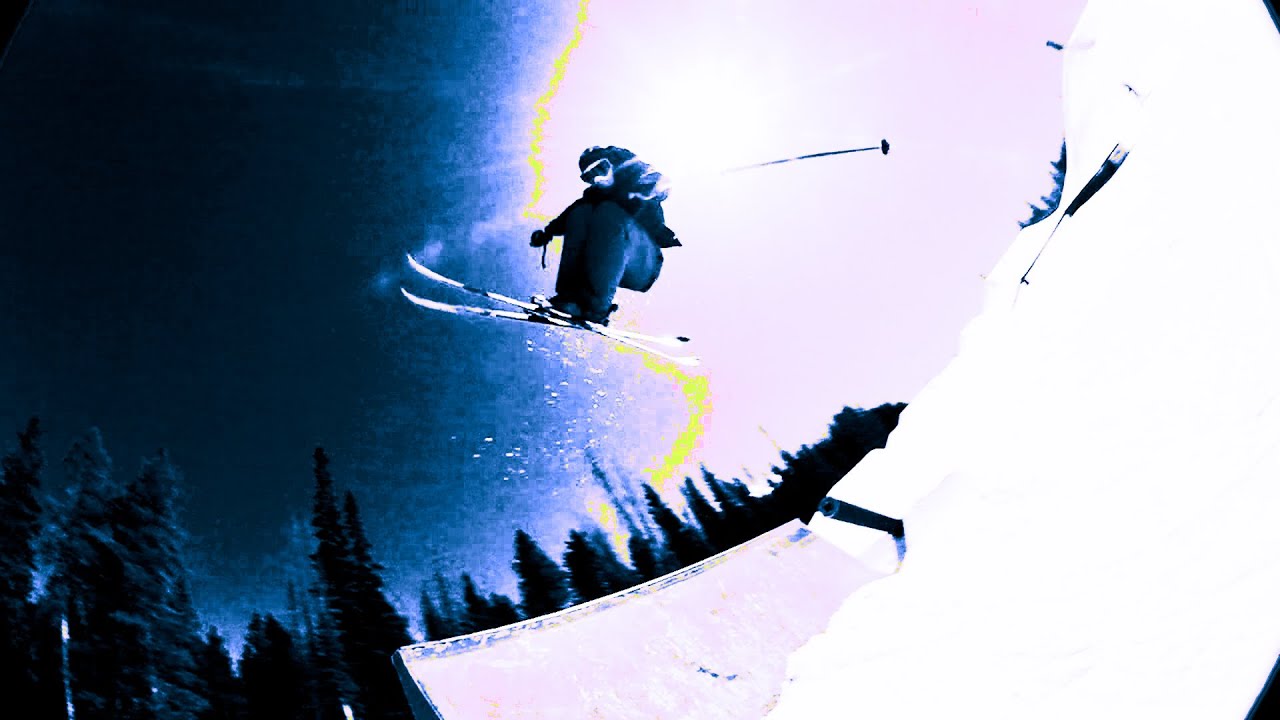
Øystein Bråten
Profile and significance
Øystein Bråten is a Norwegian freeski slopestyle specialist whose career sits at the intersection of contest consistency and street-leaning creativity. Born in 1995 and connected with Torpo IL in Norway’s Hallingdal region, he rose through the era when slopestyle went from “new school” to global prime time. The signature line on his résumé is historic: he won Olympic men’s ski slopestyle gold at PyeongChang 2018, and FIS noted that the title made him the third Norwegian—after Kari Traa and Stine Hattestad in moguls—to win Olympic gold in freestyle skiing. That achievement matters beyond a single day because slopestyle is a sport of tiny margins, changing courses, and relentless trick progression; being the athlete who delivered the winning run when it mattered most is a legacy-making result.
Bråten’s significance also comes from how he earned that peak moment. His competitive record shows long-term presence on the World Cup circuit with podiums before the Olympics and a breakthrough World Cup win in 2017. At the same time, his public identity has always included the “build it, session it, film it” side of freeski. Through projects with Red Bull and technical rail concepts like his “Flip 2 Flip” feature, he became a reference point for skiers who value control and precision on rails as much as spins on jumps. In an era where slopestyle can drift toward pure rotation math, Bråten is remembered as an athlete who could win with both difficulty and a distinctly Scandinavian sense of cleanliness.
Competitive arc and key venues
The clearest way to understand Bråten’s arc is to track his climb through the highest-pressure venues in freeski. He appeared at the Sochi 2014 Winter Games and finished 10th in men’s slopestyle, a strong result in the early Olympic era when the discipline was still defining what “finals-level” looked like. Over the next four years he matured into one of the circuit’s most reliable scorers, stacking podiums and building a reputation as an athlete who could deliver a complete run when weather, speed, and course design made outcomes unpredictable.
On the World Cup calendar, his milestone victory came at Stubai Glacier on November 26, 2017, where he earned his first World Cup win in men’s slopestyle. That win is important context for his Olympic story: it shows he didn’t arrive at PyeongChang as a one-off underdog, but as a rider already capable of winning a top-tier event. The seasons around that period also include major results at classic slopestyle proving grounds such as Cardrona Alpine Resort in New Zealand and Silvaplana in Switzerland, plus big-air World Cup podium-level form that underlined his versatility beyond a single format.
X Games results add another layer because they measure performance under a different kind of spotlight. Bråten won men’s ski slopestyle gold at X Games Aspen 2017 and backed it up with another slopestyle gold at X Games Norway 2017 in Hafjell, plus a slopestyle bronze at X Games Aspen 2016. He also won the urban-style invitational Red Bull PlayStreets in Bad Gastein, a contest that flips the slopestyle idea into a street setting and rewards rail mastery as much as jump control. Taken together, those wins show why he was viewed as an “all-conditions” competitor: he could handle federation courses, invitational showpieces, and city-style builds without losing his identity.
PyeongChang 2018 became the career-defining venue. In the Olympic final, Bråten scored 95.00 on his first run, then had to wait through the remaining attempts as rivals chased him. That detail is essential to the narrative: slopestyle isn’t only about doing your run, it’s about doing it early enough and clean enough that the rest of the field cannot catch you. When the contest ended, he stood atop the podium as Olympic champion, with Nick Goepper second and Alex Beaulieu-Marchand third. That moment turned a strong World Cup and X Games athlete into a lasting name in Olympic freeski history.
How they ski: what to watch for
Bråten’s skiing is easiest to recognize in the way he treats rails. He has long been framed as a technician—an athlete who approaches rail features with the precision of a street skier while still maintaining the speed and composure needed for full slopestyle courses. For viewers, the most revealing moments are often at the top of a run: watch how early he sets his line into a rail, how stable his upper body stays through a slide, and how smoothly he reconnects with the fall line after the dismount. In slopestyle, that “exit quality” is where clean runs are built; a shaky rail exit forces defensive skiing into the next hit, and defensive skiing kills amplitude and style on jumps.
His jump skiing tends to mirror the same mindset: controlled takeoffs, deliberate grabs, and an emphasis on landing position so speed carries forward. When he is on form, the run looks planned rather than patched together. That matters because modern slopestyle judging is effectively an evaluation of completeness: difficulty matters, but so does whether every piece of the run communicates control. Bråten’s best contests have been the ones where he blends technical rail sections with confident spins, keeping the run readable from start to finish instead of relying on a single chaotic banger.
The “Flip 2 Flip” concept captured why his style resonates. Presented through Red Bull content, it centered on a flip-on to flip-off rail feature—an example of how he pushes progression by rethinking what a rail trick can be. Even if a viewer doesn’t know every naming convention, the takeaway is clear: Bråten’s creativity often lives in feature use and approach angles, not only in adding another 180 degrees of rotation. If you want to evaluate his skiing the way other freeskiers do, prioritize those details: line choice, feature interpretation, and how “quiet” the run looks even when it’s technically hard.
Resilience, filming, and influence
Bråten’s Olympic gold is a resilience story in the specific way slopestyle tests athletes. In the PyeongChang final, he delivered the best run of his life immediately, then had to sit with the result while the rest of the field took multiple shots at beating it. That waiting game is psychologically brutal: you can’t improve your score, you can only watch others try. Winning in that scenario is not just talent; it’s the ability to trust your preparation and stay composed when momentum shifts around you.
Beyond competition, his influence shows up in how he helped keep rail creativity visible in an increasingly jump-heavy era. Through Red Bull projects and the travel-and-session format of the “Send It!” series, he became a recognizable figure for skiers who care about filming, urban or street-inspired trick ideas, and building features rather than only training on standardized contest courses. That matters culturally because freeski has always been a two-lane sport: structured events on one side, creative expression on the other. Bråten’s career shows those lanes can feed each other. Contest training can create the consistency needed for filming, while street-style thinking can make contest runs feel less generic.
His continued relevance is also tied to the “backyard” mindset that many progressing skiers relate to. Red Bull’s “Backyard Bangers” concept highlights how building and riding small features repeatedly can translate into elite-level control. For fans, that’s a reminder that the most impressive contest runs often come from unglamorous work: thousands of attempts, endless rail laps, and the patience to refine small details until they look effortless.
Geography that built the toolkit
Bråten’s story is rooted in rural Norway, not a giant resort town. His association with Torpo IL and residence in the Ål area place him in a region where winter is long and training has to be self-directed. That geography has a quiet influence on style. Scandinavian freeski culture has traditionally valued clean execution, a calm posture, and a strong rail tradition—skills that travel well because they are not dependent on a single type of park. When you grow up needing to make the most of whatever features exist, you learn to be inventive and precise.
From there, the international circuit added new layers. Courses at Stubai Glacier are often fast and firm, rewarding a skier who can be accurate on takeoff and landing even when the snow is not forgiving. Silvaplana brings a different rhythm, with European builds that can emphasize rail complexity and creative line options. Southern Hemisphere stops like Cardrona Alpine Resort matter because they set early-season trends; the skiers who are ready to perform there often carry confidence into the Northern winter.
North American contest hubs also shaped his toolkit. Parks at resorts like Aspen Snowmass, Breckenridge, Copper Mountain, and Mammoth Mountain are designed for repetition and high-speed runs, which rewards the kind of disciplined execution that becomes essential at the Olympics. When you zoom out, the PyeongChang win links all of those geographies into a single narrative: a Norwegian rail technician who could travel the world, adapt to any course, and still put down the run that defined an Olympic final.
Equipment and partners: practical takeaways
Bråten’s public partnerships are most clearly visible through his long-standing presence in Red Bull freeski content, including technical rail features and series-style projects. In terms of what that implies for equipment, the key is not chasing a specific pro model, but understanding the demands of his disciplines. Slopestyle and big air require a twin-tip setup that feels symmetrical for switch takeoffs and landings, with edges and bases durable enough for heavy rail use. A skier who wants to bring street-inspired ideas into a contest run also needs a predictable platform: inconsistent flex or an unfamiliar mount can make spins feel different in each direction, which is a recipe for sketchy landings and rushed grabs.
For progressing skiers, the most practical takeaway from his style is that “equipment” starts with feel and repetition. A boot that fits securely allows you to stay centered over the skis when landing switch. Bindings mounted to support balance in both directions make it easier to keep spins clean and grabs deliberate. And a ski that holds up to repeated rail hits encourages more attempts, which is where technical confidence actually comes from. Bråten’s career highlights that a clean run is rarely the product of a magic setup; it’s the product of a setup you trust enough to focus on execution rather than survival.
Partners matter in another way: they often fund time on snow and creative freedom. If you look at the arc of Bråten’s work, it’s clear that contest seasons and filming concepts both require travel, planning, and the ability to chase the right conditions. For a developing skier, the lesson is straightforward: prioritize the systems that let you ski more—consistent coaching, safe progression steps, and access to features—because those systems compound faster than any single gear upgrade.
Why fans and progressing skiers care
Øystein Bråten matters because he is the kind of freeski athlete who proves slopestyle is more than spin count. He won Olympic gold at PyeongChang 2018 by putting down an early, dominant run and holding off a finals field that kept raising the stakes. He also built a contest résumé that includes a World Cup victory at Stubai Glacier, multiple World Cup podiums, and slopestyle gold medals at X Games events in both the United States and Norway. Those results check the “champion” box in every major contest ecosystem—World Cups, invitationals, and the Olympics.
Progressing skiers care because his skiing is instructive. It shows how rail precision can be a weapon in competition, not just a style accessory. It shows that a run is judged as a whole, and that speed management between features is often the hidden difference between a podium and the middle of the pack. And it shows that creative projects—building features, filming technical concepts, and refining tricks outside formal courses—can feed directly into contest readiness. Whether you’re watching him for Olympic history or for the craft of clean slopestyle, Bråten remains a reference point for how modern freeski can be both disciplined and inventive.