Logan Pehota
Pemberton, British Columbia, Canada | Active: 2011-present | Focus: freeride, big-mountain film, sled-access backcountry, Freeride World Tour | Current: Red Bull, Rossignol, Sweet Protection and Polaris-linked athlete
Kicking Horse When The Score Hit Ninety-Eight
Kicking Horse’s Ozone face held cold interior snow, broken rock ribs, and the kind of visibility that turns every takeoff into a public decision. Logan Pehota dropped into the 2018 Freeride World Tour stop above Golden, British Columbia, already skiing close to home terrain but still under the full pressure of a judged face. He linked speed, cliffs, backcountry tricks, and clean exits into a 98-point run, one of the highest scores recorded on the tour. The win was not a lucky Canadian headline. It confirmed the pattern that had started two winters earlier in Alaska: Pehota could bring film-level risk into a contest and still make the run look deliberate.
Pemberton Before The Tour Bib
Pehota’s base is Pemberton, British Columbia, a mountain town north of Whistler where deep Coast Range snow, sled access, and steep terrain shape skiers early. His father, Eric Pehota, is one of Canada’s defining big-mountain pioneers, so Logan grew up with a rare kind of inheritance: not just skiing skill, but line study, snowpack language, and the idea that the backcountry could be both playground and workplace. Freeskier profiled him at 17 as a slopestyle skier with 11 years of backcountry experience, already shaped by alpine racing, ski touring, big lines near home, and mentorship from Eric Hjorleifson during early Matchstick Productions filming.
Racing, Halfpipe, Slopestyle, Then The Face
The current freeride image hides how many disciplines Pehota touched before committing to big mountains. Polaris and Sweet Protection both describe a pathway through ski racing, halfpipe, and slopestyle before freeride became the center. That variety matters because his skiing does not look like pure fall-line charging alone. Racing gave edge pressure and speed discipline. Slopestyle and halfpipe gave air awareness, switch comfort, rotation control, and grab timing. When those tools moved into exposed faces, Pehota gained a different advantage: he could treat natural terrain as a freestyle course without forgetting that cliffs, sluff, and bad landings still set the rules.
Haines Bluebird And The First FWT Win
The first major tour breakthrough came in Haines, Alaska, in 2016. Forecast Ski described the event as running under bluebird skies with prime conditions, and Pehota took the win with a fast, stylish run. Sweet Protection also marks Haines 2016 as his Freeride World Tour breakthrough. That location gave the result extra weight. Haines is not a resort venue disguised as freeride. It is Alaska terrain: spines, speed, exposure, rollovers, and landings that can disappear under sluff. A win there showed that Pehota’s Pemberton preparation could travel into the sport’s most iconic big-mountain contest environment.
Chamonix And The Early Podium Signal
Before Haines and Kicking Horse became the headline wins, Pehota had already shown he belonged in World Tour fields. At Chamonix in 2015, event coverage placed him second behind Loïc Collomb-Patton, with Fabio Studer also on the podium. The report described Pehota as firing tricks after stomping a strong line, which is still the clearest phrase for his contest identity. He was not only skiing fast. He was adding freestyle movement into terrain where many riders were focused on survival, control, and line choice. That mix became his competitive signature: technical enough for the judges, loose enough for film crews, and fast enough to threaten riders with more traditional freeride backgrounds.
Numinous And The Best Line Shift
Pehota’s film career became harder to separate from his contest career after Numinous, the Kye Petersen and Dendrite Studio project that earned him a 2017 Powder Award for Best Line. That recognition matters because it came from a different judging culture than the Freeride World Tour. A contest run is seen once, scored, and ranked. A film line is studied, replayed, shared, and remembered through camera angle, terrain choice, and consequence. Pehota’s award helped move his reputation from “strong FWT skier” to “big-mountain film athlete,” the category where he has spent most of his modern career.
Return To Send’er And The Sled Access Method
Matchstick Productions’ Return to Send’er made Pehota’s process visible. In a behind-the-scenes piece, he broke down the rhythm of filming a line: wake early, drive the truck, get on the sled, tandem toward the zone, and turn all that access work into a ski shot. Polaris later explained why the snowmobile became central to his career. After saving money from summer heli-logging work, Pehota bought his first sled in 2015 for ski access. It quickly became more than transportation. In British Columbia, a sled can open drainages, pillows, alpine bowls, and roadless approaches that would be unreachable for daily filming on foot.
Workhorse And The Snowmobile Chapter
Workhorse, produced by Red Bull Media House, put Pehota’s snowmobile life beside his skiing rather than behind it. Polaris describes the project as his more recent snowmobile film work, while Sweet Protection frames his current progression as a mix of skiing and sledding. That combination is not a side hobby in his case. It is part of the Coast Mountain style. Sledding lets him scout lines, build backcountry jumps, reach remote snow, and understand terrain from a different speed and angle. It also carries its own risk, cost, and technical demand. Pehota’s public image now belongs as much to throttles, tracks, and access roads as to skis and poles.
The Stomping Grounds And A Camera-Built Reputation
The Stomping Grounds gave Matchstick another clear Pehota segment. MSP described his “Sender” moniker as applying both to skis and snowmobile, pointing viewers toward the full film after releasing an athlete short. That label has stuck because it is direct and accurate. Pehota skis with a compact stance, commits early, and does not appear to waste movement in the air. The technical language is big-mountain rather than park-only: fall-line speed, cliff drops, backflips, natural takeoffs, pillow gaps, sluff management, and landings that need to be absorbed without letting speed disappear. His best clips feel planned, but not polished into softness.
Crested Butte With Cal Hill
In Cutting Class, Matchstick sent Pehota to Crested Butte, Colorado, where local skier Cal Hill guided him through the mountain’s extreme terrain during a deep winter. MSP described the pair hunting for deep pockets and bigger airs, while local Crested Butte coverage framed the short around cliffs and backflips in the resort’s back bowls. The project works because it removes him from the Coast Mountains without changing the tools. Crested Butte is technical, rocky, and loaded with terrain that punishes lazy line choice. Pehota’s job was to adapt his Pemberton-style air sense to a Colorado venue where local knowledge could make or break the day.
Land Of Giants And After The Snowfall
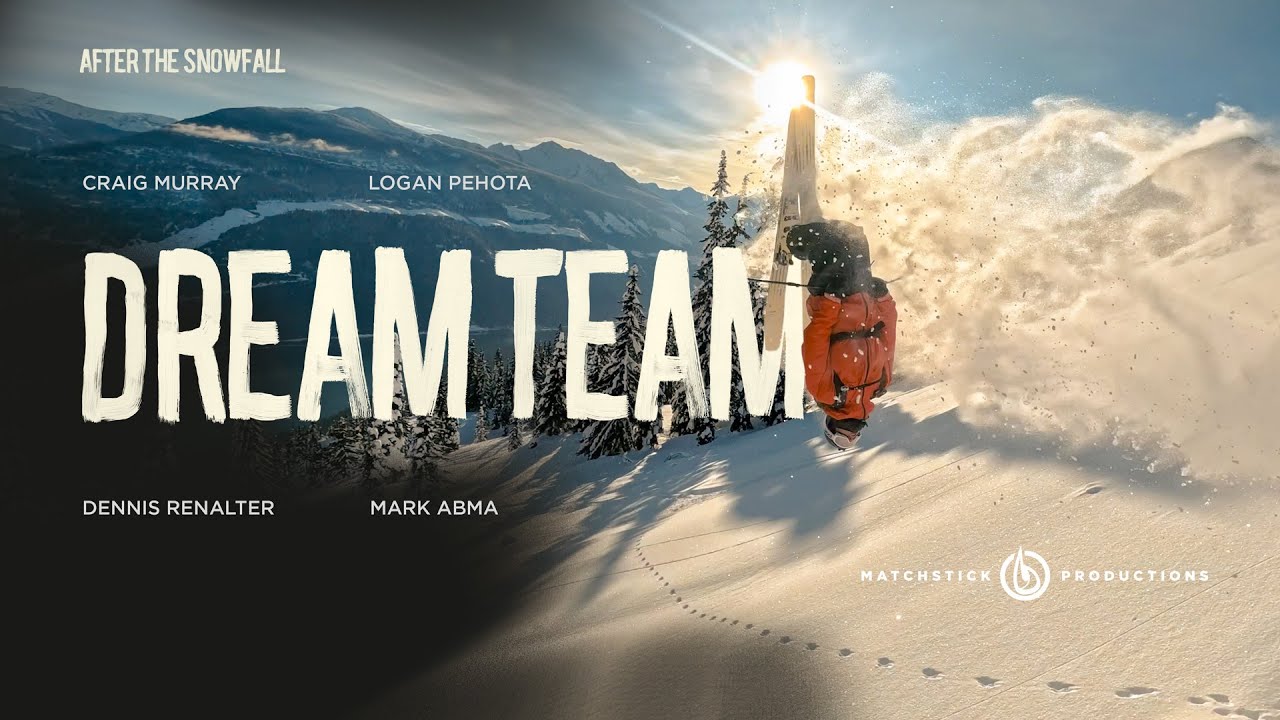
Pehota’s recent film list keeps him inside Matchstick’s main roster. The Land of Giants, released in 2023, listed him among skiers such as Mark Abma, Sammy Carlson, Nikolai Schirmer, John Collinson, Colby Stevenson, Sam Kuch, Karl Fostvedt, Craig Murray, and Marcus Goguen, with locations including the Chilkat Range, Niseko, Lyngen Alps, Wasatch, Fitzsimmons, and Kitimat. After the Snowfall, released in 2025, again listed Pehota in the cast, with shoots across BC, California, Colorado, Alaska, Norway, Japan, Whistler, and more. That continuity shows where his career sits now: not chasing a full competition calendar, but still trusted in major ski films built around storm cycles, big crews, and difficult terrain.
Rossignol, Sweet, Polaris, And The Current Setup
The support picture matches the career direction. Rossignol Group lists Pehota among its Free athletes, Sweet Protection lists him as a Canadian freeride and big-mountain skier from Pemberton, and Polaris names him a snowmobile ambassador with a Patriot Boost RMK Khaos 155. His public social bio also points to Red Bull, Rossignol, Polaris, Sweet Protection, Therm-ic, LEKI, and Backcountry Motorsports. The gear story is therefore split between skiing and access: freeride skis, protective helmets and goggles, touring packs, gloves, poles, avalanche equipment, sleds, fuel, maintenance, and enough outerwear to handle long filming days when the camera waits and the weather closes.
Pehota’s Line Between Contest And Film
Pehota earns a 4/5 importance rating because his record has both competitive and cultural depth: Haines 2016 FWT win, Kicking Horse 2018 FWT win, multiple podium-level tour results, a 2017 Powder Award Best Line, and a long Matchstick Productions presence from early MSP appearances to current feature films. A 5/5 would require Olympic-level medals, repeated X Games medals, or a broader cross-generational legacy. His current value is more specific. He represents the modern Pemberton freeride model: contest skill, film credibility, sled access, backcountry jumps, and a style where the biggest move still has to look like the line was chosen before the camera ever turned on.