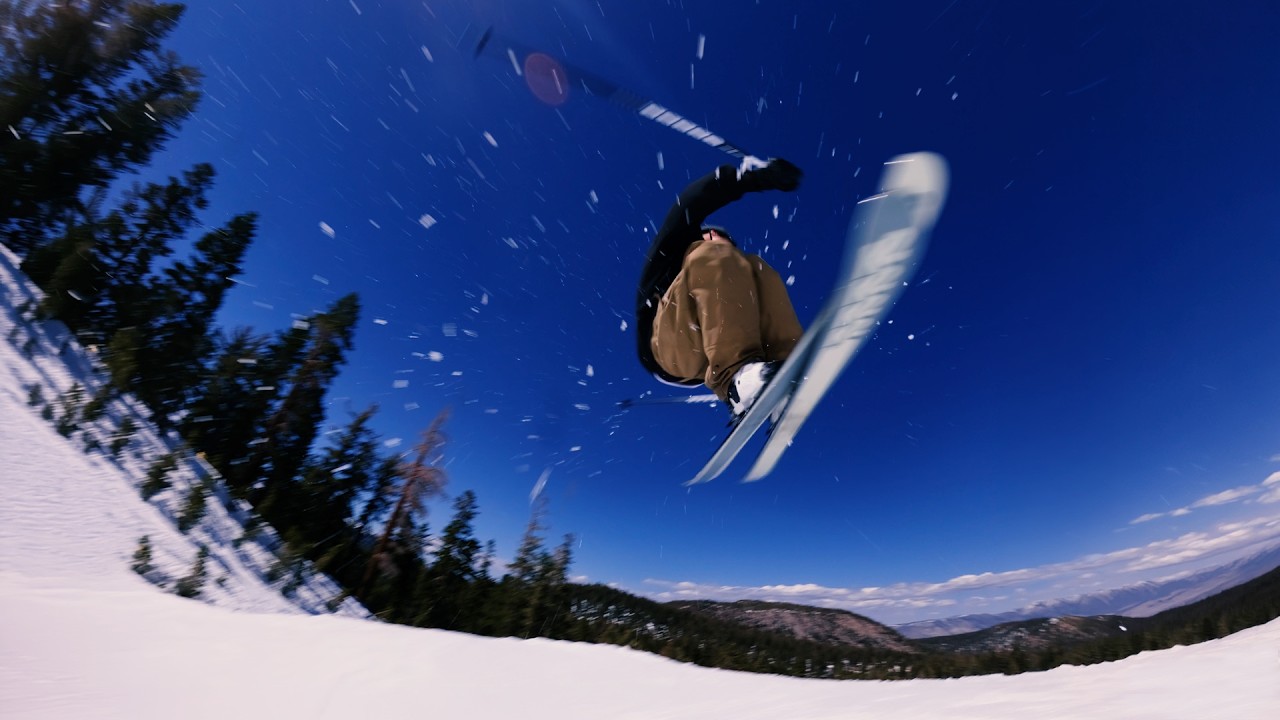
Keegan Kilbride
Profile and significance
Keegan Kilbride is one of the most credible American urban/street skiing names of his generation, and his importance comes from much more than one contest podium or one standout winter. The public record around him shows a real competition base, a verified X Games medal, a major Level 1 breakthrough, and a long run of street parts that kept him relevant well beyond the normal shelf life of a rising skier. Official FIS records identify him as a U.S. athlete born in 1995, while his own public athlete site places his hometown in Portland, Maine and describes him as a professional skier based in Colorado. That background matters because Kilbride did not appear out of nowhere as a pure internet-era rail skier. He came through a serious development path, then chose to push his career toward the side of freeski where style, creativity, and commitment on real urban features matter more than rankings alone.
That is exactly why the score reaches 5/5 here. Kilbride does not fit the classic Olympic-medalist model, but the rubric also allows for the highest tier when a skier has enduring cultural impact through films and urban parts. He fits that test. He won Level 1’s SuperUnknown XIII title in 2016, earned X Games Real Ski bronze in 2018, collected major peer recognition through Powder Awards, and kept releasing serious street skiing projects deep into the 2020s. In modern freeski, especially in the United States, that is a meaningful legacy. He became one of those skiers whose name signals a certain kind of credibility: East Coast toughness, real slopestyle roots, and a street profile strong enough to matter to core fans even without a World Cup résumé.
Competitive arc and key venues
Kilbride’s early path was much closer to a traditional contest skier than many people might assume from his later image. Local reporting in Maine described him as a Portland skier who started through a weekend program at Sugarloaf before transferring to Carrabassett Valley Academy. That article also documented key early markers in 2014: he won a North Face Open Park and Pipe Open Series event at Stratton, placed 15th out of 71 slopestyle skiers at a U.S. Revolution Tour stop in Sun Valley, and was named to the U.S. Junior Worlds team. His FIS record supports that competitive foundation, listing him as the winner of a FIS slopestyle event at Stratton in February 2014 and showing further Nor-Am slopestyle starts in Sun Valley and Aspen. That matters because it confirms that the technique underneath his later street skiing was built on real judged-event experience, not just edits and session clips.
The next phase is where his public story really takes shape. In 2016, Level 1 Productions awarded him the SuperUnknown XIII title at Winter Park Resort, a major milestone in skier-made media because SuperUnknown has long been one of the clearest proving grounds for emerging film talent. From there, Kilbride’s profile moved decisively toward urban/street skiing. He became a more regular presence in Level 1 films, then earned a bronze medal in X Games Real Ski in 2018, which is especially meaningful because Real Ski is not a side event for contest leftovers. It is one of the highest-profile showcases for all-urban ski filmmaking. Later public recognition, including his continued visibility in recent street parts and featured events like the 2026 gathering at Sugarloaf, shows that his public arc did not peak quickly and disappear. It stayed alive because the skiing kept mattering.
How they ski: what to watch for
The easiest mistake with Keegan Kilbride is to reduce him to “street skier” and stop there. That misses why his skiing works. The contest background gave him a technical base that shows up in balance, switch confidence, and the ability to stay composed at speed. Maine reporting from his junior years described a switch double cork 1080 as a defining early move, which already hinted at the level of body awareness he had before street skiing became the center of the story. But what makes him memorable is what happened after those foundations were moved into more chaotic terrain.
Kilbride’s public image is built around urban/street skiing, yet his clips rarely feel like a contest skier simply transplanting tricks into the city. The stronger impression is that he learned how to make city features behave like their own language. That means rails, gaps, transfers, transitions, and setups where approach speed and commitment matter as much as the trick itself. He comes from the side of freeski where a clip is judged by more than score value. It is judged by whether the line feels convincing, whether the trick belongs on that feature, and whether the skier looks fully in control of a spot that most people would never hit in the first place. That is why his style has held up. The movement looks deliberate. Even when the feature is rough or the landing is blind, there is very little wasted motion.
For viewers, the right way to watch him is not to count rotations like a big air run. Watch how he handles takeoff pressure, how naturally he enters and exits technical rails, and how much confidence he carries into awkward transitions. Kilbride’s value has always been tied to that mix of technical precision and street realism. It is also why his best work feels grounded in freeski rather than in stunt logic. He does not just survive features. He owns them.
Resilience, filming, and influence
Kilbride’s career also has a real resilience angle, and it starts early. Maine reporting from 2014 noted that he had already worked through serious injuries, including breaks to both humerus bones and a broken ankle, before putting together the healthier stretch that sent him to Junior Worlds and deeper slopestyle opportunities. That matters because his later street profile can make it easy to overlook how much physical durability sits underneath the polished image. Urban/street skiing does not forgive half-commitment, and an athlete with that background usually only lasts if the drive is real.
The influence piece is where his profile becomes genuinely top tier. In 2017, Level 1 Productions highlighted him as Breakthrough Performer for his opening segment in Habit. In 2019, Level 1 announced that he won the Powder Award for Best Jib. Those are not random compliments. They are the kind of peer-facing honors that show a skier has broken through from “promising” to “widely respected.” His own public athlete site also lists movie features including Romance, Habit, and other known projects from the street-heavy side of freeski. That film run is a huge part of why his importance score belongs at 5/5 rather than 4/5 or lower.
Just as important, Kilbride kept going. He did not become a single-era name trapped in one classic segment. More recent public material still places him in major street parts and featured sessions, which shows staying power rather than nostalgia. For fans of urban/street skiing, that matters a lot. Many skiers get one or two years of heavy attention and fade. Kilbride remained a reference point because his skiing kept showing the same things that made him matter in the first place: composure, vision, and a real street-specific eye.
Geography that built the toolkit
Geography explains a lot about why Keegan Kilbride skis the way he does. The public record begins in Portland, Maine, with early development through Sugarloaf and Carrabassett Valley Academy. That is a meaningful origin because East Coast skiing tends to sharpen different habits from a purely western park upbringing. Weather windows are tighter, snow is often firmer, and rail accuracy matters. Skiers from that background often develop a certain directness: less wasted motion, more comfort on imperfect setups, and a willingness to learn in conditions that do not flatter mistakes. Kilbride’s public style makes much more sense once that East Coast base is understood.
Then the map expands. Sun Valley appears in his early competition record. Winter Park Resort matters because SuperUnknown XIII was won there. Mammoth Mountain sits in the Level 1 orbit around him and in the broader progression culture that shaped many of his peers. His own public site now places him in Colorado, while recent public events tie him back to Maine and Sugarloaf again. That spread is useful for readers because it shows a real American freeski path rather than a one-resort story. Maine gave him grit and technical foundations. Western trips and later western living broadened the scale, access, and filming possibilities. The result is a skier who still feels East Coast at the core, even when the projects and spots are national.
Equipment and partners: practical takeaways
The cleanest verified partner story around Kilbride comes from brands and official event pages rather than from an exact hardgoods spec sheet. His public athlete site and public-facing profiles clearly connect him with Monster Energy and K2 Skis, while Sugarloaf’s 2026 event page explicitly described him as a K2 pro athlete. That is useful because it shows a real sponsor ecosystem without forcing guesses about every detail of his current setup. His FIS equipment fields are blank, so it would be wrong to invent a precise skis-boots-bindings package.
For readers, the practical takeaway is broader than brand logos. Kilbride’s partner profile makes sense because it matches his skiing identity. In street and park culture, the gear conversation is usually less about race-style technical disclosure and more about trust: a ski that feels predictable on rails, stable on rough landings, and playful enough for presses, quick transitions, and repeated urban sessions. The main lesson from his career is that equipment becomes meaningful when it serves a clear style. Kilbride built the style first. The sponsor fit followed from there.
Why fans and progressing skiers care
Keegan Kilbride matters because he represents one of the clearest examples of how a skier can become genuinely important without following the most obvious contest route to fame. He has a real FIS and junior-worlds background, a verified X Games Real Ski bronze medal, a SuperUnknown title, major peer recognition through Level 1 and Powder Awards, and years of relevant urban/street skiing footage. That alone would make him notable. What pushes him further is the consistency of the profile. He kept mattering across phases of the sport that often move on quickly.
For fans, he is worth knowing because he sits in the part of freeski history where street skiing stopped feeling like an offshoot and started feeling central. For progressing skiers, his path offers a sharp lesson. Build fundamentals. Use competition when it helps. Keep your style identifiable. Then put that style into terrain that says something real about who you are as a skier. Kilbride did that over and over again. That is why his name still carries weight, and that is why a 5/5 importance score is justified.