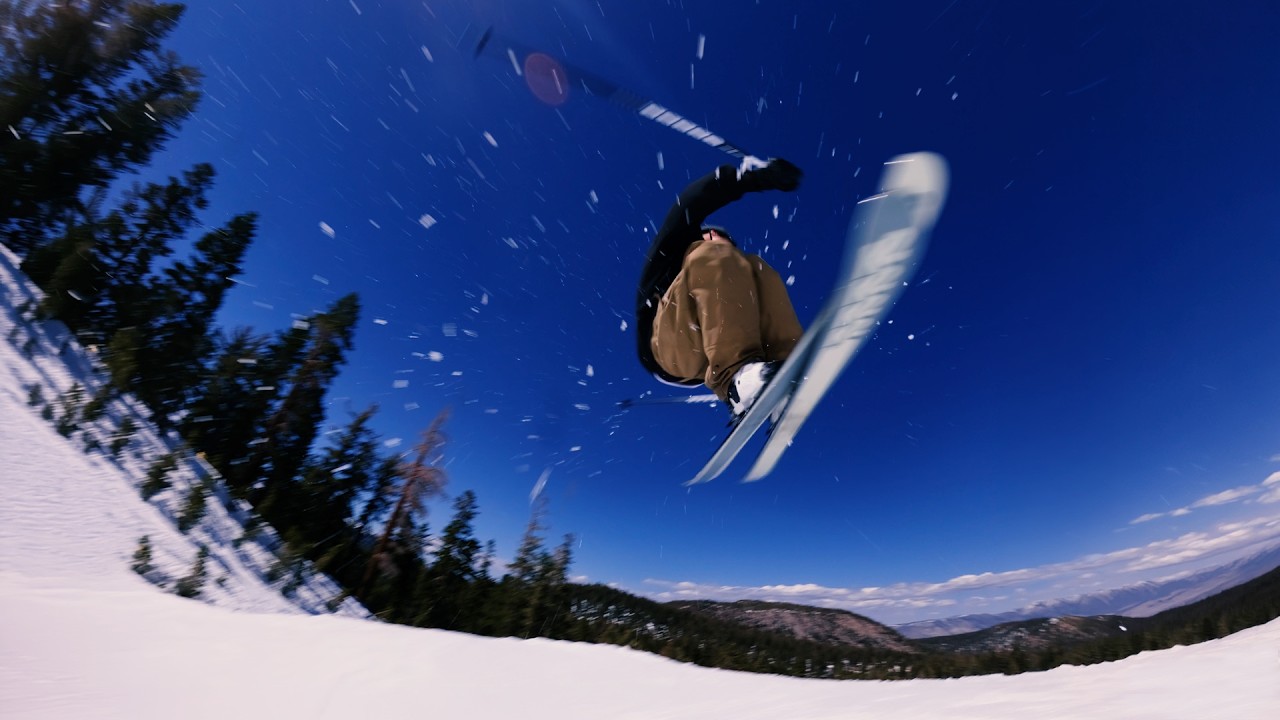
Clayton Vila
Profile and significance
Clayton Vila is one of the most recognizable North American urban/street skiing figures of the modern freeski era. He matters for more than a single result line. The public record around him shows a real early competition base, official recognition at X Games, a long run of high-consequence video parts, and an unusually strong second career as a filmmaker. Raised on Block Island, Rhode Island, Vila came from an unlikely place for a pro skier and still built a name big enough to earn backing from Monster Energy, K2 Skis, and Nike. He later translated that same vision into award-winning ski films and athlete documentaries.
That combination is what pushes his importance score into the top tier. He was not an Olympic medalist and he did not build his legacy through repeated World Cup podiums, but the rubric here also recognizes enduring cultural impact through films and urban parts. Vila fits that standard. His skiing helped make street skiing feel central to freeski culture rather than secondary to slopestyle or big air, and his directing work gave that side of the sport a more cinematic, emotionally serious identity. If a reader wants to understand why some skiers carry more weight than their contest résumé alone would suggest, Clayton Vila is one of the clearest examples.
Competitive arc and key venues
Before Vila became known as a street skier, he had a real contest pathway. His official FIS biography lists him with Waterville Valley BBTS and shows an early halfpipe record that was far more legitimate than many culture-first skiers ever build. In 2008 he finished second in a Nor-Am Cup halfpipe event at Park City Mountain Resort, then fourth at another Nor-Am stop in Winter Park. In 2009 he placed 14th in World Cup halfpipe at Park City and finished third at the U.S. National Championships. Those results matter because they show that Vila did not arrive in urban skiing as an outsider with no technical base. He had already developed the kind of edge control, air awareness, and contest composure that formal freestyle environments demand.
The more important turn came when he stopped letting competition define his ceiling. Instead of chasing a standard halfpipe or slopestyle route, he pushed hard toward self-made edits, East Coast and urban filming, and later larger projects with Stept-era street crews and Teton Gravity Research. His official X Games breakthrough came in the 2016 Real Ski video competition, where public brand and media records identify him as a bronze medalist. That result is important not only because it is real X Games hardware, but because it came in an all-urban format that matched his true lane. In other words, Vila did not merely step away from contests. He helped prove that urban/street skiing deserved a major-event platform of its own.
How they ski: what to watch for
The first thing to understand about Vila’s skiing is that it never looked like contest skiing that had been moved into the city. It looked like city skiing designed from the ground up. His public profile over the years has consistently tied him to huge handrails, awkward closeouts, wall rides, drops to transition, and spots where commitment matters as much as trick difficulty. That is an important difference. Slopestyle and big air reward execution inside a known structure. Urban/street skiing punishes hesitation, bad speed checks, and poor spot reading immediately. Vila’s best work always felt built around total commitment to the feature rather than around trick count alone.
For readers trying to evaluate his style, the most useful markers are line choice, confidence, and visual control. He came from a surf and skate background, and that showed in the way his skiing carried rhythm rather than stiffness. Even when the features were violent, the movement usually looked deliberate instead of scrambled. That is a major part of why his segments aged well. He was not just clearing giant features. He was making them look composed. Public award coverage around his 2013 Powder Awards Best Jib recognition highlighted exactly that blend of consequence and style. Vila’s skiing was rarely about looking safe. It was about making dangerous ideas feel fully owned.
Resilience, filming, and influence
If you only look at medals, you miss the center of Vila’s career. His deepest influence came through film. In 2015, his documentary For Lack of Better, released through Teton Gravity Research, became one of the defining street skiing films of its period. Public TGR coverage records that it won Best Storytelling at iF3, and later TGR announced that the film took Movie of the Year and Best Documentary honors at the Powder Awards. Those are not small side notes. They show that Vila was not simply starring in street segments. He was helping reshape how street skiing could be presented: less as disposable internet shock footage, more as a culture with real risk, obsession, injury, friendship, and artistic ambition.
That matters even more because the film did not glamourize the lifestyle without cost. Public descriptions of the project emphasize horrific injuries, sleepless nights, bending the law, and the “at all costs” mentality that often defines high-end urban skiing. Vila’s influence came partly from being honest about that reality instead of pretending the sport was just carefree rebellion. Later, he kept building that off-snow legacy by directing or co-directing athlete-centered films including Back to Life, Nerve, and, more recently, work connected to Kai Jones’s Falling Into Place. That second act is a major reason he qualifies for a 5/5 profile. He did not only help define a corner of freeski on skis. He helped document and elevate it from behind the camera as well.
Geography that built the toolkit
Vila’s geography explains a lot. Growing up on Block Island meant he did not come from a classic mountain-town script. Public profiles consistently describe him first as a surf-and-skate kid who found skiing through limited access, then built it into a profession. That background matters because it helps explain why his skiing always felt a little sideways to traditional freeski categories. He did not come up looking only at halfpipe walls or resort jump lines. He came up thinking about movement, filming, and terrain in a broader way.
From there, the map widened through New England and the West. Waterville Valley gave him a real freestyle base. Park City Mountain Resort sits in his official FIS record as one of the places where he proved he could compete at a serious level. Boston later became central to For Lack of Better and to the kind of urban skiing that made his name. Salt Lake City mattered as a long-term ski and film hub, especially during the years when street crews and film production overlapped most heavily in his life. And Los Angeles makes sense as the later home base of a skier whose filmmaking ambitions grew as large as his athletic ones. The through-line is clear: island kid, East Coast technician, western traveler, then filmmaker. Very few athlete profiles hold that combination together so naturally.
Equipment and partners: practical takeaways
One practical challenge with a skier like Vila is that a fully reliable current hardgoods setup is not publicly documented in one clean official place, so it would be wrong to invent exact skis, boots, and bindings. The better way to understand his equipment and partner history is through the brands that publicly chose to stand behind him. Monster Energy has long framed him as a front-line urban skier. Greenpoint’s official bio states that he earned sponsorships with K2 Skis, Nike, and more as his skiing career scaled up. Older interviews and public ski-media coverage also place him in the resort-and-brand ecosystem that surrounded East Coast and Colorado street progression.
For readers, the useful takeaway is not “copy this exact setup.” It is that brands backed Vila because his skiing had a strong point of view. In street skiing, equipment value is usually less about glamorous spec sheets and more about trust: edges that hold up, flex that supports presses and heavy landings, and skis that feel predictable when a feature is far from perfect. Vila’s career reinforces a broader point for progressing skiers. Companies notice athletes who do something clearly, repeatedly, and memorably. In his case, the partners followed the identity, not the other way around.
Why fans and progressing skiers care
Clayton Vila matters because he shows that freeski greatness is not measured only by Olympic starts, World Cup podiums, or textbook slopestyle progression. He had a legitimate early freestyle résumé, earned an X Games medal, and then built something more durable than a conventional contest career: a body of urban/street skiing that helped define an era, plus a filmmaking career that kept shaping ski culture after his heaviest competitive years were over. That is rare.
Fans should care because Vila is one of the clearest examples of how street skiing became emotionally heavier, more cinematic, and more central to the sport’s identity in the 2010s. Progressing skiers should care because his path offers a different model of relevance. Build real fundamentals. Find the terrain and language that suit you. Make your skiing look like nobody else’s. Then learn how to tell the story around it. Vila did all of that. His impact is not just that he was very good at urban skiing. It is that he helped make urban skiing feel important.