Tucker Carr
Profile and significance
Tucker Carr is a young American big-mountain freeskier and filmmaker from Jackson, Wyoming, whose fast rise from junior freeride contests to headline film projects has made him one of the key new faces of Teton skiing. Born and raised in Jackson Hole, with a father who worked at the resort for more than three decades, he was on skis by age two and came up through the Jackson Hole Mountain Sports School’s elite freeride programs. Those weekend groups turned into serious junior freeride starts, then into a professional path once brands and film crews realized how naturally he moved through steep terrain.
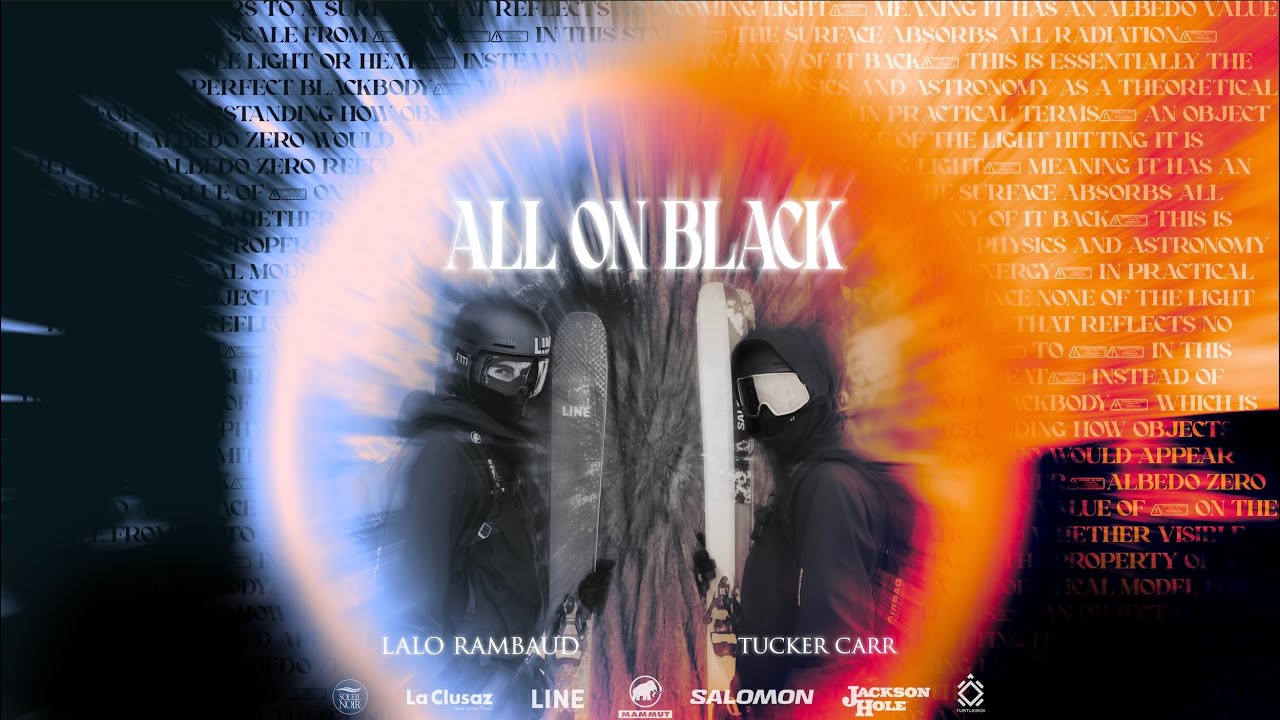
Today, Carr skis for Salomon and is part of the athlete and ambassador lineups for Jackson Hole Mountain Resort, Le Bent and climate-action nonprofit Protect Our Winters. He first came to wider attention as one of the trio behind the Gen-Z ski movie “A Little Rogue, A Little Rowdy,” then followed up with Crew 22’s “Head Games” and segments with Blank Collective Films. In 2025 he stepped fully into the spotlight by co-directing and starring in “All On Black,” an artistic freeride short shot between La Clusaz, Jackson Hole and Whistler and featured both on Teton Gravity Research’s platform and on the Salomon QST Film Tour. Add in a Jackson Hole locals segment in TGR’s feature film “Pressure Drop,” and Carr now stands as one of the main freeride storytellers of his generation, not just a strong set of legs in front of the camera.
Competitive arc and key venues
Carr’s early arc ran through the classic Jackson Hole funnel: Mountain Sports School teams, regional freeride events and, eventually, international junior starts. After a decade in the local weekend programs he moved into freeride competition with friends and fellow Jackson-based riders Luke and Wyatt Gentry, traveling to IFSA junior events around the West. That path culminated in a start at the Freeride Junior World Championships in Kappl, Austria, where he finished mid-pack in a stacked field—solid proof that his fundamentals held up on a global stage.
Over time, the balance tipped from contests toward filming and line hunting. Rather than chase full-time tour points, Carr and the Gentry brothers poured their energy into making “A Little Rogue, A Little Rowdy,” a road-trip film that followed a crew of Salomon junior athletes around western North America and ended up nominated for an award at the iF3 festival. Their follow-up, “Head Games,” pushed things further, and by the time Blank Collective Films invited Carr into their projects he was already better known as a film skier than as a competitor.
“All On Black” marks the next phase. Co-directed with French freeskier Lalo Rambaud and backed by partners across Europe and North America, the 10–11-minute film premiered at festivals like iF3 and High Five and runs as a “local flavor” selection on the 2025 Salomon QST Film Tour. Its locations—La Clusaz in the French Alps, Carr’s home slopes at Jackson Hole, and the big faces above Whistler in British Columbia—are the same venues that now define his skiing. Alongside that project, his segment in TGR’s “Pressure Drop” Jackson Hole chapter showcases him as part of a tight crew of locals charging classic tram laps, couloirs and spine walls under dream conditions.
How they ski: what to watch for
On snow, Carr’s skiing is built around fast, committed fall-line riding with just enough freestyle flair to make big-mountain lines feel playful instead of purely serious. He grew up skiing everything at Jackson Hole, from tram laps to technical sidecountry, and that background shows in how he approaches terrain: he rarely “tests” lines with many small turns, preferring to pick a strong, direct route and then flow through it with confident speed.
In Teton backcountry clips and film segments, watch how he moves through exposure. On steep faces and couloirs he often enters from the very top rather than sneaking in from a side entrance, sets two or three strong platform turns to check speed, and then opens things up into bigger, more fluid arcs once the terrain rolls out. When he airs off cliffs or rollovers, the takeoffs are rarely blind guesses; he tends to use visible features or known landmarks, keeping his body position tall and stacked so that he can absorb whatever the landing delivers. The impression is of someone who has spent hundreds of days on the same mountains and trusts both his snow reading and his muscle memory.
“All On Black” adds another layer to this picture. The film’s thermal imagery and stylised cuts emphasise how dynamically he works with terrain—slashing windlips, snapping quick direction changes on ridges, and transitioning seamlessly from playful tree shots to larger lines in alpine bowls. For viewers trying to learn from his skiing, it is worth focusing on his stance and tempo: his upper body stays quiet, his hands are relaxed but forward, and he rarely gets thrown into the backseat even when snow is deep or landings are uneven. That stability allows him to ski fast enough that camera operators have to work to keep up, without tipping over into chaos.
Resilience, filming, and influence
Carr’s story also includes a major setback and a clear example of how young athletes can handle injury. In winter 2023–24 he underwent knee surgery in February, cutting a season short just as his profile was rising. In interviews with Jackson Hole Mountain Resort, he has talked about how that recovery period forced him to confront what he wanted from skiing and how much work it would take to operate at a fully professional level. Instead of derailing his career, the rehab process sharpened his focus and set him up for the creative burst that produced “All On Black” and his role in “Pressure Drop.”
As a filmmaker and storyteller, Carr’s influence is tied closely to his long-time crew. With Crew 22 he helped prove that teenage athletes could not only ski at a high level but also carry the cinematography and narrative of a full film, something highlighted by coverage from outlets that described “A Little Rogue, A Little Rowdy” as a kind of Gen-Z manifesto for ski creativity. “Head Games” continued that momentum, and his later work with Blank Collective—with their emphasis on story-driven, coastal-mountain skiing—introduced him to broader audiences beyond Jackson.
Off the purely ski-focused stage, his alliance with Protect Our Winters underlines a commitment to climate advocacy. POW profiles present him not just as an athlete but as someone using his platform to talk about the changing winters that make his career possible. For younger viewers, that mix—serious lines, ambitious films and a willingness to speak about environmental stakes—helps position him as part of a new generation of pros who see advocacy as part of the job rather than a separate side project.
Geography that built the toolkit
The Tetons are the core of Carr’s skill set. Growing up under the tram at Jackson Hole Mountain Resort, he learned to ski everything from tight tree lines and cliff bands to wide-open powder fields. As he moved through the Mountain Sports School programs and into freeride teams, those same slopes became his classroom for reading snowpacks, picking clean exits through rocks and managing sluff on steeper faces. Short drives to Teton Pass and deeper missions into the surrounding range exposed him to longer, more committing lines, including a much-publicised descent of the Grand Teton as a teenager—one of North America’s most iconic ski objectives.
Later film work expanded his geographic range. For “A Little Rogue, A Little Rowdy” and “Head Games,” Carr spent winters road-tripping around the West with the Crew 22 gang, stacking footage in different North American ranges. “All On Black” added European layers, with extensive shooting in La Clusaz in the French Alps, where mellow powder fields sit next to steep, technical faces, and in the big bowls and tree zones above Whistler Blackcomb in British Columbia. That mix—home-mountain intimacy in the Tetons, road-trip exploration across the West, and high-alpine sessions in France and Canada—has given him a toolkit that travels well. Whether the camera is rolling in Jackson, on a QST Film Tour stop, or at a European festival venue, the terrain reads as familiar under his feet.
Equipment and partners: practical takeaways
Carr’s gear choices are closely tied to his strongest terrain: steep, variable faces and dependable in-bounds and backcountry snow. As a member of the Salomon freeride program, he spends much of his time on QST-series freeride skis—mid-to-wide-waisted models designed to stay stable at speed in chopped snow but still light and responsive enough for technical lines and airs. Paired with matching boots and bindings from Salomon, the setup is built for long days of filming where he might alternate between lift-served laps on Jackson’s tram side and short hikes or sled bumps into nearby backcountry.
On the softgoods side, his partnership with Le Bent brings merino-and-bamboo base layers and socks into the picture, which makes sense when most of your winter is spent in cold, high-precipitation mountains like the Tetons or coastal British Columbia. Avalanche gear, radios and robust outerwear are standard for the kind of lines he skis, especially when working with crews like Blank Collective Films that operate heavily in remote zones. For skiers watching at home, the takeaway is straightforward: if you want to ski the kind of terrain Carr rides, prioritise a stable freeride ski, boots that let you drive that ski with confidence, and safety equipment you actually train with. The glamour shots only work because the foundation—boots, bindings, layers, transceiver, shovel, probe—is solid.
Why fans and progressing skiers care
Fans care about Tucker Carr because he represents a very modern version of the big-mountain skier: deeply rooted in a single place yet increasingly global in his projects, serious about risk yet playful in his style, and as comfortable shaping the narrative in the editing room as he is dropping into a new face. His path from Jackson Hole grom to Salomon athlete, POW ambassador and co-director of a festival-traveling film shows what is possible when a childhood obsession with skiing is paired with creativity and perseverance.
For progressing skiers, especially those who see themselves more in freeride than in slopestyle, his story offers a practical roadmap. Build your skills on home terrain until you know every pocket and rollover; say yes to junior freeride events to learn how you respond under pressure; pick up a camera and create projects with friends instead of waiting for an invitation from a big crew; and be willing to rebuild after injuries instead of letting them dictate the end of the story. Watching Carr in “A Little Rogue, A Little Rowdy,” “Head Games,” “All On Black” and the Jackson segment of “Pressure Drop” turns his skiing into more than entertainment. It becomes a living example of how one rider from one valley can turn local passion into lines, films and advocacy that resonate across the whole freeski world.