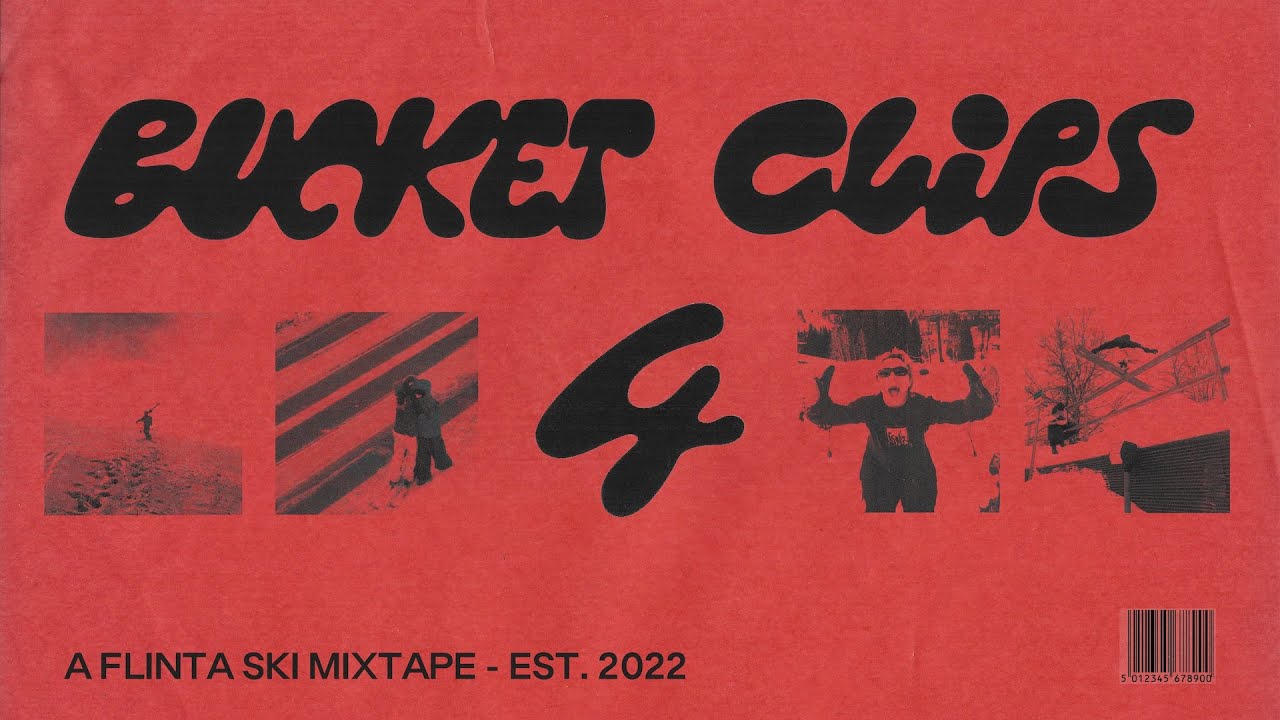
Bucket Clips 4 | An All FLINTA/Female Ski Movie
Profile and significance
Laura Pöbl is a European freeski and freeride skier whose name keeps appearing wherever community-driven film projects and creative contests are shaping modern ski culture. Rather than following a traditional path through national teams and FIS rankings, she has built her presence through mixed backcountry video contests, all-FLINTA film projects and independent season edits. Viewers discover her in projects like the “Bucket Clips” film series and in the riders list for short movies highlighted by core freeski media, as well as in the results of the Greeny Ynvitational video contest in Laax. Taken together, these appearances sketch the picture of an emerging rider who is firmly embedded in the European freeski scene, even if she remains largely unknown to mainstream audiences.
Pöbl’s significance comes from the spaces she chooses to inhabit. The Greeny Ynvitational and the Bucket Clips movies are deliberately designed to celebrate creativity, collaboration and underrepresented riders rather than only polishing the biggest names. Her third-place team finish at the inaugural Greeny Ynvitational and her recurring role in Bucket Clips edits show that other skiers and filmmakers trust her to help carry the visual story of their projects. For fans who follow independent ski cinema, she represents the large “middle class” of talented riders whose skiing you see in festival selections and online premieres long before you see it on big-budget World Cup broadcasts.
Competitive arc and key venues
Where many athlete biographies begin with junior race programs or early slopestyle podiums, Pöbl’s competitive arc is written in the language of video contests. A key milestone came in January 2023 at the first Greeny Ynvitational in Laax, Switzerland. The event brought together 24 invited riders, divided into mixed teams of three, and gave them four days to film and edit a roughly two-minute clip anywhere in the Flims-Laax-Falera area. The focus was on using the entire mountain—natural terrain, sidecountry, and creative in-bounds features—rather than leaning on pre-shaped park jumps. When the final rider vote was held, Pöbl’s Team 4 with Marco Tribelhorn and Sven Rauber claimed third place, earning both a podium and a reputation as a tight, creative crew.
This result matters because of the type of contest Greeny represents. Instead of a judged run down a single face, teams had to plan lines, chase weather windows, share ideas with filmers and then shape all of that into a coherent short movie. Finishing on the podium in that format signals that Pöbl can contribute on every level: skiing, decision-making and story. Laax itself, with its extensive terrain and strong freestyle culture, is a natural arena for this kind of event, and her success there connects her name to one of Europe’s most respected modern resorts. For fans looking to understand her skiing, the Greeny edits are one of the clearest windows into how she operates when the camera is rolling and the clock is ticking.
How they ski: what to watch for
Because Pöbl’s public footprint is built mostly on film segments and video contests rather than broadcast slopestyle runs, viewers encounter her skiing through carefully edited clips. Those clips sit within projects that emphasise fluid, mountain-wide skiing: linking powder turns, traverses, natural drops and sidehits into a continuous line rather than isolating a single stunt. When you watch her in the Greeny Ynvitational edit or in the “Bucket Clips” movies, the focus is on how she moves with the terrain, using variations in slope angle, snow texture and natural features to keep the run interesting and fun to watch.
That context shapes how to “read” her skiing. Instead of counting rotations or naming rail tricks, it is more revealing to pay attention to line choice and tempo. She appears in crews that favour using everyday conditions creatively—thin snowpacks, mixed weather, tracked powder—rather than waiting only for perfect heli-days. As a viewer, look at how her sections help the overall edit breathe: the pacing of turns, the way she threads through trees or rolls over small ridges and the way her skiing supports the mood the filmer is building. For progressing skiers, this kind of footage is a reminder that style is not just about individual tricks but also about how you connect the whole run from top to bottom.
Resilience, filming, and influence
Pöbl’s biggest influence so far is tied to the all-FLINTA and women-led projects she chooses to support. She appears in “Bucket Clips 2.0,” an all-female mixtape produced by Rosina Friedel and the el.Makrell collective, where the stated goal is to shine a spotlight on lesser-known women of freeskiing. In that film, she shares a segment with Friedel, contributing to a mix of street, powder and park footage that is explicitly about widening who gets screen time in core ski media. Subsequent editions of the Bucket Clips project and their inclusion in international festival guides confirm that this is more than a one-off cameo; it is a recurring collaboration.
Her name also shows up in festival film guides and ski-movie trailer roundups, placing her alongside a broad roster of international riders who submit work to events like iF3 and other European festivals. This repeated presence is a form of resilience: in a film landscape where many riders appear once and vanish, she keeps finding her way into new projects and edits. That persistence suggests a skier who continues to put in the work to film, travel and coordinate with crews season after season. For younger skiers, especially women and gender-diverse riders, seeing the same names return in these community-oriented projects sends an important message that it is possible to build a lasting place in ski culture without necessarily chasing the traditional contest circuit.
Geography that built the toolkit
The geography that shapes Pöbl’s skiing is overwhelmingly Alpine. The Greeny Ynvitational anchors her firmly in the Flims-Laax-Falera region of Switzerland, a destination that markets itself as a freestyle and freeride playground with extensive off-piste options and a strong park scene. Skiers there work with everything from tree-lined valleys to wind-affected ridges and mellow powder meadows, and the Greeny format encouraged teams to explore that variety. Her third-place performance with Team 4 came from using this environment creatively during a low-snow year, which required careful selection of features and an eye for interesting, safe lines.
Another recurring backdrop for Pöbl is the Austrian Alps. In a detailed gear review of a freeride outfit on a well-known European ski platform, she appears in the photo gallery skiing in high-alpine terrain in Tyrol while the reviewer tests a shell jacket and pants. These domestic freeride days, spent hiking short bootpacks, dealing with storm conditions and skiing mixed snow, are exactly where many of the habits that show up in film segments are built. For fans, recognising these locations helps contextualise her skiing: she is not an athlete who drops into the Alps for a single shoot, but someone whose clips grow out of consistent time in those mountains.
Equipment and partners: practical takeaways
Unlike heavily commercialised World Cup athletes, Pöbl’s equipment story is visible mainly through projects rather than big sponsorship announcements. In the Tyrol gear review, she is featured wearing a freeride shell kit from Spyder, specifically the Sanction jacket and Turret pant, as the tester puts the outfit through around fifty to sixty ski days across a range of conditions. For viewers, seeing her ski in this setup provides a real-world example of how a modern Gore-Tex Pro freeride shell looks and moves on snow: lightweight, protective and cut with enough room for layering and dynamic movement.
On the terrain side, the Greeny Ynvitational firmly links her with the Swiss resort of LAAX and the wider Flims Laax area, which are known for extensive freeride options and a long-standing freestyle culture. Even though the contest edits themselves do not read like gear catalogues, they still show the practical realities of a backcountry-oriented setup: skis with enough surface area for mixed conditions, bindings that can withstand repeated drops and landings, and outerwear that stays functional over several hard days of filming in a row. For progressing skiers, the useful lesson is less about copying exact models and more about matching your equipment to the kind of skiing these projects highlight—full days in variable snow, built around creative use of the whole mountain.
Why fans and progressing skiers care
Fans of independent ski films care about Laura Pöbl because she represents a very real path into the culture: film with motivated friends, support inclusive projects, enter creative contests and slowly accumulate a body of work that speaks for itself. Her story is not one of instant stardom, but of steady, visible participation in projects that matter to the core freeski audience. Every time her name appears in a festival guide, a collaborative edit or an event recap, it reinforces the idea that there is space in skiing for riders whose main ambition is to contribute to meaningful films and community events.
For progressing skiers watching her in Bucket Clips, Greeny edits or personal season cuts, the takeaway is concrete. You do not need a national-team jacket to become part of ski media; you need a reliable crew, a willingness to work with the conditions you have and the patience to put together clips that tell a story. Pöbl’s emerging career shows how powerful those ingredients can be when combined with consistent time on snow in the Alps and a commitment to projects that lift up others as well as herself. As more seasons pass and more edits drop, she is likely to remain one of those names that attentive viewers recognise—a sign that they are watching the parts of ski culture where the next generation is quietly writing its own script.