Xevo Optics
United States
Washington ski and snowboard optics brand | Founded by professional skier Mike Lough | Known for: XR7 Magnetix, Magnetix 2, XR2 and B2 goggles, polarized and low-light lenses and customizable straps | Focus: functional optics tested by skiers, racers, instructors and mountain professionals across the Pacific Northwest.
Leavenworth roots and five years of Pacific Northwest testing
Xevo Optics is a ski and snowboard goggle company based in Leavenworth, Washington, on the eastern side of the North Cascades. Founder Mike Lough describes the company as a project created by lifelong professional skiers who believed they could improve the combination of optical quality, durability, price and customer support available to snow-sports users. Before bringing the products to market, Xevo says it spent five years testing and evaluating goggles with skiers across the Pacific Northwest in conditions ranging from rain and fog to high-altitude summer glacier skiing.
That testing geography is central to the brand. Xevo credits patrollers, instructors, coaches, racers, park riders, backcountry skiers and lift operators at numerous western resorts with contributing feedback. The list includes Mt. Baker, Jackson Hole, Crystal Mountain, Mt. Bachelor, Timberline, Stevens Pass and Mission Ridge. This gives Xevo a practical identity built around changing mountain visibility rather than around fashion eyewear alone.
XR7 Magnetix and Magnetix 2 lead the interchangeable lens range
The current Xevo snow catalog is organized around several goggle platforms rather than one frame with cosmetic variations. XR7 Magnetix is the low-profile magnetic option. Current XR7 product pages specify cylindrical and flat polycarbonate lenses, an anti-water-spotting coating, full UV protection, helmet compatibility, dual strap adjustment and silicone grip on the strap. The magnetic system is designed so riders can change between dark and low-light lenses while wearing gloves, an important advantage when weather moves from sun to cloud or snow during the same day.
Magnetix 2 takes a different optical approach with a spherical polarized polycarbonate lens. Current versions include a second lens and retain helmet compatibility, over-the-glasses capability, interchangeable straps and a magnetic lens system. The current Mag 2 Black, for example, uses an 11 percent VLT polarized mirror lens for brighter conditions. These details belong specifically to that current model and should not be assumed for every Xevo lens.
XR2 and B2 offer simpler solutions for changing visibility
Xevo also maintains non-magnetic options for riders who do not need the fastest possible lens exchange. The XR2 is a lower-profile platform available with several lens choices. The current XR2 Yellow Blue is built specifically around flat and low light, using a 57 percent VLT lens with an anti-fog process, impact-resistant frame construction, UV protection and helmet compatibility. Xevo even recommends moving to the XR7 Magnetix instead if frequent lens changes are a priority, making the distinction between the two platforms unusually clear.
The B2 adds another route. The current B2 Polarized Blue Mirror uses a 16 percent VLT polarized lens intended for bright through moderately cloudy conditions and is designed to fit over glasses. Xevo also offers a B2 photochromic version whose lens changes according to available light. That current lens is specified with an 84 to 30 percent VLT range. The choice is therefore less about which Xevo goggle is objectively best and more about whether the skier prioritizes magnetic changes, photochromic adaptability, polarization or a dedicated low-light lens.
Jake Mageau and Magnus Graner connect Xevo with creative freeskiing
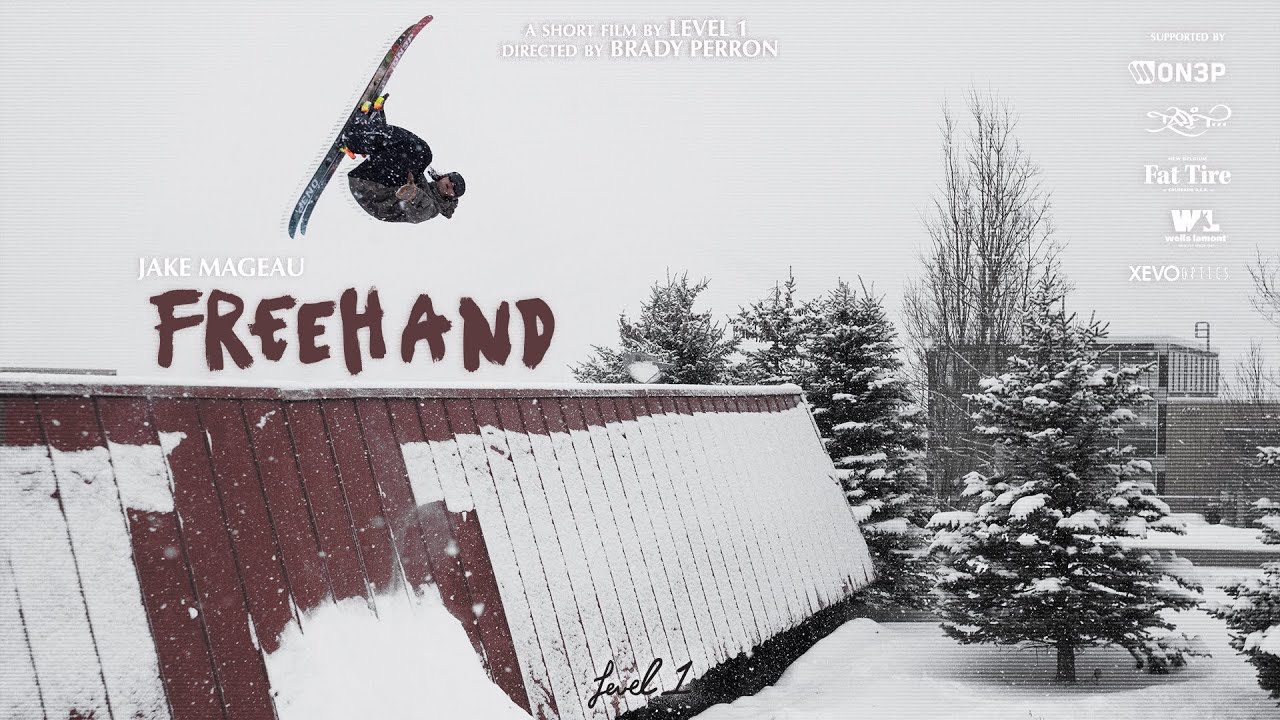
Xevo's athlete roster gives the company a particularly strong connection to modern street and freestyle skiing. Jake Mageau appears on the official Xevo team and represents a style built around street features, park transitions and unusual terrain interpretation. Xevo's own athlete profile highlights his Real Ski Fan Favorite recognition and his background in halfpipe before his skiing became increasingly focused on creative street, powder and park projects.
Magnus Graner provides another important link. Xevo identifies the Swedish skier through his X Games Real Ski gold and his connection with The Bunch. Graner's approach to skiing is heavily associated with street creativity, unconventional movement and film projects rather than a traditional race pathway. Xevo has even offered a Magnetix 2 Purple Root configuration designed by Graner and Mageau, making their involvement visible inside a current product rather than only on an athlete page.
Mission Ridge home testing extends across the western mountain map
Xevo calls Mission Ridge in Washington its home hill, but its published testing network is substantially broader. The company specifically thanks users at resorts across Washington, Oregon, Idaho, Wyoming and Montana for helping evaluate its optics. That range is useful because snow goggles encounter very different visibility problems across the western United States. Pacific storms can produce wet snow, fog and rapidly changing contrast, while high alpine sun creates an entirely different demand for tint and glare control.
Jackson Hole appears among the mountains where Xevo says skiers contributed testing feedback. Its combination of exposed alpine terrain, storms, trees and rapidly changing visibility is a useful example of why multiple lens approaches exist in the Xevo range. The same logic applies at Mt. Baker, where deep Pacific Northwest storms can make low-light definition more important than maximum sun protection. Xevo's product catalog reflects that environmental variety through clear, yellow, rose, polarized mirror and photochromic options.
Polycarbonate optics interchangeable straps and a lifetime guarantee
Current Xevo goggles rely heavily on polycarbonate lenses. Depending on the specific model, the company combines that material with polarization, anti-fog treatment, anti-water-spotting coatings and magnetic or conventional interchangeable systems. Xevo also makes customization a prominent part of the range. Straps are designed to be interchangeable across multiple goggle models, letting users change fit and appearance without replacing the complete frame and lens system.
Fit considerations extend beyond appearance. Current XR7, Magnetix 2 and B2 listings include options designed to work over prescription glasses, while several models use dual strap adjustment and silicone grip for helmet use. Xevo also sells prescription inserts for compatible goggles. These details make the range relevant to skiers who need corrective vision and would otherwise have to choose between glasses and conventional snow goggles.
The company currently advertises an industry-leading lifetime guarantee and presents its return approach as deliberately straightforward. That warranty positioning is a significant part of Xevo's identity, although customers should always consult the current terms before assuming that every form of damage or wear is covered.
Choose a Xevo lens around light before choosing the frame color
The most useful way to select a Xevo setup is to begin with visibility conditions. Riders who regularly move between bright sun and storms may find the XR7 Magnetix system attractive because it allows rapid manual switching between dark and low-light lenses. Magnetix 2 provides the same general magnetic convenience with a spherical lens design and polarized bright-light options. A skier who prefers automatic adaptation can instead look toward a photochromic B2 configuration.
Dedicated lenses remain useful when the expected weather is clear. The XR2 Yellow Blue and XR7 Yellow Blue options are specifically intended for low and flat light, while Xevo's polarized mirror options target brighter conditions. Clear lenses serve night skiing and very low-light situations. VLT figures should be checked on the exact lens being purchased because they vary substantially between colors and technologies.
The current Xevo goggle collection therefore rewards building the system around actual skiing conditions rather than selecting only by frame appearance. For many users, the most important decision is the lens combination carried for the day.
Why a small Washington optics brand has credibility in freeskiing
Xevo Optics remains much smaller than the multinational eyewear companies that dominate ski shops, but its position inside freeskiing is more substantial than its scale suggests. The company was created by experienced skiers, developed around extensive mountain testing and maintains a roster that includes recognizable riders from street and creative freeski culture. Jake Mageau and Magnus Graner in particular connect the optics directly with a generation of skiing built around films, urban features and unconventional movement.
The product range also has enough depth to support that identity. Magnetic cylindrical and spherical goggles, polarized lenses, dedicated flat-light options, photochromic technology, prescription compatibility and interchangeable straps address real optical choices rather than simply offering different graphics on one frame. Xevo's strongest argument is therefore not that it is the largest eyewear company. It is that a focused Washington brand has built a complete snow-optics range around feedback from skiers and mountain professionals who regularly encounter the visibility problems those products are intended to solve.