J Skis
United States
American independent ski brand | Founded 2013 by Jason Levinthal after Line Skis and Full Tilt | Known for: limited edition graphics, direct to skier sales, The Masterblaster, The Hotshot, The Allplay, The Vacation and The Slacker | Focus: playful all mountain freeride skis, artist collaborations, durable North American construction and a direct relationship between founder and riders
Jason Levinthal after Line and the 2013 reset
J Skis is one of the clearest founder driven brands in modern freeskiing. The company was created by Jason Levinthal, the skier and designer widely associated with the twin tip revolution through Line Skis in the 1990s. His own timeline describes building a twin tip ski in 1995, launching Line in 1996, receiving a twin tip ski design patent in 1997, selling Line to K2 Sports in 2006, launching Full Tilt while working under K2, then leaving in 2013 to start a new ski company under his own nickname, J.
That history matters because J Skis is not a generic independent label built around graphics alone. It comes from a designer who had already helped change what skiers expected a ski could do in the park, on rails, switch and across the whole mountain. J Skis became his answer to a different problem: how to build skis outside the slow, traditional, retailer heavy model of the larger ski industry. Instead of huge seasonal catalogs and anonymous product cycles, the brand leans into small batches, direct online sales, customer conversation and graphics that disappear once they sell out.
Masterblaster, Hotshot, Allplay and the limited edition shelf
J Skis organizes its ski line by personality rather than by cold technical codes. The Charge Collection is the more directional and powerful side of the brand, with The Fastforward, The Masterblaster and The Hotshot. The Fastforward is the narrower option for skiers who spend more time on groomers. The Masterblaster sits in the middle as a firm snow and all mountain charger with more soft snow range. The Hotshot widens the platform for skiers who want more float while still staying in the aggressive all mountain freeride lane.
The Play Collection covers the freestyle and creative all mountain side, with skis such as The Joyride, The Allplay and The Vacation. Those models speak to riders who treat side hits, park laps, switch skiing, butters and natural transitions as part of a normal ski day. The Explore Collection moves toward lighter, softer snow and backcountry minded shapes, including The Flight, The Escalator, The Slacker and The Best Friend. The Slacker, for example, is listed at 136 110 128 mm and described by J Skis as a mid width Explore ski that is light for touring and flotation in deep powder while still holding its own after a storm.
Playful shapes that still need to survive bad snow
The J Skis ride identity is built around making skis feel fun before they feel intimidating. That does not mean soft or weak. It means the sweet spot is deliberately generous, the shapes are meant to be easy to release, and the skis are designed for riders who want to slash, carve, press, jump, land and improvise rather than only lock into one style. This is where Jason Levinthal’s background matters. J Skis carries the DNA of modern twin tip skiing, but the line has grown well beyond park skis.
Charge models suit skiers who want stability, edge hold and confidence through chopped snow. Play models suit skiers who turn every mountain into a terrain park, whether that means rails, side hits or spring slush laps. Explore models make sense for powder, touring and off piste skiing, especially for riders who still want personality on the descent. The strongest through line is that J Skis does not want the ski to punish the skier. Even the stronger models are intended to feel accessible enough for normal skiers while still giving advanced riders enough backbone to push.
Giray Dadali, artist collabs and a team built around the customer
J Skis does not present itself like a traditional race or Olympic team brand. Its team language is closer to a community model. The brand famously says that if you have J skis on your feet, you are on the team. That fits the company’s direct tone: Jason Levinthal appears personally in the brand story, signs and numbers limited edition skis, and presents the buying experience as a conversation between skier and maker rather than a transaction through a shop wall.
The athlete and creator layer still matters. J Skis has been connected with freeskiers, artists, photographers and collaborators through limited graphics and specific model projects. The Friend, developed with Giray Dadali, became one of the brand’s clearest powder and freeride references. Other limited runs have involved artists and partner organizations, turning topsheets into collector pieces as much as product graphics. That approach gives the brand cultural presence without needing the same team structure as a large international ski company. J Skis often feels more like a rolling collaboration platform than a conventional sponsor roster.
Burlington headquarters and the East Coast reality check
J Skis is tied to Burlington, Vermont, where the brand operates its Intergalactic Headquarters at 247 Main Street. The space is more than a normal retail shop. J describes it as the home of Ski The East and J Skis, part ski shop, part après bar and part shrine to ski and snowboard culture. Visitors can see the full line in person, talk with ski equipment staff, demo skis, handle binding mounts and join events in a space designed to feel like a base lodge after a ski day.
That East Coast identity gives J Skis a useful reality check. A Vermont ski brand cannot survive on powder fantasy alone. Eastern conditions can mean ice, refrozen groomers, tight trees, chopped snow, spring slush and park laps in the same season. A ski that works there needs edge grip, durability and fun at human speeds. At the same time, the brand’s customers ride far beyond Vermont: Utah storms, British Columbia trips, Colorado resort laps, Quebec street sessions and backcountry tours. The geography behind J Skis is therefore both local and portable. It begins in Burlington, but the models are built for skiers who travel between hardpack, park, powder and mixed snow.
Maple cores, carbon laminates and North American build language
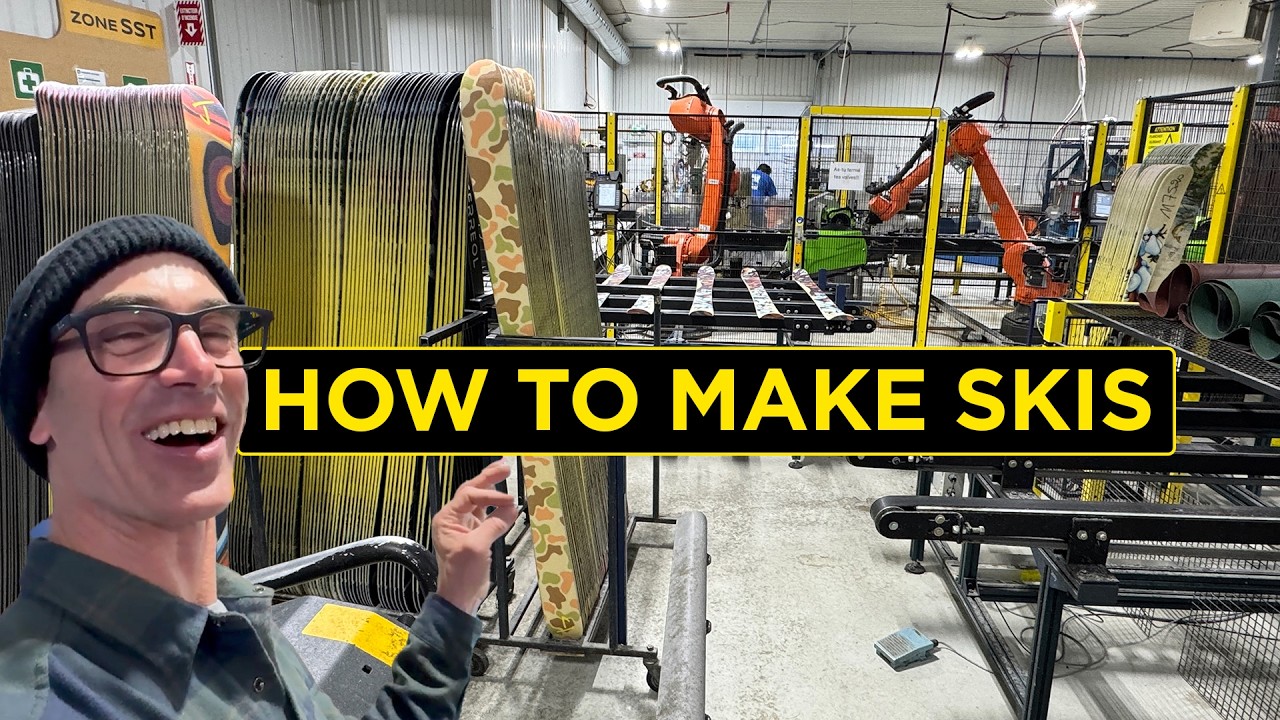
Construction is a major part of the J Skis pitch. The brand says its skis are made in North America and describes a factory connection in Quebec. Its construction page lists pre cured and pre stretched carbon fiber laminates, maple wood cores, aspen in the tips to reduce swing weight, full height UHMW polyethylene sidewalls, thick hardened steel edges, sintered UHMW polyethylene bases, perimeter rubber laminates, quasi isotropic fiberglass and Titanal metal laminate where the model calls for extra power.
The material story fits the brand’s personality. Maple gives energy, damping and binding screw retention. Aspen helps reduce weight near the tips. Carbon adds pop without making the ski feel dead. Full sidewalls and thick edges support durability for rocks, rails and repeated tuning. Rubber laminate helps reduce vibration and delamination risk. This is not an ultra minimalist touring brand and not a race room company. J Skis sits in the middle: strong enough for real resort abuse, lively enough for tricks and playful skiing, and built with enough premium materials to support the brand’s two year warranty and 5 day on snow guarantee.
Choosing between Charge, Play and Explore
The easiest way to choose J Skis is to decide how you want the mountain to feel. Skiers who want power, precision and all mountain freeride confidence should start with Charge. The Fastforward makes sense for skiers who stay more on groomers but still want freeride energy. The Masterblaster is the everyday hardpack to mixed snow choice for aggressive all mountain riders. The Hotshot is wider and more float focused for skiers who want to charge soft snow, chop and steep terrain.
Skiers who want a creative, freestyle based ski should start with Play. The Allplay is the most natural starting point for park and all mountain freestyle riders who want one ski to carve, jump and ski switch. The Vacation pushes toward a more surfy and relaxed feel for riders who like butters, side hits and soft snow play. Explore is the right family for skiers who want lighter, powder oriented and touring compatible shapes. The Flight and Escalator sit closer to everyday and uphill versatility, while The Slacker and The Best Friend go deeper into powder, float and freeride personality. Across all of them, the limited edition model matters: if a graphic sells out, that exact version is gone.
Why riders care about a ski that feels personal
J Skis matters because it makes the ski feel personal again. In a large retail environment, many skis can blur into waist widths, flex numbers and marketing categories. J Skis turns the buying process into something closer to choosing a piece of functional art. Each limited graphic run is numbered. Many are linked to artists or causes. The founder is visible. The brand voice is informal, sometimes ridiculous, and clearly skier first. That does not replace performance, but it changes how the product feels before it ever touches snow.
For riders, the appeal is the mix: a serious ski under a playful surface. The materials are real, the construction is durable, the model families are easy to understand and the purchase experience is backed by a five day on snow guarantee and a two year warranty. J Skis is not the biggest ski brand in the world, and it does not need to be. Its influence comes from proving that an independent ski company can stay close to its customers, move fast, collaborate with artists, build in small batches and still make skis that riders trust from park laps to powder days. That direct, human and slightly chaotic energy is exactly why J Skis has become one of the most recognizable independent names in modern freeskiing.