Carson Sharp
Vancouver, British Columbia, Canada | Active: 2020-present public film record | Focus: park skiing, backcountry freestyle, ski filmmaking, creative edits | Current: Sharp Studios / VVX filmmaker and OS Crew video appearance
British Columbia Snow With A Camera In The Pack
The British Columbia slope sat quiet under soft winter light, the kind of backcountry snow that looks clean until the first turn exposes crust, wind skin, or a hidden compression. Carson Sharp moved into the line with two jobs at once: ski it well enough for the clip, and understand how the shot would cut later. That double role defines his profile. Sharp is not a World Cup points story or a major contest athlete. His public identity is built through ski films, production credits, backcountry experiments, park edits, and a visual style that treats skiing as something constructed through riding, camera placement, editing, sound, and concept.
Vancouver Local With Park And Backcountry Range
Daymaker Touring describes Sharp as a Vancouver local making waves with a unique park and backcountry style. That is the cleanest short description available from a brand source, and it fits the public record. His projects do not sit in one category. Some are park-heavy, built around rails, jumps, spring sessions, and crew energy. Others move into British Columbia backcountry, where powder turns, natural takeoffs, touring access, and filming logistics matter more than a resort lap. The profile should therefore be read as hybrid: a skier who carries park movement into backcountry terrain, while also carrying a filmmaker’s eye into the way the skiing is presented.
Northont Before The Bigger Idea
iF3 lists Northont - The Movie from 2020 and Testing from 2021 in Sharp’s filmography under the Vertical Vision project page. Those early credits matter because they show that Vertical Vision did not appear from nowhere. Sharp was already making ski videos before the festival recognition arrived, using small crews and online platforms to shape a production identity. The available public descriptions do not give enough detail to over-explain those early films, but they establish a timeline: Sharp was already working as a skier-filmmaker before his name reached iF3 award lists.
Vertical Vision And The SSX-On-Tour Concept
Vertical Vision is the central anchor in Sharp’s profile. iF3 lists the film as a Canadian Sharp Studios production directed by Carson Sharp, inspired by the 2004 video game SSX On Tour. The stated idea was to make a ski production that felt like a video game, using a DIY and experimental early-2000s music-culture mood. That concept matters because it separates the film from a standard season edit. Sharp was not only collecting clips. He was building a visual frame around skiing: game-like energy, nostalgia, editing choices, art direction, and a crew presentation meant to feel intentionally different from conventional ski-film realism.
Sharp Studios With The Canadian Crew
The Vertical Vision athlete list gives the project its crew shape: Ryland Grimm, Nick Suchy, Cole Isfan, Jon Chartrand, Carson Sharp, Tyler Ritchie, Aidan Pruett, Ross Fedyna, and Jordan Kussman. That group places the film inside a Canadian creative scene rather than a solo vanity project. Sharp appears both as director and skier, which is important for understanding his role. Some athletes are only in front of the lens. Some filmmakers stay behind it. Sharp’s public identity sits between the two. He can shape the concept, appear in the footage, and then remain responsible for how the finished piece feels to viewers.
Whistler Award Night And Amateur Skier Of The Year
The 2022 iF3 Whistler Movie Awards gave Vertical Vision its strongest public validation. Newschoolers listed Carson Sharp in Sharp Studios’ Vertical Vision as the winner of Amateur Skier of the Year. SBC Skier reported the same result, noting that the award went to Sharp for his segment in the film. That award is the reason a 3/5 importance rating fits better than a basic emerging score. It is not an X Games medal or a World Cup podium, but it is recognized ski-film validation from a festival context. For a skier-filmmaker, that kind of award carries more relevance than a small contest result would.
Snowvana And The DIY Film Lane
Vertical Vision also appeared in the Snowvana Amateur Film Competition, where Unofficial Networks reported it as runner-up. The description included Sharp’s explanation that SSX On Tour had shaped his introduction to extreme sports and that the film was an attempt to influence creativity in ski-film production. That quote gives the project its clearest motivation. Sharp was not trying to make the most polished mainstream movie possible. He was trying to recover a feeling from games, youth media, music culture, and early internet ski aesthetics, then rebuild it through modern Canadian skiing.
Switch In The British Columbia Backcountry
Switch - A Backcountry Ski Vision shows a more mature backcountry direction. Newschoolers lists the film as a TREW Gear and Carson Sharp project filmed in British Columbia, presented by TREW Gear and supported by Black Crows Skis, Daymaker Touring, XSPEX Optics, and Phaenom Footwear. The credits name Carson Sharp as the filmmaker, with cinematography by Tyler Correll, Aaron McCartney, Edward Clem, and Ben Sandford. That matters because it moves his profile from park-concept video into backcountry storytelling. British Columbia terrain changes the task: touring access, snow safety, weather, longer camera days, and lines where the skier cannot simply lap the feature until it works.
Liminal And The Hokkaido Question
Sharp’s VVX page also lists Liminal, a short ski film set in Hokkaido, Japan. The description says the film explores the tension between the commercialized ski industry and authentic ski culture. Sharp is credited as co-director with Kye Matlock, while also handling shot and edit duties. That project expands his role from athlete-filmmaker into ski-culture commentary. Hokkaido powder has become one of skiing’s most photographed and marketed landscapes. A film about commercial pressure and authenticity in that setting gives Sharp a more reflective lane than a standard Japan powder edit.
Lot Lizards 2 And Hood Spring Texture
Lot Lizards 2, published through VVX in 2025, brings the profile back to spring park and crew energy. The Newschoolers listing places the footage at Hood in spring 2024 and credits Sharp as shot and editor. The skiing list includes Phil Gaucher, Chris Boyer, Jack Patti, Leif Bertleson, Alex Dube, Nick Van G, Carson Sharp, Justin Tarsoff, and Stephen Siska. Mt. Hood spring sessions carry a specific texture: soft snow, parking-lot culture, glacier laps, rails that get slower through the day, and jumps that change as the sun works the takeoffs. Sharp’s role as editor matters again because that environment depends on rhythm as much as trick difficulty.
VORTEX With OS Crew
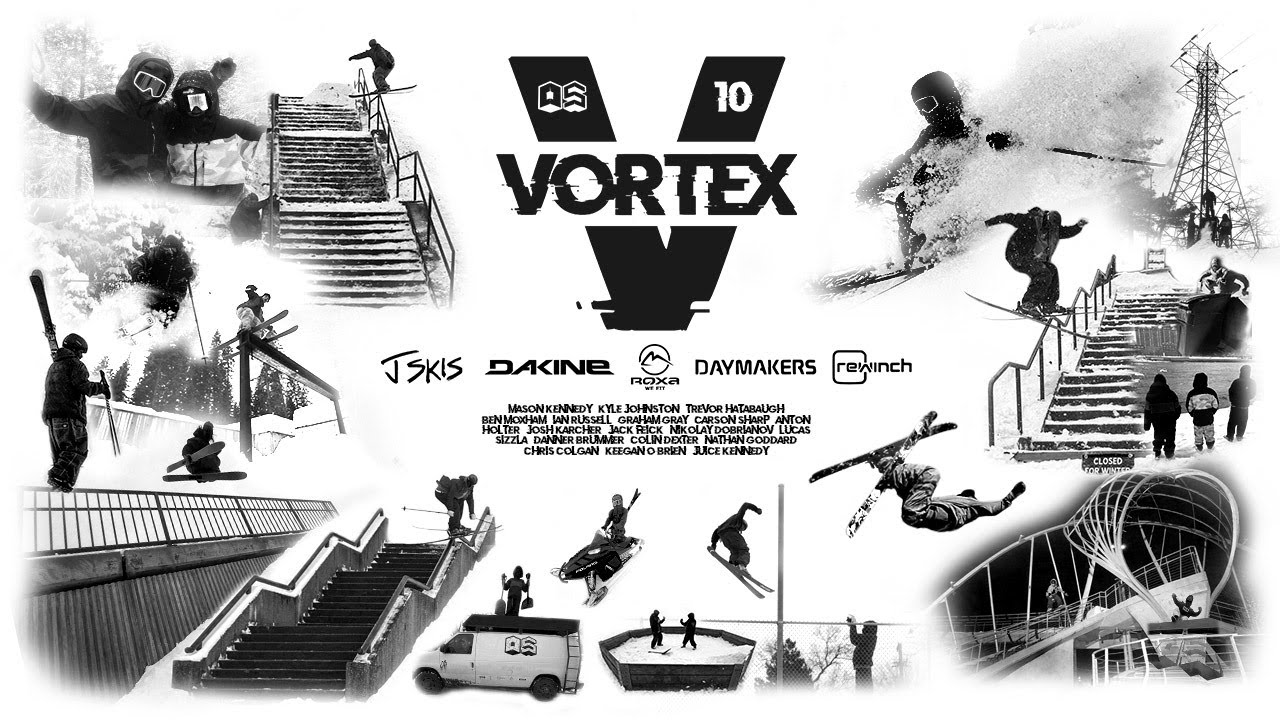
VORTEX connects Sharp to a broader American crew-film network. Newschoolers lists him in OS Crew’s tenth annual movie alongside Mason Kennedy, Kyle Johnston, Trevor Hattabaugh, Ben Moxham, Ian Russell, Graham Gray, Anton Holter, Josh Karcher, Jack Feick, Nikolay Dobrianov, Lucas Sizzla, Danner Brummer, Colin Dexter, Nathan Goddard, Chris Colgan, Keegan O’Brien, and Juice Kennedy. The film is described as street, powder, spring builds, and a private park shoot. That format fits Sharp because it does not force a single label. His skill set can sit beside street skiers, powder riders, and park builders in the same project.
How Sharp Builds A Clip
The technical reading of Sharp’s skiing should stay grounded in the available evidence. The sources support park and backcountry range, not a published list of signature tricks. His public environment points toward rail control, side-hit takeoffs, powder turns, natural jumps, spring park transitions, backcountry landings, and a strong awareness of how skiing reads on camera. The defining trait is not one trick name. It is the relationship between skiing and production. Sharp seems to treat the clip as a complete object: approach, framing, snow texture, movement, edit rhythm, and the feeling left after the shot cuts.
The Rating Comes From Film Recognition
Sharp earns a 3/5 importance rating because his record has meaningful film-culture markers: Vertical Vision, iF3 Amateur Skier of the Year, Snowvana runner-up recognition, Switch with TREW Gear, VVX projects, Liminal, Lot Lizards 2, and VORTEX with OS Crew. A 4/5 would overstate the public résumé because there is no verified X Games medal, Olympic start, World Cup podium, or major long-form professional film part at that level. His value is more specific: Carson Sharp is a Canadian skier-filmmaker using park, backcountry, nostalgia, editing, and crew projects to make ski media feel more personal than standardized.