Trevor Hattabaugh
Boise, Idaho / Whitefish, Montana | Active Public Record: 2012-present | Known for: halfpipe, AFP rankings, Park City coaching, ACTIVATE, The Slop, OS Crew VORTEX | Current: film-first all-mountain and crew-based ski profile
Mammoth When The Pipe Went Quiet
The Mammoth halfpipe sat bright under California sun, its walls hard and clean, with the kind of blue-shadowed transition that punishes late movements. Trevor Hattabaugh had reached the World Cup edge of his halfpipe career when the knee injury came, cutting across a path that had started on Idaho snow and moved toward the contest circuit.
That injury is the hinge in his public story. Hattabaugh is not a long-term World Cup finalist, X Games medalist or Olympic athlete. His profile is more unusual: a Boise skier who built a real halfpipe résumé, coached after injury, moved away from formal competition, and later reappeared through powder, park and OS Crew film projects.
Bogus Basin Before The Sun Valley Fridays
Crosson’s athlete profile gives Hattabaugh’s clearest origin story. He grew up in Boise, Idaho, and learned to ski at Bogus Basin. When Bogus dropped its freestyle program, he joined the Sun Valley ski team and skipped Fridays in high school to make the trip. That detail says a lot about the commitment behind his early career.
He competed in moguls, aerials and slopestyle, but halfpipe became the discipline where his skiing made the strongest public mark. Idaho gave him the first base, but Sun Valley gave him a stronger freestyle structure. From there, the path led toward Salt Lake City, Park City, Mammoth, Aspen and the wider North American halfpipe circuit.
Sun Valley And Aspen On The FIS Sheet
FIS gives Hattabaugh two useful official competition markers. In March 2013, he finished 4th in a men’s halfpipe event at Sun Valley with 81.6 points. The field included Broby Leeds, Colby Stevenson, Evan Schwartz, Garett Northey, Jake Mageau, Hunter Hess and other North American pipe and park skiers.
In January 2014, he finished 11th in the Aspen Nor-Am Cup halfpipe. That event was won by Alex Ferreira, with Brian Kish, Kyle Smaine, Walter Wood, Broby Leeds, Brendan Mackay, Taylor Seaton, Wing Tai Barrymore and Birk Irving also ahead of him. The result places Hattabaugh inside a strong halfpipe generation, even if he did not become one of its household names.
The AFP Window And The Mammoth Break
Crosson lists Hattabaugh’s peak halfpipe markers as 20th in the world AFP rankings for men’s halfpipe and 10th in the United States AFP rankings. The same profile says he was invited onto the World Cup circuit after moving to Salt Lake City for college, then injured his knee at the Mammoth Grand Prix.
That context matters because it explains why the official record feels shorter than the trajectory suggests. A skier can reach the edge of the next level without leaving behind a long championship archive. For Hattabaugh, the public record points to a real halfpipe climb, then a reset forced by injury before a full World Cup career could take shape.
Park City Coaching After The Injury
After the Mammoth injury, Hattabaugh chose freeskiing over the competition chase and became a halfpipe coach for Park City Ski & Snowboard. Crosson says he spent four years skiing the Wasatch range, then retired from coaching and graduated from the University of Utah.
That coaching chapter gives the profile a second function. Hattabaugh did not simply disappear after competition. He stayed close to halfpipe progression, teaching younger skiers how to manage transition, amplitude, takeoff timing, landings and the mental pressure of pipe skiing. The Wasatch years also helped move his identity away from score sheets and toward a broader mountain life.
ACTIVATE And The OnSlaught Crew Route
ACTIVATE, the 2018 OnSlaught Crew film, gives Hattabaugh one of his clearest film credits. Newschoolers lists him in the rider roster with Kincade Pavich, Tyler Mullin, Jay Stafford, Logan Moyer, Topher Newit, Charlie Scott, Charles Gandolfo, Will Steller, Brett Fisher, Graham Gray, Jess Limeburner, Justin Kennedy and Mason Kennedy.
That project moved him into a different freeski language. OnSlaught films are not halfpipe result sheets. They are crew records: park, street, powder, road trips, friends filming friends and riders turning a season into a shared archive. Hattabaugh’s presence there shows how his skiing found another outlet after the competitive halfpipe years.
Whitefish, Glacier And The Slop
The Slop, published in 2020, gives Hattabaugh a Montana-era reference. The Newschoolers listing credits riders Forest Rubin Harmon, Jack Poole, Nate Bush, Trevor Hattabaugh, Taven Edland, Keenan Prochazka and Stephan Keimach. The shout-out names Crosson Skis, Whitefish Montana and Glacier National Park.
That setting fits the post-coaching direction described by Crosson, where Hattabaugh planned to move toward Whitefish to pursue powder and make a ski movie. Whitefish changes the frame from halfpipe walls to softer snow, tree lines, park laps and mountain-town filming. His profile becomes less specialized, more all-mountain and more dependent on crew energy.
VORTEX And The OS Crew Continuity
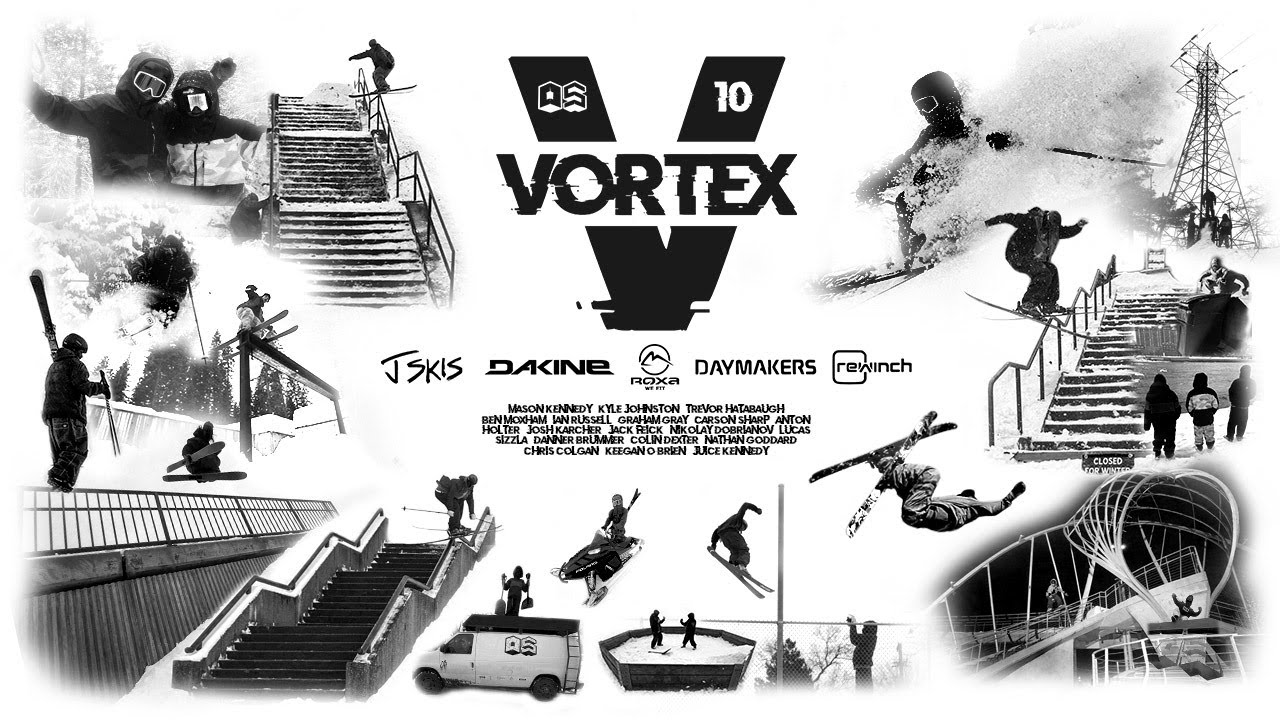
VORTEX keeps Hattabaugh’s public archive current. Newschoolers lists the 2025 OS Crew full film as the group’s 10th annual movie, mixing street, powder, spring builds and a private park shoot. Hattabaugh appears in the rider list with Mason Kennedy, Kyle Johnston, Ben Moxham, Ian Russell, Graham Gray, Anton Holter, Josh Karcher, Jack Feick, Nikolay Dobrianov, Lucas Sizzla, Danner Brummer, Colin Dexter, Nathan Goddard, Chris Colgan, Keegan O’Brien and Juice Kennedy.
Downdays described VORTEX as an OS Crew project with street spots, backcountry hits and a slushy private park shoot. That range suits Hattabaugh’s later profile. He is no longer framed only as a halfpipe skier. He appears as part of a crew whose skiing moves from rails to powder to spring terrain.
How Hattabaugh’s Skiing Should Be Read
The safest technical frame is halfpipe foundation turned all-mountain film skiing. His early record points to pipe skills: transition control, pop timing, amplitude, landings, air awareness and edge discipline on icy walls. His later clips point toward a broader toolkit: park laps, powder skiing, spring builds and crew-based filming.
That shift is useful for understanding his value. Hattabaugh is not a pure street skier, not a pure freerider and not a current contest specialist. He sits between those lanes. The halfpipe background gives him movement discipline, while the OS Crew projects show a skier more interested in terrain, friends and seasonal footage than in rebuilding a ranking profile.
Where Trevor Hattabaugh Fits Now
Trevor Hattabaugh’s profile is strongest when framed as a former American halfpipe skier who moved into coaching and film-first skiing. The verified trail runs through Bogus Basin, Sun Valley, Salt Lake City, Park City coaching, Mammoth, FIS halfpipe results, Crosson Skis, ACTIVATE, The Slop and VORTEX.
For skipowd.tv, the angle is not elite contest fame. It is transition: a skier who reached a serious halfpipe level, lost momentum through injury, stayed in the sport as a coach, then resurfaced through Montana snow and OS Crew films. His archive connects Idaho freestyle roots, Wasatch halfpipe culture and the independent ski-movie world that kept his name moving after competition.