donahoSTUDIO
StudioSwitzerland
Swiss ski film studio | Known for: Birds Brigade, Glacier Days and experimental freeski cinematography | Focus: creative park skiing, collaborative filmmaking and visual techniques that push ski edits beyond conventional action footage.
From Swiss park films to a recognizable creative identity
Donaho Studio appears in the European freeski film archive as a Swiss production project closely connected to creative park skiing. Public festival records document the studio by 2017, when Birds Brigade was screened at the High Five Festival in France. Rather than building its reputation through traditional big-mountain documentaries or competition recaps, Donaho developed around playful skiing, handmade visual ideas and a style in which editing and animation could become as important as the trick itself. The public record does not provide enough reliable information to assign a precise founding date or corporate history, so the clearest way to understand Donaho Studio is through the films that established its name.
Birds Brigade turns freestyle skiing into a visual experiment
Birds Brigade is one of the earliest well-documented Donaho Studio projects. The 2017 film appeared in the High Five Festival program as a 30-minute Swiss production. Contemporary coverage described the project as heavily self-made, combining skiing with animation, stunts and original creative work. The film is also important because techniques developed there became part of Sämi Ortlieb's later filmmaking language. Ortlieb has explained that Birds Brigade was where he began experimenting with the idea of animating snow itself, moving beyond conventional overlays and toward manipulating the physical ski environment frame by frame.
Glacier Days grows from a webseries into a Zermatt film
The studio's most visible project became Glacier Days. By 2018, the series had already existed for three years before Donaho Studio changed format and produced Glacier Days - Zermatt Summer Snowpark Movie. The 20-minute film was built around summer park skiing at Zermatt and was selected for major ski-film programs including High Five and iF3. The official iF3 program described the goal as creating a ski film centered on creativity, new tricks and inventive cinematography rather than simply documenting a sequence of summer park laps.
Snowpark Zermatt becomes both set and creative playground
The setting is essential to the Glacier Days identity. Snowpark Zermatt provides high-altitude summer skiing, rails, jumps and glacier terrain at a time when most Northern Hemisphere parks are closed. That made it possible for the crew to repeat features, rebuild lines and treat the snowpark almost like a physical film set. Freeskier coverage of Glacier Days later highlighted a broad group of riders passing through the project, with Sämi Ortlieb, Will Wesson, Marcel Brünischloz and Erik Olson among the recurring names and appearances from skiers including Kai Mahler, Antti Ollila and Fabian Bösch. The result feels less like a conventional team movie and more like a rotating creative session built around whoever was skiing the glacier.
Sämi Ortlieb connects skiing animation and filmmaking
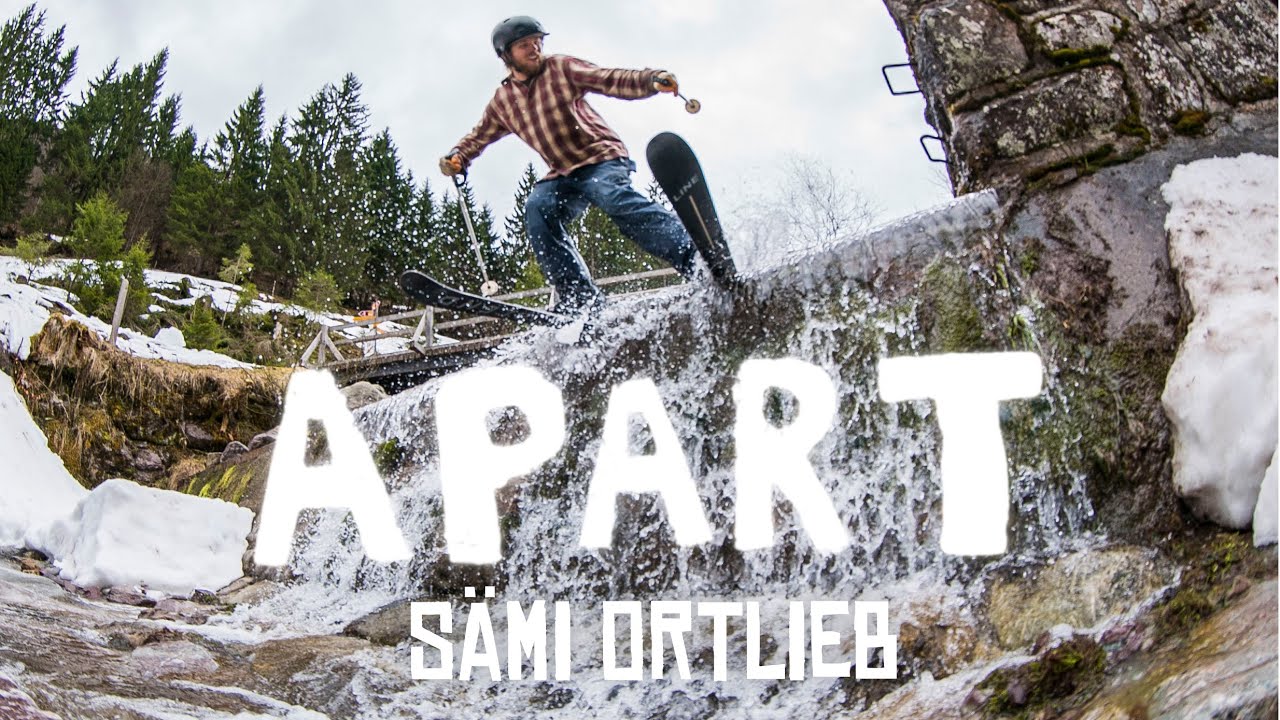
Sämi Ortlieb is one of the clearest creative figures associated with Donaho Studio's documented work. His approach combines skiing with drawing, animation, music and filmmaking, and the projects around Donaho reflect that overlap. Birds Brigade introduced experiments with animated snow, while later work pushed those techniques toward more complex interaction between skier and landscape. That visual curiosity distinguishes the studio from production companies whose identity rests primarily on camera equipment, helicopter footage or destination scale. In Donaho's strongest work, the mountain is not only recorded by the camera; it can become part of the animation itself.
Maneuvers pushes the landscape animation idea further
The later short film Maneuvers shows how that creative direction evolved. The project was directed by Sämi Ortlieb and produced by Ortlieb, Donaho Studio and Level 1. Instead of treating stop-motion as decoration added after the skiing was filmed, the production transformed snow, branches and natural terrain into moving parts of the scene. Level 1 describes the film as an experimental animation in which natural materials become an evolving playground around the skier. That continuation is important because it connects Donaho Studio's earlier experiments with a larger international freeski production environment without losing the handmade feel that made the original work distinctive.
Festival screenings gave a small studio visibility beyond Switzerland
Donaho Studio's documented reach comes largely through ski-film festivals and editorial coverage rather than a large commercial production catalog. Birds Brigade appeared at High Five in 2017, while Glacier Days was programmed at High Five and iF3 in 2018. Glacier Days was also recognized during the iF3 awards cycle, where it appeared among the cinematography nominees. For a relatively small studio, those screenings mattered because they placed its park-focused work alongside much larger productions from established international companies. The recognition was based less on scale than on visual approach: ordinary summer park footage was being reframed through unusual editing, animation and feature building.
Why Donaho Studio still stands out in the freeski film archive
Donaho Studio occupies a niche but identifiable place in freeski media. Its public catalog is not broad enough to compare with long-running studios that release films every season, yet Birds Brigade and Glacier Days give it a clear creative signature. The connection with Sämi Ortlieb's experimental filmmaking, the use of Zermatt's summer snowpark as a recurring environment and the later production link with Level 1 through Maneuvers show a consistent interest in treating ski films as visual experiments rather than simple trick compilations.
That is what makes Donaho Studio relevant for riders and viewers interested in the creative side of freeskiing. The studio's strongest documented work comes from park culture, collaboration and a willingness to alter the landscape through filmmaking itself. Even with a relatively compact public archive, those projects are distinctive enough to give Donaho Studio a legitimate place among the smaller European production names that helped make freeski cinema stranger, more playful and more inventive.