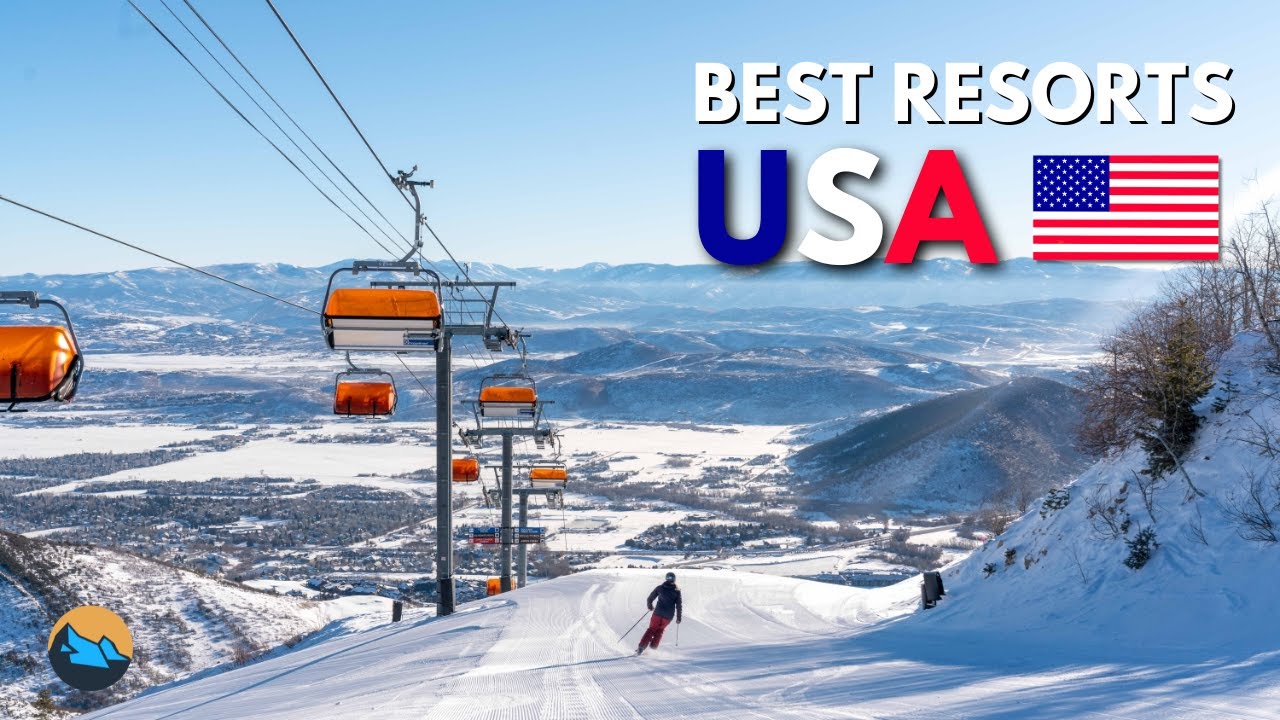
Vail
Rocky Mountains
United States
Overview and significance
Vail, Colorado centers on Vail Mountain, a destination whose identity is defined by immense scale and an in-bounds freeride playground that few mountains can match. The resort’s own mountain information lists 5,317 acres, 32 lifts, a high point of 11,570 feet, and an average of 354 inches of annual snowfall, with the four-mile Riva Ridge as the signature long run noted on its statistics pages. Vail also promotes itself as one of the largest ski resorts in the world and among the biggest single-mountain venues in North America, a claim that aligns with what visitors feel on snow: sustained fall lines on the Front Side, seven “Legendary Back Bowls,” and the outlying Blue Sky Basin that rides like lift-served backcountry.
For freeskiers, Vail’s significance is twofold. First, the terrain canvas is unusually coherent for stacking laps and footage across bowls, glades, and groomers. Second, there is a credible park scene anchored at Golden Peak, plus a deep event heritage that includes years of the Burton U.S. Open in Vail up through 2019—an era that helped standardize modern course building and brought global attention to the valley. Add simple logistics once you’re in town and frequent grooming that keeps speed consistent, and Vail becomes a high-output choice for mixed crews who want both park mileage and big-mountain lines in one day.
Terrain, snow, and seasons
Vail’s terrain splits into three broad zones. The Front Side stacks groomers, bump lines, and treed gullies with fast connections back to Vail Village and Lionshead. Beyond the ridge, the Back Bowls sprawl across seven major bowls—Sun Up, Sun Down, Tea Cup, China, Siberia, Inner and Outer Mongolia—with thousands of acres of open faces, rollovers, and islands of trees that catch wind-drifted snow. Farther out, Blue Sky Basin brings a quieter feel with gladed pitches, short cliffy shots, and natural features arranged over an outer pod that still returns cleanly to the main network via marked routes and lifts (see the resort’s trail maps for the Front Side, Back Bowls, and Blue Sky linkages).
Surface quality is actively managed. The mountain’s average snowfall is cited at 354 inches on the Mountain Statistics page, and daily grooming keeps key traverses and park in-runs predictable. In storm cycles, wind can close high lifts and reshape entrances to cornices; on those days the Front Side trees and leeward bowl ribs often ride best while patrol works the alpine. Prime winter coverage typically extends from the heart of January through February, with March delivering longer days and forgiving landings for park progression. For day-of decisions, Vail publishes a live snow & weather report and terrain/lift status you should check before building lap plans.
Park infrastructure and events
Vail operates a compact, clearly defined program: the resort invites riders to “choose from two terrain parks,” led by the Golden Peak Terrain Park directly under the Riva Bahn Express. That lift creates short, repeatable cycles—Vail describes it as a roughly five-minute lap to the mid-station—so you can calibrate speed quickly across jump and rail lines that evolve with rebuilds. A second park provides a smaller-to-medium step for progression, and all zones follow the resort’s SMART Style / Park SMART guidance.
Event heritage is real even if the current calendar focuses more on community and regional programming. Vail hosted the Burton U.S. Open Snowboarding Championships for multiple years through 2019, with slopestyle and halfpipe builds in Golden Peak that set standards for feature shapes and speed control; Burton’s own event posts from that final Vail year remain a useful reference. Today, check Vail’s events calendar for park nights, banked slaloms, and visiting-team sessions that can temporarily reshape the daily flow.
Access, logistics, and on-mountain flow
Vail sits just off I-70 in Eagle County, about 100 miles west of Denver. Once you arrive, the Town of Vail’s free bus system runs year-round and links Lionshead, Vail Village, and the Golden Peak base, making car-free days straightforward. If you do drive, review the resort’s current getting here & parking details, as rates and protocols vary by season. Vail’s homepage also reiterates capacity management—“lift tickets will be limited”—so it pays to secure access in advance on vail.com.
Flow tips are simple. For park laps, stage at Golden Peak and use Riva Bahn to stack attempts with minimal downtime. On powder mornings with limited visibility, mine Front Side trees and the lower entries to Sun Up/Sun Down while the alpine is evaluated. As patrol drops ropes in the Back Bowls, work by aspect and wind: Tea Cup and China funnel speed across long, rolling pitches, while Mongolia offers more isolated panels that ski best one at a time with clear regroup points. On bluebird days, connect a bowls session to Blue Sky Basin for glades and natural hits, then finish with a fast Front Side top-to-bottom down Riva Ridge—Vail’s longest run as highlighted in the resort’s literature and trip-planning guides.
Local culture, safety, and etiquette
Vail blends international destination energy with a groom-and-go rhythm that keeps even busy days productive. In the parks, call your drop, clear landings quickly, and step up feature size deliberately under the Park SMART framework. In the bowls, ski consequential panels one at a time, regroup below blind rolls, and respect closures—rope lines often reflect ongoing control work or feature maintenance.
If you plan to travel beyond the boundary, treat it as a separate day. Vail’s safety pages outline designated exit points and a hotline for current information, while avalanche education and forecasts are centralized by the Colorado Avalanche Information Center. Winter drivers should also monitor CDOT’s COtrip for I-70 conditions and traction/chain requirements that can materialize quickly during storms through the high passes.
Best time to go and how to plan
Mid-January through late February typically brings the cold temps and storm cadence that preserve chalk on north-facing panels and keep park speed consistent. March is a favorite for many freeskiers thanks to longer days and more forgiving landings; on sunny windows, solar aspects corn up by midday while shaded bowls remain wintery. Book lift access early in holiday periods, use the town bus to skip parking friction, and build your lap plan each morning around the live lift/terrain status page. If your crew mixes park and freeride, dedicate a Golden Peak session when temperatures are firm and wind is light, then pivot to bowls as visibility improves. For regional inspiration and comparable venues, see our Colorado location hub on skipowd.tv.
Why freeskiers care
Vail unites repetition and range. Repetition comes from Golden Peak’s short cycles and reliable grooming that lets you measure attempts per hour, not per day. Range comes from the Back Bowls and Blue Sky Basin—terrain that remains filmable long after the first rope drop, with natural features, drifted landings, and multiple lines off each ridge. Layer on simple in-town transit, clear safety messaging, and an operations crew that keeps surfaces honest across changing weather, and you get an enduring destination where progression is the default outcome—not the exception.