Kitzbühel
Alps
Austria
Austrian Alps resort in Tyrol | Known for: 233 km KitzSki area, 58 lifts, Streif downhill, Hahnenkamm race, Hanglalm snowpark, ski routes, and historic town access | Season: winter operations from late autumn to spring depending on sector and snow | Best for: race heritage trips, fast piste mileage, park laps, Austrian resort travel, and skiers who want classic Alpine culture with freestyle options
Hahnenkamm Above A Seven Hundred Fifty Year Old Town
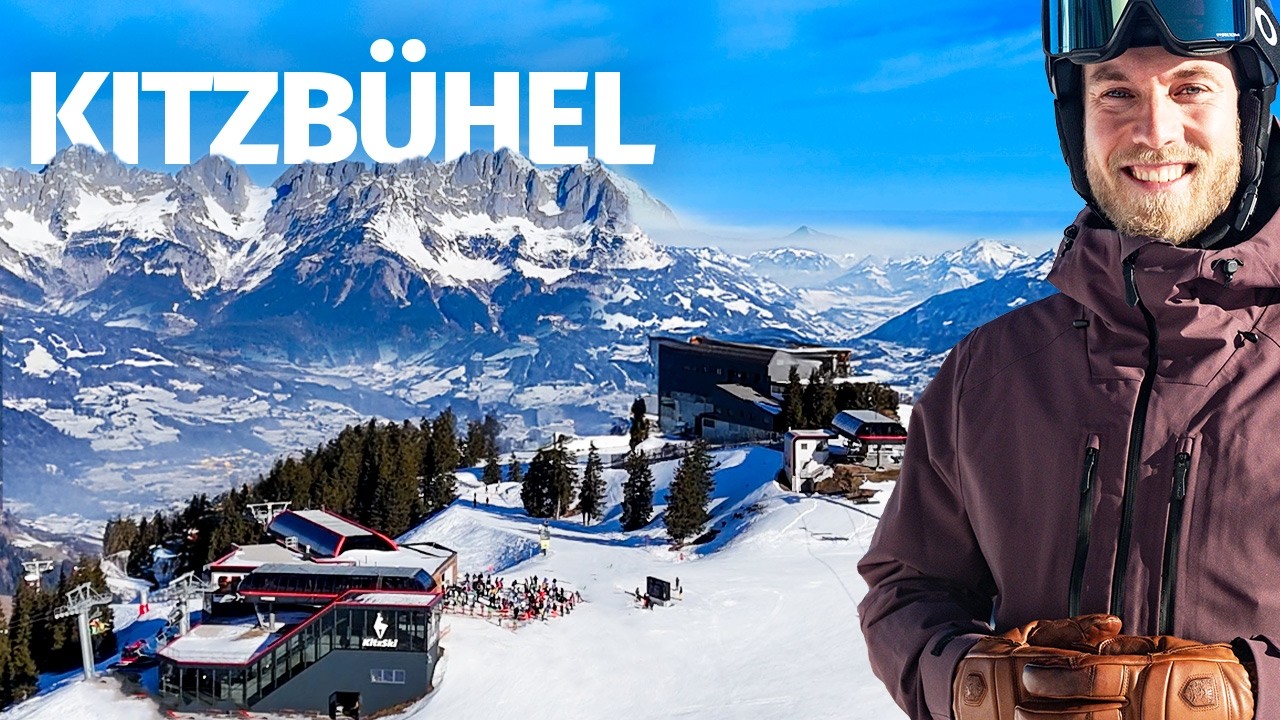
Kitzbühel begins at the edge of a medieval Tyrolean town, then climbs toward the Hahnenkamm, Kitzbüheler Horn, Pengelstein, Jochberg, Pass Thurn, Resterhöhe, Kirchberg, and Mittersill sectors. That town-to-mountain relationship is the first reason the resort carries more weight than a normal piste destination. The official tourism material frames KitzSki around 233 kilometers of skiing and 58 gondolas and lifts, with the slopes connected to a town that is older than most Alpine resort brands. For freeskiers, Kitzbühel is not a pure park laboratory or a glacier training base. It is a high-status Austrian ski system where race history, fast groomers, snowpark laps, ski routes, huts, and old Alpine resort culture overlap.
Two Hundred Thirty Three Kilometers Across Tyrol And Salzburg
The KitzSki area stretches beyond Kitzbühel alone. Regional tourism material places the Kitzbühel Kirchberg ski area between the Kitzbüheler Horn and the Hahnenkamm, at altitudes from about 800 to 2000 meters, with 233 kilometers of slopes and 41 kilometers of ski routes. The network links several villages across Tyrol and Salzburg, including Kitzbühel, Kirchberg, Aurach, Jochberg, Pass Thurn, Mittersill, Hollersbach, and Aschau in the Spertental. That geography gives the resort a long-travel character rather than one compact bowl. A skier can start near the town, cross through high rolling terrain, move into Jochberg, continue toward Resterhöhe, and finish the day far from the morning base if return timing is ignored.
Blue Cruisers Red Links And The Black Streif Shadow
The official Kitzbühel tourism FAQ breaks the marked terrain into 46 blue runs totaling 94 kilometers, 32 red runs totaling 67 kilometers, and 18 black runs totaling 20 kilometers. That distribution says a lot about the resort. Kitzbühel is famous for one of the hardest race descents in skiing, but the public ski area is not built only for experts. Strong intermediates get the most fluid version of the mountain: long red connectors, rolling blue pistes, lift-linked travel, and fast groomers that reward precise pressure rather than survival technique. The black terrain matters because of its history and steep sections, but the real KitzSki rhythm is movement. It is a place to cover distance, link sectors, and let the mountain’s race aura sit beside a surprisingly accessible piste map.
Streif Downhill And The Hahnenkamm Race Since Nineteen Thirty One
The Streif is the name that separates Kitzbühel from almost every other resort of similar altitude. The first Hahnenkamm Race took place in 1931, and the event has become one of alpine skiing’s defining annual stages. The downhill course is famous for sections such as the Mausefalle, Steilhang, Hausbergkante, and the final fall toward the town. Recreational skiers do not experience the Streif at race speed, and they should not use World Cup imagery as a personal challenge. Its value for skipowd.tv is cultural. The mountain has a permanent global race story, and that story shapes the way skiers read every steep roll, compression, side angle, and fall-line pitch around the Hahnenkamm.
Hanglalm And Thirty Seven Obstacles In Jochberg
The freestyle identity is strongest at KitzSki Snowpark Hanglalm in the Jochberg area. The official snowpark page describes a constantly varied setup for multiple levels, with 18 kickers, 7 rails, 10 boxes, 7 jibs, and 1 special. That is a real park inventory, not a token rail lane beside a family slope. The park is accessible via the G5 Hanglalm lift and is aimed especially at advanced and professional riders, while the wider Kitzbühel information also points to other playful zones in the ski area. For freeskiers, Hanglalm gives Kitzbühel a concrete park reason to appear on skipowd.tv beyond the Streif. A trip can include classic Austrian piste travel in the morning and freestyle repetition in Jochberg when the park is shaped and open.
Kitzbüheler Horn Family Park And Jufenbach Flow
Kitzbühel tourism describes three snowpark experiences across the ski area: the Kitzbühel Snow Park at Pass Thurn for ambitious riders, the Family Park at the Kitzbüheler Horn, and Jufenbeach Skill Park on the Hahnenkamm. That spread is important because Kitzbühel’s freestyle offer is not concentrated into one giant contest venue. It is distributed through different ability levels and mountain moods. The Kitzbüheler Horn side gives a more family-oriented and playful version of freestyle, while Jufenbeach focuses on technique, creativity, and flow near the Hahnenkamm environment. Kitzbühel should not be framed like Stubai Zoo, where early-season slopestyle training defines the whole venue. Its park system is part of a larger resort day, not the only reason to arrive.
Ski Routes And Freeride Without Arlberg Language
The KitzSki area includes ski routes and ungroomed-feeling options, but the freeride language should stay measured. Tirol’s official resort page mentions ski routes for freeride fans, modern lifts, snow parks, and the Streif, while regional KitzSki material places the ski routes around 41 kilometers. That gives advanced skiers terrain beyond groomed pistes, especially after storms or in soft spring snow. It does not turn Kitzbühel into Ski Arlberg. The Arlberg has a deeper freeride identity with extensive deep-snow terrain and a stronger off-piste tradition. Kitzbühel’s freeride value is more integrated into piste travel: side routes, short powder windows, wind-shaped bowls, and terrain that rewards timing rather than huge exposure.
Grass Mountains And Snowmaking Strategy
Kitzbühel’s altitude is moderate by Alpine standards, with the ski area topping out around 2000 meters, yet the resort is widely promoted as reliable from December into April. The explanation is partly terrain and partly infrastructure. The Kitzbühel Alps are smoother, grass-based mountains rather than high rocky glaciers, so less snow can make pistes skiable when preparation is strong. Snowmaking and grooming then protect the main routes through warm spells and busy holiday periods. This is a different snow strategy from Sölden or Kitzsteinhorn, where glacier altitude carries more of the seasonal story. Kitzbühel depends on efficient piste management, fast lift circulation, and careful route planning when low elevations soften.
Pengelstein Crossings And The Long Day Problem
The ski area’s size creates a classic Kitzbühel planning problem: it is easy to travel far without noticing how much return distance remains. Pengelstein, Jochberg, Pass Thurn, Resterhöhe, Kirchberg, and the Hahnenkamm side all connect into a map that rewards movement. That is ideal for film crews and travel-focused skiers because the terrain can change background, light, slope angle, and village context several times in one day. It also requires discipline. Late starts, long hut lunches, wind holds, and crowded connectors can make a full-area tour stressful. The smart strategy is to choose a theme: Streif and Hahnenkamm race context, Hanglalm park laps, Kitzbüheler Horn family flow, or a long KitzSki circuit. Trying to do everything casually often means missing the best snow window.
Town Luxury And Mountain Specificity
Kitzbühel’s lifestyle reputation is impossible to ignore, but it should not dominate a ski profile. The town has boutiques, restaurants, bars, hotels, historic streets, and a social atmosphere that can feel more polished than many Austrian resorts. That matters for trip planning because non-skiers and mixed groups have a strong base experience. For freeskiers, however, the mountain details still have to lead. The resort’s value is not only expensive hotels and race-week crowds. It is the combination of a real ski network, Hahnenkamm mythology, Hanglalm park structure, accessible practice lifts, long red and blue travel routes, and the ability to ski from a historic town into a huge lift system. The best Kitzbühel content should show both sides without letting lifestyle flatten the terrain.
Austria Links From Race Heritage To Park Culture
Kitzbühel sits inside a wider Austria freeski map. Stubai Zoo gives the country an early-season World Cup park signal. Sölden brings glacier summits, high-energy training, and Giggijoch-side park laps. Kitzsteinhorn adds another glacier bridge between park and freeride. Ischgl - Samnaun brings cross-border resort scale and spring energy. Ski Arlberg supplies the deepest freeride heritage. Kitzbühel’s role is different. It is the race-and-resort prestige node: not the purest park, not the deepest freeride terrain, not the highest glacier, but one of the most recognizable places in world skiing because the Streif and Hahnenkamm turn one mountain into a yearly global reference.
Avalanche Reports Park Rules And Race Course Respect
Kitzbühel feels polished, but skiers should not confuse polish with lack of consequence. On the pistes, speed control matters because the resort attracts mixed ability levels, race fans, families, high-speed intermediates, and confident locals. On park features, riders should inspect the Hanglalm setup first, choose the right line, wait turns, clear landings, and respect reshaping work. On ski routes or off-piste terrain, the standard Alpine rule applies: check conditions, carry avalanche equipment when leaving controlled pistes, travel with trained partners, and use the relevant regional avalanche bulletin. The Avalanche Report is a practical starting point for Tyrol conditions. Kitzbühel’s race image is about precision, and that same precision belongs in everyday skiing here.
Why Kitzbühel Carries Austrian Ski Weight
Kitzbühel earns a 4 level profile because its ski significance is enormous, even if its freeski identity is less central than its alpine racing heritage. The concrete facts are strong: 233 kilometers of skiing in the KitzSki network, 58 lifts, 46 blue runs, 32 red runs, 18 black runs, 41 kilometers of ski routes in regional material, three snowpark experiences, Hanglalm with 37 listed obstacles, the Streif, and the Hahnenkamm Race tradition dating to 1931. It is not a modern freestyle capital like Stubai Zoo, not a glacier training base like Kitzsteinhorn, and not a freeride school like Ski Arlberg. Its value is more classic and more visible. Kitzbühel gives freeskiers a place where park laps, resort travel, race mythology, Tyrolean town culture, and long Alpine piste days all meet under one of the most famous names in skiing.