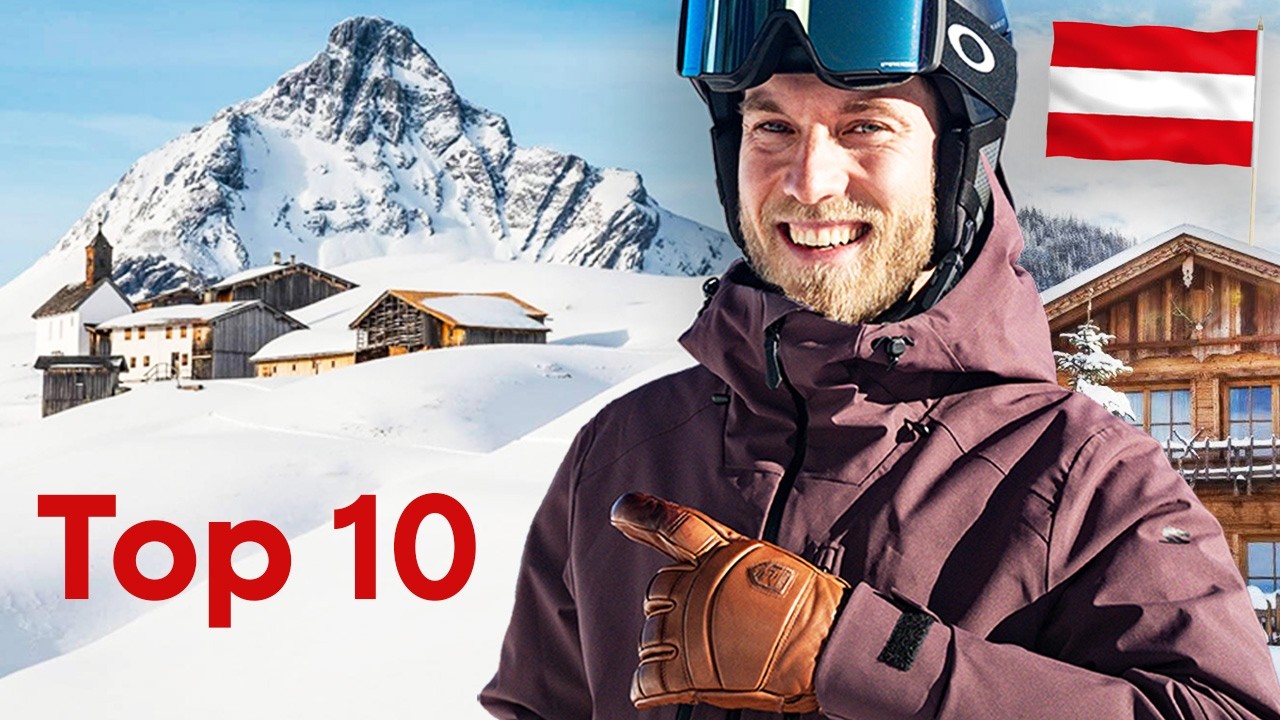
Kitzsteinhorn
Alps
Austria
Austrian glacier resort above Kaprun in Zell am See-Kaprun | Known for: Top of Salzburg at 3029 meters, Glacier Park, Easy Park, Central Park, South Central Park, superpipe, Freeride XXL routes, X OVER RIDE, K-ONNECTION, and a fall to late spring season | Best for: park riders, glacier training crews, freeriders, preseason filming, spring sessions, and Austrian road trips
Top Of Salzburg And The Kaprun Glacier Engine
Kitzsteinhorn rises above Kaprun as the high-altitude engine of Zell am See-Kaprun, with the public mountain experience reaching the Top of Salzburg at 3029 meters. The official winter data lists 62.5 kilometers of slopes, 24 cable cars and lifts, and an elevation band from 768 meters to 3000 meters. Those numbers make the resort smaller than Austria’s largest lift networks, but the glacier changes the equation. Kitzsteinhorn stays relevant when lower mountains are waiting for snow, losing coverage, or shifting into shoulder-season mode.
Kitzsteinhorn works as a freeski location because it solves timing. Park skiers need snow in October and November. Freeriders need high-alpine faces when winter fills in. Spring crews need soft landings and a long park window into April and May. The mountain gives all three inside one Kaprun-based system, linked to the valley by modern lift infrastructure rather than a pure shuttle-and-glacier-road routine.
K-ONNECTION From Kaprun To 3029 Meters
The K-ONNECTION is one of the resort’s defining logistical facts. Since 2019, the lift chain has connected Kaprun, Maiskogel and the glacier through the 3K K-onnection, giving skiers a direct route from the town side toward the high Kitzsteinhorn terrain. For visiting crews, that matters because glacier days are already sensitive to wind, visibility, freeze levels and feature status. Removing extra road friction makes the whole trip easier to run.
The mountain flow usually starts with Maiskogel or lower glacier access, then moves toward Alpincenter, Langwied and the upper glacier when the weather allows. The Top of Salzburg platform gives the orientation: Hohe Tauern peaks, glacial slopes, freeride entries, park zones and the long drop back toward Kaprun all sit in one visual field. Compared with Sölden, Kitzsteinhorn feels more compact and freestyle-focused; compared with Stubai Zoo, it is less defined by one snowpark venue and more by the combination of glacier park, freeride routes and valley connection.
Glacier Park Opens The Austrian Freestyle Clock
Kitzsteinhorn Snowparks are the main reason the resort carries a 4/5 freeski profile. The official park material describes an extra-long freestyle season from October to May, with Glacier Park on the glacier plateau opening first in autumn. That early timing gives riders rails, boxes and first kickers when much of Europe is still dry below 2000 meters.
The seasonal park sequence matters. Glacier Park serves the first autumn sessions. Easy Park then gives beginner and intermediate riders a controlled line for first rails, first jumps and speed checks. Central Park carries the heavier winter identity for more experienced skiers, while South Central Park extends the spring setup when light, slush and soft landings become the main value. The superpipe adds another layer, making Kitzsteinhorn useful for transition control as well as rails and jumps.
Central Park South Central And Spring Feature Mileage
Kitzsteinhorn’s park strength is not only feature count. It is the calendar. A rider can start the season on Glacier Park rails, return in midwinter for Central Park and pipe laps, then come back in spring for softer South Central sessions. That repeatability turns the mountain into a training rhythm rather than a one-off destination. It is especially useful for crews filming edits across multiple months because the same resort can produce different visual textures.
That places Kitzsteinhorn naturally beside Absolut Park in the Austrian freestyle map, but the role is different. Absolut Park is a full winter freestyle campus built around a long purpose-shaped park system. Kitzsteinhorn is the glacier-season tool: earlier, higher, more weather-exposed, and especially valuable when skiers need snow reliability before or after the core winter. The best park days here come from reading light and speed, not simply arriving at first lift with a trick list.
Freeride XXL From Ice Age To Pipe Line
The freeride side gives Kitzsteinhorn more depth than a park-only glacier. The resort’s Freeride XXL system lists five signposted routes: X1 Ice Age, X2 Westside Story, X3 Left Wing, X4 Jump Run and X5 Pipe Line. Entry points include info boards with topography, difficulty and hazard information, while the Alpincenter area supports freeride awareness through information and transceiver-check infrastructure.
The naming can sound playful, but the terrain should not be treated casually. Kitzsteinhorn’s own safety language is clear that these routes are not groomed pistes. They are high-alpine freeride routes where skiers need proper safety equipment, partners and decision-making. The value for skipowd.tv is that the terrain is lift-adjacent and filmable. A crew can shoot park in the morning, move toward freeride routes when visibility improves, and return to shaped features if wind or stability makes off-piste terrain a poor choice.
X OVER RIDE On The Langwied Face
The X OVER RIDE gives Kitzsteinhorn its strongest freeride event signal. The 2026 edition ran as an FWT Challenger stop, with the competition staged on the Langwied face at 2260 meters. FWT described the face as playful, with athletes linking big airs, tricks and varied line choices under bluebird conditions. That detail matters because the event is not only about steep survival. It rewards a freeride language where style and trick selection can sit inside a full mountain run.
Kitzsteinhorn’s X OVER RIDE history also helps separate the resort from ordinary glacier training venues. The event had already spent years as a 3-star and 4-star Freeride World Tour Qualifier before returning as a Challenger stop. That tells skiers the terrain has enough visibility, runout quality and feature variety for judged freeride. It is not Bec des Rosses scale, but it is a real development stage for riders trying to move from qualifier pressure toward higher-level freeride starts.
Austria Glacier Context From Stubai To Sölden
Kitzsteinhorn sits inside a dense Austria freeski network. Stubai Zoo gives the early-season slopestyle and World Cup reference. Sölden gives bigger glacier-resort scale, BIG3 summit culture and October race visibility. Turracher Höhe brings compact snowpark progression in the Nockberge. Kitzsteinhorn’s role is different again: Salzburg glacier reliability, multi-season snowparks, Freeride XXL routes and a direct Kaprun-to-glacier lift connection.
That makes it useful for Austrian road trips. A crew can use Kitzsteinhorn when the goal is early snow, spring filming or a mixed park and freeride schedule. If the goal is a pure park campus, Absolut Park may be the sharper call. If the goal is high-throughput cross-border resort mileage, Ischgl - Samnaun is larger. If the goal is classic big Austrian freeride, Ski Arlberg carries more historical weight. Kitzsteinhorn wins when timing, altitude and mixed freestyle-freeride utility matter most.
Kaprun Base And Zell Am See Trip Logic
Kaprun is the practical base for Kitzsteinhorn. Staying in or near town gives the cleanest access to the K-ONNECTION, the Maiskogel side and the valley services that make longer glacier trips manageable. Zell am See adds a larger lake-town feel, rail access, restaurants and a wider holiday structure, while Kaprun keeps skiers closer to the upload. The right base depends on whether the trip is training-focused or more mixed.
The Ski ALPIN CARD context also matters for planning because the broader region can connect Kitzsteinhorn, Schmittenhöhe and the Skicircus Saalbach Hinterglemm Leogang Fieberbrunn under one ticket product. For a freeski crew, that creates backup value. If Kitzsteinhorn is windy, lower or neighboring zones may keep the day alive. If the glacier is clear, there is little reason to overcomplicate the plan. Go high, check park status, read the freeride routes and use the long season for what it does best.
Glacier Weather Avalanche Gear And Park Etiquette
Kitzsteinhorn’s safety profile is defined by altitude. Glacier weather can change fast. Flat light can hide takeoff angles, wind can change jump speed in one lap, and strong spring sun can shift landings from firm to slow very quickly. Park riders should inspect features, watch several drops, call their line, clear landings and respect closed or reshaping zones. The same feature can ride differently at 9 am and 1 pm.
Freeride requires a higher standard. The official route system does not remove the need for beacon, shovel, probe, partners and avalanche bulletin awareness. The Euregio avalanche report should be part of any off-piste plan in the Austrian Alps. Open routes are still mountain terrain, not groomed runs with soft marketing names. A smart crew tests the first route conservatively, watches wind transport and sluff, and treats retreat as a normal decision rather than a failed clip attempt.
The Kitzsteinhorn Use Case For Freeskiers
Kitzsteinhorn matters because it gives freeskiers a rare combination of season length, snowpark structure and freeride access. The concrete pieces are strong: Top of Salzburg at 3029 meters, 62.5 kilometers of slopes, 24 lifts, Glacier Park, Easy Park, Central Park, South Central Park, a superpipe, five Freeride XXL routes, X OVER RIDE, and the K-ONNECTION from Kaprun toward the glacier.
October and November are best for early rails, glacier features and preseason legs. January through March brings the strongest overlap between Central Park, freeride conditions and pipe sessions. April and May can be excellent for soft landings, spring park edits and morning glacier speed before the snow slows down. For skipowd.tv, the strongest Kitzsteinhorn content should be tagged around glacier park, superpipe, Freeride XXL, X OVER RIDE, Kaprun, Austria, spring session, preseason training and mixed freeride park days. The resort’s value is simple: it keeps freeskiing alive at both ends of the season while still offering enough terrain to matter in the middle of winter.