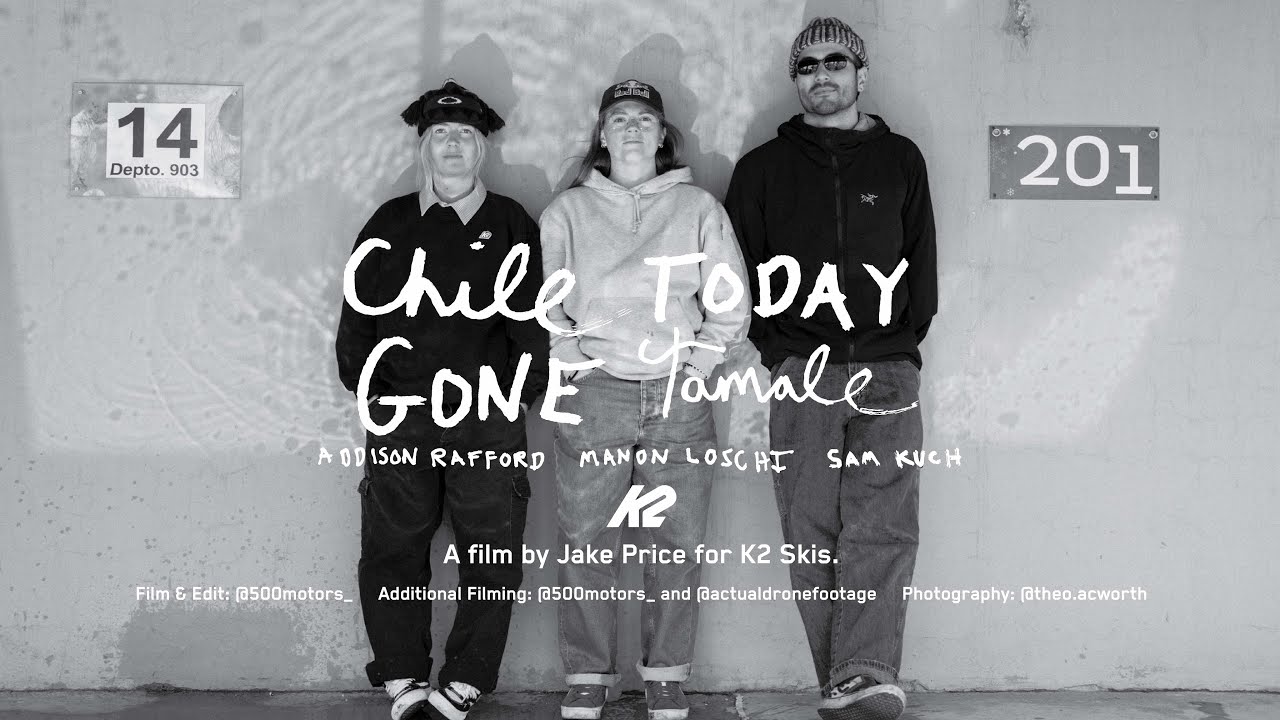
Sam Kuch
Profile and significance
Sam Kuch is a Canadian big-mountain freeskier from Nelson, British Columbia, who has become one of the most talked-about film skiers of his generation. Raised on the stormy slopes above town and now based around the powder-rich Selkirk Mountains, he blends backcountry line choice with full-on freestyle trickery: spins off cliffs, pillow stacks treated like park lines and high-speed airs into tight landings. His breakout came in the late 2010s, when a standout web series part earned him “Discovery of the Year” at the iF3 Festival and launched him from part-time roofer to full-time pro skier almost overnight.:contentReference[oaicite:0]{index=0}
The wider ski world really took notice with his segment in Matchstick Productions’ film “Return to Send’er,” where he turned British Columbia terrain into a playground of huge drops and flowing pillow lines. That performance swept major festival awards, including Best Male Performance at the Powder Awards and male Skier of the Year honours at both the High Five Festival in Annecy and iF3 in Montreal, cementing his status as a premier film athlete rather than a traditional contest skier.:contentReference[oaicite:1]{index=1} Since then, Kuch has fronted high-caliber projects with production houses like Matchstick Productions and Blank Collective Films, and starred in athlete-driven shorts such as Arc’teryx’s “Here Goes,” all while stacking standout parts year after year.:contentReference[oaicite:2]{index=2}
Competitive arc and key venues
Although most fans know Sam from film, his roots are competitive. He grew up skiing Whitewater Ski Resort near Nelson, joining the local freeride team as a teenager and quickly standing out for his ability to charge steep lines with tricks on natural features. In 2016 he capped his youth career by winning the IFSA North American Junior Freeride Championship, proving that his loose, playful style could also handle judges’ scorecards and pressure.:contentReference[oaicite:3]{index=3}
Rather than chasing the Freeride World Tour full-time, Kuch pivoted toward filming, where his risk tolerance and creativity could be showcased without the constraints of a single competition face. The “Return to Send’er” segment that lit up festivals was largely filmed in his home mountains around Nelson and Revelstoke, along with deeper missions into the interior of British Columbia. Articles and interviews from that era routinely described him as the “most entertaining skier in front of a camera,” highlighting both the scale of his lines and the smoothness with which he linked tricks into complex terrain.:contentReference[oaicite:4]{index=4}
More recently, Kuch has stepped back into the contest spotlight on his own terms. In 2025 he finished second at the inaugural YETI Natural Selection Ski event in Alaska’s Tordrillo Mountains, a freeride competition that invited a hand-picked roster of the world’s best slopestyle and big-mountain skiers to ride a feature-stacked Alaskan face.:contentReference[oaicite:5]{index=5} That result, earned in consequential terrain more often associated with snowboard icons, underlined that his film skills translate directly to high-level, head-to-head competition when he chooses to show up.
How they ski: what to watch for
The defining feature of Sam Kuch’s skiing is how fast he is willing to go before committing to a feature—and how relaxed he looks while doing it. In films like “Return to Send’er,” Blank Collective’s projects and shorts such as “Space Craft” and “Third Person,” he routinely charges into pillow lines, blind rolls and cliff bands at speeds that leave very little room for correction.:contentReference[oaicite:6]{index=6} Instead of throwing on the brakes, he uses subtle adjustments in stance and ski pressure to stay in the fall line, then layers tricks on top of that momentum: hand-drag 3s off cliffs into rodeo 7s off windlips, floaty 360s over exposure, and big backflips out of natural takeoffs that would scare most skiers even without the spin.
Technically, his airs are marked by early, committed grabs and a quiet upper body. Watch his bigger spins and flips frame by frame and you’ll see that the rotation often comes from his hips and legs, leaving his shoulders relatively stable and his head free to spot landings early. That translates into landings that look almost soft, even when he drops from serious height into variable snow. On the ground, his turns alternate between precise, fall-line arcs and playful slashes or drifts that set up the next feature, giving each line a rhythm that feels musical rather than mechanical.
Another layer is his mental approach. Pieces like “Third Person” explore how Kuch visualizes his runs in detail before he drops, essentially watching himself ski the line in his mind’s eye.:contentReference[oaicite:7]{index=7} That internal replay seems to underpin the confidence you see on camera: when he finally leaves the ridge, every terrain change and transition looks like something he has already experienced. For progressing freeriders, this combination—aggressive speed, strong fundamentals, and deliberate visualization—is what makes his skiing so instructive as well as spectacular.
Resilience, filming, and influence
Behind the smooth segments lies a story of resilience. In the early 2020s Kuch suffered a serious backcountry crash, slamming through trees and badly injuring his leg in what could have been a career-ending accident. Features on the incident describe him lying in the snow unsure whether the loud crack he heard was a branch, a ski or his own bone, and the months that followed involved surgery, extensive rehab and the psychological process of relearning to trust his body in big terrain.:contentReference[oaicite:8]{index=8}
His comeback was as much mental as physical. Rather than returning immediately to ever-bigger stunts, he talked about “prioritising joy” and rebuilding step by step, an attitude reflected in later projects like the Arc’teryx short “Here Goes.” That film focuses on a single winter in the heart of the B.C. backcountry and uses his personal mantra—“here goes,” whispered before dropping—to frame the balance between fear, focus and commitment.:contentReference[oaicite:9]{index=9} The result is a skier who has not just bounced back from injury, but who now seems more deliberate and sustainable in the risks he takes.
Influence-wise, Kuch has quickly become a reference name whenever conversations turn to modern big-mountain freeskiing. He has won Discovery of the Year and Standout Skier of the Year honours at iF3, collected festival awards across Europe and North America, and drawn glowing profiles in ski media asking whether he might be the best skier in the world right now.:contentReference[oaicite:10]{index=10} Through ongoing work with Blank Collective Films, his recurring presence in Matchstick Productions movies and his growing portfolio of concept shorts, he has helped define what high-speed, trick-heavy backcountry skiing looks like in the 2020s.
Geography that built the toolkit
Kuch’s skiing is inseparable from his home geography. He grew up in Nelson, a small mountain town on the so-called “Powder Highway” of interior British Columbia, where heavy snowfall and steep tree lines are the norm.:contentReference[oaicite:11]{index=11} His home hill, Whitewater Ski Resort, sits in a high alpine bowl beneath Ymir Peak and is famous for deep snow, minimal grooming and a relaxed, locals-first atmosphere that encourages exploration over infrastructure.:contentReference[oaicite:12]{index=12} Long before he was filming with major brands, he was lapping Whitewater’s lifts, ducking into glades, building booters off wind lips and following older skiers into faces that demanded fast decision-making.
From there, his map expanded outward through the Kootenays and beyond. Revelstoke and other interior B.C. zones provided bigger faces and more complex avalanche terrain, while trips with Blank Collective and other crews took him to coastal ranges, Japan, Norway and Alaska, each adding new textures to his skill set—denser snowpacks, deeper pillows, spines, wind-affected ridges and heli-access terrain.:contentReference[oaicite:13]{index=13} The 2025 YETI Natural Selection Ski event in Alaska’s Tordrillo Mountains is a culmination of that geographic education: riding a big, exposed Alaskan wall in front of a global audience required every lesson he had learned on home slopes, in Canadian backcountry zones and on film trips around the world.:contentReference[oaicite:14]{index=14}
Equipment and partners: practical takeaways
Sam Kuch’s equipment reflects the realities of high-speed, big-mountain freestyle. His current ski sponsor is K2 Skis, which welcomed him to the team with public recognition that he is “one of the best to ever put sticks on his feet” and highlighted his upbringing in the British Columbia backcountry.:contentReference[oaicite:15]{index=15} That move followed earlier years on different brands, but the through-line is the same: he favors freeride-oriented skis with enough backbone for charging yet enough playfulness to slash, spin and land switch in deep snow.
On the boot side, he represents the BOA Fit System, riding K2 alpine boots with dual-dial BOA closures that allow micro-adjustable tension around the foot and lower leg. In his own words, the dual-dial design helps make the boots feel like an extension of his body, providing the precision and confidence he needs on committing lines. Outerwear is supplied by Arc’teryx, whose technical shells and pants are designed for deep, wet snowpacks and long touring days, while goggles and helmets come from Anon Optics, giving him high-contrast vision and reliable protection in stormy conditions.:contentReference[oaicite:17]{index=17} Anchoring it all is his longstanding relationship with Whitewater Ski Resort, which continues to list him as a homegrown athlete and gives him a return-to-base where his style was originally forged.:contentReference[oaicite:18]{index=18}
For skiers looking to take practical cues from his setup, the lesson is balance. Big-mountain freestyle demands skis that stay composed at speed but still release into slashes and tricks, boots that are supportive but adjustable enough to skin, sled and hike, and outerwear that keeps you warm and dry through long days of film work in volatile weather. You do not need his exact model list, but you can emulate his priorities: confidence underfoot, clear vision and a kit built for backcountry realities rather than just resort laps.
Why fans and progressing skiers care
Fans care about Sam Kuch because he represents a modern ideal of big-mountain skiing: fast, stylish, fully committed and yet strangely relatable in his joy and humility. His festival-sweeping film segments, from “Return to Send’er” to “Here Goes” and the Blank Collective catalog, have reset expectations for what a backcountry part can look like—sustained speed, stacked features and tricks that would be impressive in a park, now executed above exposure and in deep snow.:contentReference[oaicite:19]{index=19} His near-career-ending crash and subsequent comeback have only deepened that connection; viewers see not just a highlight reel but a person working through fear and uncertainty to reclaim the feeling of skiing at his limit.
For progressing skiers, Kuch offers a blueprint that does not depend on traditional contest success. He built his reputation on a small interior B.C. hill, honed his style in local freeride programs, and then leaned into filming, storytelling and festival circuits instead of chasing rankings. Along the way he has embraced mental tools like visualization, prioritized joy as a guiding principle and chosen sponsors that support long-term exploration rather than short-term hype. Whether you are dreaming of your first pillow line or analyzing Natural Selection Ski replays, following Sam Kuch is a way to study how modern freeskiers can blend freeride, freestyle and filmmaking into one coherent, sustainable path.