Kyle Johnston
Profile and significance
Kyle Johnston is an American freeski athlete and coach whose name keeps popping up wherever street skiing and community-focused park programs intersect. Raised in Gloversville, New York, he started skiing at age two and spent a decade cutting his teeth in USASA and Revolution Tour contests before shifting his focus toward filming and coaching. Today he is best known as a key member of the Boise-based OS Crew and as the Freeski Futures head coach with the Sun Valley Ski Education Foundation in Idaho. That dual identity – heavy urban skier in the crew’s award-winning projects and methodical mentor in a structured development program – makes him an important bridge between core freeski culture and the next generation coming up through organized pathways.
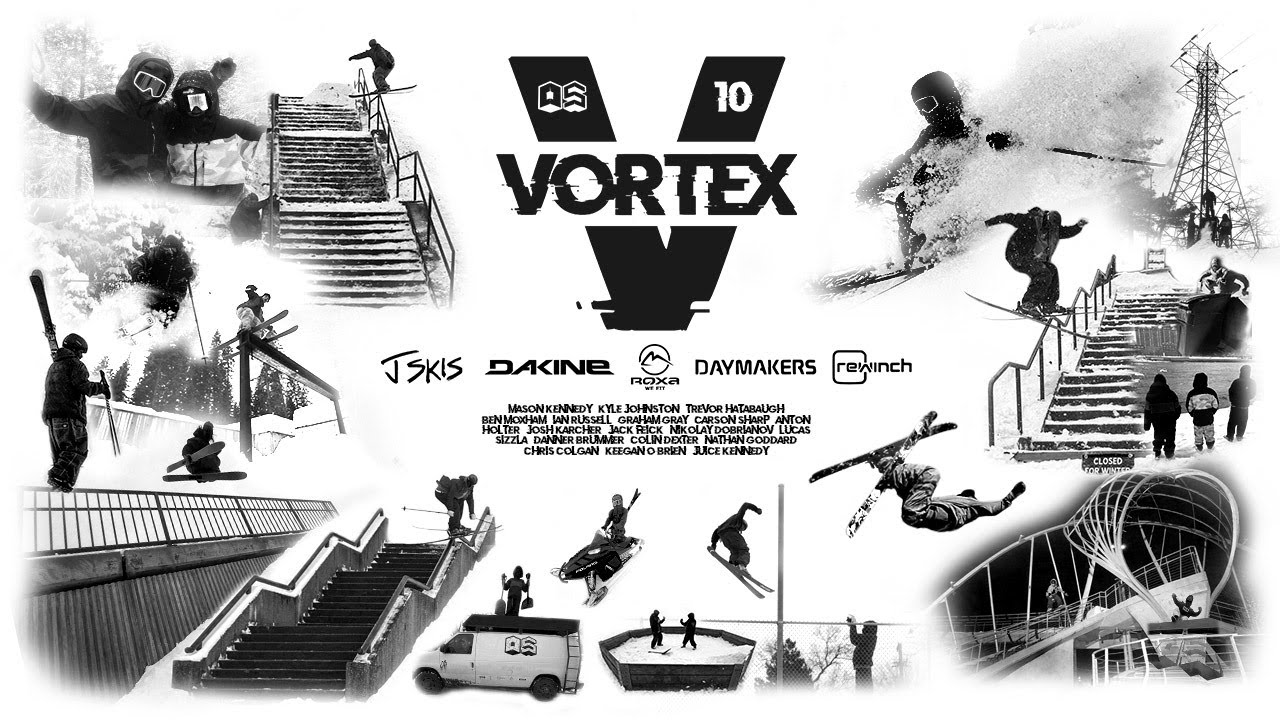
Johnston’s profile has risen quickly as OS Crew’s films have jumped from local premieres to international recognition. He appears as a featured rider in the crew’s recent trilogy of full movies – “Magnetic,” “absORB,” and “VORTEX” – with the last of those taking Amateur Film of the Year honors at the 2025 iF3 Movie Awards and earning him a nomination for Amateur Skier of the Year for his performance. For freeski fans who follow street segments as closely as World Cup rankings, Kyle has become one of the names synonymous with the new wave of creative, do-it-yourself urban skiing coming out of the American Northwest.
Competitive arc and key venues
Before appearing in festival lineups, Johnston’s path ran through the familiar youth-competition grind. According to his coaching biography, he spent roughly ten years on the USASA and Rev Tour circuits, learning to manage speed, pressure and consequence in slopestyle and pipe-style environments. The results sheets from those years won’t show globe trophies, but the repetition of regional and national start gates gave him a strong technical base and a deep understanding of how runs are built under time pressure. That background now informs both his own filming and the way he coaches athletes who still care about bib numbers.
The real turning point, though, is tied to venues that exist off the standard contest map. Through OS Crew, Johnston has become a regular in premieres at Boise’s Egyptian Theatre and Treefort Music Hall, where the crew launches its annual films to sold-out hometown crowds before taking them on tour. His skiing is central to the 8th OS Crew film “Magnetic,” which showcased the crew’s urban focus, and to “absORB,” their 9th outing that mixes backcountry lines with dense street segments. In “VORTEX,” the 10th film, he stands out again as the crew pushes their mix of backcountry hits, spring builds and large-scale street spots – a body of work that led directly to the film’s international awards recognition and his individual iF3 nomination.
How they ski: what to watch for
Johnston’s skiing is defined by rail precision and stubborn persistence. One of the best windows into his approach is the “absORB Raw Cut Series: Ep. 3 – Kyle Johnston,” which shows him locked into a single feature for around six hours and roughly one hundred attempts. The clip he is chasing requires a difficult line-in using a winch, speed management through a long down feature and an unnatural front swap pressed right at the top before lacing the rest of the rail. That kind of trick is all about micro-adjustments, and you can see him refine edge angle, body position and timing over and over until everything lines up for the landed shot.
On film, this translates to a style that looks calm on top of very real risk. Johnston tends to keep his upper body quiet and stacked directly over his feet, which lets him lock into kinks and close-out rails with minimal body drift. He also favors combinations rather than single moves – swapping directions mid-rail, adding surface swaps or spinning off blindside – so a spot rarely gets used for only one trick. Away from the handrails, “VORTEX” shows him comfortable stepping into bigger backcountry-style hits and spring jump builds, where he brings the same measured approach to grabs and spins, focusing on clean axes rather than simply adding rotations.
Resilience, filming, and influence
The raw-cut episode that documents Johnston’s six-hour battle is more than a curiosity; it is a clear statement about how he approaches skiing. Rather than celebrating only first-try stomps, OS Crew highlights the grind it takes to put down high-end tricks, and Kyle embraces that transparency. Watching him crash, hike back up, adjust a rail lip, confer with the winch driver and try again gives aspiring street skiers a realistic picture of the process behind a three-second shot. That willingness to show the work has helped his segment resonate with core audiences on platforms like Newschoolers, where behind-the-scenes edits carry significant weight.
His influence stretches beyond the screen through his coaching role in Idaho’s Wood River Valley. As Freeski Futures head coach with the Sun Valley Ski Education Foundation, Johnston is responsible for helping young athletes figure out whether their goals live in contests, film parts or simply in becoming confident lifelong skiers. He brings OS Crew’s DIY film ethos – building spots, managing crews, respecting urban environments – into structured training sessions, while also teaching competition basics such as run construction and mental preparation. That combination of real-world film experience and organized programming is rare, and it means his impact will be seen not only in his own segments, but in the way his athletes design their futures in freeskiing.
Geography that built the toolkit
Johnston’s skiing reflects the geography that shaped him. Growing up in Gloversville in upstate New York meant learning to ski on small hills with firm snow and short laps, the kind of environment that rewards precise edging and creative use of limited terrain. Those early years on icy park rails and quick laps helped him develop the edge control and comfort with variable takeoffs that later show up on handrails and urban drop-ins. When he eventually headed west, he brought that East Coast efficiency with him rather than abandoning it for purely freestyle resort laps.
In adulthood, his map has expanded to include Idaho and Colorado landmarks that now form the backdrop to many OS Crew shots. Boise’s Bogus Basin offers night laps and creative in-bounds terrain, while the city itself provides an endless supply of rails, ledges and gaps for winter street missions. Summer often finds Johnston and the crew at Woodward Copper at Copper Mountain, Colorado, where they session park lanes and rope-tow setups while coaching campers and stacking footage for upcoming projects. In winter, his work with SVSEF keeps him tied to the Sun Valley area’s blend of classic resort runs and modern park features. Taken together, those locations give him a full spectrum of environments – from small-town rope-tow style laps to big-mountain backdrops – that all feed into his riding.
Equipment and partners: practical takeaways
Johnston’s segments are closely tied to the equipment and partners that support OS Crew’s projects. The teaser and raw-cut releases for “absORB” and “VORTEX” list backing from brands such as J Skis, Roxa Ski Boots, Wear Leathers, Spy Optic and NorthPull Winch. In practical terms, that means you are often seeing him on playful, twin-tip skis designed for park and street work, in boots built to drive rails and jumps while still tolerating long shovel sessions, and in gloves and goggles built for the cold, late-night conditions where many urban spots go down. The winch support is especially important: it allows him and the crew to generate the speed required for large gaps and long approach lines in flat urban zones where gravity alone is not enough.
For progressing skiers watching his segments, the gear takeaway is less about copying exact models and more about understanding why these categories matter. A medium-flex park-oriented ski will make it easier to experiment with surface swaps and presses; boots that still ski strongly but allow some ankle mobility help when absorbing sketchy landings; solid gloves and goggles matter when you are shoveling for hours. Johnston’s skiing shows that thoughtful equipment choices – aligned with the terrain you want to ride and the projects you want to build – can make long sessions more productive and sustainable.
Why fans and progressing skiers care
Fans gravitate toward Kyle Johnston because he represents a version of modern freeskiing that feels both aspirational and attainable. He is not defined by Olympic finals or World Cup circuits, but by stacked street clips, long nights under parking-lot lights and premieres where the audience is filled with friends, local kids and shop crews. His nomination for Amateur Skier of the Year alongside the iF3 recognition for “VORTEX” proves that this path can still lead to international respect, even when the main stage is a handrail instead of a halfpipe.
For skiers trying to progress, Johnston offers a clear blueprint. His footage shows exactly how much work lies behind a single standout trick, and his day job as a coach demonstrates that the same patience and structure can be applied to anyone’s skiing, not just to athletes filming for a movie. Watch his raw cuts to understand commitment, his full segments to study line choice and trick variety, and his coaching role to see how crew-based, community-first skiing can coexist with long-term development. In combining heavy urban parts, backcountry adaptability and a serious investment in youth progression, Kyle Johnston has carved out a role that matters both to today’s film-driven freeski culture and to the kids who will shape what comes next.