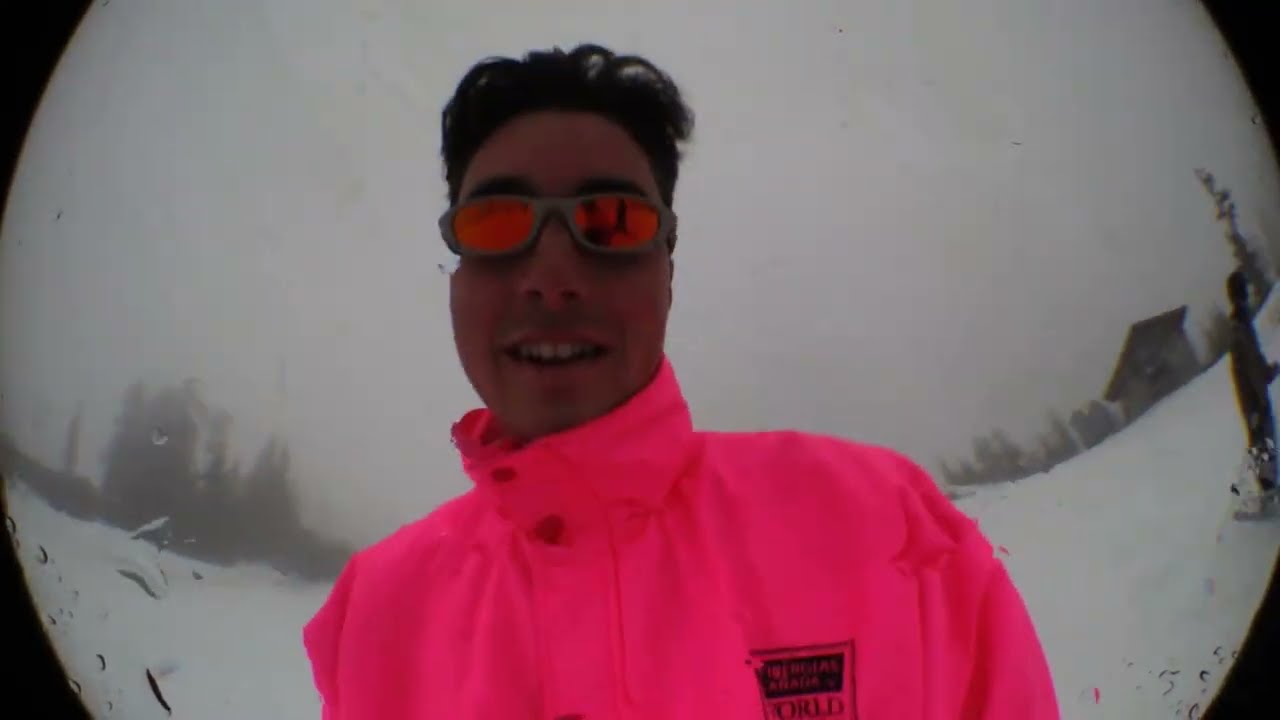
Kai Smart
Whistler, Canada | Active: 2015-2026 | Known for: slopestyle, backcountry skiing, Tien Shan Dream | Legacy: skier and filmmaker
Northern Tien Shan Without A Lift Line
The snow above Kazakhstan’s Tuyuk-su Glacier carried no park rope, no chairlift hum, and no easy exit. Kai Smart’s later ski story moved into that kind of terrain: slow approaches, heavy packs, high-altitude turns, and cameras pointed at mountains that were also research landscapes.
Smart’s public profile does not read like a long World Cup résumé. It reads like a Whistler skier who moved from junior freestyle systems into expedition filming, backcountry lines, and mountain storytelling. His most documented creative work is Tien Shan Dream, the 2024 film he co-directed with Morgan Tien, following a two-week glacier traverse through the Northern Tien Shan mountain range in Kazakhstan.
Whistler Freestyle Before The Expedition Years
Smart grew up in Whistler, British Columbia, inside one of Canada’s densest freestyle environments. His FIS record lists him with the Whistler-Blackcomb Freestyle Ski Club, a detail that places him directly in the Sea to Sky park-and-pipe pathway. That system gives young skiers access to Blackcomb park laps, spring training, air awareness, and a local culture where competitive skiing and filming often overlap.
The family context around skiing was also deep. His father, John Smart, is a former Canadian Olympic moguls skier and a long-time Whistler coach, while Kai’s own route moved through multiple freestyle disciplines before focusing more strongly on slopestyle and then backcountry skiing. That progression matters because his later film work still carried a freestyle eye: takeoff timing, air control, terrain reading, and the instinct to shape a line for both skiing and camera.
BC Team Results And A Compact FIS Record
Smart’s competition record was short but structured enough to show a real development pathway. The official FIS profile lists him as Kai SMART, Canada, born in 2002, with FIS code 2534668 and a status of not active. The same page records points in slopestyle and big air, which fits the park direction described by people around his career.
TMC Freeriderz lists his junior accomplishments as BC Team, second at Junior Nationals, first overall in BC in 2015, 2016, and 2017, plus four doubles. Those details suggest a skier who had reached a strong provincial level before his public identity shifted away from contest ranking and toward filming, travel, and the backcountry.
TMC, Armada, Giro And The Whistler Support Web
Smart’s sponsor list on the TMC profile included Armada, Giro, and TMC. That mix says a lot about his place in the Whistler scene. Armada connects naturally to freestyle and freeride skiing, Giro to helmets and goggles, and TMC to the local shop network that supports young riders before their names travel far beyond the valley.
In his own TMC text, Smart described growing up in Whistler and having his skiing revolve around the shop because it was the core freeski store in town. That kind of support is rarely just about equipment. For a developing skier, it means tuning help, community recognition, sponsor introductions, clip circulation, and a reason to keep pushing through long seasons of park laps, injuries, school, and travel.
From Slopestyle Control To Backcountry Judgment
The shift from slopestyle to backcountry skiing changes the skier’s job. In the park, the feature is built, shaped, and repeated. Speed can be tested, takeoffs are visible, and a trick can be tried again. In the mountains, snowpack, exposure, weather, timing, navigation, and group decisions become part of the line before a turn is even made.
Smart’s later profile, especially through Tien Shan Dream, sits in that transition. The film synopsis describes a human-powered, self-supported journey across 100+ kilometres, with 11,000+ metres of elevation gain, 14 big mountain lines, five peaks, and visits to high-altitude research stations. Those numbers turn the project into more than a ski edit. They point toward expedition planning, endurance, route choice, and a willingness to connect skiing with climate, science, and place.
Tien Shan Dream And The Research Station Traverse
Tien Shan Dream was listed by VIMFF 2025 as a 26-minute Canadian snowsports and mountain culture film directed by Kai Smart and Morgan Tien. Its setting is the Northern Tien Shan of Kazakhstan, where 4000+ metre peaks surround long-running glacier and cosmic radiation research stations established during the Soviet era.
The film’s premise gives Smart’s skiing a wider frame. The team was not only chasing powder or building a segment around tricks. They were moving through scientific terrain, meeting researchers, crossing glacier systems, and using freeride skiing to enter a landscape shaped by climate, altitude, history, and risk. Outside TV also lists the film as a two-week glacier traverse connecting two remote research stations, which makes the project one of the clearest public records of Smart’s creative direction.
How Smart’s Skiing Reads On Screen
Based on the available record, Smart’s skiing is best understood as hybrid. The junior freestyle background gave him air sense, switch comfort, rotation control, and the confidence to carry speed into takeoffs. The backcountry phase asked for a different tempo: skinning, scanning terrain, waiting for safe windows, and accepting that the best line might be the one left alone.
That combination fits a generation of skiers who do not see a hard wall between park, freeride, touring, and film work. His BC pathway also overlapped with skiers from the same development environment, including Oscar Blyth, whose own archive connects British Columbia park skiing with later coaching media. Smart’s route moved somewhere else, but the shared base was the same: Canadian freestyle development, Whistler repetition, and a culture where skiing is learned through both competition and footage.
Japan, Whistler And A Community Loss
Smart died in March 2026 after injuries sustained in an avalanche burial while skiing in the Tokachi mountain range in Hokkaido, Japan. He was 23. Reports from the period describe him as a freeskier, filmmaker, University of British Columbia graduate, and Whistler local whose final months included the completion of Tien Shan Dream.
Writing that fact inside a ski profile requires restraint. It should not turn the page into spectacle, and it should not reduce the skier to the accident. The more accurate frame is that Smart’s public ski record now has two connected parts: a young Canadian freestyle pathway and a final creative chapter built around expedition skiing, film, and mountain curiosity.
The Archive Kai Smart Leaves
Smart’s archive is not large, but it is clear. It includes BC freestyle results, a FIS record in slopestyle and big air, Whistler shop support, sponsor ties, and a 2024 expedition film that reached VIMFF and Outside TV. That is enough to place him on skipowd.tv as a creative Canadian freeskier rather than a contest-dominant athlete.
The lasting document is Tien Shan Dream: 26 minutes of glacier travel, remote research stations, freeride lines, and a skier-filmmaker trying to connect movement in the mountains with something larger than a single clip. For viewers discovering Kai Smart through ski video, that film is the cleanest place to start.