Juice Kennedy
Profile and significance
Justin “Juice” Kennedy is a Boise, Idaho–raised freeski original whose life revolves around slopestyle, big air and above all, urban street skiing. Growing up hot-lapping the terrain parks at Bogus Basin after school, he developed a high-energy yet surprisingly smooth style that eventually earned him an invite to the Level 1 SuperUnknown event, the global talent showcase that has launched many of freeskiing’s most creative riders. From those night laps he built what became the OS (OnSlaught) Crew, a tight-knit collective that has spent more than a decade traveling in a van, filming rail missions, backcountry booters and storm days, and turning that footage into a yearly ski movie tour.
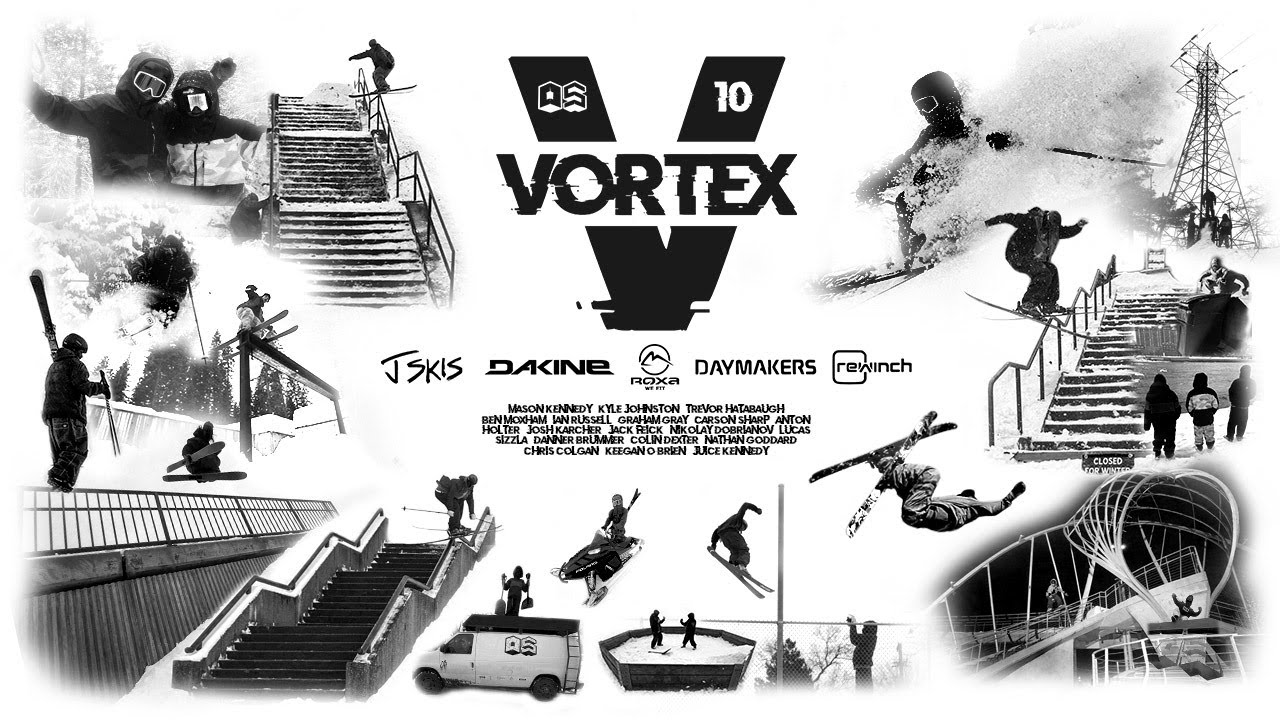
Kennedy’s significance today spans far beyond his own tricks. He is the driving force behind OS Crew’s film catalog, including the urban-heavy “Magnetic,” the backcountry-and-street blend “Electric,” the widely praised “absORB” and the tenth annual movie “VORTEX,” which was awarded Amateur Film of the Year at the iF3 Movie Awards. Along the way he has become a signature athlete for J Skis, earning his own limited-edition Allplay “Juice Storm” pro model, and a visible partner for brands like Dakine, Roxa Boots and local Boise shop MCU Sports. Whether he is headlining a Mammoth spring park edit, starring in a Level 1 street segment or organizing film premieres in Boise theaters, Juice sits at the center of a crew-driven corner of modern freeski culture.
Competitive arc and key venues
While Justin Kennedy is best known for films rather than FIS rankings, his path still follows a sort of “competitive arc” through iconic venues and projects. His breakout recognition came when his Bogus Basin park skiing earned him a spot at the Level 1 SuperUnknown event, putting him on snow and on screen with many of the strongest young slopestyle and big air riders in the world. Instead of pivoting to World Cups, he doubled down on filming, focusing on building full street and resort segments that could stand alongside contest footage in impact and replay value.
For more than a decade, the primary arenas for his skiing have been OS Crew’s features and film tours. Urban projects across Boise, Calgary and other North American cities have seen him and his crew turning handrails, wall rides and unique concrete architecture into technical, high-consequence lines. Resorts like Bogus Basin, Mammoth Mountain and Copper Mountain provide the park infrastructure for his in-bounds slopestyle and big air shots, as well as the spring jumps where many of his most replayed clips are filmed. The OS film premieres themselves—at venues such as the Egyptian Theatre and Treefort Music Hall in Boise—function like contests in their own right: packed rooms, big screens and an audience eager to see what new level the crew has reached.
How they ski: what to watch for
Juice’s skiing is a blend of high energy and composure, equally at home in a resort park line or on a handrail in the middle of downtown. In his season edits and in the “Speak to That?” Mammoth park feature, you see a skier who hits medium and large jumps with confident speed, sets his rotation early and keeps his axes clean. Spins tend to live in the comfortable but stylish zone—threes, fives, sevens and the occasional bigger trick—anchored by solid grabs and landings that touch down high on the sweet spot of the landing instead of deep and sketchy. He often adds late tweaks, shiftys or small hand drags that accentuate the trick without ever making it look forced.
On urban and park rails, Kennedy’s street pedigree is obvious. OS Crew raw cuts and street compilations show him committing to long, technical features where there is no room for hesitation: multi-kink handrails, close-out setups, wallride transfers and drop-on entries. He approaches these with calculated speed, hops on early and lets his feet do the fine-tuning while his upper body stays comparatively quiet. It is common to see him use surface swaps, tap features and redirects mid-line, but the overall impression remains controlled rather than chaotic. For viewers trying to learn, the key details are his line planning—how one feature sets up the next—and his ability to keep his shoulders and head looking down the rail while the skis do the detailed work underneath.
Resilience, filming, and influence
Behind every polished OS Crew segment is a huge amount of resilience, and Justin “Juice” Kennedy is usually at the center of that grind. He has steered the crew through ten full-length films, including “Magnetic,” “Electric,” “absORB” and “VORTEX,” each combining slopestyle- and big air–inspired tricks with urban street skiing and backcountry missions. The iF3 listing for “absORB” names him as director, highlighting his dual role as lead rider and filmmaker. OS raw cut episodes, including a dedicated deep-dive into his own street shots, reveal the crashes, missed pulls and long nights with the winch that sit behind a single landed trick.
His influence extends well beyond film credits. In Boise, Kennedy helped create and now co-hosts the annual Urban Air big air and rail jam at the Idaho New Year’s Eve Potato Drop, where downtown streets are closed so riders can hit a purpose-built jump under fireworks. J Skis’ write-up of the “Juice Storm” collaboration credits him and the OnSlaught Crew with traveling in a van for years, organizing grassroots film tours and convincing city officials to let them bring freeski-style big air and rails into the heart of town. In summer, he spends time at glacier and snowfield camps around North America, coaching slopestyle and park technique, passing on his knowledge of urban and street skiing and showing younger riders how film projects come together.
Geography that built the toolkit
Kennedy’s ski toolkit is defined first by Boise and Bogus Basin. Growing up there meant countless night-ski sessions, slushy spring laps and storm days where visibility was low but the jumps were soft. That environment pushed him to refine his stance and edging on small-to-medium park features, to learn how to keep flow even when the snow was changing lap to lap, and to treat every piece of terrain—hips, knuckles, rollers—as a potential feature. Bogus’s community-focused park scene also gave him a crew of like-minded skiers willing to dig, shape and film after hours.
As OS Crew’s ambitions grew, so did his map. Urban missions took him to other Idaho cities, then farther afield to places like Calgary, where creative architecture and reliable winter conditions make for prime street-skiing canvases. Resort travel expanded beyond Bogus to include Mammoth Mountain, Copper and other classic slopestyle venues, where he filmed high-tempo park lines that fed both OS movies and stand-alone edits hosted by outlets such as European freeski media. Summer coaching and training trips brought him to glacier parks and seasonal camps, ensuring that his rail and jump skills stayed sharp year-round. Taken together, those geographies produce a skier equally comfortable threading an icy handrail, floating a soft park booter or drawing a playful line down a stormy in-bounds face.
Equipment and partners: practical takeaways
Juice’s equipment is a direct reflection of his all-terrain, film-heavy approach. His pro model with J Skis, the Allplay “Juice Storm,” is a 97 mm–waisted twin-tip built to handle everything from resort groomers and park jumps to trees and playful powder. The ski is promoted as soft and playful enough for presses and butters, but with enough backbone to stay composed when you are charging into a big air takeoff or lining up a street rail with serious consequences. For a rider who moves constantly between slopestyle-style jump lines, big air features and urban/street skiing, that kind of versatility is essential.
His broader partner ecosystem adds more clues: tags and credits for Dakine, Roxa Boots, Daymaker Touring, Bern Helmets and MCU Sports point to a kit designed for long, hard days rather than just contest runs. Durable outerwear and packs that survive shovel duty and winch sessions, supportive boots that still feel good after a week of urban filming, and touring adapters that let him take a park-style stance into backcountry powder all play a part. For progressing skiers, the practical takeaway is clear: copy the philosophy, not necessarily the exact logos. Look for a playful-but-stable twin-tip, boots that fit perfectly, and protective gear you are happy to wear every session. The goal is to forget about equipment so you can focus on the line, just as Juice does when the camera is rolling.
Why fans and progressing skiers care
Fans care about Justin “Juice” Kennedy because he represents a complete, crew-driven vision of freeskiing. He is not just dropping slopestyle, big air and urban tricks; he is also writing the story, directing the films and building the events that showcase his community. Seeing OS Crew’s “VORTEX” win Amateur Film of the Year at iF3 confirmed what years of premieres and edits had already suggested: their mix of street clips, backcountry shots and personality-driven storytelling belongs in the top tier of ski movies, and Juice is one of the main reasons why.
For progressing skiers, his path is both inspiring and approachable. He started by lapping a local hill every day after school, learned to see stairs and handrails as extensions of the terrain park, and gradually turned that obsession into a film series, a city-scale New Year’s Eve big air event and a pro model ski. Watching his segments with a critical eye—how he chooses lines, how he keeps speed consistent, how he mixes creativity with control—offers a masterclass in turning strong basics into distinctive style. Just as importantly, his work with camps and community events shows that giving back is part of the job. In an era where freeski culture is shaped as much by crews and films as by podiums, Juice Kennedy stands out as one of the athletes who builds that culture from the ground up.