Carson Sharp
Profile and significance
Carson Sharp is a Canadian freeski filmer and rider whose career sits right at the intersection of park, street and modern backcountry. Growing up in Ontario, he spent his early seasons skiing and filming on city rails before moving west and becoming a Vancouver local, trading Eastern handrails for the deep snow and big terrain of British Columbia. Those twin influences—DIY street culture and high-mountain powder—run through everything he does, from small crew edits to full-length features and international film tours. As both skier and director, he is best known for the video-game-inspired movie “Vertical Vision,” which he created under the Sharp Studios and VVX banner, and for a growing catalogue of projects that explore what skiing means beyond contests and podiums.
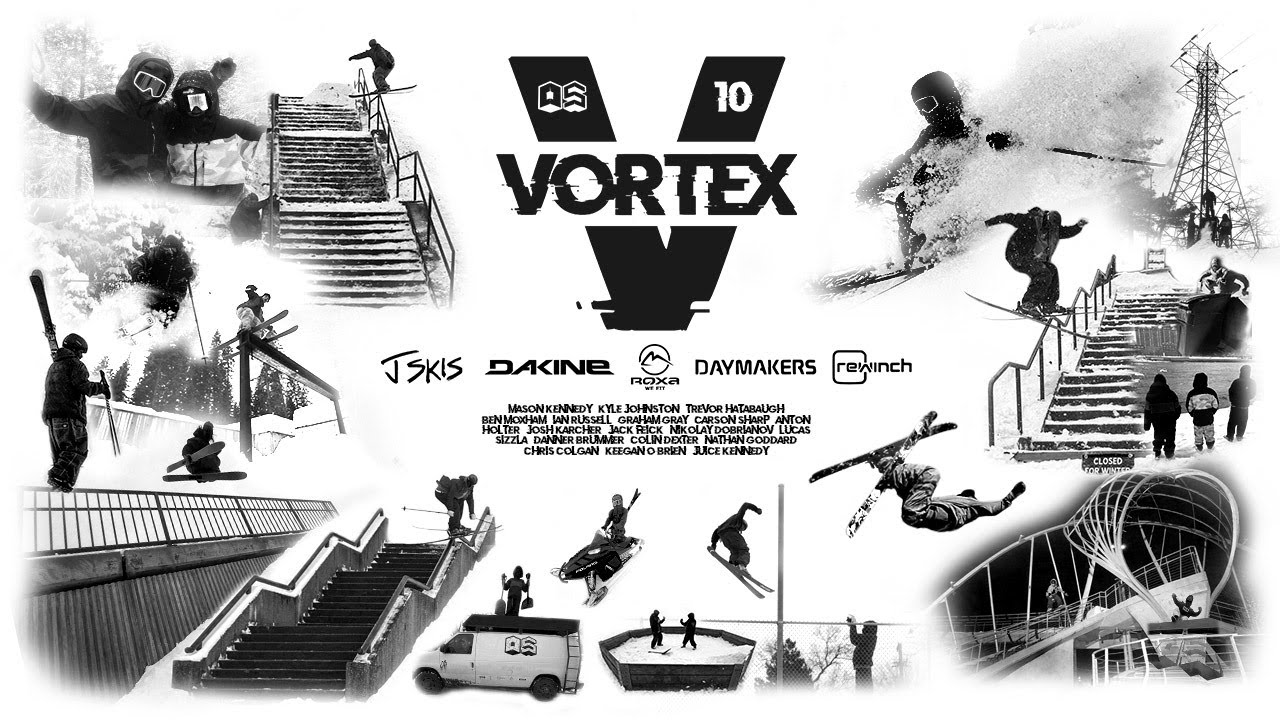
Sharp’s breakthrough moment came in 2022 when his segment and direction in “Vertical Vision” earned him the Amateur Skier of the Year title at the iF3 Movie Awards, a festival that functions as a barometer for global freeski film culture. The movie also picked up recognition at Snowvana’s amateur film competition, confirming that his mix of playful editing, strong skiing and early-2000s video game aesthetics resonated with judges and audiences. Since then he has appeared as a finalist at Level 1’s SuperUnknown 20, joined the Boise-based OS Crew in their full-length films “absORB” and “VORTEX,” and stepped into the spotlight again with new titles like “Switch” for outerwear brand Trew Gear and the Japan-based backcountry film “Liminal.” The result is a profile that matters as much for creative direction as for on-snow performance.
Competitive arc and key venues
Unlike traditional slopestyle specialists who build their résumé through World Cup rankings, Sharp’s “competitive arc” runs primarily through film festivals and invited sessions. The iF3 Amateur Skier of the Year award for his role in “Vertical Vision” put him on the map internationally, placing him in the same conversation as other standout up-and-coming skiers who use movies rather than bibs to showcase their level. The film itself screened as part of the iF3 ski category and toured to festivals and events where its SSX On Tour-inspired style—bright graphics, arcade pacing and soundtrack choices that nod to early-2000s culture—set it apart from more traditional powder and urban edits.
In 2023 Sharp was named a finalist for Level 1’s SuperUnknown 20, traveling to Mammoth Mountain’s Unbound park to session with some of the strongest park riders of his generation. That week-long shoot is effectively a proving ground for film-focused freeskiers, and his inclusion confirmed that his technical park abilities match the creativity of his directing. Around the same time, he collaborated with Trew Gear on “Switch,” a British Columbia–shot film later listed in iF3’s ski guide, and began work on “Liminal,” a poetic backcountry journey through Japan that questions the tension between hyper-commercial resorts and the raw core of ski culture. Add in his rider credits in OS Crew’s “absORB” and “VORTEX,” plus appearances at camps and sessions from Whistler and Mount Hood to Woodward Copper, and Sharp’s key venues range from contest-quality parks and North American city streets to Japanese tree runs and big-mountain faces.
How they ski: what to watch for
On snow, Carson Sharp blends the calm precision of a lifelong park skier with the line-reading instincts of an emerging freerider. Early edits like “Carson Sharp – Summer Shred 2015,” filmed at Whistler’s public park and Momentum Camps, show the foundation: clean spins in the three to nine range, solid grabs held through the apex of the arc and rail tricks that favor control and stance over gimmicks. His “Street 16” footage adds another layer, putting those same fundamentals onto handrails and urban ledges with gap-ons, surface swaps and blind 270 exits that stay well within his balance point even when the run-in is short or the landing is firm.
As his focus shifted toward backcountry and hybrid park–pow terrain, Sharp’s skiing evolved rather than reset. In “Vertical Vision” and later in “Liminal” and OS Crew’s “VORTEX,” you see him use playful but deliberate body language in soft snow: slightly forward stance to keep the shovels driving, light pole touches to set rhythm, and spin directions chosen to match the natural flow of the slope. He often links a technical trick with a drawn-out slash or drift, using butters and nose presses on rollers or knuckles to transition between hits. Whether he is lacing a rail in a Vancouver side street or airing off a Japanese wind lip, his hallmark is how relaxed his upper body looks—shoulders quiet, head up, and skis doing the detailed work underneath. For viewers, the key things to watch are how early he sets his edge angle before a takeoff or rail and how much space he gives himself to ride out a landing rather than forcing a stomp.
Resilience, filming, and influence
Sharp’s influence extends well beyond his own part in any given film because he is almost always the one behind the camera, the timeline and the storyboard. “Vertical Vision” was conceived as an attempt to bring the energy of SSX On Tour into real-world skiing, and his Newschoolers description of the project reads like a manifesto for a new wave of DIY production: embrace video-game color, experiment with format and let small crews drive big ideas. Subsequent VVX projects, including releases from Revelstoke-based crews and British Columbia backcountry missions, continue that theme of treating each film as a cohesive creative object rather than just a dump of tricks.
Resilience shows up in how he builds those projects. Street and urban segments demand long nights, repeated winch pulls and more than a few crashes; backcountry films require early alarms, sketchy snowmobile roads and days where the weather never quite cooperates. In raw cuts and behind-the-scenes snippets, you see Sharp working through all of that: lugging cameras and shovels, resetting features after slough or collapse, and recalibrating plans when the light changes or a landable takeoff proves impossible. He is also increasingly visible as a voice in how ski films talk about meaning. “Liminal” uses original poetry and narration from collaborator Kye Matlock to question who gets seen and valued in skiing, and Sharp’s framing invites viewers to think about contribution, not just performance. That willingness to ask bigger questions while still delivering watchable action clips has made his recent work stand out on freeride film tours across North America.
Geography that built the toolkit
Geography is central to understanding Carson Sharp’s skiing. His formative years in Ontario taught him how to turn marginal conditions and small-scale infrastructure into canvas—think early-season city snowbanks, campus rails and the kind of tow rope or t-bar hills where creativity matters more than vertical drop. That upbringing honed his ability to see lines where others see obstacles and to stay motivated when temperatures, light or snow quality are less than ideal.
Relocating to Vancouver opened an entirely different world. Local shoots tap into the urban architecture and occasional snowfalls of the city itself, while the Coast Mountains just up the road provide access to major resorts and serious backcountry. Park and glacier sessions at places like Whistler Blackcomb and summer trips to Mount Hood in Oregon helped keep his rail and jump skills sharp, while filming with crews in interior British Columbia introduced him to pillows, steep tree lines and sled-access zones. More recently, his time in Japan for “Liminal” expanded his map again, swapping North American continental snowpacks for dry, consistent storms and tight hardwood glades. Each region leaves a trace: the scrappy lines of Ontario, the big-mountain and weather-reading skills of British Columbia, and the smooth, flowing pow riding shaped by Japanese terrain.
Equipment and partners: practical takeaways
Sharp’s equipment choices reflect his desire to move fluidly between park, street and the backcountry without sacrificing the playful feel that defined his early skiing. He appears in partner lists and athlete welcome posts for outerwear brand Trew Gear, whose technical shells and bibs are designed for long days in stormy BC conditions but still fit the style-forward aesthetic of park and street culture. On the touring side, he is featured by Daymaker Touring as one of the skiers using their adapter system to turn downhill setups into climb-ready tools, a logical fit for someone who wants to keep a familiar park-style boot and binding feel while venturing deep into the mountains.
His film projects also highlight a network of supporting brands. “Vertical Vision” is listed as being supported by CAST Touring, eyewear company XSPEX, creative studio Pangea and Ontario craft brewery Full Beard Brewing, illustrating how Sharp mixes core ski brands with small businesses that share his DIY ethic. Later works like “Liminal” add backcountry-focused outerwear and creative partners to that mix, showing a progression toward productions that are as much about storytelling and collaboration as they are about any single product. For skiers watching at home, the practical lesson is that you do not need an entirely separate quiver for every terrain; with smart choices—versatile outerwear, adaptable touring solutions and durable park-capable skis—you can follow a similar path from city rails to remote ridgelines.
Why fans and progressing skiers care
Fans gravitate toward Carson Sharp because he represents a modern version of the classic ski-film dream: build a crew, experiment with cameras, ride whatever terrain you can access and slowly level up until your projects share screens with the biggest names in the game. His trajectory from Ontario street kid to Vancouver-based filmmaker winning iF3 awards and touring North America with films like “Vertical Vision,” “Switch” and “Liminal” offers a roadmap that feels attainable yet still aspirational. He shows that attention to editing, music, pacing and narrative can matter just as much as the trick list, and that a personal vision can stand out even in a crowded field of ski content.
For progressing skiers, Sharp’s work is packed with concrete cues. You can study his park lines to see how a relaxed upper body and early edge set lead to clean landings, watch his urban segments to understand how to break a feature into manageable steps, and analyze his backcountry shots to learn how he chooses features that flow naturally with the terrain. Just as importantly, his films encourage viewers to think about why they ski, not only how. By balancing high-level riding with questions about value, access and authenticity, he invites the next generation to build their own scenes, support their local crews and treat filming as both a creative outlet and a way to contribute to the broader freeski community.