Juho Kilkki
Jyväskylä, Finland | Active: 2010-present | Known for: Real Skifi, creative urban skiing, Mad Professors of Skiing, Newschoolers Hall of Fame | Current: Real Skifi skier, filmmaker and Finnish TV freeski specialist
Jyväskylä Pavement Before The First Drop
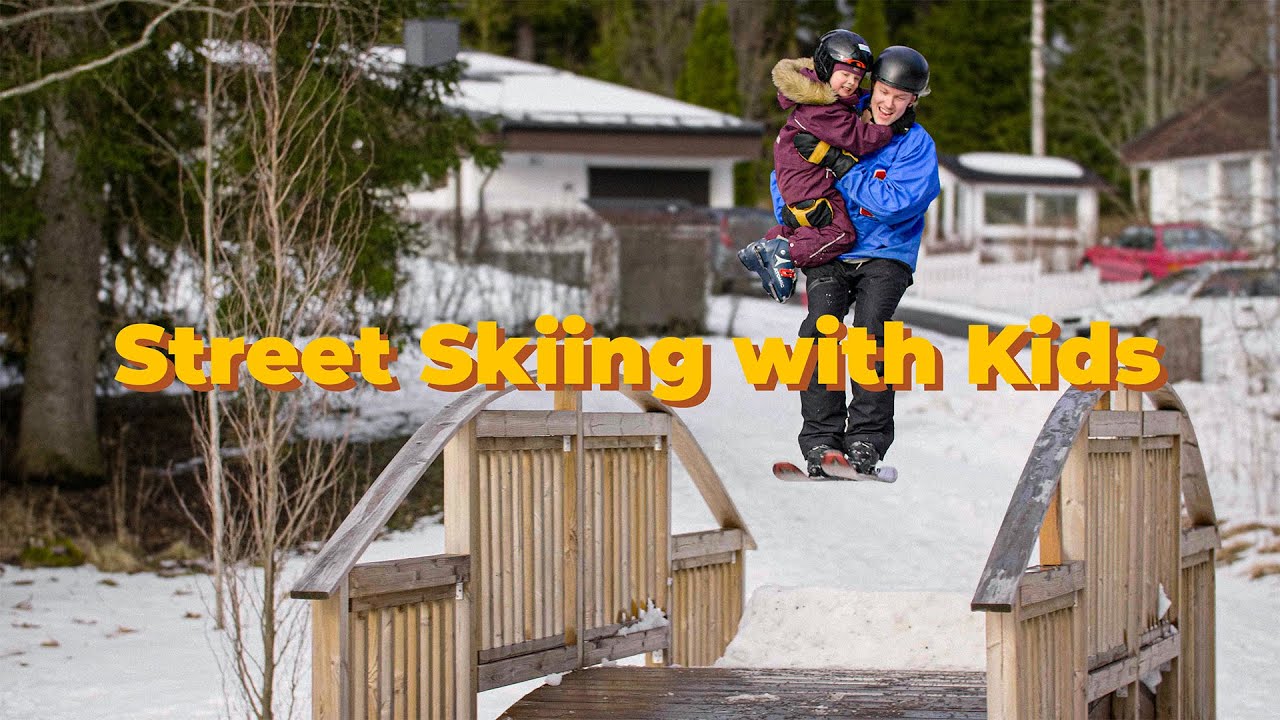
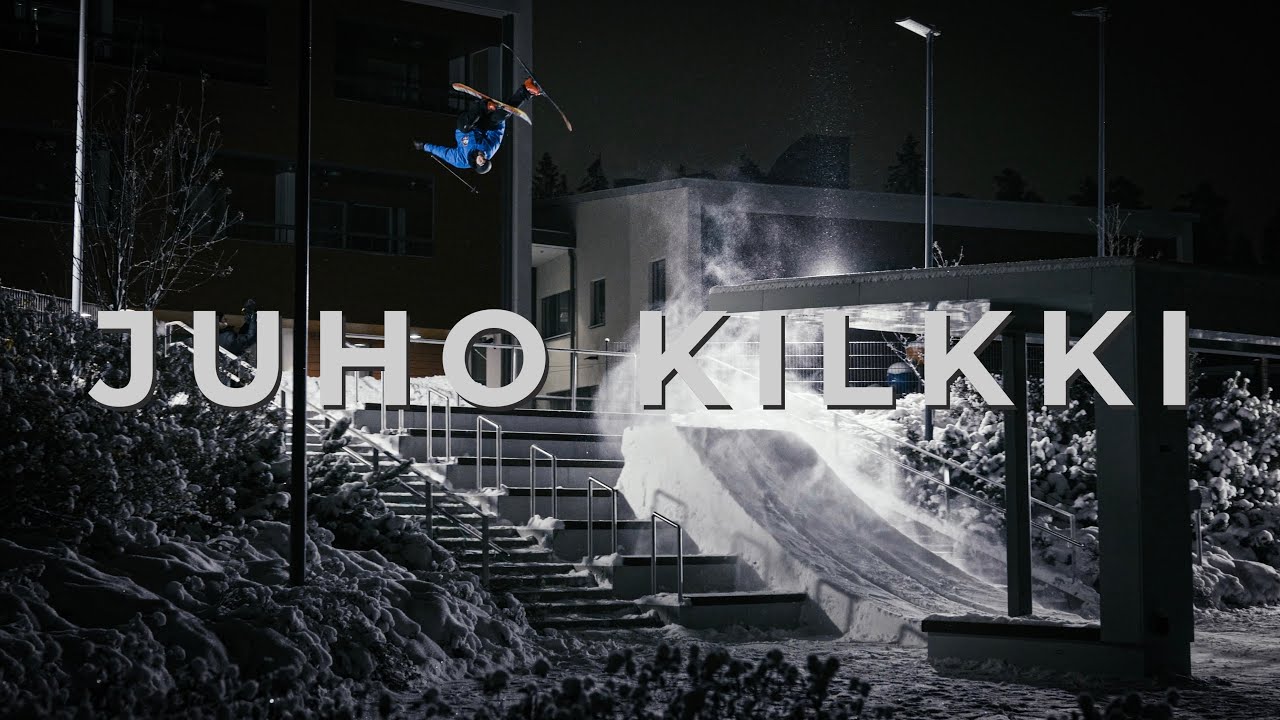
The street in Jyväskylä looked too flat for skiing until the shovel line was finished. Snow packed into a short in-run, a rail waiting in the cold, a camera fixed where the trick either worked or looked impossible. Juho Kilkki’s career began in that kind of setting, far from contest scaffolding and federation bibs. Real Skifi did not ask whether a spot was built for skiing. Kilkki, Ilkka Hannula, Verneri Hannula and Janne Korpela treated the city as a puzzle: stairs, walls, playgrounds, roofs, benches, ice, water, plastic, gravity and timing all became part of the run.
Laajavuori Without Coaches Or A Plan
The official Real Skifi history places the early crew at Laajavuori, the small local hill in Jyväskylä. Juho, Ilkka and Verneri spent their early and mid-teen years riding the bus after school and skiing there almost daily. The important detail is what they did not have. There were no sports clubs or formal coaches guiding them into a competition structure. Instead, the local scene gave them excitement, friends and the thrill of learning tricks together. That environment shaped Kilkki’s skiing before any sponsor or audience arrived: repetition, curiosity, small-hill creativity and the habit of solving problems without waiting for permission.
The February 2011 Video That Escaped Finland
Real Skifi began filming urban skiing in late 2010 after Janne Korpela joined the group with a camera. The first episode appeared in February 2011, and the freeski world reacted quickly. The formula was simple but hard to copy: short spots, strange tricks, clean editing, dry Finnish humor and ideas that made viewers replay clips to understand how they worked. Kilkki became one of the central bodies in that experiment. His skiing did not rely on huge jumps or long lines. It relied on reading a feature differently, then making the impossible-looking movement feel controlled.
Partly Cloudy And The Level 1 Bridge
In 2013, Real Skifi produced a segment for Level 1’s Partly Cloudy. That was a major bridge between Finnish internet creativity and the established ski-movie world. Level 1 had long been a reference point for urban skiing, park style and progressive film parts, but Real Skifi brought a different tone. The crew was less interested in making a handrail look dangerous in the classic street-film sense. They wanted the viewer to laugh, pause, rewind and ask how the trick had been imagined. Kilkki’s role in that period helped push freeski video toward invention, not only execution.
Organic Skiing Around Home
Kilkki’s 2016 video part Organic Skiing is one of the clearest individual statements in his archive. He described it as a part made with his wife during the winter, filmed by walking to almost every spot from home. The rules mattered: natural terrain for speed, natural light for filming, and local Jyväskylä spots already shaped by earlier crews such as Tikut Gang. That constraint gave the video a specific texture. No winch, no huge build, no artificial drama. The skiing came from stairs, banks, snow piles, handrails, wall contact, presses, slides and the patience to make nearby terrain feel complete.
Newton’s Laws With Dumbbells And Floaters
Real Skifi’s science-themed period shows the most recognizable side of Kilkki’s mind. Newton’s Laws used skiing to test physics in ridiculous practical form: weights in hand, floaters attached, rotations altered, force turned into comedy. The jokes worked because the skiing was real. A trick still needed a takeoff, balance, axis control, landing pressure and enough courage to drop in. Kilkki’s creative value comes from that double register. He can make a clip look like a school experiment, but underneath the humor is serious body control, rail awareness, switch timing and trust in a very odd setup.
Tenet, Relativity And Skiing As Film Logic
Real Skifi also moved into filmmaking concepts that had little to do with traditional ski parts. Tenet played with reverse movement and time logic. Relativity used skiing to illustrate the subjective feeling of time. Transitions turned editing cuts into the main idea rather than hiding them between tricks. Kilkki’s skiing became part of a larger cinematic grammar. A rail was not only a rail. A wallride could become a cut point, a landing could become an in-run, an out-run could reverse into a takeoff, and a fall could become part of the timing. This is where he moved beyond “street skier” into filmmaker-skier territory.
Mad Professors Of Skiing And The Story Behind The Trick
The documentary Mad Professors of Skiing gave Real Skifi a longer historical frame. iF3 lists Juho Kilkki as director, CEO, skier and filmmaker, with the film described as a full-length documentary about twelve years of memories and moments from the crew. That matters because Real Skifi’s best clips often look effortless from the outside. The documentary format exposes the hidden work: failed ideas, friends, family, risk, planning, building, editing, weather and the pressure of turning a local experiment into a career. Kilkki’s importance sits partly in that transparency. He helped show how creative skiing is made, not only how it lands.
Episode 20 With Ilkka Hannula
Episode 20, released in 2024, stripped away some of the science-fiction trick language and returned to a more direct street part with Kilkki and Ilkka Hannula. Downdays described it as technical rail tricks, playful spots and funk rather than typical Real Skifi sci-fi. That episode is useful because it proves Kilkki’s skiing still works without the most elaborate concept. He can ski rails, transfers, wall features and urban lines in a clean street format. The invention remains, but the base is solid: edges locked, body centered, speed managed, feature understood before the trick begins.
Episode 21 And The Crew After Reinforcements
Real Skifi’s later history did not freeze around the original group. In 2023, the crew added new skiers, including Kalle Tenhunen and Elias Lajunen, and Episode 21 presented that next stage. The official history describes this as a pivotal moment after more than fifty videos and fifteen years of work. Kilkki’s role changed with that evolution. He was no longer only one of the skiers in front of the lens. The Real Skifi site describes him as someone who broadened into directing, filming and editing. That shift makes his legacy stronger. He helped build a platform that could outlast one generation of bodies.
Finnish Broadcast Booth And Street Knowledge
By 2026, Kilkki’s career had expanded into a different kind of ski work. In his Newschoolers Hall of Fame interview, he described a side role as a freeski specialist for the Finnish Broadcasting Company, calling tricks during World Cup broadcasts. The contrast is sharp. His own career came from streets, jokes, physics experiments and Jyväskylä sidewalks, yet he now analyzes Olympic-track slopestyle and big-air skiing for Finnish television. That gives the broadcast booth an unusual voice: not a standard ex-contest skier, but someone who understands technique through creativity, rail logic, timing and the mechanics of making difficult movement readable.
The MacGyver Of Freeskiing
Real Skifi calls Kilkki the “MacGyver of freeskiing,” and the label fits because his career is built around using whatever is available. A plastic bottle, a dumbbell, a bench, a child’s playground, a frozen puddle, a wall, a snowbank, a reverse edit, a transition, a family walk to a spot: all can become skiing material. That approach influenced a generation of skiers who learned that progression does not always require a bigger jump. Sometimes it requires a stranger question. Kilkki’s legacy is not a medal count. It is a way of seeing terrain, filming skiing and proving that imagination can be as technical as a trick.