Mount Shiribetsu
Japan
Japan
Backcountry volcano zone beside Rusutsu in southwest Hokkaido | Known for: Shiribetsu-dake at 1107 meters, South Face bowls, West Bowl touring, Northwest Gully, heli-skiing terrain, deep Hokkaido powder, and fast access from Rusutsu Resort | Season: January to March depending on snowpack and avalanche conditions | Best for: experienced ski tourers, guided backcountry crews, powder filmers, and skiers looking for compact Japanese volcano terrain
Shiribetsu Dake Above Rusutsu
Mount Shiribetsu, or Shiribetsu-dake, rises to 1107 meters beside Rusutsu in southwest Hokkaido, close enough to the resort base that the mountain feels almost too accessible for how serious it can become. The existing skipowd.tv location page already frames it correctly: no lifts, no piste network, no park, only a compact volcanic backcountry peak with steep bowls, trees, gullies and Hokkaido storm snow.
The peak sits inside the wider Hokkaidō powder map, but it has a different rhythm from the resort-based tree skiing that makes the island famous. Shiribetsu is not a place for casual sidecountry laps through an open gate. It is a touring and guided backcountry objective where approach choice, wind loading, route spacing and avalanche timing decide the day before anyone thinks about footage.
South Face Bowls And The Rusutsu Parking Approach
The South Face is the most visual version of Shiribetsu. HokkaidoWilds describes it as a prominent face near Rusutsu, with bowls and gullies directly south of the summit that can be steep and very deep through much of the season. The practical detail is important: the route can start from the large Rusutsu Resort parking area, which makes logistics easy without making the skiing controlled.
That access can create a false sense of simplicity. The resort buildings, roads and hotels are close, but the South Face itself is natural terrain with no patrol control, no marked exits and no in-bounds safety net. A good crew treats the first lap as an information lap. Watch for wind slab, storm slab, glide cracks, changing visibility and runout exposure. When the snowpack is stable, the face can deliver clean, filmable Hokkaido powder turns. When it is not, the same easy access puts skiers under real overhead hazard quickly.
West Bowl And The Popular Touring Line
The West Bowl is another key Shiribetsu reference. HokkaidoWilds calls it one of the volcano’s most popular routes, with straightforward access, relatively simple navigation and several descent options. That combination explains why the zone appears often in Hokkaido backcountry itineraries. It offers enough terrain to feel rewarding, but not the expedition scale of larger volcanic objectives.
Popularity should not be confused with low consequence. A popular skin track can cross loaded terrain. A familiar bowl can still slide after wind or rapid warming. The best West Bowl days usually come from early starts, clean weather windows and careful group spacing. Skiers who arrive late may find tracked snow, crowded transitions or less room to manage safe uptracks and descent lines. Shiribetsu is compact, so traffic matters. One group’s poor decision can affect another group in the same drainage.
Northwest Gully And The 989 Meter False Peak
The Northwest Gully route gives Shiribetsu a slightly different personality. HokkaidoWilds describes it as a mellower way toward the popular 989 meter false peak, with lower traffic than the West Bowl and descent options for experienced backcountry travelers prepared to assess the snowpack carefully. That false summit is useful because it gives skiers a practical target when the true summit is wind affected or visibility is closing.
The northwest side also shows why Shiribetsu works as a training mountain for strong touring crews. It lets skiers manage smaller decisions before bigger ones: where to set the uptrack, whether to stop below a convexity, how to read wind transport, which aspect has stayed cold, and when to turn around. For video, the terrain can look simple compared with Alaska or the Alps. For actual skiing, its value is decision density. Every short lap teaches something.
Heli Skiing And The Steep Hokkaido Compact Zone
Hokkaido Backcountry Club describes Shiribetsu-dake as heli-skiing terrain with trees, steep chutes and open glades, reaching the same 1107 meter summit area. Their terrain notes mention slopes in the 20 to 40 degree range and average runs of about 650 meters. That confirms the mountain’s serious profile. Shiribetsu is not only a touring hill beside a resort. It is coherent enough to support guided heli operations when weather, permits, avalanche conditions and group ability align.
For skipowd.tv, that heli-skiing context helps explain the terrain type without turning the page into an operator profile. Shiribetsu has short access, clean fall lines and enough pitch to matter on camera. The best footage will usually come from powder turns, tree exits, wind-buffed panels, compact couloirs and fast resets rather than huge vertical. Its strength is concentration. In the right window, a crew can ski multiple quality lines in a short area without a long expedition approach.
Stomp It Travels And The Hokkaido Education Angle
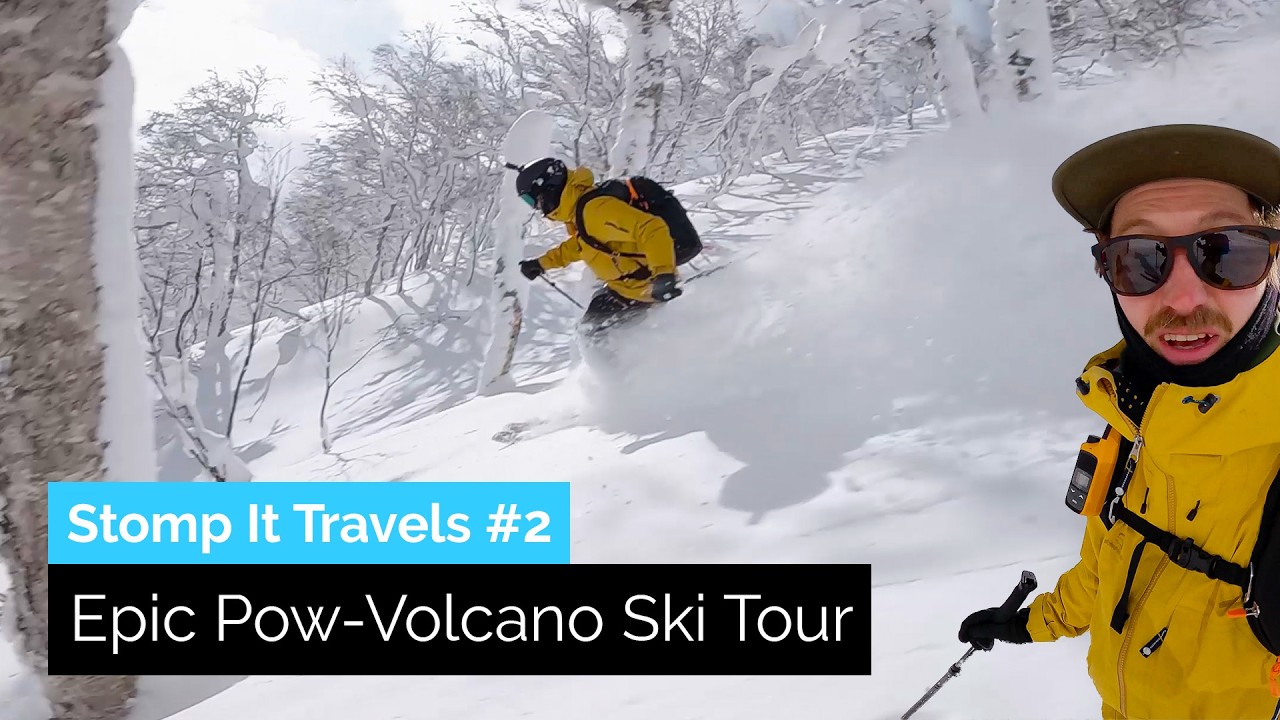
The existing Mount Shiribetsu page on skipowd.tv already includes the video Epic Japanese Pow-Volcano Ski Tour in Japan from Stomp It Tutorials. That is a useful editorial connection because Shiribetsu fits educational ski travel better than pure hero skiing. The mountain is a place where viewers can understand skinning, powder turns, avalanche caution, aspect choice and how a compact volcano differs from resort powder.
Japan ski content often focuses on deep resort trees, night laps and lift-accessed powder. Shiribetsu adds another layer. It shows how quickly the Hokkaido experience changes when the rope, lift and patrol structure disappear. A skier who looks comfortable in Rusutsu trees still needs backcountry equipment, partner rescue skills and conservative judgment on Shiribetsu. That contrast makes the location valuable for tutorials, travel vlogs and backcountry progression content.
Rusutsu Base Logistics And New Chitose Access
Rusutsu is the practical base. The resort sits close to the mountain’s south-side access and provides lodging, food, onsen options, parking and a weather fallback if Shiribetsu is not a responsible objective. Rusutsu’s official winter material describes the resort as about 90 minutes by car from Sapporo and New Chitose Airport, with 4 gondolas and 14 lifts across 3 peaks and 37 runs.
That proximity is the main reason Shiribetsu works well for mixed trips. A crew can tour early if the wind is down, then move to lift-served Rusutsu laps when visibility drops or avalanche conditions worsen. The smartest plan keeps both options open. Do not build an itinerary that requires Shiribetsu to be safe on a specific day. Build a Hokkaido powder week where Shiribetsu becomes the objective only when the snowpack, weather, parking and group ability all line up.
Avalanche Bulletins And No Gate Discipline
Shiribetsu sits inside a region covered by Japan Avalanche Network and Hokkaido backcountry bulletin resources, including the Shiribeshi area around Niseko, Yotei, Shiribetsu and Yoichi. Those bulletins should be part of every plan, but they do not replace field assessment. Local wind, sun, new snow, temperature rises and glide activity can all change the decision after the morning forecast is read.
The route also demands respect for resort boundaries and private land. Published Hokkaido backcountry guidance notes that skiers planning to tour Shiribetsu should start from the bottom, because Rusutsu does not provide a legal backcountry gate from the ski area. That means approach planning, parking choices and communication with local rules matter. Carry beacon, shovel and probe. Ski with partners who know rescue. Keep uptracks out of runouts. Avoid stacking groups below loaded bowls. Treat every line as unmanaged mountain terrain.
The Mount Shiribetsu Use Case For Freeskiers
Mount Shiribetsu matters because it gives Hokkaido a compact backcountry volcano that is easy to reach but not easy to reduce. The concrete pieces are clear: 1107 meters, South Face bowls, West Bowl touring, Northwest Gully access, a 989 meter false peak, heli-skiing terrain, Rusutsu logistics, Hokkaido storm snow and a verified skipowd.tv video footprint through Stomp It Travels.
January and February are the strongest months for cold powder, frequent resets and deep tree exits. March can be useful for clearer skies, longer light and more predictable filming windows, but solar warming and glide hazards need extra attention. For skipowd.tv, the strongest tags are Mount Shiribetsu, Shiribetsu-dake, Rusutsu, Hokkaidō, Japan, South Face, West Bowl, Northwest Gully, ski touring, backcountry, powder, Japow, volcano skiing, heli skiing, Stomp It Tutorials and Rusutsu Resort. Shiribetsu’s concrete value is simple: it turns a small Hokkaido volcano beside a major resort into a serious powder classroom for skiers who bring the right equipment, timing and judgment.