Maggie Voisin
Profile and significance
Maggie Voisin is one of the defining freeskiers of her generation: a slopestyle and big air specialist from Whitefish, Montana, who grew from a small Northwest hometown hill into a seven-time Winter X Games medalist, three-time U.S. Olympic team member and globally recognised film skier. Born on 14 December 1998 and raised chasing laps at Whitefish Mountain Resort, she switched from ski racing to slopestyle as a kid and joined the U.S. Freeski Team as a teenager. By 15 she had already claimed X Games silver and a nomination to the Sochi 2014 Olympic team, instantly becoming a symbol of the sport’s exploding youth movement.
Over the next decade Voisin anchored the U.S. women’s park and pipe programme, stacking X Games medals, World Cup podiums and two Olympic finals appearances while pushing progression with both-way doubles and highly technical rail runs. At the same time, she became increasingly visible in the film world, eventually winning iF3’s Standout Skier of the Year award for her segments in Teton Gravity Research and Good Company projects. Today, after stepping back from full-time contests, she stands at a rare intersection: contest legend, backcountry film standout and athlete-representative on the board of U.S. Ski & Snowboard, helping shape the future of the sport she grew up inside.
Competitive arc and key venues
Voisin’s competitive story began on the slopes above her hometown, where she first clipped into skis at three years old and quickly gravitated toward terrain parks. Early success at regional events led to her selection for the U.S. Freeski Team in her mid-teens. The 2013–14 season marked her international breakthrough: she posted top-four results on the FIS World Cup tour and then, at just 15, won slopestyle silver at Winter X Games Aspen, becoming the youngest skier ever to medal at X Games. That performance secured her spot on the Sochi 2014 Olympic team, though a fibula fracture in training sidelined her before she could start.
Rather than derail her career, the setback became a pivot point. Voisin returned to the circuit, collected more X Games hardware and in 2018 wrote her name into history by winning women’s ski slopestyle gold at Winter X Games Aspen, the first American woman ever to win that discipline. Another slopestyle gold followed at X Games Norway at Hafjell Resort in 2020, along with big air medals that brought her total X Games haul to seven medals across slopestyle and big air. On the Olympic stage she competed at PyeongChang 2018, finishing fourth in women’s slopestyle, then at Beijing 2022, where she qualified strongly and skied to fifth place in a tightly scored final.
Across her contest career Voisin also earned six World Cup podiums and multiple Dew Tour and elite-invitational appearances, but the venues that stand out are the ones where her style seemed to fuse with the course: the sculpted lines of Aspen’s slopestyle park, the scaffolding and steep landings of big air competitions, and the progressive jump and rail sets of European stops like Corvatsch and Stubai. By the time she stepped away from full-time competition around 2024, she had spent a decade at the sharp end of every major park and big air field in the world.
How they ski: what to watch for
Voisin’s skiing is built on power, precision and a deep sense of timing. In slopestyle, she is known for rail sections that pack in real technical difficulty without sacrificing flow: switch-on entries, disaster transfers, and clean two-way spin-offs that set up her jump line rather than draining momentum. Watch how she keeps her upper body calm while the skis do the work; on kinked rails and gaps her shoulders barely move, which allows her to commit fully to the feature and still exit with speed.
On jumps, her hallmark has been a willingness to push rotation while maintaining unmistakable grabs. She was among the first U.S. women to bring both-way double corks—like left-side double cork 1260s with solid mute or safety grabs—into high-level competition, and she built full runs around combinations of switch and forward spins to both sides. In big air she often favoured flat and corked 900s, 1080s and 1260s with long-held grabs over spin-count for the sake of it, a choice that helped her stand out in fields where style and precision increasingly decide podiums. For viewers studying her skiing, slow down her runs and notice how early she sets rotation at the lip, how long she stays connected to the ski during the grab, and how calmly she absorbs the landing.
Resilience, filming, and influence
Resilience is threaded through Voisin’s career. Missing the Sochi Olympics because of injury could easily have defined her story; instead she returned to X Games and World Cups, rebuilt her confidence and came back to the Games four years later as an established threat. Along the way she navigated personal loss and the mental wear of life on tour, speaking publicly about the need to manage pressure and keep perspective. That openness, combined with her results, turned her into a role model for younger athletes trying to balance ambition with health.
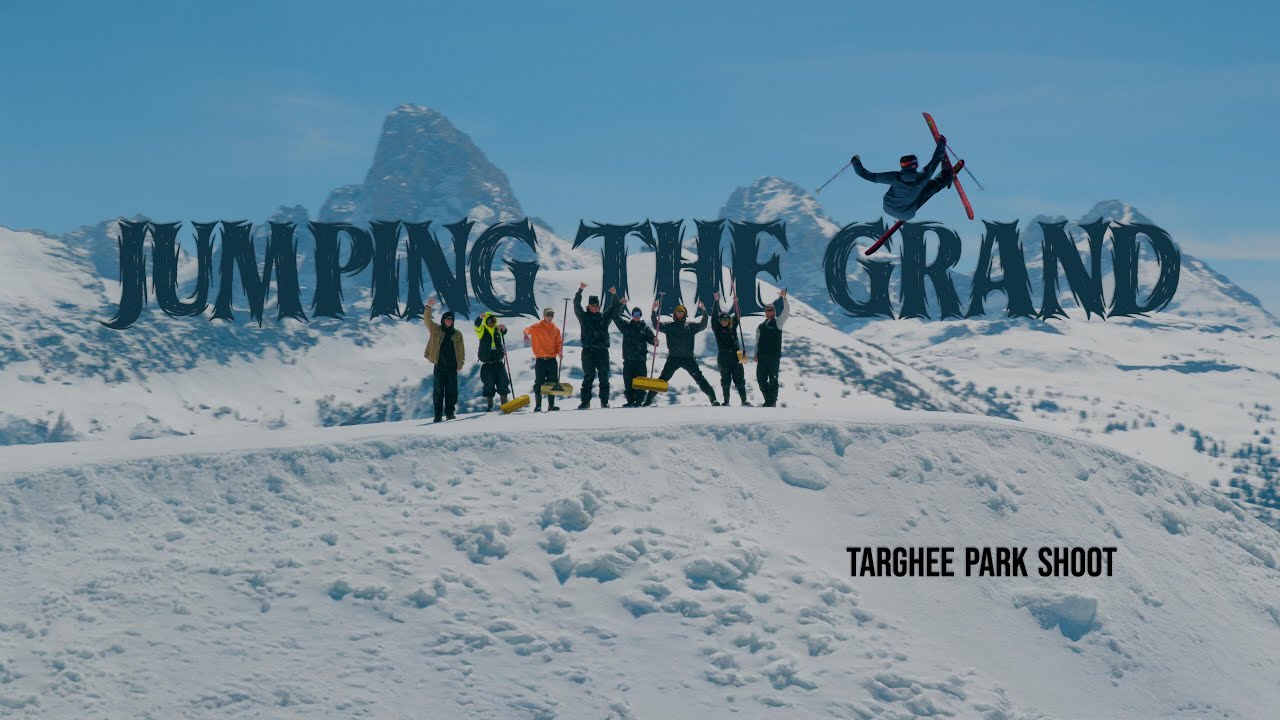
In the mid-2020s she began rebalancing toward filming and freeride projects, a shift that had been on her mind for years. Working with crews like Teton Gravity Research in films such as “Legend Has It” and later “Pressure Drop,” and with Good Company on the backcountry-heavy “Crescendo,” she traded start gates for sled bumps, bootpacks and helicopter bumps in British Columbia, Alaska and Japan. Those segments proved she could translate contest-honed airtime to natural terrain: building backcountry booters, linking pillows and jumping off natural features with the same commitment she once brought to slopestyle jumps. Her film work earned her iF3’s women’s Standout Skier of the Year recognition, and cemented her status not just as a contest star but as one of the most complete all-round skiers of her era.
Off the snow, Voisin has also taken on leadership roles. She joined the board of U.S. Ski & Snowboard as the freeski athlete representative, bringing a decade of World Cup and Olympic experience into governance conversations. That combination of on-snow influence and off-snow advocacy means her impact on freeskiing extends well beyond her own segments and scoresheets.
Geography that built the toolkit
The mountains around Whitefish, Montana, are foundational to who Maggie Voisin is as a skier. Learning to ski at Whitefish Mountain Resort gave her a mix of groomers, side hits and variable conditions that forced her to develop real edge control long before she specialised in park. From there she began traveling to larger freestyle hubs, spending crucial development years training in the parks of Colorado and Utah and on the progressive jump lines of venues that regularly host World Cups and X Games.
Summer and shoulder seasons took her to places like the glacier lanes of Mount Hood in Oregon, where she hosted takeover sessions at Windells and packed long days of laps and airbag training into a compact timeframe. Later, as her focus shifted toward filming, her geographic footprint expanded again: deep snow in interior British Columbia, big faces and couloirs in Alaska, and storm cycles in Japan all became canvases for her backcountry evolution. Each environment added a layer to her toolkit, from reading variable park conditions in Aspen to picking safe lines through natural features in the Coast and Chugach ranges.
Equipment and partners: practical takeaways
Voisin’s equipment story mirrors her evolution from park-focused contest skier to all-terrain film athlete. Long associated with K2 Skis, she has spent much of her career on twin-tip platforms purpose-built for slopestyle and big air, tuned for reliable pop, strong edges and predictable landings on sometimes-icy landings. Helmets, goggles and protective gear from brands she has worked with over the years—paired with outerwear that can handle both park impacts and long backcountry days—have rounded out a kit designed for high-consequence skiing in all conditions.
Energy and lifestyle support from partners such as Monster Energy has helped her sustain the travel-heavy contest years and later backed her as she transitioned into the film space. As she stepped deeper into freeride and backcountry projects, she also aligned with technical outerwear and mountain brands, including becoming an ambassador for Norwegian outerwear specialist Norrøna, whose shells and insulation are built for long, stormy days in serious terrain. For skiers looking to learn from her setup, the key takeaway is not to copy every logo, but to understand the logic: skis that match your terrain and style, boots that fit well enough to trust on big hits, and outerwear that lets you stay warm, dry and focused whether you are lapping the park or building a jump hours from the nearest lift.
Why fans and progressing skiers care
Fans care about Maggie Voisin because she has touched every major corner of modern freeskiing. She has X Games golds, Olympic finals and World Cup podiums; she has survived and grown from injuries and setbacks; and now she has film parts that place her alongside the heaviest backcountry skiers in the world. Few athletes manage that breadth, and even fewer do it while maintaining the accessible, grounded presence she has carried from Whitefish to the biggest stages in the sport.
For progressing skiers, her path is a case study in long-term development. She shows how an early love for a local hill can grow into international success, how technical progression in the park can later translate into powerful backcountry skiing, and how it is possible to shift goals mid-career without abandoning what made you successful in the first place. Watching Voisin, the lessons go beyond trick lists: commit to good fundamentals, treat style as non-negotiable even as you push difficulty, respect the mountains and the people around you, and be willing to reinvent yourself when the time is right. Whether you know her from an X Games broadcast, an Olympic final or a TGR segment, Maggie Voisin’s skiing—and the way she has steered her career—has already left a lasting mark on freeskiing.