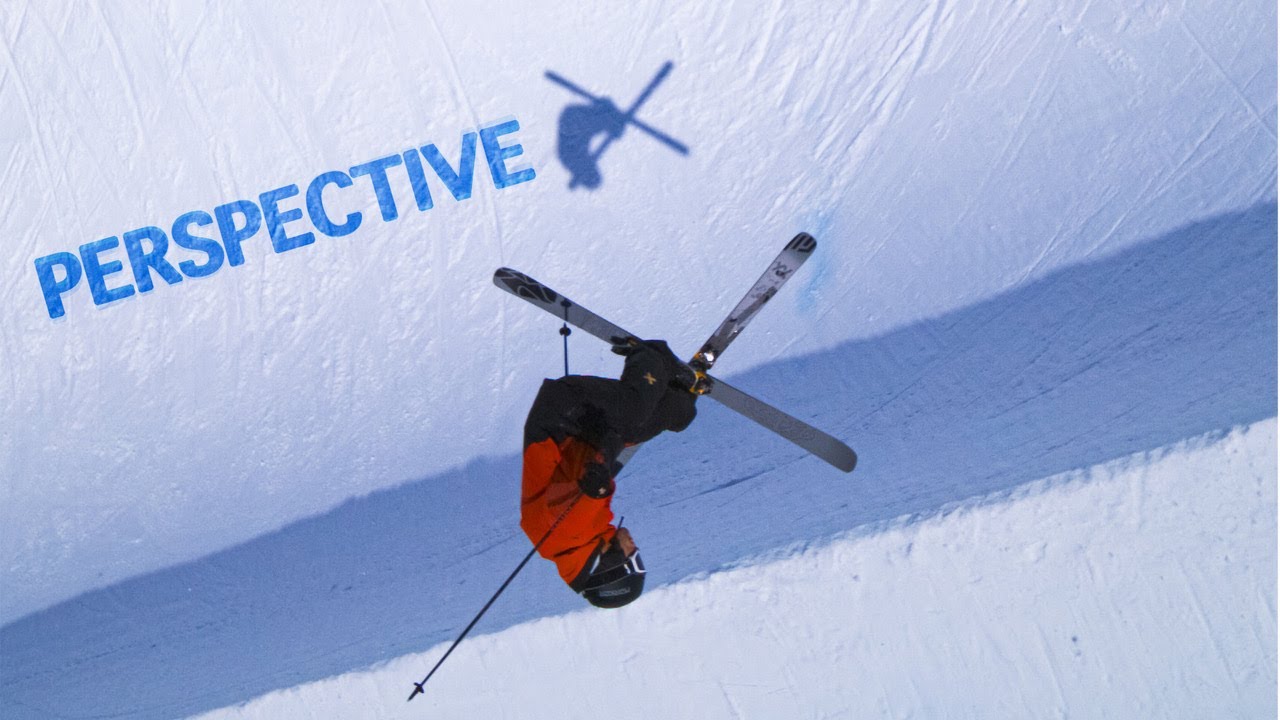
Kévin Rolland
Profile and significance
Kévin Rolland is one of the defining French athletes of modern freeski halfpipe: a rider who helped push the event from “new-school curiosity” into a fully professional, Olympic-level discipline. Born in 1989 in Bourg-Saint-Maurice (Savoie) and developed through the mountains around La Plagne, he became a rare blend of early prodigy and long-haul competitor—someone who kept returning to the top tier across multiple eras of trick progression, judging trends, and equipment changes.
His résumé is anchored by a bronze medal at the Olympic Winter Games in 2014, along with major titles in the world championship and World Cup ecosystem, and multiple wins at the Winter X Games in the United States. Those results matter, but so does the timing: Rolland’s peak years overlapped with the period when halfpipe skiing was standardizing its technical language—how amplitude, rotation, grabs, and “use of the pipe” were scored—and when the global training pipeline for halfpipe athletes was becoming more structured. He isn’t just “successful”; he’s a reference point for how elite halfpipe skiing is supposed to look when it’s big, controlled, and complete.
Competitive arc and key venues
Rolland entered the Freestyle Ski World Cup in 2005 at 16, then stepped quickly into championship territory: junior world champion in 2007 (Airolo, Switzerland) and senior world champion in 2009 (Inawashiro, Japan) in ski halfpipe. Over the next decade-plus, he remained a constant in the sport’s most important arenas, winning the halfpipe crystal globe in 2009, 2016, and 2017—evidence of season-long consistency rather than one-off peak form.
On the showcase side of freeski, his name is closely associated with X Games halfpipe battles in Aspen Snowmass, where he won the event in 2010, 2011, and 2016. He also doubled up with victories at X Games Europe hosted in Tignes in 2010 and 2011, which helped cement the Alps as a legitimate stage for the same high-pressure, high-consequence halfpipe skiing traditionally seen in North America.
The Olympic storyline is equally central. At Sochi 2014—where men’s ski halfpipe made its Olympic debut—Rolland earned bronze, opening a new chapter in how freeski halfpipe athletes were perceived outside the core action-sports audience. Later Olympic appearances included PyeongChang 2018 and Beijing 2022, where he returned to place sixth in the halfpipe final and served as co-flag bearer for France at the opening ceremony. His last World Championships start listed by the FIS came in 2023 at Bakuriani, where he finished seventh in the men’s freeski halfpipe final—an end-of-era result that still reads as elite, given the depth and difficulty of the modern field.
How they ski: what to watch for
When Rolland is “on,” the first thing you notice is the scale: he’s built for amplitude, and he uses that height to make his run look calm instead of rushed. In halfpipe judging, big air alone isn’t enough—athletes need clean takeoffs, stable axis control through rotation, and landings that keep speed for the next wall. Rolland’s best runs are a clinic in that rhythm: he carries pace without appearing to chase it, and he tends to make difficult tricks look slower, which is often a sign of real control rather than cautious skiing.
Watch his approach to grabs and presentation. In freeski, a “spun” trick can still feel incomplete if the grab is short, late, or unstable. Rolland has long been associated with runs where grabs are integrated rather than tacked on, and where the trick selection feels designed as a full composition—left and right spins balanced, direction changes that read clearly, and enough variety that the run doesn’t blur into repetition. That kind of structure matters as much today as ever, even with the rapid escalation of trick difficulty in big air and slopestyle: halfpipe is still the discipline where style and clarity are easiest to compare head-to-head.
For fans learning how to evaluate halfpipe skiing, Rolland is also a useful case study in “use of the pipe.” Look for how far up the wall he travels, how consistent his air is from hit to hit, and whether he maintains line discipline so the run stays symmetrical. When he’s skiing well, his runs tend to look like they were drawn with a ruler—clean transitions, minimal chatter, and speed that remains intact all the way through.
Resilience, filming, and influence
Rolland’s influence isn’t only competitive. He became part of the public face of freeski halfpipe for a broader audience—both through Olympic visibility and through the way his name appears in projects that try to translate mountain sports for non-specialists. A concrete example is his inclusion as one of the athletes featured by Ubisoft around the “Road to the Olympics” expansion for Steep, reflecting how recognizable he had become as a representative of high-level freestyle skiing.
Just as important is the resilience narrative, because it’s verifiable and it shaped the second half of his career. In May 2019, Rolland suffered a severe training crash at home in La Plagne with multiple fractures, lung injury, and head trauma, spending days in a coma and being told he might never ski again. The comeback wasn’t an abstract “feel-good” storyline; it was a return to the top layer of the sport, culminating in a sixth-place Olympic finish in 2022. That arc matters in freeski culture because halfpipe progression is inherently risky—athletes are constantly negotiating the line between pushing difficulty and preserving the ability to compete for years.
Influence can also be seen closer to home. French freeski has produced a deep generation of slopestyle and big air talent, but halfpipe specialists are rarer, and Rolland’s longevity helped keep that pathway visible in France. Even for skiers who don’t ride halfpipe, his career is a reminder that technical progression is not only about the newest trick; it’s also about how long you can keep performing under pressure, and how well you can rebuild after a major interruption.
Geography that built the toolkit
Rolland’s story is inseparable from the geography of the Alps. Coming from Bourg-Saint-Maurice and representing the Club des Sports of La Plagne, he developed in a region where access to terrain, lift infrastructure, and a strong winter-sport culture can create an unusually high training volume. For halfpipe skiers, that volume matters: the discipline is as much about repetition and timing as it is about raw courage. The more days you spend in a pipe, the more precisely you learn the invisible details—where to pump for speed, how to manage the lip, how to land without washing out, and how to keep the run smooth even when the pipe wall is cut differently from venue to venue.
At the same time, his competitive circuit put him repeatedly on the most influential halfpipe venues in the world, especially the North American resorts that hosted major World Cup and championship events. Places like Park City Mountain, Copper Mountain, Deer Valley, and Mammoth Mountain each have their own snowpack, weather patterns, and pipe characteristics, and the athletes who last across many seasons are usually the ones who can adjust quickly. Rolland’s record across different years and venues suggests exactly that adaptability: a skier who could bring his own style while still meeting the technical demands of whichever pipe he was handed.
For viewers, this geographic mix is a clue to understanding his skiing: part Alpine freeride sensibility (big mountains, strong edges, comfort with speed), part contest professionalism (precision, routine building, performance under lights). That combination is a common thread among long-lived freeski champions, and Rolland fits it cleanly.
Equipment and partners: practical takeaways
At the elite halfpipe level, equipment is less about gimmicks and more about repeatability: boots that transmit edge pressure instantly, bindings that stay consistent across cold swings, and skis that feel stable on landings while still releasing cleanly on takeoff. In Rolland’s publicly listed competition setup, his boots are associated with Dalbello. That’s a practical detail for progressing skiers: halfpipe demands a boot that can absorb repeated impacts without becoming vague, while still allowing enough ankle articulation to stay centered in transitions.
Halfpipe also magnifies any weaknesses in fit. If your heel lifts, you lose precision on the wall. If your stance is too far back, you’ll fight to keep speed. Rolland’s longevity is a reminder that fundamentals—boot fit, alignment, and consistent tuning—often matter more than chasing a “pro model” aesthetic. Even strong park skiers can feel lost in a pipe until their gear feels predictable from edge to edge, hit to hit.
Another takeaway is how top halfpipe skiers manage training load. Rolland’s career included periods of high competitive density, major goals around Olympic cycles, and a return after serious injury. That kind of timeline typically requires disciplined equipment choices: fewer experimental changes mid-season, and more emphasis on what lets the athlete trust the setup. For anyone trying to improve, the lesson is simple: stability builds confidence, and confidence lets you ski with speed and commitment—which is the true currency of halfpipe.
Why fans and progressing skiers care
Fans care about Kévin Rolland because his career sits at the crossroads of freestyle skiing’s biggest transitions: the Olympic arrival of ski halfpipe, the escalation of technical difficulty, and the increasing professionalism of training and competition. He won at the highest levels in multiple formats—World Championships, World Cup seasons, X Games, and the Olympics—while maintaining a recognizable style built around amplitude, clarity, and run composition.
Progressing skiers can learn from him because his story highlights what actually separates “good” from “world-class” in a pipe. It’s not only the hardest trick; it’s the ability to repeat difficult runs with control, keep the run readable, and land in a way that preserves speed and intent. Add in the comeback after a major crash and the return to an Olympic final, and you get a rare example of the full freeski skill set: technical mastery, competitive composure, and the patience to rebuild. If you’re watching halfpipe to understand the sport—not just the highlights—Rolland is one of the clearest reference points of the modern era.