Jérôme Vallée
Profile and significance
Jérôme Vallée is a Quebec freeskier whose name is closely tied to one of the most interesting eras of urban and park skiing from eastern Canada. Active through the late 2000s and early 2010s, he grew from posting small personal edits online to riding in full-length ESK Media movies alongside some of Quebec’s most respected street and park skiers. Those films—especially “Interlude” and “Souvenirs”—put him on the radar of core freeski fans as part of a tight-knit crew stacking creative spots in Québec City, Montreal and beyond, at a time when the province was a global hotspot for progressive urban skiing.
Rather than chasing FIS points or World Cup start lists, Vallée followed the classic Quebec film path: winters built around finding rails, ledges and wallrides in cities and resorts, then stitching the best shots into parts and crew segments. In “Interlude,” he appears in a cast that includes names like JF Houle, Charles Gagnier, Alex Bellemare, Émile Bergeron and Alex Beaulieu-Marchand, a lineup that underlines how seriously the local scene took his skiing. The follow-up movie “Souvenirs” again lists him among the featured riders in a project described as “mature and creative urban skiing,” reinforcing his status as one of the solid, camera-ready street specialists of his generation in Quebec.
Competitive arc and key venues
Vallée’s story is built more on filming than on podium photographs, but a rough competitive arc still emerges if you look at where his skiing appears. Early on he shared small online edits—short “petit vídeo de ski”–style clips showing park laps and playful freestyle skiing with friends on Quebec hills. Those early uploads carried the same DNA as the later film parts: creative use of modest features, an obvious love of sliding steel and an eagerness to grab any camera that was rolling.
His major “venues” became the locations chosen by ESK Media. Urban segments in Québec City and Montreal put him on long handrails, concrete ledges and kinked setups that defined the province’s street image during that era. Resort-based sessions at Mont-Sainte-Anne gave him more traditional park and side-hit playgrounds—jump lines, park rails and spring sidecountry lines filmed when the snow softened. The crew then exported that formula to Europe, with “Souvenirs” shot in places like Tignes and Val d’Isère, proving that their approach to street and resort jibbing translated smoothly from Quebec to the Alps.
Instead of a list of contest results, Vallée’s “competitive record” lives in how often he is named in trailers, reviews and festival write-ups. When film descriptions single out “some of Quebec’s best skiers” and include his name in the same breath as internationally known riders, it shows the respect he earned inside the scene. For a freeski culture that often values filmed impact as highly as formal medals, that credit is its own kind of result sheet.
How they ski: what to watch for
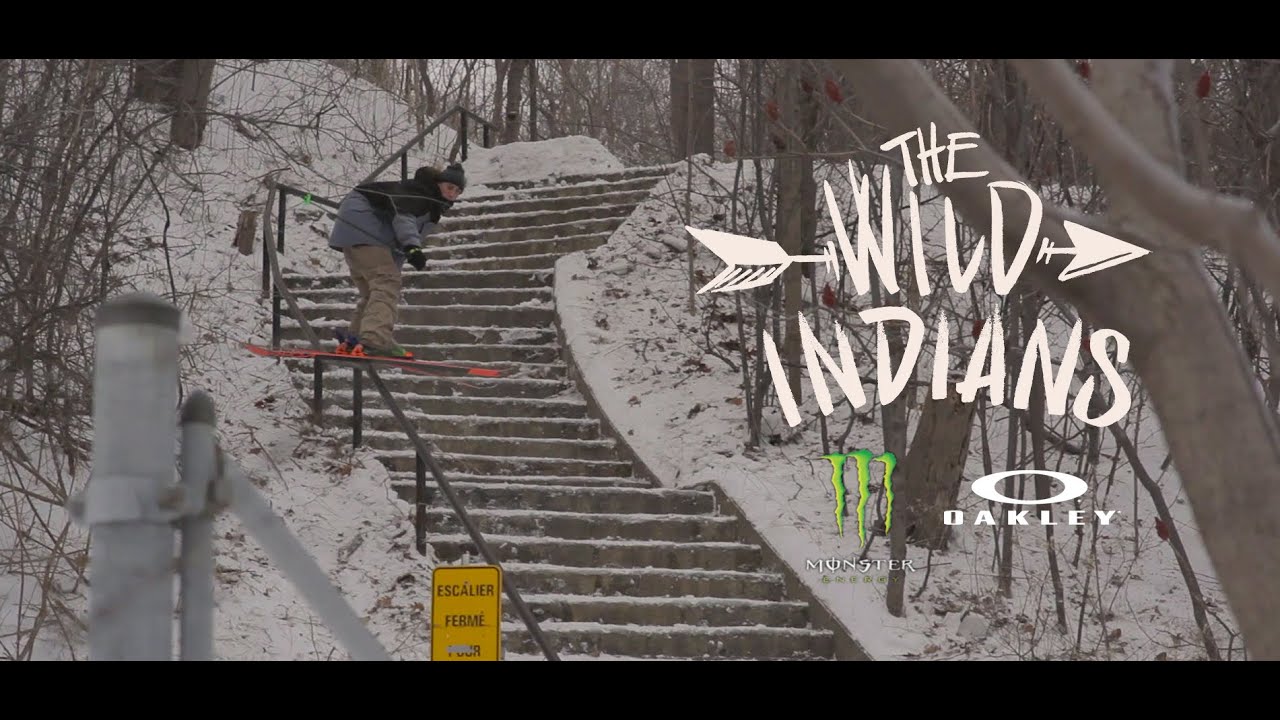
Watching Jérôme Vallée in ESK Media films is to see a skier built for the streets: compact, balanced and clearly comfortable on metal. His urban segments are dominated by rail and ledge work rather than giant step-down gaps. Approach lines are tidy and deliberate; he sets his speed early, squares up to the feature and then lets the trick develop without last-second panic. Expect front and back slides that lock in for the full length of the rail, smooth spin-ons and spin-offs, and the occasional wallride or transfer line that uses the architecture of the spot rather than just the most obvious handrail.
On resort features, the same habits show through. Park rails at places like Mont-Sainte-Anne become testing grounds for the technical tricks that later appear in city spots, while mid-sized booters provide room for clean spins and solid grabs that still feel grounded in real-world skiing. His style is not about the largest spin count; it leans more towards tricks that match the scale of the feature and can be repeated and refined over a season. For progressing park and street skiers, the useful lesson is how much of his skiing relies on good basics—speed control, centred stance and early commitment—rather than wild, last-moment improvisation.
Resilience, filming, and influence
Vallée’s influence comes from persistence and presence in a specific slice of freeski history. Being part of multiple ESK Media movies meant showing up year after year: scouting spots in frigid Quebec winters, shovelling landings and in-runs, and accepting that most attempts would end in bails before one clip finally stuck. That willingness to endure cold nights, broken shovels and repeated tries is a quiet form of resilience that every street skier recognizes, even if it never appears in a result list.
Inside the crew dynamic, his role is that of a reliable segment rider—someone who can be counted on to produce a handful of strong shots during a season and to keep morale high when the weather and logistics are difficult. The fact that reviews and trailers for both “Interlude” and “Souvenirs” mention him by name, alongside riders who went on to larger international careers, shows that editors saw his footage as part of the films’ backbone. For younger skiers who watched those movies when they dropped, he was one of the faces that made urban Quebec skiing feel both aspirational and relatable.
Geography that built the toolkit
The geography behind Jérôme Vallée’s skiing is almost a character in its own right. Québec City and Montreal provide dense urban canvases: long concrete stair sets, metal handrails buried in snowbanks, city park paths and industrial backdrops. Winters there are cold and snowy, which means the spots are plentiful but the conditions are harsh, forcing riders to deal with ice, wind and short daylight. That environment naturally develops precision on takeoffs and landings, careful inspection habits and a tough mindset when it comes to hiking a set of stairs fifty times for one clip.
Mont-Sainte-Anne and other regional resorts add a complementary layer. Spring sessions at Mont-Sainte-Anne offer softer landings, park jumps and rails that can be lapped repeatedly, letting Vallée and the ESK crew refine tricks that will later appear in the streets. When the project expanded to Europe for shoots in Tignes and Val d’Isère, the crew brought that same Quebec-bred creativity to glacier parks and alpine resort features. For viewers, understanding this geographical mix explains why his segments feel both gritty and polished: they grow out of real winter in Quebec cities, but they are sharpened on park lines at home and abroad.
Equipment and partners: practical takeaways
Vallée’s segments sit firmly in the realm of urban and park skiing, and the equipment visible in ESK-style projects reflects that world. Riders in those films typically use modern twin-tip park skis with reinforced edges, mounted close to centre to make switch takeoffs and landings feel natural on rails and ledges. Stiff enough underfoot to survive repeated impacts on metal, but soft enough in the tips and tails to allow presses and butters, that kind of ski is the baseline tool for the kind of spots he skis.
For viewers and aspiring jib skiers, the practical takeaways are straightforward even without a detailed sponsor list. If your winter revolves around the kind of features seen in “Interlude” and “Souvenirs”—urban handrails, park rails, small drops and side hits—prioritise durability and predictability over pure high-speed performance. Detuned tips and tails, strong edges underfoot, boots that let you flex and absorb impacts, and outerwear that can handle long, cold nights in city streets will all do more for your skiing than a race-room setup. Vallée’s clips show what becomes possible when that kind of gear is paired with patience, repetition and a crew willing to put in the work.
Why fans and progressing skiers care
Fans and progressing skiers care about Jérôme Vallée because he represents the working heart of a scene that shaped modern freeskiing. In an era when Quebec urban movies were inspiring riders around the world, he was one of the names in the credits doing the unglamorous, essential work: hiking stairs, learning new rail tricks, and helping fill out films that still hold up as snapshots of that time. He may not have the contest résumé of some of his co-stars, but the fact that he appears alongside them in well-regarded projects is part of what makes those movies feel inclusive and authentic rather than like pure star vehicles.
For skiers progressing in small parks or dreaming of their first street spot, Vallée’s path offers a realistic template. Start with simple edits with friends, focus on clean execution rather than the biggest possible trick, build or find features that fit your level, and treat each winter as a chance to add a few more strong clips. Watching his sections in ESK Media films turns into both nostalgia and instruction: a reminder that a dedicated local rider, given a camera, a crew and a lot of stubbornness, can help define how an entire region’s skiing looks on screen.