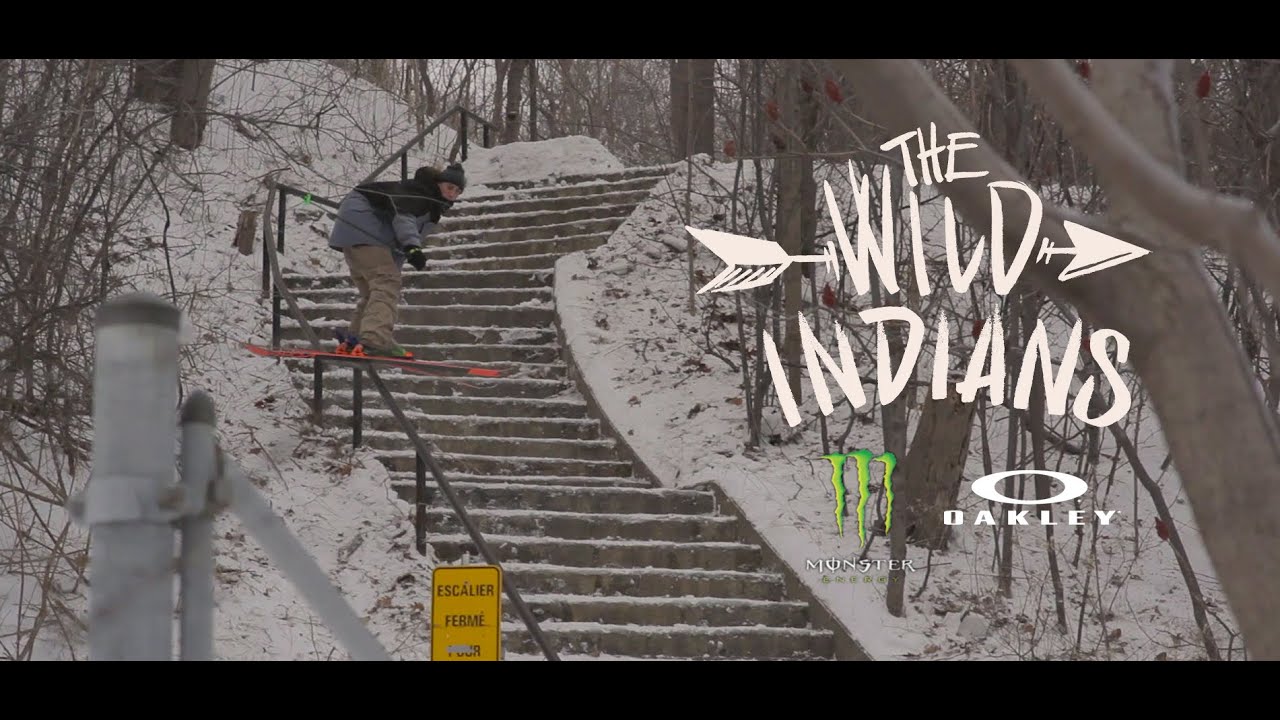
The Wild Indians | ABM | FULL FILM
Profile and significance
Jean “Jean-Spag” Prince, better known in ski credits as Jean Spag, is a core Quebec urban freeskier whose name is woven into one of the most influential street eras in modern skiing. As part of the WFProductions crew from Quebec City, he appears in the full-length movie “Le Grinch,” a 2012 film that follows the WFP family through a winter of handrails and night missions, and later in the urban project “The Wild Indians” alongside Alex Beaulieu-Marchand, Émile Bergeron, Jérôme Vallée and Paul Bergeron. These projects, premiered at festivals and shared by major freeski media, helped define how Quebec street skiing looked in the early–mid 2010s: gritty, creative, and set to reggae and hip-hop soundtracks.
Jean Spag is not a contest skier chasing FIS points; he is a film rider whose impact lives in segments, web edits and crew projects. When magazines and websites highlight The Wild Indians as a heavy urban project and list his name beside internationally known pros, it underlines his status as part of a small, highly respected circle of Quebec street riders. For freeski fans and film nerds, he represents the archetype of the local specialist who may not be famous to the general public, but whose work is immediately recognized by anyone who followed the Quebec street wave of that era.
Competitive arc and key venues
Because Jean Spag’s story is film-driven rather than contest-driven, his “competitive arc” is really a timeline of projects and cities. Early on, he emerged as part of the WFP family in Quebec City, contributing shots to WFProductions movies that focused on urban features and park sessions. “Le Grinch,” the fourth film from the crew, showcased their 2012 season of rail missions and park laps, with Jean-Spag Prince listed among the featured skiers. The movie premiered to core audiences at freeski film festivals before being released online, instantly slotting him into the Quebec street canon.
Several years later, his name reappeared in the credits of The Wild Indians, an urban project built around Alex Beaulieu-Marchand and Émile Bergeron that quickly circulated through major freeski outlets. The film was shot largely in Québec, with a heavy emphasis on city rails, creative ledge setups and night sessions in industrial zones. As part of a compact cast that included some of the most technically gifted riders of their generation, Jean Spag contributed to a project that many fans now associate with ABM’s move from contest dominance to serious street credentials. In that context, his “results sheet” consists of being trusted to deliver shots in projects that still get replayed by street-ski fans years later.
How they ski: what to watch for
Although there are fewer public solo edits than for some of his co-stars, Jean Spag’s skiing in crew movies fits squarely into the classic Quebec urban mold: rail-focused, technically aware and tailored to look clean on camera. His spots are typical of the region’s street vocabulary—long handrails outside apartment blocks, kinked city stair sets, ledges alongside retaining walls, down-flat-downs in business districts. The emphasis is on control and commitment rather than sheer stunt size. Speed is usually set early, with calm approaches that leave space for the trick and the landing, instead of frantic speed checks at the last second.
On features, the tricks you see from him echo the broader Quebec style of the era: solid lock-ins on front and back slides, spin-on and spin-off variations, and the occasional transfer or wallride that uses the architecture of the spot instead of treating it as background. The skating influence that runs through many Quebec crews is visible in the way lines are pieced together—simple, readable tricks done with maximum confidence and minimal wobble, so that the viewer’s eye follows the whole feature instead of just a single moment. For progressing street and park riders studying these films today, the lesson is that clean execution, speed control and commitment matter as much as adding another half-rotation.
Resilience, filming, and influence
Street skiing segments demand a particular kind of resilience, and Jean Spag’s filmography reflects that. Projects like “Le Grinch” and The Wild Indians come from winters of shovelling snow into in-runs and landings, waiting for traffic gaps, dealing with security, and hiking the same stair set for hours to land a handful of tricks. Being part of multiple full-length releases from the same core film community shows that he was not a one-winter cameo; he was a reliable contributor across seasons, consistently bringing enough shots to justify his place in the credits.
While he has also expressed creativity outside of skiing—under the “JeanSpag” name on other platforms—his influence within freeskiing is mainly tied to the visual record of those years. When modern articles and video tags group him together with ABM, Émile Bergeron and Jérôme Vallée in the context of Quebec street skiing, they acknowledge his part in a movement that helped push urban skiing into tighter, more technical and more artistic territory. For riders who discovered freeski through those films, his sections are part of the visual language that still shapes how they think about city rails and winter missions.
Geography that built the toolkit
Geography plays a big role in explaining the spots and style that define Jean Spag’s skiing. Quebec City and its surroundings are a natural laboratory for street riding: long winters, frequent storms, and dense urban zones full of staircases, government buildings and neighbourhood railings. Locations seen in WFProductions work capture that environment—concrete steps buried in snow, rails framed by stone walls and old brick, and night sessions lit by street lamps and car headlights. This kind of terrain forces skiers to adapt to icy stairs, variable snow depths and tight run-outs, sharpening their instincts for speed, angle and impact.
Montreal and other urban centres in the province offer complementary terrain: modern architecture with handrails of different heights and lengths, plazas that become natural jib zones after a storm, and industrial backdrops that suit the gritty aesthetic of reggae and hip-hop soundtracks. Spending winters hunting spots in and around these cities builds a toolkit of creativity and toughness. The result, as seen in Jean Spag’s segments, is a style that feels both spontaneous and carefully considered—a product of local winters as much as of individual talent.
Equipment and partners: practical takeaways
There is little public information about specific sponsors or signature products for Jean Spag, which fits the low-profile, core nature of his presence in films. However, the type of skiing he does dictates certain equipment choices. Urban and park riders in this scene typically rely on durable twin-tip skis with reinforced edges, mounted near the centre to make switch takeoffs and landings intuitive on rails and ledges. A medium flex that is forgiving enough for presses and butters, yet strong enough underfoot to survive repeated impacts on metal and concrete, is the usual baseline for the kind of spots seen in Quebec projects.
For skiers inspired by his segments, the practical gear takeaway is straightforward. Prioritise edge durability and predictable flex over high-speed carving performance. Detune tips and tails to avoid catching on kinked rails, keep boots snug enough to handle drops without heel lift, and choose outerwear warm enough for hours of standing around in sub-zero temperatures between attempts. None of this gear will automatically make you ski like a Quebec street rider, but it will give you the same kind of platform that crews like WFProductions relied on while filming projects that still get replayed today.
Why fans and progressing skiers care
Fans and progressing skiers care about Jean Spag because he represents the working-class heart of a famous scene. When people remember the Quebec urban wave, they often think first of the biggest names, but those stars were surrounded by equally committed locals who spent the same long nights on the same stair sets. Jean Spag is one of those locals whose contribution shows up not in podium lists but in film credits and re-watchable segments, especially in “Le Grinch” and The Wild Indians.
For riders coming up in small parks or thinking about their first street missions, his path offers a realistic blueprint. You might never become the main headline in a film, but being part of a crew, consistently bringing solid shots and keeping the energy high on cold, difficult nights can still leave a mark on ski culture. Watching his appearances alongside friends and heavy-hitters in Quebec projects turns those films into more than just entertainment—they become a reminder that the culture is built as much by dedicated locals like Jean Spag as by the world-famous pros they share the screen with.