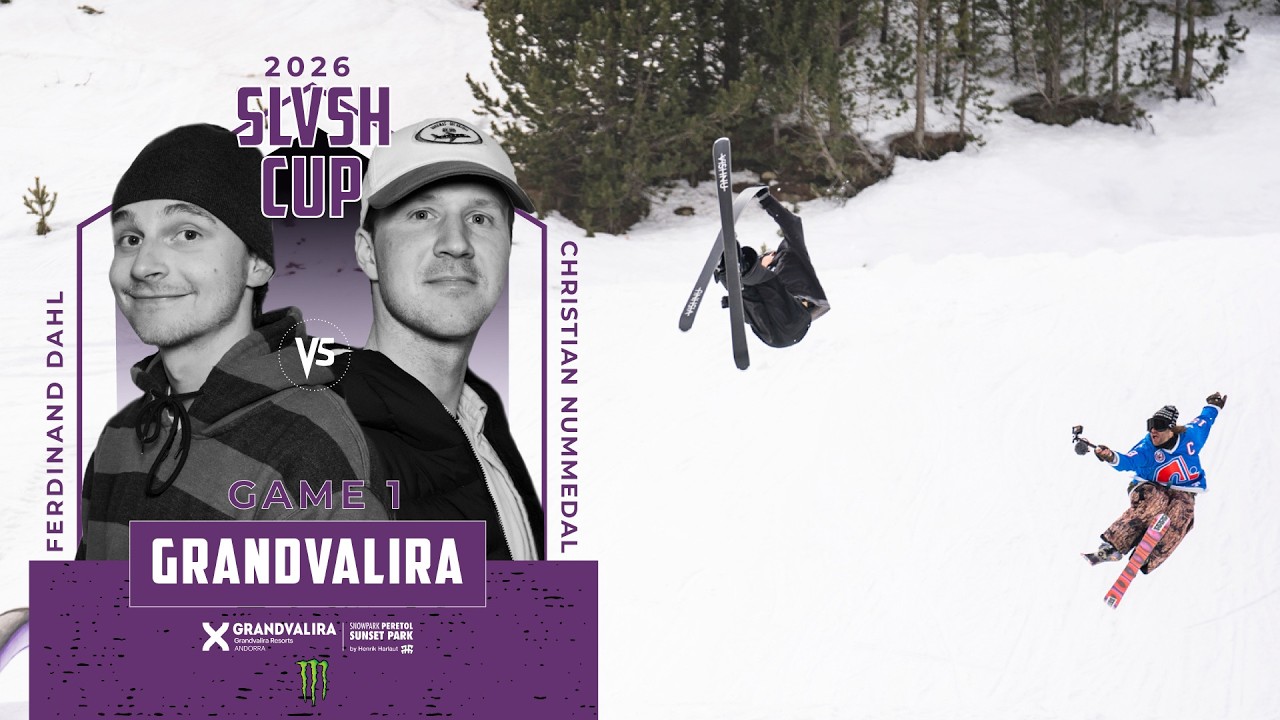
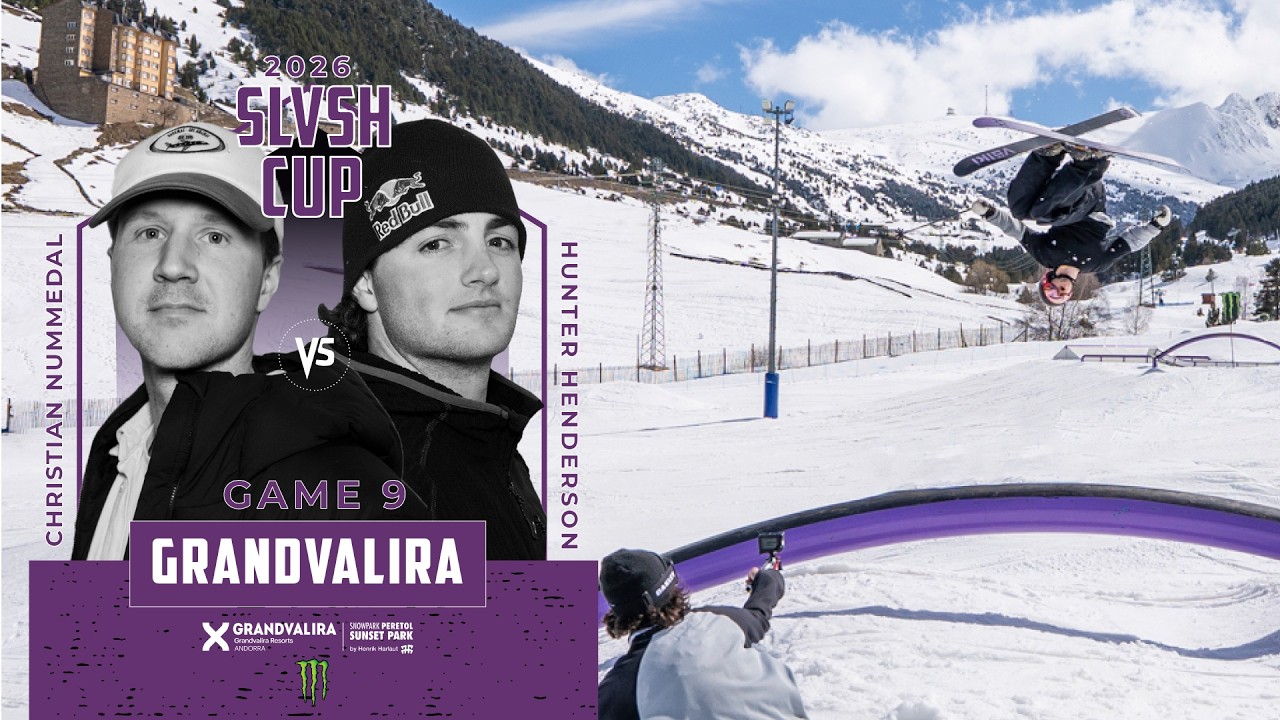
Christian Nummedal
Hakadal, Norway | Active: FIS record listed as not active | Discipline: freeski big air and slopestyle | Verified: 2023 World Championships silver, 2017-18 big air Crystal Globe, 3 World Cup wins | Current: retired from competition since 2023
Shougang Steel And A Switch Triple
Big Air Shougang looked metallic in the Beijing sun, with cooling towers rising behind the ramp and hard snow flashing under the takeoff. Christian Nummedal came in switch, compressed once, and sent a triple rotation into the Olympic final.
The scene matched his career better than any formal introduction. Nummedal was never only a slopestyle course skier, and he was never only a big-air specialist. At Beijing 2022, he qualified sixth for the first Olympic men’s freeski big air final, then finished tenth. Birk Ruud won gold for Norway, Colby Stevenson took silver, and Henrik Harlaut earned bronze. Nummedal left without a medal, but the final placed him inside the first Olympic version of a discipline he had already helped define on the World Cup circuit.
From Hakadal To The Norwegian Freeski Landslaget
Nummedal is tied to Hakadal, Norway, in his FIS record and Norrøna ambassador profile. Olympedia lists him as born in Oslo on November 3, 1995, affiliated with Hakadal IL, and representing Norway at two Olympic Winter Games. That local base matters because the Norwegian freeski system became one of the strongest park-and-pipe groups of the late 2010s and early 2020s.
His first FIS World Cup start came far from his later event identity. FIS records his debut on January 21, 2011, in Kreischberg, Austria, in halfpipe, where he finished thirteenth. Slopestyle and big air later became the defining events, but that early halfpipe start shows a broad park background before specialization. The Norwegian team pathway then grew around riders such as Øystein Bråten, Birk Ruud, Ferdinand Dahl, Johanne Killi, and later Tormod Frostad.
Silvaplana Before The Big-Air Breakthrough
The first World Cup podium arrived on March 22, 2014, in Silvaplana, Switzerland, where Nummedal finished third in slopestyle. Silvaplana is not a neutral place on a freeski résumé. The Corvatsch course sits high above the Engadin valley, with spring light, fast landings, long jumps, and rail sections that punish speed mistakes.
That podium came before his full promotion into the Norwegian national-team core. FIS later described his 2016-17 campaign as the season when he became a regular World Cup competitor and moved into a stronger national-team position. The gap between early podium and full breakout is important. Nummedal’s career was not built on one junior explosion. It was a slower climb through event starts, missed seasons, team selection pressure, and the constant need to earn a place in a deep Norwegian group.
Voss-Myrkdalen On Home Snow
The first World Cup victory came on March 24, 2017, at Myrkdalen-Voss in Norway. Winning a big air World Cup at home gave Nummedal a different status. It was not only a podium in a strong field; it was a Norwegian skier landing the hardest part of his event under domestic pressure.
That same period connects to his 2017 World Championships appearance in Sierra Nevada, Spain, where FIS records his first World Championships start in slopestyle. The Spanish course gave him a wider international stage, but the Voss-Myrkdalen win built the competitive momentum. Big air rewards takeoff discipline, switch comfort, axis control, grab clarity, and enough landing strength to hold the second score. Nummedal’s best contest skiing began to make sense in that stripped-down format.
Mönchengladbach, Quebec City, And The Globe Season
The 2017-18 season became the central competitive block of Nummedal’s career. He won big air World Cups in Mönchengladbach, Germany, on December 1, 2017, and Quebec City, Canada, on March 24, 2018. With Voss already on the record, those results gave him three World Cup victories, all in big air.
FIS states that he claimed the 2017-18 big air Crystal Globe as the season’s top overall competitor in the discipline, becoming the first Norwegian man to win a FIS Freeski globe. The timing was sharp. Big air was moving toward the Olympic program, city events were drawing crowds, and riders were pushing triple cork 1620s, switch double 1440s, and more complex left-right requirements. Nummedal’s globe came from consistency across that format, not from a single best-trick clip.
Quebec City closed the title chase in a public urban setup, with a scaffolded jump and cold eastern Canadian conditions. The win secured more than a score. It gave Norway another proof point that its freeski team could win beyond slopestyle and beyond home terrain.
Triple 1620s And A Compressed Air Style
Nummedal’s skiing was built on efficient rotation rather than loose theatrical movement. In big air coverage from X Games Aspen 2018, Newschoolers logged him throwing a triple cork 1620 double Japan and a right double cork 1260 double Japan. At X Games Norway 2018, reports again placed him among riders sending large triple 1620 variations.
The trick vocabulary explains the athlete: triple corks, switch takeoffs, double corks, Japan grabs, mute grabs, safety grabs, rightside and leftside rotations, rail approaches, and slopestyle jump management. He did not have Henrik Harlaut’s drawn-out grab language or Alex Hall’s nose-butter misdirection. He was closer to the Norwegian contest model: compact in the air, direct on the landing, and able to move between big air and slopestyle without losing structure.
That style also helped him survive changing formats. Big air judging moved toward variety, left-right balance, and higher spin ceilings. Slopestyle rewarded rails, transfers, jumps, and full-course rhythm. Nummedal never became the most famous stylist in either format, but his technique kept producing results across both.
Copper Mountain From Alternate To Dew Tour Winner
The 2020 Dew Tour at Copper Mountain gave Nummedal one of the stranger wins of his career. FIS later called it the most unlikely story of his international stage time, noting that he entered as the third alternate and then won the event. U.S. Ski & Snowboard reported the result from Copper Mountain: Christian Nummedal first, Alex Hall second, Andri Ragettli third, with Colby Stevenson fifth and Nick Goepper sixth.
Copper’s course had fresh-snow speed issues, technical rails, and a modified contest atmosphere where riders had to adjust quickly. Newschoolers described Nummedal setting the early bar by stomping a double 1440 on the bottom jump. The victory worked because he did not ski like an alternate filling a start list. He skied like a rider with years of World Cup decision-making behind him.
That Dew Tour result widened his résumé beyond FIS. A World Cup globe gives federation weight. Dew Tour gives North American contest credibility. Beating Hall and Ragettli at Copper placed Nummedal inside a field where creative rails, course tactics, and jump difficulty all mattered at once.
Stubai And The Slopestyle Ranking Peak
After the 2017-18 big air peak, Nummedal still had slopestyle results left. FIS records a second-place World Cup finish in Stubai, Austria, on November 21, 2020. The Stubai Zoo course is an autumn testing ground, with glacier light, firm snow, and a rider field that often arrives hungry after off-season training.
His 2021 season ranking put him third in slopestyle and fifth in overall Park & Pipe, according to FIS cup standings. That matters for judging the career fairly. Calling him only a big-air skier misses the slopestyle consistency that appeared after the globe season. He could still build full runs with rails, jumps, switch entries, and grab discipline after his biggest one-jump titles were already behind him.
That late slopestyle strength also set up the final chapter. When Nummedal reached Bakuriani in 2023, he was not arriving as a nostalgia name. He was still capable of skiing a full course against riders from the next wave.
Bakuriani Beside Birk Ruud
The highest podium of Nummedal’s career came at the 2023 FIS Freestyle Ski and Snowboarding World Championships in Bakuriani, Georgia. On February 28, he earned silver in men’s ski slopestyle. Birk Ruud won gold for Norway, and Andri Ragettli of Switzerland took bronze.
FIS described Nummedal’s second run as the one that secured silver just behind his close friend and teammate Ruud. The podium had a clear Norwegian stamp: Ruud at the top, Nummedal beside him, both coming from a team that had already shaped the previous Olympic cycle. The setting also carried a different texture from the big-air city events. Bakuriani’s Didveli slope brought Caucasus mountain weather, a full slopestyle course, and championship pressure rather than an invitational show.
That silver changed the ending of his career. Without it, the résumé would still be strong: globe, World Cup wins, Dew Tour, Olympic finalist. With it, Nummedal closed competition as a World Championships medalist in the event that demands the most complete course management.
Norrøna, Team Culture, And The Support System
Norrøna lists Nummedal as a freeski athlete in slopestyle and big air competitions, connected to the brand since 2016. The fit is logical. Norrøna’s ski identity sits close to Norwegian mountain culture, technical outerwear, and the crossover between freeride, backcountry, and park athletes.
The Norwegian freeski team environment also deserves space in his profile. FIS called Nummedal a pillar of the Norwegian Freeski Landslaget during one of the team’s strongest periods. That group produced Olympic medals, World Cup globes, and a visible internal culture where riders often filmed together, trained together, and pushed each other across big air and slopestyle.
Names around him mattered: Øystein Bråten, Birk Ruud, Ferdinand Dahl, Johanne Killi, and later Tormod Frostad. Nummedal’s role was not always the headline role, but the depth of the team made his results harder to earn. He had to compete internationally while also staying relevant inside one of the most competitive national programs in freeskiing.
The Retirement That Came After A Medal
On May 12, 2023, FIS reported that Nummedal had announced his retirement from competition. He was twenty-seven, had just won World Championships silver, and said the decision was hard and emotional but felt right. He also pointed to the first World Cup he rode in Kreischberg in 2011 and the length of the chapter he was closing.
His FIS record now lists him as not active, with two Olympic slopestyle starts, one Olympic big air start, five World Championships starts, forty-nine World Cup starts, five World Cup podiums, and three World Cup victories. The viewing path is specific: Voss-Myrkdalen 2017 for the first win, Mönchengladbach 2017 and Quebec City 2018 for the globe, Copper Mountain 2020 for the Dew Tour surprise, Beijing 2022 for Olympic big air, and Bakuriani 2023 for the silver-medal farewell.