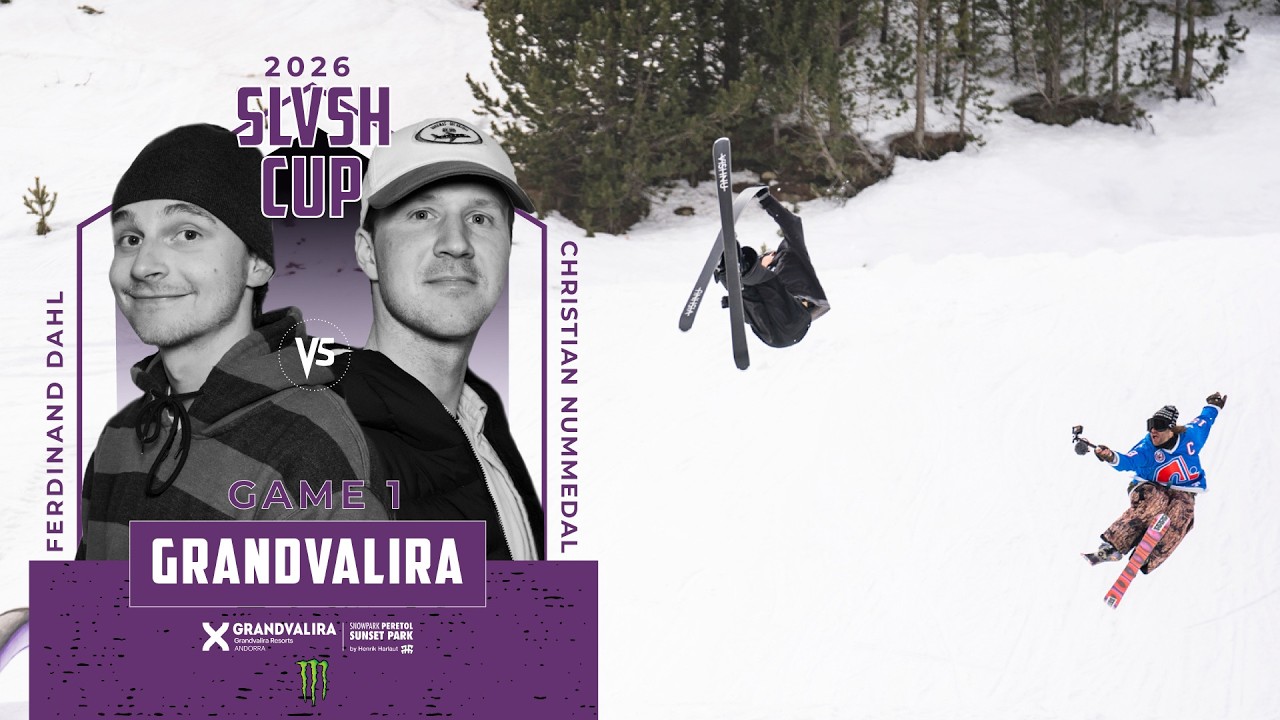
Christian Nummedal
Profile and significance
Christian Nummedal is one of the more important Norwegian competition skiers of the modern freeski era, especially for readers who care about the bridge between big air power and full-run slopestyle quality. Born in 1995 and publicly identified by FIS with roots in Hakadal, Norway, he built a career that reached two Olympic cycles, a World Championships silver medal in slopestyle, five World Cup podiums, three World Cup victories, and the 2017-18 big air crystal globe. That is a substantial résumé even without an Olympic medal. It places him well above the “promising athlete” tier and squarely in the category of a proven international competitor. His significance also goes beyond the raw results sheet because FIS described him as the first Norwegian man to win a FIS Freeski globe, a landmark that matters in a country whose park-and-pipe depth later became one of the strongest in the sport. Even though he retired from competition in 2023, Nummedal remains relevant as a reference point for how a skier can evolve from a big air specialist into a more complete slopestyle contender.
Competitive arc and key venues
Nummedal’s competitive arc was not a straight line, which is one reason his career is interesting. FIS records show his first World Cup start came in halfpipe in 2011, long before the most successful phase of his career. His first World Cup podium arrived at Silvaplana in the 2013-14 season, then his first World Cup victory came on home soil at Voss in 2017. The breakthrough season followed in 2017-18, when he collected two more big air wins and secured the season-long big air globe. FIS standings show him ranked first in big air that winter, while also finishing inside the top 20 in slopestyle. He later competed at the 2018 and 2022 Winter Olympics, with FIS result pages recording 28th in slopestyle at PyeongChang, then 10th in big air and 23rd in slopestyle at Beijing 2022. The strongest late-career stretch came in 2023: World Championships silver in slopestyle at Bakuriani, seventh in slopestyle World Cup competition at Tignes, and a string of respectable finals-level results that showed he was still dangerous in serious fields.
How they ski: what to watch for
The simplest way to understand Nummedal’s skiing is to start with air awareness. His best years were built on big air scoring, which usually means strong takeoff timing, spatial control, and the confidence to bring heavy rotation into clean landings. FIS coverage of his 2017-18 Québec City victory highlighted a left triple cork 1620 safety as the decisive trick of the evening, and that detail says plenty about the level he could reach when he was fully switched on. But reducing him to a pure big air rider would miss the second half of the story. His slopestyle silver at Bakuriani in 2023 confirmed that he was not only a one-jump specialist. He had developed the ability to manage a full contest run, combining rail execution, jump rhythm, and pressure handling in a way that translated across modern judged formats. For viewers, that is the key lens: Nummedal mattered because he brought big air amplitude into slopestyle structure. He was rarely framed as an urban/street skiing icon, and his public legacy sits much more in contest freeski than in film-heavy street culture, but his technical ceiling was high enough to matter in both conversations about style and conversations about scores.
Resilience, filming, and influence
Nummedal’s career has a stronger resilience story than a quick medal list suggests. He debuted early, then spent years with partial seasons, uneven momentum, and stretches where the breakthrough seemed possible without fully stabilizing. That changed in stages rather than all at once. His 2020 slopestyle World Cup podium at Stubai showed he could challenge again in a deeper and more modern field, but the best single example of his competitiveness came from the 2020 Dew Tour, where FIS later noted that he got into the event as the third alternate and still won. Then came the emotional high point of 2023, when he claimed World Championships silver and retired soon after, ending on the strongest note of his later career rather than fading quietly out of the system. In terms of broader influence, he was never primarily sold to the public through a giant urban/street skiing filmography. His influence is more competition-facing. He helped define a period when Norwegian men kept pushing the standard in park-and-pipe, and he showed that a skier could remain dangerous deep into a career by refining craft rather than relying only on novelty.
Geography that built the toolkit
The geography around Nummedal matters because it helps explain both his technical identity and his competitive durability. Public Norrøna ambassador information places both his upbringing and home base in Hakadal, Norway, which sits close enough to the Oslo-area training culture to feed an athlete into structured national-team pathways while still being tied to everyday mountain life. From there, the contest map widened into places that shaped different parts of his freeski toolkit. Voss mattered as a home-soil stage where he earned his first World Cup win. Stubai and Silvaplana mattered as technical slopestyle venues that reward line management and early-season or late-season adaptability. Tignes mattered as a benchmark stop in the European contest calendar. Bakuriani became the place of his most meaningful championship result. Even Québec City belongs in the story because his crystal-globe-clinching win there came in one of the sport’s most unusual city big air settings. Altogether, his geography was not random. It was a map of how top competition freeski gets built: home culture first, then repeated testing across very different contest terrains.
Equipment and partners: practical takeaways
For readers who care about gear, there is one important limit: the public FIS biography fields for skis, boots, and poles are not usefully filled out, so it would be wrong to invent a definitive setup. The cleaner and more useful partner story is brand ecosystem rather than hardgoods speculation. Nummedal is publicly listed as a Norrøna ambassador, and that is a credible fit for a Norwegian athlete whose post-competition presence still overlaps with mountain culture and freeride-flavoured events. The practical takeaway for progressing skiers is that his career does not teach “copy this exact ski package.” It teaches something more valuable: high-level freeski careers are usually built first on movement quality, repetition, and venue adaptation, while sponsor visibility tends to make more sense once the results are already there. In Nummedal’s case, the results clearly came first. His partner context supports the image of an athlete whose value lies in serious skiing rather than branding noise, and that makes his profile more useful for readers trying to understand performance than for readers hunting a simple shopping list.
Why fans and progressing skiers care
Christian Nummedal matters because he represents a durable version of top-level freeski success. He was not only a hot prospect for one winter, and he was not only a late-career medalist who appeared out of nowhere. He built a long international record, won a World Cup globe, reached two Olympics, earned a World Championships silver medal, and retired while still capable of elite results. That is the kind of profile serious fans respect because it reflects staying power, not just flashes. For progressing skiers, he is useful for another reason: his path shows how much range matters. Big air strength gave him his early signature, but slopestyle completeness extended his career and sharpened his legacy. For anyone watching modern freeski, that is a valuable lesson. The athletes who last are usually the ones who can evolve as courses, judging trends, and competitive depth keep changing. Nummedal did that, and that is why his name still carries weight even after stepping away from competition.