Les Aravis
Alps
France
Overview and significance
Les Aravis is the ski-and-mountain cluster wrapped around the Aravis Range in Haute-Savoie, France, best understood as a compact network of villages and resorts rather than a single “mega-domain.” In winter, it commonly refers to the linked destination identity built around La Clusaz, Le Grand-Bornand, Manigod, and Saint-Jean-de-Sixt, with shuttle connections and combined products marketed under the Aravis umbrella.
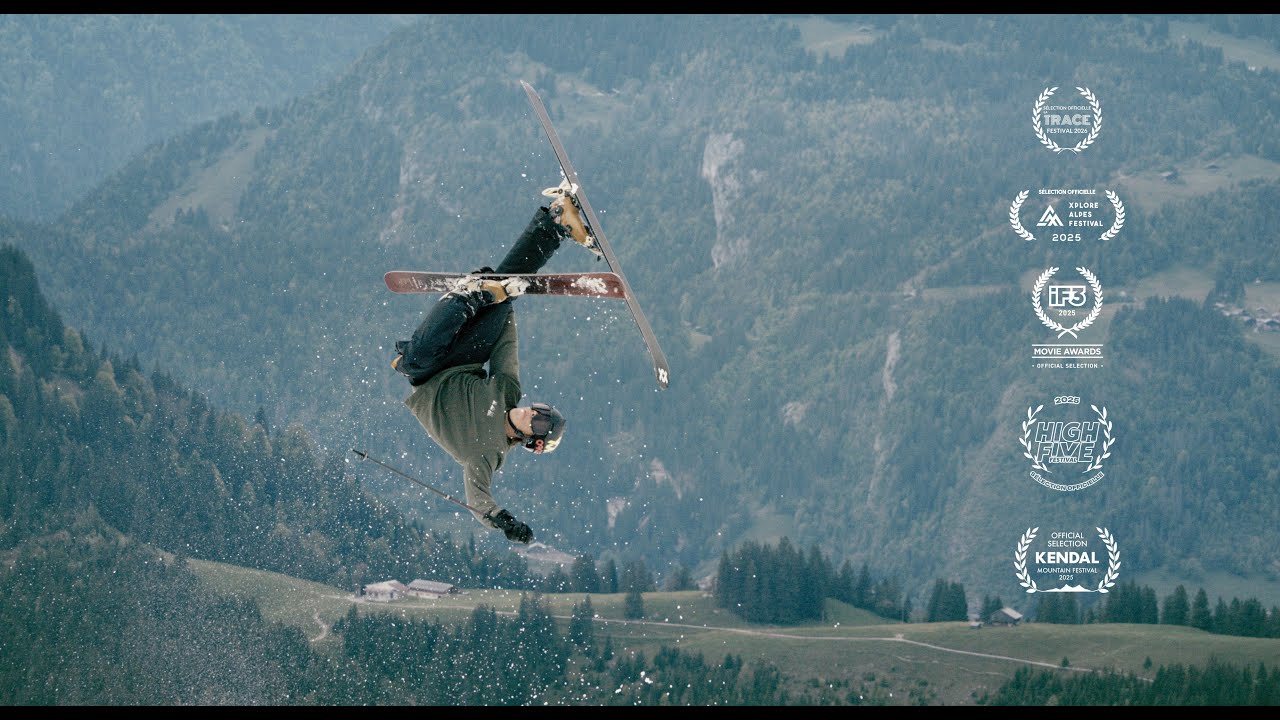
For freeskiers, Les Aravis matters because it offers multiple “styles” of riding in a small geographic footprint: La Clusaz’s long-standing freeski identity and dedicated slopestyle-style park build, Le Grand-Bornand’s park infrastructure that’s explicitly designed to be accessible across levels, and a local culture that treats freestyle and freeride as normal parts of a winter week—not special occasions. Add recurring official-level competition touchpoints in the valley, and you get a region that reliably shows up on European freeride and freestyle radars without needing the scale of the biggest Alpine super-resorts.
Terrain, snow, and seasons
Terrain in Les Aravis is defined by pre-alpine relief that rises quickly above villages but does not rely on glaciated, ultra-high-altitude skiing. The massif’s high point, Pointe Percée, is 2750 m and is described locally as the range’s highest summit, with a “no glacier” character that signals what you feel on snow: big views, sharp limestone silhouettes, and winter conditions that can be excellent but also sensitive to temperature swings.
On the lift-served side, the region’s headline alpine mileage is presented through three layers of scale. La Clusaz – Manigod publishes an altitude range of 1100 m to 2600 m with 125 km of marked runs across five massifs, along with 85 runs and 49 lifts. Le Grand-Bornand publishes 90 km of pistes and 49 runs served by 24 lifts. For the wider identity, Manigod’s official piste information also presents the combined “Massif des Aravis” as a grouped alpine offer totaling 133 runs and just over 211 km of pistes, with shuttle links between the stations.
Season timing is the standard Northern Alps rhythm—winter through spring—with exact dates varying by year and by operator. The practical planning point for freeskiers is that the terrain mix gives you options when conditions shift: treed and sheltered pistes when visibility is flat, higher sectors when it’s colder, and multiple park zones that can remain rideable even when off-piste ambitions need to be dialed back.
Park infrastructure and events
Park riding in Les Aravis is anchored by two distinct, well-defined offers. In La Clusaz, the resort positions itself directly as a freeski hub and operates the LCZ Park, which it describes as a slopestyle-style layout that can be set with multiple lines depending on snow coverage. The LCZ Park page also states that its difficulty levels meet AFNOR safety standards and are structured in L, XL, and XXL tiers, which signals a serious build aimed at experienced freestyle skiers rather than a token “couple of rails” setup.
Le Grand-Bornand brings a complementary park personality with SnowparkGB in the Maroly sector, described as a multi-level freestyle zone built to make park progression accessible “for all.” Official descriptions highlight a broad ladder of difficulty from beginner lines up to expert lines, plus a big airbag training feature and boardercross options. The resort’s own presentation emphasizes the scale as well, describing the park footprint at about five hectares, with a long run in the zone and a dedicated flow that supports repeatable laps.
Event gravity in Les Aravis is real, even if it’s not marketed as “one giant festival every week.” On the competition side, FIS lists La Clusaz as a host location for European Cup freeski events, including slopestyle and big air dates in early February 2026. On the freeride pathway, the Freeride World Tour Junior calendar shows a junior event hosted in La Clusaz in January 2026, reinforcing what many riders already associate with the area: steep, playful terrain close to lift infrastructure, and a community that treats freeride as part of the resort’s identity.
Access, logistics, and on-mountain flow
Les Aravis works because it’s easy to reach and easy to move around once you’re there. The villages sit within day-trip distance of Annecy and the Geneva corridor, and the region openly supports public transport access. The Haute-Savoie regional network publishes winter schedules for the Y62–Y63 bus line connecting Annecy with La Clusaz and Le Grand-Bornand during the winter season. On top of that, La Clusaz promotes free Aravisbus shuttles that serve the different hamlets and resort centers across the Aravis villages, which is a meaningful advantage if you want to ski multiple stations without committing to daily car logistics.
On-snow “flow” depends on your chosen base. In La Clusaz, the resort explicitly frames its alpine layout as five separate massifs, which is a useful mental model for freeride and freestyle days: you can pick a sunny sector for softer snow, a higher sector for colder coverage, or a park-focused lap plan and stick with it. Le Grand-Bornand presents a straightforward structure with three beginner areas, a defined snowpark, and marked ski touring routes, which tends to make day planning simple for mixed groups. In Manigod, the resort positions itself as a village-scale ski area with a direct link into the La Clusaz–Manigod domain from the Col de la Croix Fry, which can be ideal when you want quieter laps and a “ski nature” feel without losing access to bigger terrain nearby.
Local culture, safety, and etiquette
Les Aravis has a strong “locals ride here” culture: parks are not hidden away, freeride is not treated like an exotic add-on, and you’ll often share lift lines with riders who know the terrain well. That’s great for energy and progression, but it also raises the bar for etiquette. In the parks, assume tight spacing, frequent filming, and riders working on repetition. Keep landings and outruns clear, respect drop order, and avoid stopping on blind rollovers—especially in slopestyle-style layouts where speeds are higher and lines are fixed.
Off-piste and backcountry-adjacent skiing in this range deserves real respect. A “no glacier” character does not mean “no risk.” Wind effect, rapid temperature changes, and the complexity of terrain features can create avalanche problems and variable surfaces. If you’re stepping beyond marked pistes, match the day to your group’s experience, pay attention to closures and signage, and don’t confuse familiarity with safety. The most common mistake in regions like Les Aravis is letting the comfort of short transfers and small villages make the mountains feel smaller than they are.
Best time to go and how to plan
For freestyle-focused trips, the most reliable approach is to plan around mid-winter when park builds are typically complete and temperatures support consistent takeoffs and landings. If you want to align your visit with the region’s visible competition pulse, early February has hosted official freeski slopestyle and big air European Cup dates in La Clusaz, while mid-January has shown up on the junior freeride calendar. Even if you’re not competing, those periods often correlate with high-quality builds and a strong on-hill session atmosphere.
For general freeski travel, Les Aravis rewards flexible planning more than rigid itineraries. Base in one village, then use the shuttle and bus options to follow conditions. Pick one “mission” per day—park laps in La Clusaz, park-and-airbag progression in Le Grand-Bornand, quieter carving and night-ski style vibes in Manigod—and you’ll get more out of the region than if you try to sample everything in a single afternoon.
Why freeskiers care
Freeskiers care about Les Aravis because it blends real alpine terrain with genuine park infrastructure and a culture that supports both. The region can deliver big-mountain texture when conditions allow, but it also offers structured freestyle environments that make progression practical: La Clusaz’s LCZ Park is explicitly shaped around a slopestyle concept with multiple expert-oriented lines, while Le Grand-Bornand’s SnowparkGB is built around accessibility, variety, and repetition-friendly features including an airbag.
Just as importantly, Les Aravis shows up on official calendars in ways that reinforce its identity. When a place hosts FIS freeski competition dates and sits inside freeride development pathways, it usually means the terrain and the community are credible enough to hold athletes to a standard. For riders who want a French Alps base that feels authentic, sessionable, and legitimately freestyle-aware, Les Aravis delivers a compact, repeatable version of that experience—more training ground than theme park, and more culture than marketing.