Jean Tonnelier
La Clusaz / Aravis, France | Active: freeride, steep skiing and film projects | Discipline: freeride, steep skiing, ski mountaineering, freestyle-influenced mountain skiing | Verified: 2023 Junior Freeride World vice-champion, FWT Qualifier profile, Hors Ligne / Off Track documentary | Current: moving away from competition toward mountain skiing and creative film work
The Éphémères Spur In The Aravis
The Aravis limestone was cold in the morning shade, the snow pressed thin against the steep ribs above La Clusaz. Jean Tonnelier edged into the Éphémères spur, following a line first opened by Pierre Tardivel, with no bib waiting below.
That scene from Hors Ligne gives the clearest current image of Tonnelier. He could have stayed inside freeride rankings after becoming junior world vice-champion in 2023. Instead, at twenty-one, he moved toward a quieter and harder kind of skiing: ski mountaineering, steep faces, repeated scouting, friends on the rope, and the slow work of learning where freestyle confidence stops and mountain judgment begins.
La Clusaz Before The Podium Track
Tonnelier’s public story is tied to La Clusaz and the Aravis, not to a distant national training center. Alpine Mag places his childhood between Talloires, near Lake Annecy, and La Clusaz, where his maternal grandparents lived and where winter shaped his skiing. That geography matters because his current skiing is not imported into the Aravis. It comes from a local relationship with the massif.
MK Sport’s Völkl feature gives the technical base: he started in alpine skiing at the ESF in La Clusaz, then joined Seb Michaud’s Freeride Evolution 2 team to ski the rougher terrain of the Aravis and enter the junior freeride circuit. Alpine skiing gave him edge control, stance discipline and speed management. Freeride gave him terrain reading, air choice and exposure.
Junior Freeride Before The Turn Away
The result that anchors Tonnelier’s competitive résumé is the 2023 junior freeride world vice-champion title. Alpine Mag and Skieur both identify him through that line, and Skieur adds that he qualified for his first Qualifier circuit soon after. That is enough to make him more than a local film skier, but not enough to inflate him into a World Tour star.
The Freeride World Tour profile lists him as a French ski men rider, age twenty-two, based in La Clusaz. Its 2024 Qualifier table shows results at La Rosière, Les Arcs and Nendaz, including thirteenth at Les Arcs and fourteenth at La Rosière. Those numbers show the transition clearly: he had entered the pathway, but his strongest public identity now sits elsewhere.
Le Sauze, Les Arcs And The Limit Of Rankings
Tonnelier’s FWT page also references a 2026 South Line Series Le Sauze Challenger replay, keeping him connected to freeride competition. The profile confirms that he is not disconnected from the circuit, but the record does not show the kind of senior podium archive that would justify treating him like a fully established Freeride World Tour athlete.
That distinction matters for a quality page. Tonnelier should not be presented as a World Tour finalist, X Games name or Olympic skier. His value is more precise: a young French rider with junior freeride proof, local Aravis depth, a freestyle base, and a documented decision to leave the noise of podiums for a more demanding relationship with the mountain.
The Aravis Style Already Has A Shape
Tonnelier’s skiing sits between freestyle, freeride and steep skiing. The observable vocabulary includes alpine edge pressure, cliff drops, fall-line turns, jump takeoffs, exposed traverses, steep couloir entries, slough management, short-radius control, powder exits and a willingness to bring playful movement into serious terrain.
Compared with a pure freeride competitor, he seems less focused on maximizing face scores and more interested in learning a line until it becomes personal. Compared with a park skier, he uses tricks more carefully because the landing is no longer built by a crew. Compared with established French steep skiers such as Paul Bonhomme or Pierre Tardivel, he is still early in the mountain apprenticeship, but that apprenticeship is now the center of the story.
Hors Ligne And Alex Chambet’s Camera
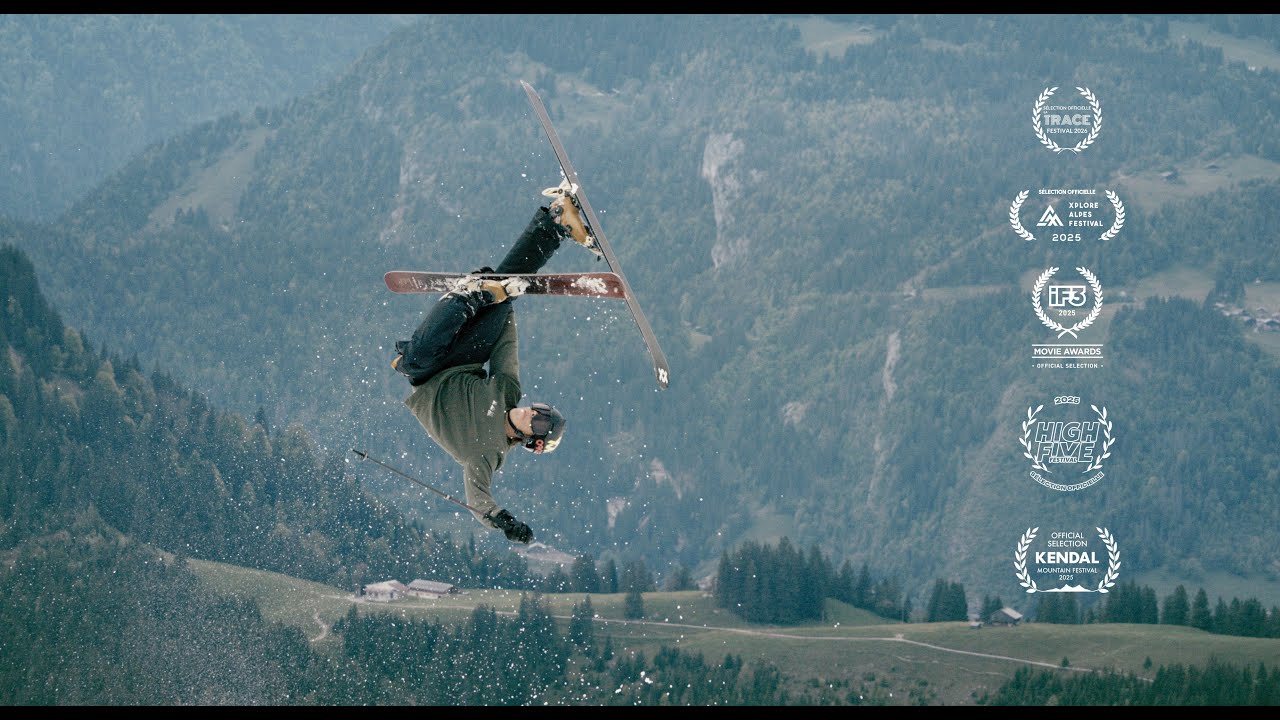
Hors Ligne, also listed internationally as Off Track, is the main creative marker. FilmFreeway describes it as a twenty-one-minute French documentary directed by Alex Chambet, completed in September 2025, filmed in France and centered on Tonnelier’s decision to leave competition for a steeper, wilder and more personal path.
Skieur Magazine describes the film as a Mammut project following Tonnelier through the Aravis with friends and mentors, including guide Paul Bonhomme and skier Gaëtan Gaudissard. MK Sport frames the film around learning to “unlearn,” a useful phrase for his current transition. The camera does not simply follow a young rider doing bigger tricks. It follows a skier slowing down enough to understand exposure, timing, snow and fear.
Paul Bonhomme, Gaëtan Gaudissard And The Mentors Around Him
The mentor thread is essential because steep skiing cannot be treated like a solo progression edit. Alpine Mag places Tonnelier under the watchful eye of Paul Bonhomme, while Skieur names Bonhomme and Gaëtan Gaudissard among the people around him in Hors Ligne. That support changes the way his profile should be read.
A junior freeride result can be earned with athletic confidence. A steep line demands a different system: partner trust, mountain timing, rope skills, snow assessment, route memory, retreat options and humility. Tonnelier’s current direction is valuable precisely because it shows the uncomfortable middle stage. He is not pretending that freestyle talent automatically grants access to serious faces. He is learning from people who know the consequences.
Völkl Revolt 114 And The La Clusaz Tool
MK Sport’s equipment feature connects Tonnelier to Völkl and the Revolt 114. The article states that he entered the Völkl team three years earlier and chose the Revolt 114 for freeride progression and the combes of La Clusaz. It also gives his own reasoning: a playful but solid ski, a flatter tail, enough versatility for tricks and enough strength for technical slopes.
That gear choice fits the skier’s current position. A 114-mm freeride ski gives float and stability, but the Revolt identity keeps the freestyle memory alive. Tonnelier is not skiing narrow technical mountaineering tools only, and he is not skiing park skis in the high mountains. His setup reflects the hybrid problem: hold an edge when the slope is exposed, land a drop when the snow allows it, and still keep enough pop for movement that feels like his own.
Festival Screens Before A Wider Audience
Hors Ligne moved through the festival path before reaching a wider online audience. High Five Festival listed Hors-ligne / Jean Tonnelier & Alexandre Chambet in its ski program, while FilmFreeway lists the project under the title Off Track. Local and mountain media also covered its release around Annecy and the Aravis.
That route matters because Tonnelier’s current visibility is not only social media. It is tied to mountain-film culture, where a skier’s value depends on story, landscape, risk and image as much as competition results. The strongest footage path is not a highlight reel of one contest. It is FWT Junior and Qualifier context first, then Hors Ligne for the turn toward ski mountaineering, steep skiing and a more personal way of moving through La Clusaz.
The Next Line Needs Time
Tonnelier is still an emerging profile, so the page should leave room for the career to develop. The reliable facts are clear: La Clusaz roots, alpine foundation, Freeride Evolution 2 with Seb Michaud, junior freeride vice-champion status, FWT Qualifier presence, Völkl support, and Hors Ligne as a serious film marker.
For skipowd.tv, the watch path should start with junior freeride clips, then move to La Rosière, Les Arcs and Nendaz for the Qualifier phase. The main chapter is Hors Ligne: the Aravis, the Éphémères spur, Paul Bonhomme, Alex Chambet’s camera and a skier choosing mountain learning over podium speed. Jean Tonnelier is not a finished legend. He is a French freerider in the middle of a difficult conversion, where the next good clip must also be a good decision.