Big Snow American Dream
New Jersey
United States
Indoor real-snow ski venue in East Rutherford New Jersey | Known for: year-round snow, a 1000-foot main slope, terrain park training and a controlled 28-degree environment | Best for: park progression, preseason freeski sessions, coaching and reliable snow access near New York City
One Thousand Feet Of Snow Inside American Dream
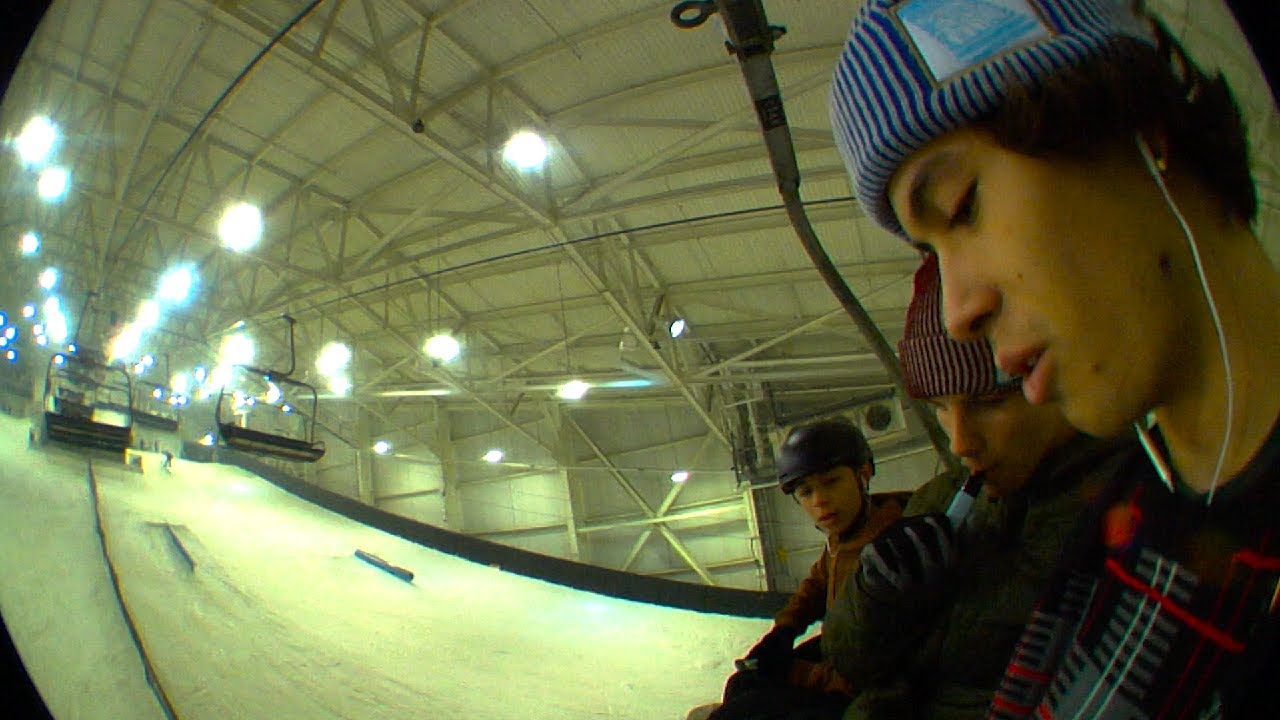
Big SNOW American Dream packs a 1000-foot ski slope and 160 feet of vertical drop inside a 16-story climate-controlled structure in East Rutherford, New Jersey. The venue occupies 180000 square feet in total, with approximately 150000 square feet dedicated to slopes and about four skiable acres. Its steepest gradient reaches 26 percent, while the average grade is approximately 10 percent. Those numbers are tiny beside a mountain resort, but they are unusual for one reason: the snow remains available twelve months a year within sight of the New York metropolitan area.
Big SNOW American Dream opened on December 5 2019 inside the American Dream entertainment complex beside the Meadowlands. It remains North America's first and only indoor real-snow year-round ski and snowboard resort. There is no weather window to wait for, no snow-line calculation and no summer shutdown caused by warm outside temperatures. The venue holds the snow surface at roughly 28 degrees Fahrenheit, or about minus 2 Celsius, throughout the year.
Four Lifts Turn 160 Feet Into Repetition
The lift network contains four installations: one fixed-grip quad chair, one platter surface lift and two magic carpets. The main chair serves the full slope, while the platter provides another option for riders using the upper terrain. The carpets are concentrated around the learning area. Maximum slope capacity is listed at 500 people, so Big SNOW operates more like a controlled training venue than an outdoor destination capable of spreading thousands of skiers across several valleys.
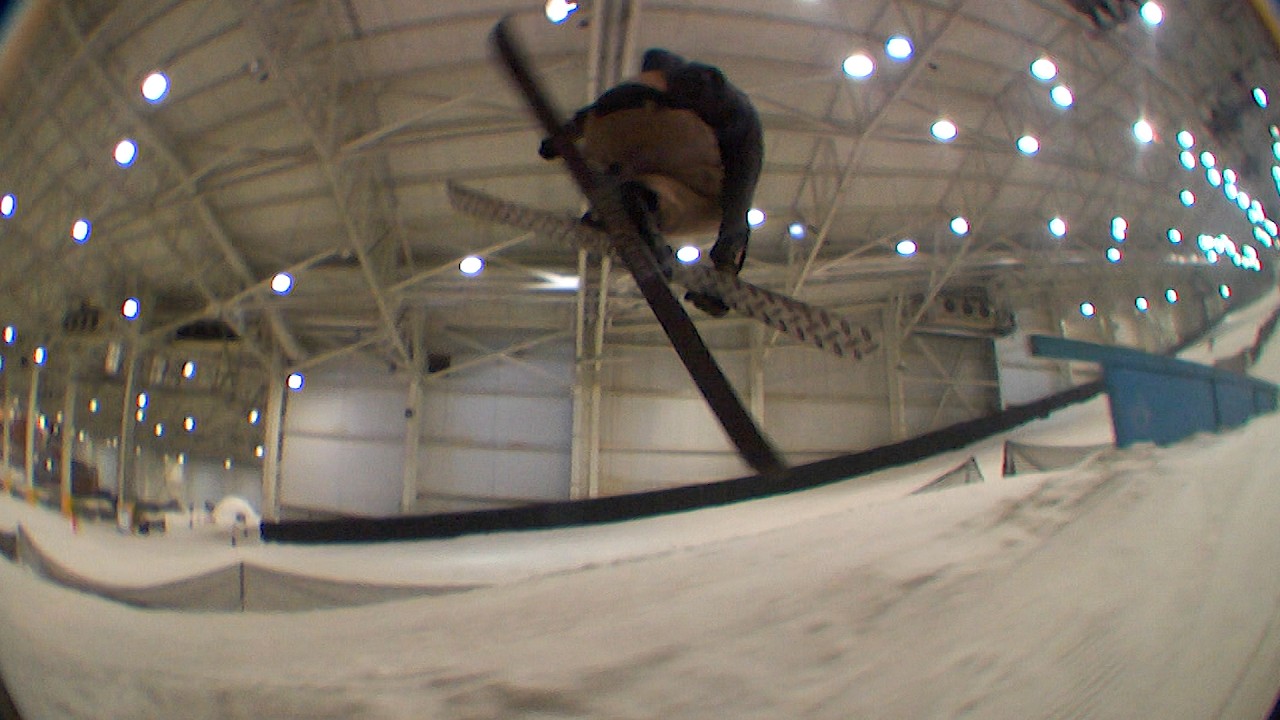
For freestyle skiing, the short vertical is not automatically a disadvantage. A skier working on one rail movement, switch approach or small-jump trick benefits from repetitions rather than kilometre totals. A 160-foot descent can be completed quickly, followed by another lift ride and another attempt. The result resembles a skatepark training model transferred onto snow: limited terrain, predictable conditions and enough repeated attempts to isolate specific movements.
That model becomes particularly useful outside the traditional northeastern ski season. October park sessions do not depend on an early Vermont storm, and July laps do not require glacier travel. Athletes can schedule technical blocks around school, work or competition calendars without checking whether a mountain has enough natural snow to build features.
A Terrain Park That Does Not Wait For Winter
The terrain park gives Big SNOW its strongest connection to freeskiing. Features can be incorporated into the main slope for public sessions, private training and specialised camps. Big SNOW's own race-training programme even offers a terrain-park addition for private lane rentals, demonstrating that shaped freestyle terrain is treated as a configurable training product rather than a seasonal extra.
The indoor environment changes park preparation. Outdoor shape crews constantly react to snowfall, rain, wind, solar radiation and overnight temperature swings. Big SNOW removes most of those variables. The slope remains around 28 degrees Fahrenheit and artificial snow production can continue independent of outside weather. Approach speed still changes with grooming, traffic and snow texture, but the operating environment is far more repeatable than a normal mountain park.
That consistency supports preseason camps. Okemo Mountain School scheduled snowboard and freeski mini camps at Big SNOW for October 24 and 25 2026, specifically using the terrain park for early-season on-snow training. Big SNOW also advertises performance camps built around racing, carving, terrain-park skills and general technique. For East Coast athletes, the venue can therefore function as a bridge between dryland training and the first outdoor park builds of winter.
Game Of SNOW Put An Indoor Rail Contest In New Jersey
Big SNOW has also demonstrated that an indoor slope can support event-format park riding. The Game of SNOW contest brought invited riders into the dome for a summer rail competition while outside temperatures approached typical New Jersey summer heat. The first edition used a purpose-built rail setup, and the second annual event in August 2022 offered a 10000-dollar prize purse with riders competing on two 24-foot features.
The concept fits the venue better than a giant slopestyle contest. With only 160 feet of vertical, Big SNOW cannot reproduce a World Cup jump line, but it can create dense technical rail setups where each attempt is visible and riders return rapidly to the start. The indoor walls also compress spectators, music and riding into one space, producing an atmosphere closer to an indoor skate contest than a conventional mountain event.
USASA regional rail-jam competition has also used the venue, including Mid-Atlantic Series events. That grassroots role is important. Big SNOW gives younger riders and local competitors access to judged freestyle skiing without waiting for December snowmaking at outdoor hills across New Jersey, Pennsylvania or New York.
Park After Dark Extends The Indoor Session Past Closing
Park After Dark adds another format to the freestyle programme. Big SNOW runs dedicated late-night park sessions with music, DJs and an event-focused atmosphere after normal slope operations. The October 30 2026 edition is scheduled from 9 p.m. to 1 a.m., turning a shopping and entertainment complex in New Jersey into a four-hour midnight snowpark session before the outdoor East Coast season has properly started.
The venue also operates recurring community sessions such as women's ride nights and rotating snow events. This programme gives the facility more cultural value than a purely instructional ski simulator. The main slope remains short, but the calendar can change constantly because features and sessions are not tied to snowfall or daylight. A July rail event, October park camp and winter coaching block can all use the same refrigerated surface.
That year-round continuity is Big SNOW's real advantage. Outdoor resorts can build better jumps, longer lines and more varied terrain, but they cannot guarantee snow every month. Big SNOW trades scale for availability, which is especially useful to riders who need specific technical repetitions rather than a full mountain experience.
Five Thousand Five Hundred Tons Of Indoor Winter
The snow system is as important as the terrain. Big SNOW was designed with more than 5500 tons of snow inside the building and an average snow depth around two feet. Its snowmaking system can produce approximately 4.4 tons per hour while using about 1100 gallons of water per hour. Radiant cooling beneath the floor helps maintain the snowpack while the building remains at a constant winter temperature.
This produces a surface that behaves more like groomed resort snow than synthetic matting. Ski edges engage real frozen water, rails are approached on actual snow and landing surfaces can be shaped with normal park equipment. For athletes who spend summer months on trampolines, airbags or dry slopes, the ability to return to real ski bases and real edges is a meaningful difference.
The controlled climate also removes one variable from equipment testing. Wax and base speed remain relatively consistent compared with an outdoor day that might move from minus 10 Celsius morning snow to wet afternoon slush. Coaches can therefore focus more closely on movement, timing and line choice. The limitation is equally clear: Big SNOW cannot teach changing mountain weather, powder technique, avalanche awareness or variable natural terrain.
Terrain Based Learning Starts Before The Quad Chair
Big SNOW is not designed only for experienced park riders. Its beginner system uses Terrain Based Learning, a progression built around specially shaped snow. New skiers move from flat terrain into a mini-pipe, rollers, banked turns and finally an independent beginner slope. The terrain itself helps manage speed and body position rather than immediately placing a first-time skier on a conventional open run.
This progression matters to the venue's broader role. New York and northern New Jersey contain millions of people within practical travelling distance who may never have visited a mountain resort. Big SNOW allows first turns without buying winter clothing, driving into the Catskills or Poconos or organising a full ski weekend. Rental packages include skis or snowboard equipment, outerwear and a helmet, reducing the entry barrier even further.
Advanced riders use the same building differently. They arrive with their own equipment, head directly toward the chair and park, and treat two hours as a concentrated training block. Beginners and experienced freeskiers therefore share the venue without needing the same terrain objective.
East Rutherford Replaces The Mountain Access Road
Big SNOW sits at 1 American Dream Way in East Rutherford, directly beside MetLife Stadium and the New Jersey Meadowlands. The complex is reached through major metropolitan roads including Interstate 95, Route 3 and Route 120, while public transportation also serves American Dream. Manhattan lies only a few miles east across the Hudson River, placing real-snow skiing inside one of the most densely populated metropolitan regions in North America.
The logistics are almost the inverse of a mountain resort. There is no chain-control road, summit weather forecast or last gondola connecting a distant valley. Riders park inside a retail complex, change equipment indoors and step into a refrigerated snow environment. Regular hours currently run into the evening, with Friday and Saturday sessions extending later than weekday operations.
That convenience explains why two-hour tickets make sense here. Big SNOW is not asking riders to maximise a week-long holiday. It can be used like a gym or skatepark: arrive for a focused session, work on one technical objective and return again later in the month.
Real Snow Without A Mountain
Big SNOW American Dream occupies a specific place in North American freeskiing. Four acres and 160 feet of vertical cannot replace a real mountain, and a 1000-foot indoor run offers no powder, backcountry or large natural terrain. Its value comes from solving a different problem: consistent access to actual snow regardless of month, temperature, rain or regional snowfall.
For park skiers, that turns New Jersey into a twelve-month training location. A rider can practise rails in summer, attend an October freeski camp, enter a regional rail jam and continue technical coaching before outdoor resorts have completed their first park builds. The measurable scale remains compact - 180000 total square feet, four acres of snow, four lifts and a 160-foot vertical - but the calendar has no conventional winter boundary. Big SNOW's defining feature is not how far a skier can descend. It is how often that same skier can come back and do it again.