Xander Guldman
Profile and significance
Xander Guldman is part of the new generation of big-mountain freeskiers who have turned Freeride World Tour starts and heavy film segments into a single, coherent career. Raised in Truckee, California, he grew up lapping the steep, playful terrain above Donner Summit, cutting his teeth with the Sugar Bowl Ski Team and later Sugar Bowl Academy before becoming one of North America’s standout junior freeriders. After winning the overall North American IFSA junior title and earning a podium at the Freeride Junior World Championships, he briefly stepped away from competition to study at UC Davis, then returned with a more mature outlook and an even deeper love for big-mountain skiing.
That return has reshaped how people talk about him. In 2023 he made his debut on the Freeride World Tour, finishing 12th overall in the Ski Men field with solid performances at Baqueira Beret, Ordino Arcalís and Kicking Horse. At the same time, he was quietly stacking some of the most talked-about segments in modern ski cinema, including appearances in Matchstick Productions’ “The Land of Giants” and the HEAD team film “Unified.” Those performances helped him earn the iF3 Breakout Skier of the Year award and established him as a skier whose blend of technicality, creativity and composure puts him near the top of the contemporary freeride conversation.
Competitive arc and key venues
Guldman’s competitive arc starts early. As a kid in Tahoe he began entering junior freeride events around the region, steadily climbing from local podiums to national-level dominance. His breakthrough on the youth stage came when he won the overall North American IFSA title in 2015 and then claimed third place at the Freeride Junior World Championships the following year. Along the way he picked up the IFSA Mayor of Freeride award for community spirit, a nod to the way he combined results with humility and support for fellow competitors.
After aging out of juniors, he chose a different path than many peers: he paused competition to focus on university and work as a river guide, then relaunched his ski career on the Freeride World Qualifier circuit. In 2022 he finished second overall in the Americas FWQ standings, securing a coveted spot on the 2023 Freeride World Tour. There, he delivered a strong rookie campaign with 12th overall, including an 8th place at Ordino Arcalís and another 8th at Kicking Horse, where his now-famous screamin’ seamen 360 became one of the most replayed tricks of the season. Even without an FWT podium, the combination of consistency and flair marked him as a long-term threat whenever he clips into a start gate.
Key venues trace the outline of his style. At home, Sugar Bowl Resort and the surrounding Donner Summit terrain have shaped his instincts for natural airs, tight trees and fall-line speed. On tour, faces like Baqueira Beret in Spain, Ordino Arcalís in Andorra and the rugged ridges of Kicking Horse Mountain Resort in British Columbia have given him canvases to mix freestyle tricks with big exposure. Those mountains, combined with film trips to Alaska, Norway, Japan and interior British Columbia, show why his line choices feel both playful and high-consequence at the same time.
How they ski: what to watch for
Watching Xander Guldman ski is a lesson in how modern freeride can absorb park influence without losing respect for the terrain. He tends to ski with a compact, athletic stance and a very calm upper body, letting his skis and subtle hip angulation do most of the talking. On steep venues he favors direct, fall-line lines, linking airs that build in size and commitment as the run unfolds. Rather than hunting one giant cliff, he often stitches together a sequence of features that keeps the pace high and leaves little room for hesitation.
Trick-wise, Guldman is best known for stylish 360s and off-axis spins thrown in places where most riders would be content just to survive. His screamin’ seamen 360 at Kicking Horse, for example, showed how comfortable he is twisting his legs into a complex grab even above serious exposure. In films, he brings the same approach to spines, pillows and couloirs, often squeezing a grab or tweak into a takeoff that many skiers would treat as purely functional. For fans and aspiring freeriders, the details to watch are his landings: he consistently absorbs impact, re-centers over his skis and immediately rolls back into the fall line, which keeps his runs flowing and judge-friendly even when the tricks are unconventional.
Resilience, filming, and influence
Resilience runs quietly through Guldman’s career. Stepping away from competition in his early twenties could have meant drifting out of the sport’s spotlight, but he used that time to build other parts of his life: studying pre-med courses, guiding multi-day river trips and thinking carefully about what kind of ski career he actually wanted. When he came back to the FWQ and then the Freeride World Tour, he did so with a clearer sense of purpose and an emphasis on long-term health rather than short-lived fireworks.
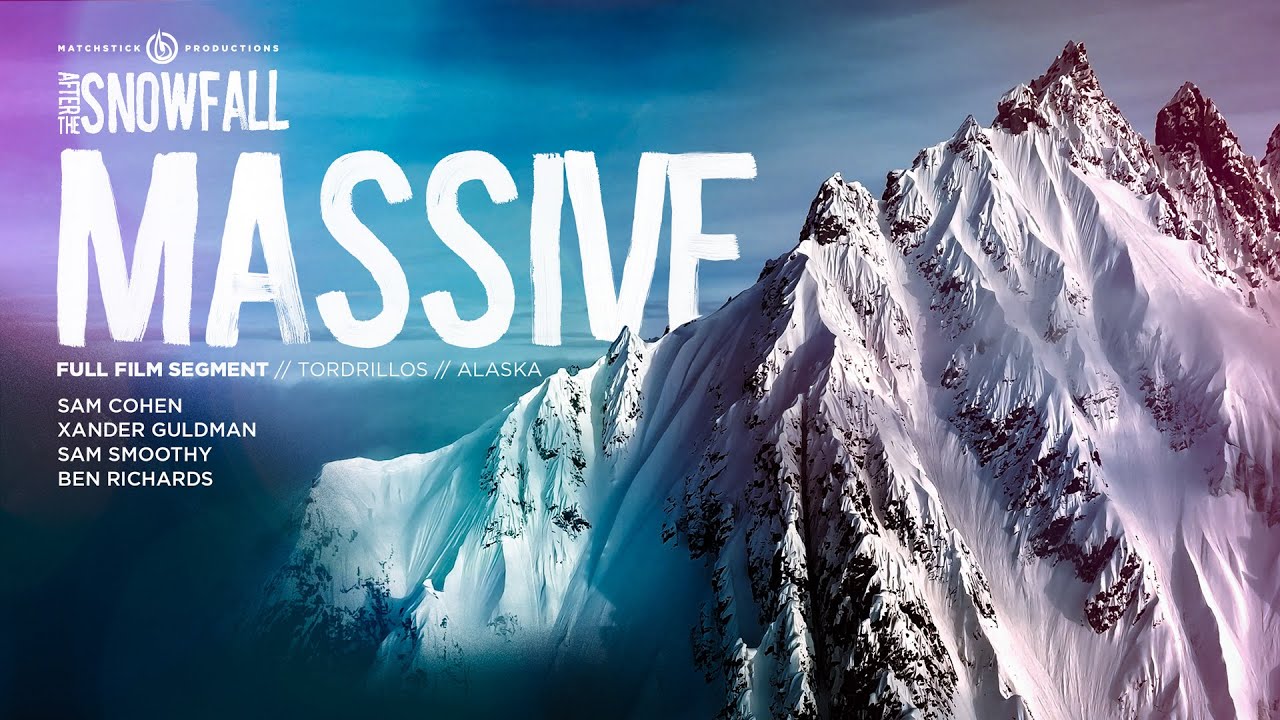
His influence has expanded rapidly through film. In Matchstick Productions’ “The Land of Giants,” he went from relative unknown to audience favorite, standing out in a cast full of established legends with fast, creative lines in some of the world’s most photogenic ranges. In HEAD’s “Unified” and later “Out of the Ordinary,” he helped anchor the brand’s big-mountain storytelling, showing how a race-bred company can express pure freeski culture. More recently he has stepped into a director’s role with “Form,” a short film built around skiing on Donner Summit and an improvised jazz score performed live by his brother’s quartet. Projects like the Noise Ordinance tour, which combine live music and ski films, underline his interest in expanding what a ski premiere can feel like, not just stacking banger shots.
Geography that built the toolkit
Guldman’s skiing is inseparable from the geography of Lake Tahoe and the northern Sierra Nevada. Growing up in Truckee meant regular storms, heavy coastal snow and terrain that flips quickly from open bowls to tight timber and rock-lined chutes. Long days exploring around Donner Summit and the backcountry near Sugar Bowl Resort taught him how to read complex avalanche terrain, manage speed in variable snow and find creative hits where others see only traverse tracks. Those habits show up every time he steps onto a new face: he looks for ways to play with the mountain rather than simply ticking off the obvious fall line.
Film and tour travel have expanded that toolkit. “The Land of Giants” alone brought him to zones such as Idaho’s Smoky Range, Alaska’s Chilkat Range, the Niseko Range in Japan, Norway’s Lyngen Alps, the Sierra back home in California, Utah’s Wasatch and multiple ranges in British Columbia. Alongside Freeride World Tour stops in Spain, Andorra and Canada, plus South American trips with partners like Stellar Equipment, he has experienced everything from deep maritime storms to firm continental chalk. The result is a skier who looks just as comfortable threading a rocky spine in low light as he does lacing turns down a perfectly filled-in Alaska face.
Equipment and partners: practical takeaways
On the gear side, Guldman rides for the HEAD freeski program, using skis from HEAD paired with bindings from Tyrolia. His outerwear comes from Stellar Equipment, while goggles and helmets are supplied by Smith Optics. In avalanche terrain he relies on tools from Backcountry Access, and he continues to represent his home hill through an ambassador role with Sugar Bowl Resort. Taken together, his sponsor mix reflects a focus on durability, safety and all-conditions performance rather than hyper-specialized park gear.
For progressing skiers, the practical message is clear. Guldman’s skiing works because his equipment is built as a system: stable, directional freeride skis that can still be thrown into spins, bindings and boots tuned for aggressive but controlled landings, and avalanche gear he knows intimately from countless backcountry days. Viewers studying his runs can see how this setup lets him commit to creative tricks in serious terrain without second-guessing his tools. It is a reminder that before trying to copy his tricks, riders should invest in reliable safety gear, a solid big-mountain ski underfoot and the avalanche education to back it up.
Why fans and progressing skiers care
Fans gravitate toward Xander Guldman because he embodies a modern, multidimensional version of a pro skier. He is competitive enough to charge on the Freeride World Tour, stylish enough to anchor segments in major films and thoughtful enough to build projects that link skiing to music and storytelling. His iF3 Breakout Skier of the Year award was less a surprise than an acknowledgement of what many viewers already felt: he is one of the riders redefining what “big-mountain freeskiing” looks like right now.
For aspiring freeriders, his path offers a realistic roadmap. He built strong fundamentals on a local team, learned to move confidently in the backcountry, embraced a break from competition when he needed it and came back with renewed energy rather than burnout. He shows that it is possible to value community, creativity and long-term health while still skiing at the very edge of what is possible. Whether you are watching a Freeride World Tour replay, a Matchstick Productions premiere or a small-venue screening of “Form,” following Guldman gives you a front-row seat to how thoughtful, imaginative big-mountain skiing is evolving season after season.