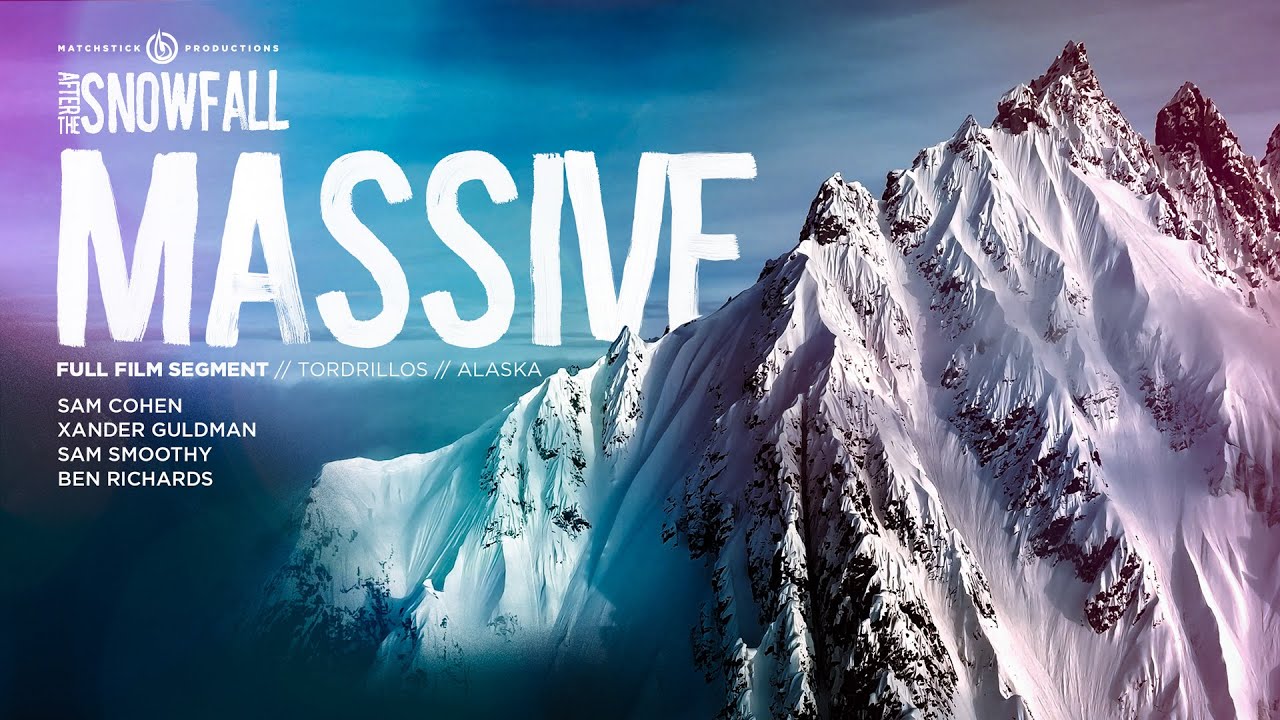
Sam Smoothy
Wānaka, New Zealand | Active: 2011-present | Focus: freeride, ski mountaineering, big-mountain films, first descents | Current: The North Face athlete and XXIV project skier
Vallnord Arcalís When The Traverse Vanished
Vallnord Arcalís looked thin and hostile in February 2015, with Pyrenean wind scraping snow off rock ribs and leaving only narrow white bridges between cliffs. Sam Smoothy pushed into a line no other skier had chosen, landing above exposure, cutting left through a three-tiered cliff band, and skiing as if the whole face had already been solved in his head. The Freeride World Tour stop in Andorra became more than a win. It became the run that moved him from contest danger into ski-film relevance, the moment Teton Gravity Research looked at a New Zealander from the Southern Alps and saw an Alaska skier.
Treble Cone Before The Big-Mountain Map
Smoothy grew up around Wānaka, with Treble Cone as the hill that shaped his early skiing. The North Face describes a childhood built around outdoor parents, New Zealand winters, and a racing background before freeride took over. Australian Geographic adds useful detail: he skied from age two, raced giant slalom and slalom until 17, then drifted toward freeskiing through slopestyle, halfpipe, and big air. That mixed start matters because Smoothy never became a pure park skier or a pure racer. He carried race pressure, freestyle curiosity, and Southern Alps terrain reading into the same body, then spent years trying to make that combination work on bigger faces.
Qualifier Debt And The 2012 Wildcard
The route to the Freeride World Tour was not clean. Smoothy spent his early twenties funding qualifier starts across Europe and North America, with limited sponsorship and off-season work filling the gaps. Australian Geographic reported that his breakthrough came when he ranked inside the top three on the qualifying circuit, but his first World Tour season did not hold. Injuries hurt his requalification, and by his own account he was close to stepping away with debt and no secure future. An injury-replacement wildcard changed the direction in 2012. The North Face records that he backed it up with a Chamonix win and two more podiums.
Chamonix, Courmayeur, Røldal, Austria
Smoothy’s FWT record gives the contest chapter real weight. The North Face lists first place at Chamonix in 2012, second at Courmayeur in 2012, third at Røldal in 2012, first overall at the World Heli Challenge in 2011, first at the Freeride World Tour stop in Austria in 2014, second overall on the Freeride World Tour in 2014, and first at Andorra in 2015. Those results place him beyond one viral line. He was a multi-podium freeride athlete during a period that included riders such as Reine Barkered, Jérémie Heitz, Drew Tabke, Sam Anthamatten, and Loïc Collomb-Patton, with each venue asking for a different balance of speed, exposure, and control.
The Andorra Line That Changed The Phone Calls
Freeskier’s long profile of the 2015 Andorra run gives the clearest anatomy of the moment. Smoothy began with a large cliff drop onto a narrow exposed strip above rock, then moved skier’s left into a three-tiered cliff section and kept landing drops until the finish. He told Freeskier the line stood out as the most exposed area of the venue and that he wanted something that reached the edge of his ability. Charlie Lyons described his strength as the ability to see big-mountain lines with a unique eye. The result was not only a score. It showed filmmakers that Smoothy could find a path through terrain that looked unskiable from the broadcast angle.
Alaska With TGR After The Contest Bib
The Andorra win led directly into film work. The North Face says that run triggered a call from Teton Gravity Research inviting him to Alaska. Mountainwatch later described Smoothy’s 2016 TGR invitation as the start of a regular relationship with the production house. TGR’s own archive placed him at Fantasy Camp in Alaska with Nick McNutt and Angel Collinson, skiing terrain with heavy exposure. That setting changed the job. A freeride contest gives one judged descent on a marked venue. Alaska filming asks for repeated decisions from helicopters, radio communication, spine management, sluff control, and the discipline to stop when the mountain’s answer is no.
Rogue Elements, Winterland, And The Wider Film Thread
Smoothy’s film path widened after the first Alaska trip. The North Face credits him with TGR films plus parts with Sherpa Cinema and Legs of Steel. Skipass lists him in the cast of TGR’s Rogue Elements in 2017, beside skiers and riders such as Angel Collinson, Jeremy Jones, Ian McIntosh, Nick McNutt, Tim Durtschi, Johnny Collinson, Elyse Saugstad, Griffin Post, and Sammy Carlson. Red Bull’s page for Winterland later pointed viewers toward the story of Smoothy’s crash, a reminder that his film career included hard lessons as well as clean footage. His screen identity became tied to steep consequence rather than trick count.
SkyPiercer On The Aoraki East Face
The Sky Piercer pulled Smoothy’s story back to New Zealand. The 2018 film, directed by Jase Hancox, listed Sam Smoothy, Nadine Wallner, Xavier De Le Rue, and Fraser McDougall in the cast, with Mt. Cook as the location. Freeride Filmfestival describes the project around Aoraki, the highest mountain in New Zealand, and the steep east face that had occupied Smoothy’s imagination. Adventure Sports TV adds the waiting game: surfing in the Catlins, climbing and biking around Lake Wānaka, diving for crayfish on the West Coast, bush-bashing toward alpine lines, then leaving the hut just after midnight when a short weather window arrived. The film gave Smoothy a home-mountain myth large enough to match the international footage.
Caroline Face And The Local Kiwi Descent
The ski-mountaineering chapter became more serious on October 21, 2021. PlanetMountain reported that Joe Collinson, Will Rountree, and Sam Smoothy made the second ski descent of the Caroline Face of Aoraki/Mt Cook, a 2000-metre face on New Zealand’s highest mountain. The same report described the Caroline Face as a long-coveted prize, exposed to seracs, avalanches, bare ice, and complex climbing. The trio climbed the East Ridge to middle peak, entered through a rappel from Porter Col, used another rappel through the central serac band, and then skied boot-top powder down the face. It was the first descent since the 2017 first ski descent and the first by a local Kiwi team.
XXIV And The Twenty-Four 3000-Metre Peaks
Smoothy’s current project is XXIV, an attempt to climb and ski all 24 named 3000-metre peaks in New Zealand. The North Face described the project with 13 peaks completed on its athlete page, while later adventure coverage reported the tally had reached 21 of 24 by late 2025. The New Zealand Mountain Film & Book Festival announced Smoothy as a 2025 speaker and described XXIV as a project built around the country’s named 3000-metre summits. The idea is not only peak collecting. Powder reported that Smoothy wants the project to act as an homage to New Zealand and an examination of himself as a steep skier, not just a checklist.
Jones Route On The East Face
The most current hard marker came on November 1, 2025. PlanetMountain’s photo report states that Ross Hewitt, Will Rowntree, and Sam Smoothy made the first ski descent of the Jones Route on the massive East Face of Aoraki/Mt Cook. That line gives the recent project a sharper edge. Smoothy is not simply revisiting familiar freeride venues or repackaging old FWT footage. He is still adding new ski-mountaineering records in the Southern Alps, on faces where climbing skill, route-finding, glacier judgment, rappels, exposure management, and snow assessment matter as much as downhill ability. The same skier who once attacked Andorra for judges now works inside terrain where the mountain gives no score and very little room for correction.
The North Face, Writing, And Mountain Judgment
The North Face remains the clearest current sponsor anchor for Smoothy. Its athlete page also notes that he passed his NZMGA Assistant Ski Guide exam and has continued writing, with work in Freeskiing, The Ski Journal, and NZ Skier magazine. Those details matter because they show a career no longer defined only by descent footage. Smoothy’s public role now includes communication, judgment, and mentorship around risk. His crash history, FWT years, Aoraki projects, and guide training all point toward the same evolution: from proving he could ski the exposed line to explaining why, when, and with whom that line should be attempted.
How Smoothy Reads Exposure
Smoothy’s style is built on commitment rather than ornament. In contests, he chose technical venues, narrow snow strips, cliff bands, and fast exits instead of safer tactical runs. In film, that translated into Alaska spines, high-consequence faces, and lines where sluff management mattered more than trick vocabulary. In ski mountaineering, it shows through patience: waiting for freeze cycles, monitoring ice cliffs, climbing into position, accepting rappels, and turning away when a face is not ready. His skiing uses fall-line speed, edge pressure, compact takeoffs, and strong landing absorption, but the signature is the way he links exposure into one readable path.
The Present Tense Is Still Aoraki
Smoothy’s FWT competition chapter is closed enough to read historically, but his mountain chapter is active. The verified present is XXIV, the Aoraki work, The North Face support, and ski-mountaineering projects with partners such as Will Rountree, Joe Collinson, Ross Hewitt, and Jase Hancox. The 2015 Andorra run remains the clip that opened the world, but the strongest current marker is closer to home: New Zealand’s 3000-metre peaks, where Smoothy is still turning old freeride confidence into alpine decisions with measurable consequences.