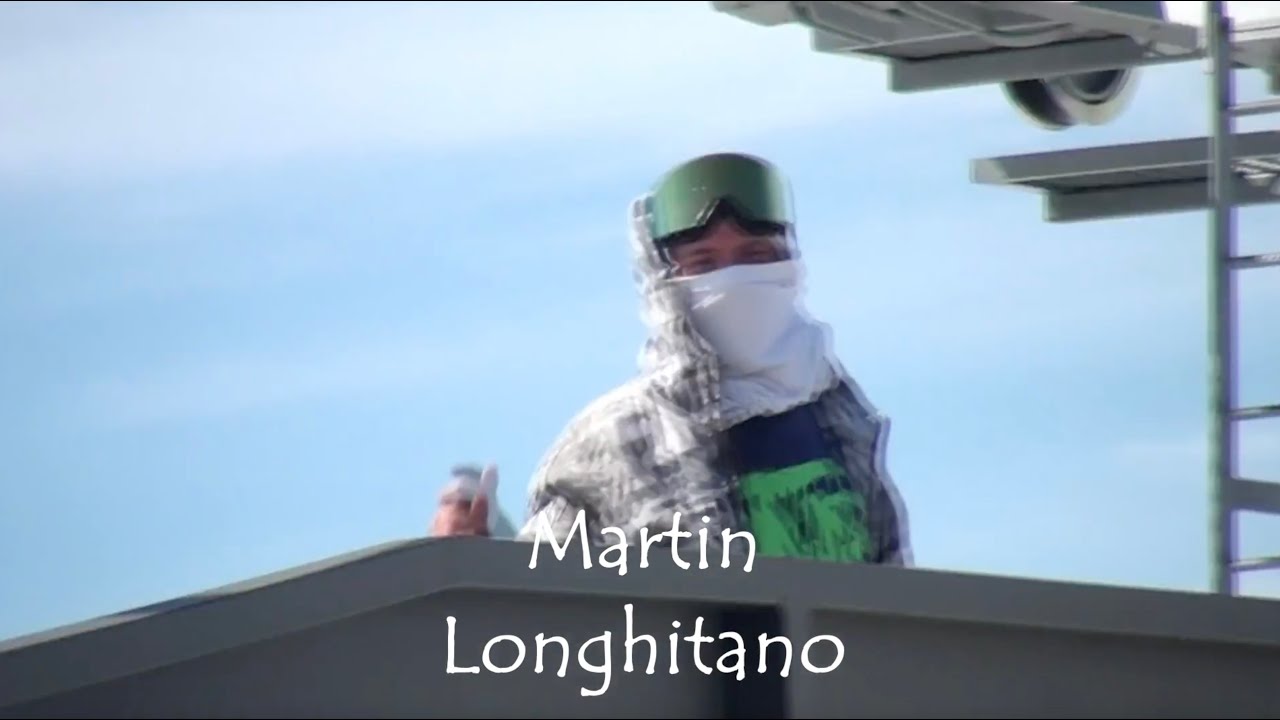
Martin Longhitano
Perisher / Snowy Mountains, Australia | Active: 2019-present public record | Known for: SuperUnknown XVI, Jib League, The Filth, Gallah Gang, Perisher park style | Current: Propa Snow team / Australian park and street skier
Front Valley When The Slush Ran Thin
Perisher’s Front Valley was soft by late afternoon, the rail takeoffs grooved by laps and the spring snow beginning to pull at the skis. Martin Longhitano kept skiing anyway, sliding through features with a loose upper body and enough patience to let each press breathe. That is where his public identity makes the most sense: not in a formal World Cup start list, but in Australian park laps, improvised street spots, old twin-tips, short snow windows and edits where style has to survive on less-than-perfect terrain.
Perisher As The Main Language
Longhitano is closely tied to Perisher, the New South Wales resort whose Front Valley park has become the most visible freestyle zone in Australian skiing. Mountainwatch called him one of the key skiers in Moonbah and Back, filmed at Perisher with Cameron Waddell, Bailey Johnson and Cade Robinson. That project matters because it placed him beside Australian skiers with more conventional competition visibility, while showing a different strength: smooth park flow, creative feature use, and the ability to make home-mountain laps feel worth watching deep into spring.
SuperUnknown XVI And The Global Signal
The international signal came in 2019, when Level 1 selected Longhitano as a SuperUnknown XVI finalist. The finals at Winter Park gathered skiers from eight countries, including Martin Longhitano from Australia, Dane Kirk from New Zealand, Joona Sipola from Finland, Monty Wright from Great Britain, Anton Lindén from Sweden and several American finalists. SuperUnknown has always rewarded more than trick difficulty. A skier has to show body language, feature choice, filming awareness and personality. For Longhitano, that finalist week put an Australian park rider into a global style conversation.
The Old Dynastars At Nordkette
Jib League sharpened that reputation. Chillfactor reported that Longhitano travelled from an annual guiding job in Italy to Innsbruck for the event, carrying a pair of 2002 Dynastar Concept twin-tips he had found in a Jindabyne op shop. He made it through the open day into the pro sessions and finished fourth overall after three days at Nordkette Park. The old skis became more than a gimmick. They matched the event’s mood: rider-judged, style-driven, loose in format, and built for skiers who can adapt when the feature asks for imagination rather than a standard run plan.
Case For Keys And The Lockdown Spots
Case For Keys, the Gallah Gang project, captured another side of Longhitano’s Australian identity. Mountainwatch described the film as a group of friends making the most of an Aussie winter during pandemic restrictions, getting creative around Perisher. Longhitano said that lockdown opened the chance to ski spots he had been looking at for a long time. The rider list included Elliott Russell, Sam Shields, Jai Hunter, Martin Longhitano and Clem Margnes, with support from Tall T, K2 and Faction Skis. That context gives the project its texture: local restrictions, local terrain, friends, and a short winter pushed into something more inventive.
The Filth On Grass, Dirt And Rails
The Filth is the clearest street marker in Longhitano’s archive. Downdays called Australian street-skiing projects rare and framed the edit as proof that anything can work with enough snow and passion. FREESKIER pushed the point further, noting the grass, dirt, down rails, wall rides and tail taps on snow guns. The footage is valuable because Australia does not offer the same easy urban-snow setup as Quebec, Finland or Utah. Longhitano’s part works through scarcity. Thin snow, dirty landings, awkward surfaces and unusual spots become the whole point.
Moonbah And Back With Waddell And Johnson
Moonbah and Back gave Longhitano a cleaner park setting beside Cameron Waddell and Bailey Johnson. Mountainwatch described the film as a Perisher edit with a cruisy feel, filmed by Ryan Cafferkey, with additional filming from Reuben Riegler. The final segment was filmed after the lifts stopped spinning, when Longhitano and Waddell used spring slush and unnatural features to keep the session alive. That detail suits his profile well. He does not need a perfect park opening day. He often looks strongest when the normal resort routine has ended and the terrain starts asking stranger questions.
Premier Peri Park And The End-Season Bag
Premier Peri Park kept the focus on Perisher’s Front Valley. Downdays described it as an end-of-season park edit where Longhitano dug deep into his bag of tricks, with filming by Benson Keers and editing by Longhitano with help from Jai Hunter. The edit sits in the same lane as his strongest work: local, self-shaped, and more concerned with flow than scale. Perisher’s rails and jumps become a testing ground for switch entries, presses, pretzels, butters, redirects, shifty movements and clean exits, all without the stiffness of a formal contest run.
How He Makes Rails Feel Loose
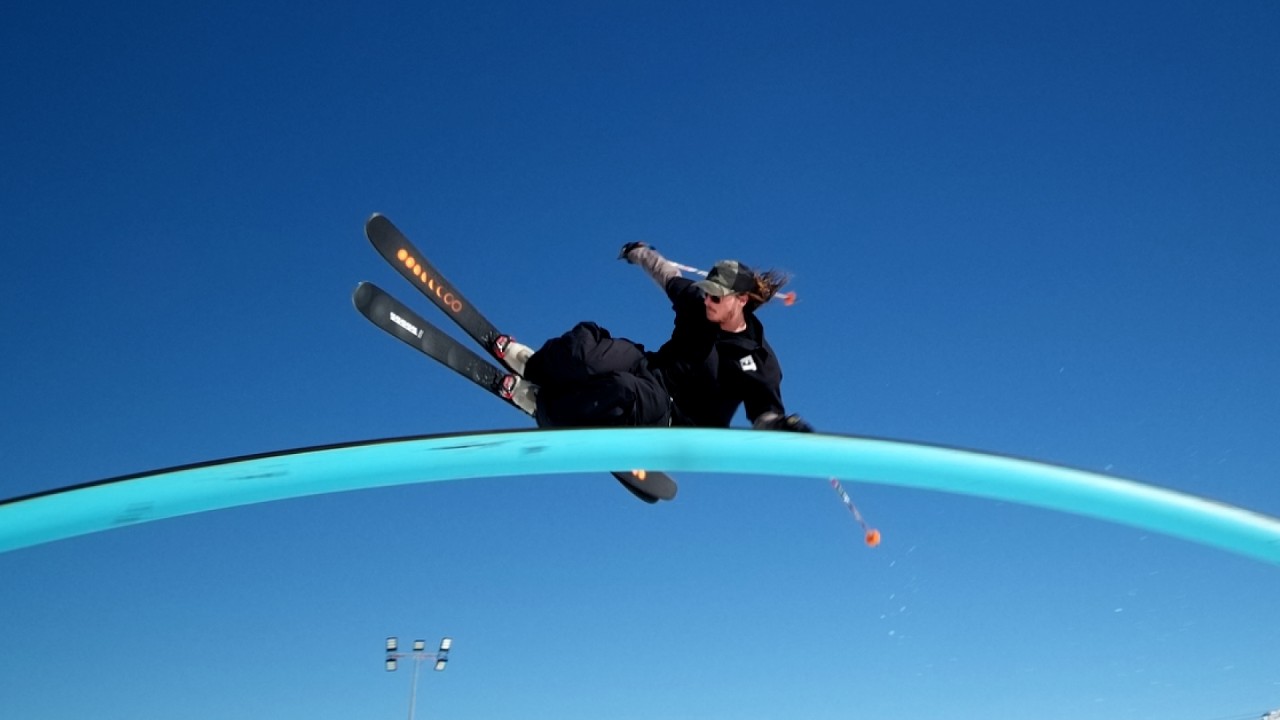
Longhitano’s skiing depends on control that does not look forced. His best clips use soft ankles, quiet shoulders, patient nose and tail pressure, and entries that let the feature decide the rhythm. He is comfortable on down rails, wall rides, snow-gun taps, side hits, small jumps, flat landings and slow-speed creative setups. The technical base is visible, but the appeal comes from how unhurried the skiing feels. He can make a rail trick read like a line rather than a single move, linking approach, slide, exit and after-movement into one shape.
Propa Snow And The Practical Setup
Propa Snow lists Longhitano on its team and describes him as a skier who brings creativity back to the center of park skiing, with a technical rail bag and fluid style. Mountainwatch ski-gear guides have also used Longhitano imagery around K2 freestyle skis, including Perisher shots on Reckoner and Omen models. That equipment context fits the way he skis. A park-and-street skier in his lane needs a setup that can press, slide, absorb flat landings, survive rails and still feel balanced for switch takeoffs. The gear matters because the tricks often depend on subtle pressure rather than brute force.
The Australian Street Lane He Opened Wider
Longhitano’s importance is cultural more than statistical. He is not defined by World Cup points or Olympic selection. His profile comes from SuperUnknown peer recognition, Jib League performance, Perisher edits, Gallah Gang projects and The Filth pushing Australian street skiing into a wider freeski conversation. That combination gives him a distinct place on a ski-video platform. He represents a skier from a short southern-hemisphere season who learned to make compact parks, dirty landings, old skis and spring leftovers feel like enough. The next markers are likely to come from more Perisher projects, Jib League-style sessions and street edits where the snowpack is thin but the idea is strong.