Luke Harrold
Profile and significance
Luke Harrold is a New Zealand freeski prodigy born in 2008 in Christchurch and based in Lake Hāwea, already regarded as one of the most exciting halfpipe talents in the world. Specialising in freeski halfpipe with additional starts in slopestyle and big air, he became the youngest Kiwi freeskier ever to stand on a World Cup podium when he finished second in the Beijing freeski halfpipe World Cup in December 2023 at just 15 years old. Only weeks later he underlined that breakthrough by winning Youth Olympic gold in halfpipe and bronze in big air at the Gangwon 2024 Winter Youth Olympic Games, confirming that his Secret Garden result was no one-off.
Harrold learned to ski through the Hāwea Flat Primary School programme and developed his park and pipe skills at Cardrona Alpine Resort, progressing into Snow Sports NZ’s development structures and then onto international circuits. By 2023 he had already claimed major Continental Cup wins in both North America and Europe, and in 2025 he finished a remarkable fourth place in men’s halfpipe at the FIS Freestyle World Championships at Corvatsch in Switzerland. Backed by partners such as Red Bull New Zealand, Atomic and The North Face Australia & New Zealand, he now sits at the leading edge of a new generation of Kiwi park and pipe skiers heading toward the Milano Cortina 2026 Olympic Winter Games.
Competitive arc and key venues
Harrold’s competitive story began on home snow. After starting to ski at Cardrona through school, he entered the New Zealand Junior Freestyle Nationals in 2016 and quickly gravitated toward the halfpipe and park. His potential was recognised early; in 2018 he was identified as a talent by Snow Sports NZ and invited into the National Development Team. Over the next several seasons he moved from junior domestic events into FIS competition, steadily collecting results in halfpipe, slopestyle and big air.
The international breakthrough came in 2023. That year he dominated the halfpipe on the Continental Cup circuit, winning the overall FIS North American Cup in Aspen Snowmass and the European Cup Premium event in the famed superpipe at LAAX. He also finished second in slopestyle at the World Rookie Tour Finals, showing that his skill set extended beyond the pipe. In December 2023 he stepped up to the World Cup level at Secret Garden’s Yunding Snow Park in China, site of the Beijing 2022 Olympic pipe, and stunned the field by taking second place in his debut World Cup, immediately entering New Zealand’s record books.
The momentum carried into the 2023–24 northern winter. In January 2024 Harrold travelled to the Gangwon 2024 Winter Youth Olympic Games in South Korea, where he delivered on the biggest junior stage in the sport. He won the men’s freeski halfpipe with a 94.25-point run and added a bronze medal in freeski big air, making him one of the standout athletes of the Games. By 2025 he was no longer just a rising prospect; at the FIS Freestyle World Championships at Corvatsch he qualified second into the men’s halfpipe final and finished fourth overall, narrowly missing a senior world medal but firmly establishing himself among the very best. In October 2025 his selection for the Milano Cortina 2026 Olympic Winter Games was confirmed, giving him the chance to translate all that experience into his first full Olympic appearance.
How they ski: what to watch for
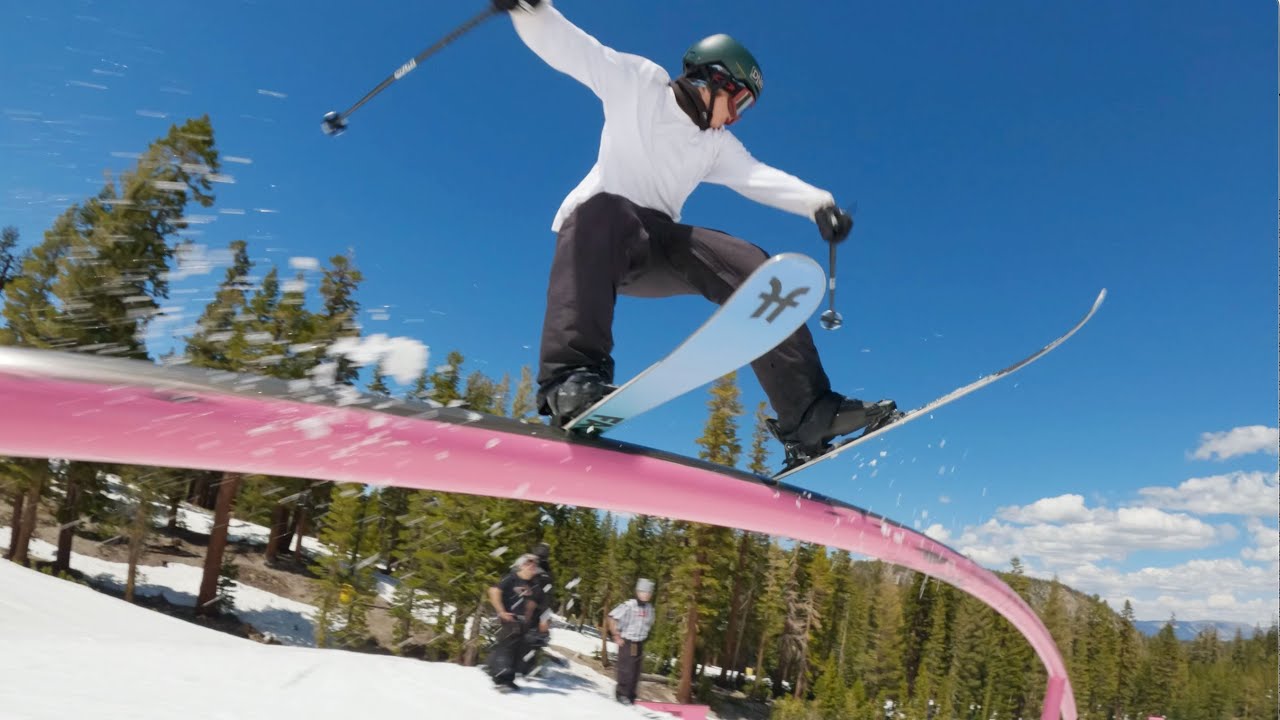
Harrold’s skiing is defined by a rare blend of amplitude, technical variety and composure for an athlete still in his teens. In the halfpipe he typically builds five or six hits per run, using both walls aggressively rather than simply surviving the transitions. Fans should watch for the way he combines direction changes and different axes of rotation: left and right spins, switch entries, and off-axis cork variations that keep judges engaged from top to bottom. His Youth Olympic winning run and his World Cup podium performance both showcased this pattern, with clean take-offs, fully held grabs and smooth transitions between tricks rather than rushed, last-second adjustments.
Even when he is pushing difficult combinations, Harrold maintains a calm, stacked stance that keeps his upper body quiet while his legs and edges do the work. That makes his landings look controlled rather than desperate, a key factor in scoring at the highest level. In big air and slopestyle appearances, the same qualities appear on single features: his spins are set early, his grabs are visible and secure, and he uses the full landing to absorb impact. For viewers who want to learn from him, slow-motion replays of his pipe runs reveal clean edge changes on the vertical, patient rotations and a clear sense of where he is in the air at every moment.
Resilience, filming, and influence
Behind the highlight reel, Harrold’s rise has demanded serious resilience. Balancing full-time school at Mt Aspiring College with year-round training, Southern Hemisphere winters at Cardrona and Northern Hemisphere competition blocks requires discipline uncommon even among older professionals. His 2023–24 and 2024–25 seasons compressed travel to China, Europe, North America and Korea into tight windows, with long days in the halfpipe followed by gym and tramp work to keep his trick vocabulary growing.
That work ethic shows up in the way he responds to pressure. To arrive at a first World Cup, drop into a pipe built for Olympic champions and leave with second place suggests not just talent but the capacity to deliver when it counts. The same applies to his Youth Olympic performance, where he converted qualifying speed into a near-flawless gold-medal run. While he is still at the beginning of his filming career compared to older pros, edits from training at Cardrona and international camps already circulate widely in the New Zealand freeski community, and his Youth Olympic and World Cup highlights have been shared across official channels. For young Kiwi skiers watching from Wānaka, Queenstown or the North Island hills, Harrold’s path offers a very tangible model of what focused progression can achieve.
Geography that built the toolkit
Harrold’s skiing is deeply shaped by the places that raised him. Born in Christchurch but based around Lake Hāwea, he grew up with ready access to the Southern Lakes region and its resorts. Cardrona Alpine Resort became his main training ground, providing a world-class superpipe, multiple terrain parks and a long Southern Hemisphere winter that anchors his annual training cycle. The combination of organised coaching through Cardrona’s high-performance programmes and the local community of freeskiers meant he could learn advanced tricks in an environment that also fostered creativity and fun.
From there, his geographic world expanded quickly. LAAX exposed him to one of Europe’s most progressive halfpipes and park setups, while Aspen Snowmass offered the classic Colorado mix of high-altitude superpipe and slopestyle venues. Secret Garden’s Olympic pipe in China challenged him with the same transitions that had tested the world’s best at Beijing 2022, and Corvatsch gave him a taste of Swiss high-alpine pipe competition at World Championships level. Moving between these venues has forced him to adapt his runs to different pipe shapes, snow textures and judging preferences, accelerating his development far beyond what a single home hill could provide.
Equipment and partners: practical takeaways
Harrold’s partnerships mirror his status as a serious high-performance athlete with global ambitions. His connection with Red Bull New Zealand places him alongside a selective group of action sports athletes, providing support for travel, training and off-snow performance work. On the hardware side, he rides for Atomic, one of the leading ski manufacturers in freestyle and race skiing, using their freestyle platforms to balance edge grip on icy pipe walls with enough pop to reach the amplitude his runs demand. Outerwear and technical layers from The North Face Australia & New Zealand help him cope with everything from frigid night training in the Southern Alps to variable spring conditions on European glaciers.
For progressing skiers, the gear lesson is not to copy every logo but to understand why his setup works. A dedicated pipe and park ski with a reliable, consistent flex profile lets him trust his take-offs and landings; well-fitting boots and tuned bindings give him precise control on the vertical walls of the halfpipe; and outerwear built for long training days keeps him comfortable enough to focus on progression rather than survival. Harrold’s story also shows the value of building relationships with brands that share your long-term goals, whether that is contest success, filming or a mix of both.
Why fans and progressing skiers care
Fans care about Luke Harrold because he represents the future of New Zealand freeskiing at the very highest level. In just a few seasons he has moved from junior national events to Continental Cup dominance, a World Cup podium, Youth Olympic gold and a top-five finish at the senior World Championships. Yet his skiing still carries the hallmarks of the Southern Lakes parks where he grew up: a playful attitude, visible joy in the pipe and a focus on style as much as on raw difficulty.
For progressing skiers, his trajectory offers a clear roadmap. He shows how starting with a strong local programme, committing to consistent training at a resort like Cardrona and then stepping gradually through Continental Cups to World Cups can lead all the way to the Olympic stage. Watching his runs carefully—how he links tricks, controls speed in the pipe and holds his grabs—can teach as much as any clinic. As he heads toward Milano Cortina 2026, Luke Harrold is not just another name on a start list; he is a young athlete reshaping what is possible for Kiwi freeskiers on the world stage.