Kale Cimperman
Pittsburgh, Pennsylvania | Active: 2010s-present | Known for: street skiing, Vishnu Freeski, LINE video projects | Current: Brighton, Utah / DaleBoot athlete roster
Brighton Slush And A Stranger Line
The spring snow at Brighton carried that wet Utah sound: skis hissing, landings punching through, jackets half-open in the sun. Kale Cimperman was not framed as a contest skier chasing judges’ numbers. His lane was rougher and looser, built from rails, tubes, odd transitions, backyard-style takeoffs, and moments where a feature looked half accidental until someone pointed skis at it.
That setting fits the way his public ski career reads. Cimperman’s name appears through street films, LINE Skis projects, DaleBoot’s athlete roster, RCFS edits, and the early story of Vishnu Freeski. His path belongs to the part of freeskiing where a handrail, a snowbank, a plastic tube, or a playground feature can become the whole mountain.
From Pittsburgh To Salt Lake Movement
Cimperman’s public biography begins away from the usual mountain-town script. OARS lists his hometown as Pittsburgh, Pennsylvania, with Salt Lake City, Utah as his current location. The same profile calls him a professional river guide, a graduate student, and a pro skier, while his short personal note connects skiing with skateboarding. That detail matters because his skiing sits closer to skate-influenced street logic than to alpine race structure.
Salt Lake City placed him near the Wasatch scene: Brighton, Park City, Woodward Park City, and a deep rail culture that has fed many American street edits. DaleBoot’s athlete page lists Cimperman in Brighton, Utah, and ties him to Daycare and LINE Traveling Circus. Those two references define the public shape of his modern skiing better than any points list could.
Vishnu Before The Brand Had Gravity
In 2015, Newschoolers published a Brand Spotlight on Vishnu Freeski after meeting Kale Cimperman and Emmett Davis at SIA in Denver. In that interview, Cimperman described Vishnu as a street skiing brand founded by Emmett Davis, Dylan Manley, and himself. He also said the team was made of people they had already been skiing with for a while, which explains why the brand felt more like a crew project than a distant equipment company.
Vishnu’s early identity was built around the Wet, a symmetrical twin-tip shaped for presses, butters, switch landings, and catching transition on objects that were never designed for skis. That design language mirrors Cimperman’s public image: soft-flex thinking, urban problem solving, and skiing where rails, barriers, ledges, tubes, and landings all matter as much as jump size.
Hot Milk And The Early Vishnu Footprint
One of Cimperman’s earlier individual video traces is Hot Milk, published by Vishnu on Newschoolers in May 2015. The listing names Kale as the skier, credits him, and places the clip in PC, shorthand for Park City. It sits in the same period as Vishnu’s public emergence, when the brand was still explaining its purpose to the wider freeski audience.
The important detail is not the view count or any single trick. It is the connection between rider, filmer, brand, and ski design. Cimperman was not only appearing in edits; he was part of the group shaping the tool underfoot. In street skiing, that loop can be direct: a ski that presses better changes how a rider looks at a kink rail or a tight landing.
RCFS And The Cabin Logic
RCFS placed Cimperman inside a different kind of video ecosystem. The series, tied to Will Wesson and friends, used DIY builds, tubes, rails, cabin setups, and Wasatch Academy features as a working laboratory. Newschoolers listings from 2020 and 2021 repeatedly place Cimperman with Wesson, Dylan Manley, Mitchell Brower, Gavin Rudy, and others in RCFS clips.
That environment rewards a specific toolkit. A skier needs low-speed edge control, patience on takeoffs, comfort with imperfect snow, and enough switch confidence to turn a homemade feature into a full line. The tricks are not always about amplitude. They often come from matching transition, holding a press through flex, landing centered, and using the next object before the viewer has reset.
Daycare Put Him In A Larger Street Room
Daycare, released in 2023 and presented by LINE Skis, brought Cimperman into a crowded street cast created by Will Wesson and Patrick Ring. Downdays lists him alongside Wesson, Ring, Reagan Wallis, Tucker Fitzsimons, Bennie Osnow, Andy Parry, Pete Koukov, Taylor Lundquist, Dasha Agafonova, Mitchell Brower, Jed Waters, Liam Baxter, Kevin Merchant, and others.
The project matters because the crew spans eras. Wesson and Parry carry Traveling Circus history, while riders like Ring, Fitzsimons, Lundquist, and Agafonova represent a newer street-video rhythm. Cimperman fits between those groups. His name appears as a bridge between older DIY rail culture, Vishnu’s early street identity, and the later LINE crew format where full casts move through urban spots together.
Traveling Circus Without A Contest Bib
LINE Traveling Circus 17.2, Ain’t No Stairs, No One Cares, was published on October 31, 2024. LINE’s page lists Cimperman with Will Wesson, Andy Parry, Mitchell Brower, Dicky Thomas, Bennie Osnow, and Tucker Fitzsimons. Newschoolers describes the episode’s urban philosophy and places Cimperman in the same Utah-flavored mix of playground features, powder jokes, and street skiing looseness.
The title itself gives context for his role. This is not polished slopestyle skiing with a start gate and fixed judging criteria. It is skiing that treats stairs, rails, bike racks, banks, trees, and weird transitions as possible terrain. Cimperman’s public image is strongest in that format, where a rider’s eye matters as much as a trick name.
Rendition And Street Ski Memory
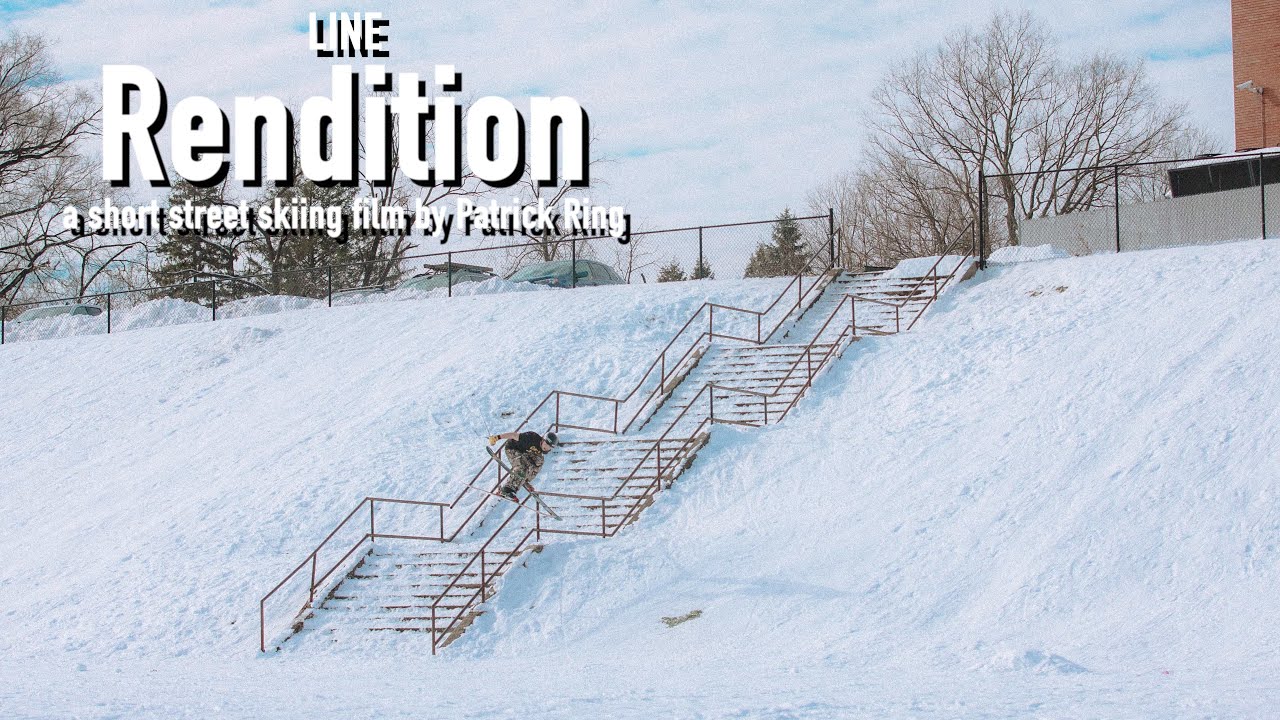
Rendition arrived in October 2025 as a short street skiing video by LINE Skis, directed by Patrick Ring. Newschoolers lists Cimperman in the cast with Tucker Fitzsimons, Tom Wallisch, Taylor Lundquist, Andy Parry, Will Wesson, Dasha Agafonova-Knight, Bennie Osnow, Tweak, and Ring. The project is described as a follow-up to Daycare, with references to ski and skateboard films hidden throughout.
That cast places Cimperman in a room with several different types of street authority: Wallisch’s technical contest-to-street legacy, Wesson’s long-form creative history, Parry’s Traveling Circus identity, and a younger generation pushing rail difficulty. Cimperman’s value inside that lineup comes from continuity. He connects the old independent brand era to modern LINE street projects without needing to be positioned as the main headline.
DaleBoot, LINE Projects, And The Practical Setup
DaleBoot’s athlete roster lists Cimperman with Brighton, Utah, and credits Daycare plus LINE Traveling Circus. That roster matters because boot support in street skiing is more practical than decorative. Rail skiers need predictable flex, heel hold, and enough comfort to spend long days hiking the same feature in cold city snow or warm resort slush.
His broader equipment story also runs through Vishnu. The brand’s early conversation around symmetrical shape, soft flex, rocker, camber underfoot, and transition-friendly landings matches the needs of technical rail skiing. A rider working on presses, swaps, pretzels, switch takeoffs, and narrow landings benefits from gear that bends without collapsing and releases without feeling dead.
How Cimperman Reads A Feature
Cimperman’s skiing is best read through terrain choice. Public clips and project listings place him around PC, Brighton, Utah, Wasatch Academy builds, LINE street casts, and RCFS cabin sessions. Those environments favor creativity over clean repetition. A tube can become a rail; a snow pile can become a landing; a spring park lap can turn into a small film set.
Technically, his lane points toward rail slides, surface transfers, butters, presses, switch movement, and transition matching. The skate influence from his OARS profile fits that pattern. Skateboarding teaches speed checks, line selection, body position over narrow objects, and the ability to see a feature before it looks like a feature. Cimperman’s ski identity sits in that crossover.
The Current Public Trail
The most current public trail points to a skier still tied to the Utah street and film ecosystem rather than an athlete chasing World Cup starts. LINE’s 2024 and 2025 projects keep his name active in Traveling Circus, When Pigs Fly, and Rendition. DaleBoot still lists him with Brighton, Utah. OARS still frames him as a river guide, graduate student, and pro skier.
That mix gives Cimperman a specific place in freeski culture. He is not defined by medals, bib numbers, or FIS rankings. His profile comes from street skiing, founder history, crew projects, and the practical knowledge of turning ordinary structures into ski terrain.