Jonas Hofer
Profile and significance
Jonas Hofer is a Swiss-based park and street skier whose name has been gaining traction in the core freeski world through a steady flow of self-produced edits and tightly crafted urban segments. Splitting his time between the freestyle culture of the Bernese Oberland and trips to cities further afield, he has carved out a niche as a skier who does a bit of everything on a project: riding in front of the camera, shooting behind it and cutting the final edit. His work on Newschoolers under the “JonasGH” handle, alongside appearances in recent street films, has made him one of the emerging European riders to watch if you care about where urban skiing is headed.
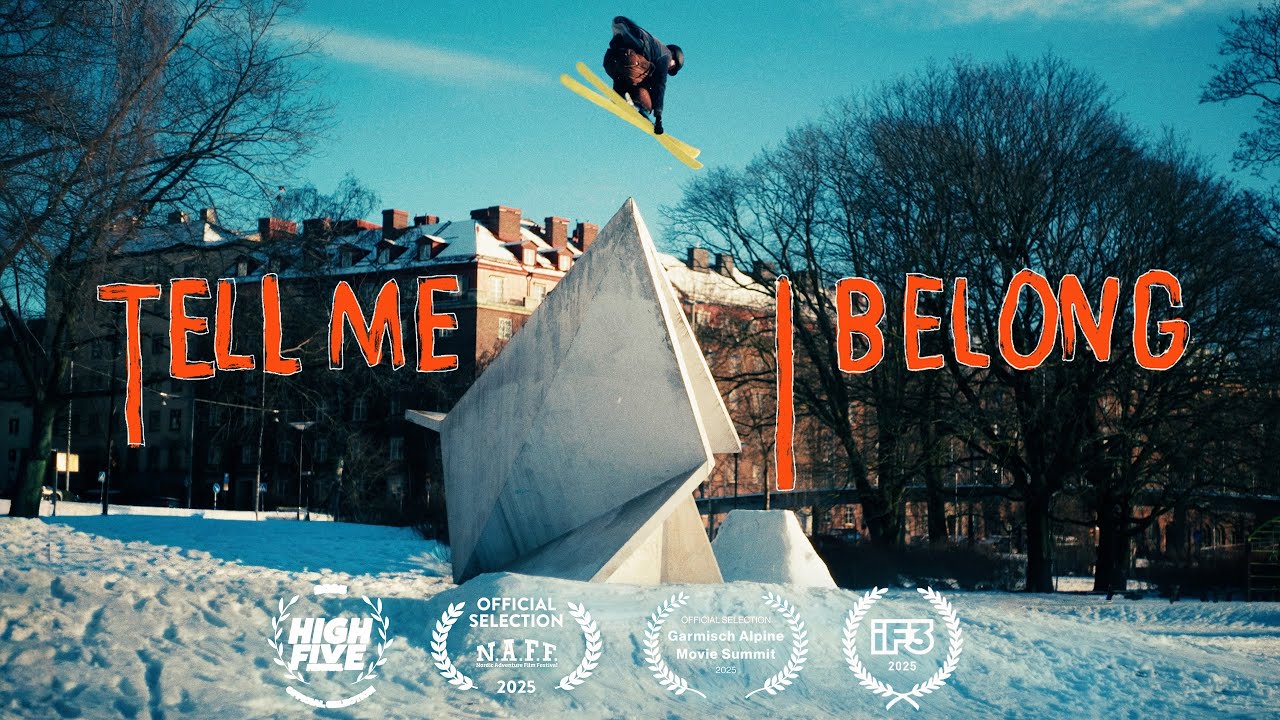
Hofer’s most visible calling card so far is “GRINDelwald – Streetpart 2024,” his first full street part, filmed largely in what he calls his “second hometown” of Grindelwald. In parallel, he features in “Tell Me I Belong,” a Stockholm-based street film from the Bungee Breakers crew that follows five friends from different corners of Europe meeting up to ski urban together. That short has entered the international festival circuit, with official selections at events like iF3 and the High Five Festival, bringing his name to an audience well beyond the regular Newschoolers feed. For a ski-video platform, Hofer is a textbook example of the new-school European street rider: less about contest résumés, more about crews, edits and spots.
Competitive arc and key venues
Rather than building his path through slopestyle rankings or federation rosters, Hofer has followed the classic film-first trajectory. Early on, his skiing showed up in playful park edits shot around the Swiss Alps: spring laps in the Snowpark First above Grindelwald, mellow sessions at Crans-Montana and early-season footage from Skyline Snowpark at Schilthorn. Those videos already carried his fingerprints as both skier and editor, with credits listing him for camera work and cutting as well as riding. Over time, the park-focused clips evolved into more concept-driven projects, culminating in his dedicated street part “GRINDelwald,” where handrails, walls and ledges in and around the village became his main playground.
At the same time, he has plugged into a wider European crew network. Collaborations with filmer Silvan Borra and riders like Elias and Bastian Gatt, Kai Jussel and Christian Moser link him to a broader “under-the-radar but very serious” park and street scene that roams between Switzerland, Austria and beyond. In that context, “Tell Me I Belong” marks an important step in his arc: a multi-rider urban project filmed in Stockholm, presented by the Bungee Breakers collective and shared widely by outlets and partners including Line Skis. The film’s presence at festivals such as iF3 Montreal and the street-focused sessions at High Five positions Hofer not just as a local park kid, but as part of a pan-European street conversation.
Key venues reflect that blend of alpine and urban environments. In the mountains, the freestyle setups at Snowpark Grindelwald First, Skyline Snowpark at Schilthorn and the terrain parks of Crans-Montana have been recurring stages for his park footage. Down in the valley, streets, stair sets and plazas around Grindelwald and other Swiss towns provide the raw material for “GRINDelwald.” Further north, the winter architecture of Stockholm—long handrails, kinked ledges and hard-to-find landings—turns into the canvas for “Tell Me I Belong,” showing that his toolkit travels well once the snow falls in the city.
How they ski: what to watch for
Hofer’s skiing is defined less by sheer spin count and more by how he uses every inch of a feature. On park days, he tends to approach rails at a measured but confident speed, entering with a centered stance and letting small edge movements do the work. Nose presses, tail taps and surface swaps appear regularly, but they rarely feel forced; instead, they are woven into lines that flow naturally from one rail to the next. Watching his Grindelwald park edits, you’ll see him turn simple flat-down rails and tubes into multi-stage puzzles, squeezing in swaps or pivots where other riders might just slide straight through.
In the street, this mindset gets even more interesting. “GRINDelwald – Streetpart 2024” and his co-lab projects with Christian Moser show him comfortable on kinked handrails, close-out features and narrow landings that leave little margin for error. He likes to ride high on the rail, holding presses longer than seems possible, then dropping out at just the right moment to find a tiny tranny or packed snow pad. On walls and banks, he often goes higher than expected, using redirect moves and late pivots to send himself back into the fall line. What to watch for is his body language: shoulders relaxed, hands quiet, and a habit of riding out landings with minimal arm flail, which makes even sketchy spots look surprisingly controlled.
Resilience, filming, and influence
Street skiing demands a particular kind of resilience, and Hofer’s output makes that clear. A single three-second clip in “GRINDelwald” can represent hours of shoveling, salting and trial runs, not to mention the logistics of scouting spots around his home region while waiting for the right snow level. The same holds for “Tell Me I Belong”: five riders from different countries converge on Stockholm, battle weather, security and injuries, and still walk away with a film cohesive enough to make festival programs across Europe and North America. That ability to keep morale high and ideas flowing across long, cold nights is as much a skill as any rail trick.
Behind the camera, Hofer has steadily moved from cutting his own park edits to helping shape larger projects. Newschoolers descriptions and festival credits frequently list him for filming and editing roles alongside riding, especially on the Grindelwald-based pieces and the collaborative street work he does with Borra, Moser and others. This dual identity—as both skier and storyteller—amplifies his influence. Younger riders watching “GRINDelwald” or “Tell Me I Belong” can see not only what he does on skis, but also how he frames that skiing in terms of pacing, music and spot choice, reinforcing the idea that modern freeski careers often depend as much on creative direction as on on-snow talent.
Geography that built the toolkit
Hofer’s skiing is deeply tied to the geography of the Bernese Oberland and central Switzerland. Grindelwald, tucked beneath the north walls of the Eiger, Mönch and Jungfrau, offers both a classic alpine resort and a dense village full of winter-friendly architecture. Above town, the park and natural features at Grindelwald First give him a laboratory of jumps, boxes and rails with big-mountain views. Below, stair sets, road gaps and handrails become part of the same mental map, reimagined once the snow piles up on sidewalks and stone walls.
Elsewhere in the Alps, terrain parks at Crans-Montana and Schilthorn add variety to his training grounds: different builders, different rail inventories, and different snow and light conditions that force constant adaptation. Trips to urban centers like Stockholm expand that geography again, introducing him to northern European winter textures—icy run-ins, thin coverage and compact landings—that demand sharper edge control and more precise speed management. The result is a skier whose style feels equally at home on a soft spring rail line with a glacier backdrop or on a midwinter handrail where every flake of snow has to be shoveled into place.
Equipment and partners: practical takeaways
Hofer’s filmography puts him regularly in projects associated with Line Skis and the Bungee Breakers crew, particularly through “Tell Me I Belong,” which has been shared on Line’s channels and highlighted in festival guides. That connection makes sense when you look at how he skis: his approach demands symmetrical, park-oriented skis with enough stiffness underfoot to stay stable on big landings, but with forgiving tips and tails that can handle presses, nosebutters and sideways slides on steel and concrete. Durable edges and bases are non-negotiable when you are sessioning city rails one week and snowpark tubes the next.
For skiers inspired by his edits, the most useful takeaway is not a shopping list of models, but the logic behind his setup. A street-ready park ski with a balanced flex profile, mounted near center, pairs well with bindings tuned for reliable retention and boots that let you flex smoothly without collapsing. Add in basic impact protection, a helmet and outerwear tough enough to survive repeated contact with metal and stone, and you have the baseline needed to start exploring spots the way he does. Watching how confidently Hofer leans into presses, recovers from small mistakes and keeps his skis sliding cleanly through kinks is a good reminder that trustworthy equipment is part of what makes creative skiing look effortless.
Why fans and progressing skiers care
Fans of modern park and street skiing care about Jonas Hofer because he embodies the do-it-yourself spirit that has always powered the scene. He films with friends, edits his own work, and focuses on lines and spots that feel authentic to his home terrain rather than chasing the biggest possible rail for a one-off clip. His presence in a festival-backed short like “Tell Me I Belong” alongside his solo “GRINDelwald” part shows a rider who can carry both crew projects and personal vision, contributing to a small but growing wave of Swiss and European street films built from the ground up.
For progressing skiers, especially those who see themselves more in urban missions and park laps than in bibbed competitions, Hofer’s trajectory offers a relatable path. Start with local parks, learn to use every corner of a rail line, then look at your town with fresh eyes once the snow falls. Build small edits, learn to shoot and cut, connect with riders who share your vision, and gradually step into larger projects like “Tell Me I Belong” that bring together multiple scenes and styles. Following Jonas Hofer’s work is not just about watching another highlight reel; it is a way to understand how a modern European street skier can turn a love of spots, friends and self-made videos into a growing presence on the global freeski radar.