Jean Tonnelier
Profile and significance
Jean Tonnelier is a French freeski athlete from La Clusaz whose skiing has evolved from contest freeride into steep-slope mountain lines that sit closer to modern “ski de montagne” than to park-only freestyle. He appears in the official athlete listings of the Freeride World Tour as a Ski Men competitor, and his recent results show the classic pathway of a young freerider working through qualifiers. What makes Tonnelier stand out is the way he connects disciplines: an alpine foundation, a freeride competition background, and a freestyle instinct for timing and balance that he now applies to exposed terrain where consequences are higher and control matters as much as airtime.
Two clear, verifiable markers explain why his name belongs in any serious freeride conversation. The first is his silver medal at the Freeride Junior World Championship in Kappl, an international result that signals real competitive level, not just local hype. The second is his public pivot away from a podium-first identity. In film work and interviews, he has framed recent winters as a choice to step back from the noise of start lists and focus on learning the mountain craft behind steep skiing: reading snow, managing exposure, and building the patience required to progress without skipping steps. For viewers, that makes his story compelling because it mirrors what many elite freeriders eventually learn: longevity comes from decisions, not only from boldness.
Competitive arc and key venues
Tonnelier’s competitive arc starts with a junior freeride breakthrough that put him on the international map. Finishing second at the Freeride Junior World Championship in Kappl placed him among the best young freeriders of his age group and demonstrated the fundamentals that judges reward in freeride: a coherent line, control through technical sections, and a finish that looks intentional rather than improvised. That result also matters because it sits at the top of the junior pyramid; it is the kind of event where many future World Tour riders first show their potential.
From there, the pathway becomes more granular and more demanding. On the Freeride World Tour Qualifier circuit, his 2024 season included the French Freeride Series stops at La Rosière and Les Arcs, where he placed 14th and 13th respectively, then added a start in Switzerland at Nendaz. These are the kinds of events where the field is deep with athletes who can all ski steep terrain, so scoring becomes about clean decision-making: smart feature selection, speed management, and minimizing mistakes that look small on camera but are costly to judges.
He has also been visible in the “scene” spaces that shape freeride careers in France: resort faces that allow frequent training laps, and mountain zones where skiers can repeat serious lines with mentors and partners. That side of the arc is important because freeride results do not exist in a vacuum. A skier can be fearless and still stall out if they can’t build a repeatable approach to snowpack assessment, line planning, and risk management. Tonnelier’s narrative increasingly emphasizes those elements as the foundation for his next chapter.
How they ski: what to watch for
Tonnelier’s skiing reads like a hybrid: he carries the composure of an alpine background while keeping a freeski sense of flow that makes steep terrain look less like survival and more like a line. When you watch him, the first thing to evaluate is not how big the biggest air is, but how “quiet” the run looks. In steep skiing, a calm upper body, consistent stance, and deliberate speed control are the telltale signs that the skier is reading the terrain rather than reacting to it.
Another signature is his progressive approach. Friends and collaborators have described him as someone who doesn’t rush steps, and that mindset is visible in the way he builds a descent. Instead of forcing a feature because it looks dramatic, the run tends to feel structured: a planned entry, a committed fall-line section, then a feature or two that fits the speed and the snow, followed by a controlled exit. That structure is exactly what freeride judges reward, and it is also what makes filmed steep skiing satisfying to watch: the viewer can feel the line’s logic.
Because his background includes freeride competition and a freestyle sensibility, he is also comfortable using small airs and natural transitions as punctuation rather than as the entire point. In steeper terrain, that often translates into clean takeoffs and stable landings that keep momentum without destabilizing the run. If you want to judge his skiing the way experienced freeriders do, look at the landings: do they set up the next turn, or do they force a correction? The best steep skiers land ready to keep skiing, and that detail is where style and safety meet.
Resilience, filming, and influence
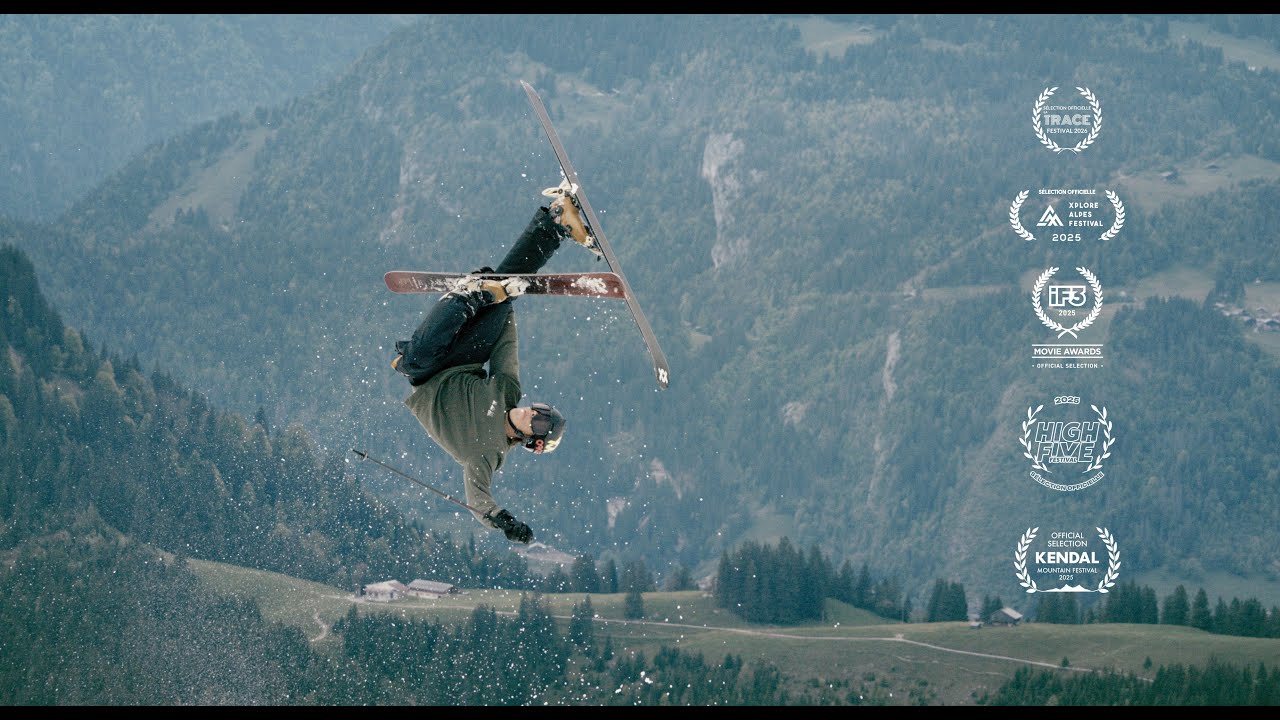
Tonnelier’s current influence is built less on a single headline win and more on the way he frames progression. His film projects have presented a clear message: stepping away from constant competition can be a form of growth, not a retreat. In “Hors Ligne,” produced by Glace Noire Films, he is portrayed turning toward steeper, more technical mountain skiing in the Aravis, surrounded by friends and mentors as he learns to approach committed lines with more intention. The project was supported by brands and places that matter in the freeski world, including Mammut, Völkl, and La Clusaz, which is a strong indicator that his skiing is being taken seriously by both industry and home community.
Earlier, his first film “Grow” premiered at the High Five Festival, a milestone that matters because festival selection is a different kind of validation than contest ranking. It rewards storytelling, cinematography, and a coherent point of view. For an athlete building a long-term identity, those cultural spaces can be as important as a results page: they help define what the skier is trying to say with their skiing.
Resilience in steep skiing is also practical. It means backing off when the snow isn’t right, returning to the same face on a better day, and accepting that the most impressive choice is sometimes the decision not to ski. Tonnelier’s emphasis on learning, mentorship, and careful progression positions him as part of a younger generation that wants to keep the intensity of freeride while modernizing the decision-making behind it. For fans, that is a healthy influence: it makes steep skiing look aspirational without making it look careless.
Geography that built the toolkit
Tonnelier’s geography is a major part of his identity. He grew up between the shores of Lake Annecy and the winter base of La Clusaz, two places that encourage very different kinds of mountain education. Lake life and shoulder-season adventures build a comfort with outdoor movement and weather, while a winter base in a high-level alpine resort builds the repetition that strong skiing requires. That split background also explains why he speaks about “learning to unlearn”: moving from a structured competition world into mountain skiing often means slowing down, listening to conditions, and letting the terrain dictate the rhythm.
The Aravis massif is the workshop where his steep-ski identity has been shaped. The region is known for tight terrain, strong local ski culture, and the kind of steep faces where precision is non-negotiable. It’s also a place where partnerships matter; many of the best lines are skied with experienced locals, guides, or older mentors who can share not just a route but a way of thinking about it.
His travel map also includes the wider Alps, because freeride athletes in his lane tend to work across different snowpacks and aspects to build confidence. Training sessions and early-season laps in places like Tignes are part of how many French freeskiers sharpen their legs and dialing before conditions deepen elsewhere. In his case, that travel supports the “hybrid” identity: he can ski resort terrain with speed and style, then translate that movement into bigger, more consequential faces when the mountain season opens up.
Equipment and partners: practical takeaways
Tonnelier’s equipment story is unusually clear for a freeride skier at his stage because it has been discussed publicly in connection with his skiing direction. He has been part of the Völkl team and has described choosing the Revolt 114 as a platform that stays playful enough for tricks while still feeling supportive when the terrain gets serious. That makes sense for a skier straddling freeski and steep skiing: the gear needs to be stable under speed, trustworthy in variable snow, and still balanced enough to keep a modern freeski stance rather than a purely directional “big mountain” posture.
His film support list also connects him with Mammut, which aligns with the practical needs of ski mountaineering and steep terrain days where you are often carrying gear, layering for wind, and moving in changing conditions. For progressing skiers, the takeaway is not to chase a single ski width or a single pro model. The takeaway is to match equipment to intent. If your goal is steep freeride lines, prioritize stability, predictable edge feel, and boots that keep you centered when you’re tired. If your goal is to keep freestyle expression in the mix, choose a setup that still feels balanced in the air and agile in tight exits.
The simplest, most useful lesson from his kit choices is that versatility matters when you ski the Alps the way he does. A day might include a groomer warm-up, a technical face, and a short bootpack or traverse to access the line you actually care about. Gear that works only in one lane will push you into compromises. Gear that works across lanes lets you focus on the decision-making, which is where steep skiing is truly won or lost.
Why fans and progressing skiers care
Jean Tonnelier is worth watching because he represents a modern freeride path with both credibility and direction. The credibility comes from results and official listings: a junior world silver in Kappl and an active presence in the Freeride World Tour ecosystem through qualifiers at La Rosière, Les Arcs, and Nendaz. The direction comes from what he has chosen to emphasize since then: steep skiing, mentorship, and film projects that treat freeride as a craft rather than a scoreboard.
Progressing skiers should care because his story teaches the right lessons. It highlights that “progression” in freeride is not only bigger cliffs; it is cleaner line planning, better snow judgment, and the patience to repeat terrain until it becomes controlled. It also shows how a freeski background can improve big-mountain skiing: flow, balance, and the ability to keep skiing expressive even when the terrain is serious. If you’re a fan, you get a rider whose lines are rooted in the Alps and built with intention. If you’re trying to get better, you get a blueprint that prioritizes control and longevity without draining the sport of what makes it exciting.