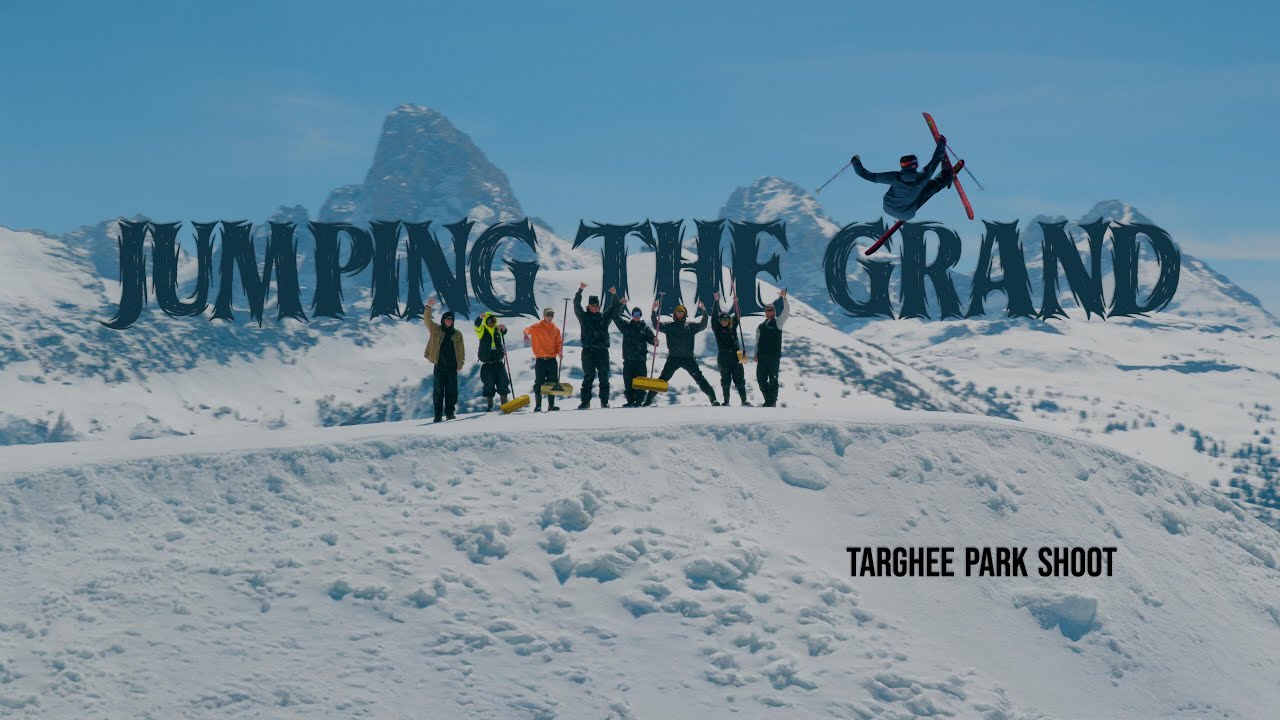
The Most Scenic Jump Session Ever | Olympians and Next-Gen Rippers Tear Up Grand Targhee
Profile and significance
Grace Henderson is an American freeski slopestyle and big air specialist born on April 28, 2001, and raised in Durham, New Hampshire. A product of the East Coast park scene and the Waterville Valley BBTS club, she has climbed from small local hills to the very top tier of women’s park skiing. A member of the Stifel U.S. Freeski Team since 2022, she earned her first FIS World Cup podium in 2022 and made a global statement in January 2025 with a silver medal in women’s ski big air at X Games Aspen. That X Games podium, combined with consistent World Cup performances, confirms her as one of the most important names in the current women’s slopestyle and big air field.
Henderson’s path into freeskiing began with ski racing, which she did for several seasons around New Hampshire. The turning point came when her parents started entering her into the same freestyle competitions as her brother Hunter; quickly, the creative freedom and park atmosphere won her over. She switched full-time to freestyle, enrolled at Waterville Valley Academy and committed to slopestyle and big air. From that base she progressed into NorAm Cup dominance, FIS World Cup starts and eventually the X Games stage, where her calm style and heavy jump tricks have made her a standout in a rapidly progressing discipline.
Competitive arc and key venues
Henderson has been active in FIS competition since early 2016 and made her World Cup debut on February 5, 2017, finishing 14th in slopestyle at Mammoth Mountain in California. Those early years were defined by rapid learning and strong results on the NorAm Cup circuit; she racked up wins in both big air and slopestyle, including a double victory in Calgary in 2020 and a big air win at Aspen Snowmass in 2017. These results built the confidence and points base she needed to become a regular on the World Cup tour.
Her first major breakthrough at the highest level arrived on November 19, 2022, at the Stubai slopestyle World Cup in Austria, where she finished third in women’s slopestyle for her first World Cup podium. Coming on one of the most respected park courses in Europe, that third place showed she could hold her own against the sport’s established stars. In the seasons around that result she collected multiple World Cup top-ten finishes and a top-five at the Junior World Championships in Kläppen, Sweden, in big air, steadily moving from “promising” to “contender.”
By 2023 she was stepping into the sport’s most visible arenas. Henderson debuted at X Games Aspen 2023, finishing seventh in women’s ski big air. An injury then forced her to miss the 2024 edition, but she returned in 2025 in spectacular fashion, earning silver in Pacifico Women’s Ski Big Air and placing fifth in women’s ski slopestyle at Buttermilk. Her big air podium run included a strongly scored double cork 1080 tail grab, particularly meaningful because it was her first double in several years after battling injuries. In parallel, she has represented the United States at major championship events, including the 2025 FIS Freestyle World Championships in St. Moritz, where she finished mid-pack in the women’s ski big air qualification after three solid but conservative runs.
Recent seasons have kept her firmly in the World Cup conversation. At the opening slopestyle World Cup of the 2025–26 Olympic season in Stubai, Henderson led the U.S. women by qualifying sixth; when heavy winds forced cancellation of the women’s final, the qualification standings became the official results, giving her a sixth-place finish at one of the season’s key early stops. With Olympic qualifying underway and her X Games medal already secured, she now sits in the group of athletes expected to be in contention for World Cup podiums and major-event finals whenever she clips in.
How they ski: what to watch for
Technically, Grace Henderson is a jump-focused skier with a refined rail game, built on a racing foundation that still shows in her line choices and edge control. On slopestyle courses she tends to build runs that are balanced rather than overloaded on any single section: rail segments feature switch-on approaches, change-ups and spin-ins and spin-outs that set a smooth rhythm, while the jump line carries the heaviest technical load. She consistently spins both left and right, an increasingly non-negotiable requirement at the highest level, and often uses switch takeoffs to add variety without sacrificing grab quality.
On big air features, her hallmark is commitment to fully held grabs on high-consequence tricks. The double cork 1080 tail grab that helped earn her X Games silver is a good example: she sets the rotation early, reaches confidently for the tail and keeps the grab locked in rather than tapping the ski at the last moment. In slow-motion replays you can see how calm her upper body remains while her legs and skis move around that fixed point. Judges reward this kind of clarity, and progressing skiers can learn a lot from watching how she maintains body position all the way from takeoff to landing.
Another aspect to watch is how she deals with variable speed and conditions, particularly on World Cup slopestyle courses where wind or flat light can affect approach speed. Henderson is known for making smart mid-run adjustments: if speed is slightly low for a planned 1440, she will often choose a slightly lower-rotation trick such as a 1080 but execute it cleanly with a long grab, demonstrating control and maturity rather than forcing a rushed rotation. This ability to “downshift” without losing style is a big part of her consistency and a key lesson for young riders studying high-level contest skiing.
Resilience, filming, and influence
Resilience sits at the centre of Henderson’s story. After working her way through NorAms and World Cups and breaking into X Games in 2023, she lost the 2024 X Games season to injury. Instead of allowing that setback to stall her progress, she used the time to rebuild both physically and mentally, returning to competition with an even deeper trick bag. Her 2025 season, highlighted by the X Games big air silver and strong World Cup showings, has been widely framed as a comeback campaign—especially because she brought back double corks after a multi-year gap where injuries had limited her airtime ambitions.
Her influence also runs through family and community channels. Grace is part of a skiing sibling duo with her brother Hunter Henderson, himself a high-level park and pipe skier. The story of their parents entering her in Hunter’s comps has become part of U.S. Freeski lore, and young athletes often point to the Hendersons as proof that small New England mountains can produce riders capable of facing off against Europe’s glacier-trained specialists. Grace’s public interviews emphasise gratitude and team culture: she often talks about how much she values traveling the world with teammates who feel like family, and her presence on the Stifel U.S. Freeski Team roster adds a strong female role model to a historically male-dominated side of the sport.
While she has not yet shifted heavily into full-length film projects in the backcountry, Henderson’s contest highlights, U.S. team edits and sponsor clips already circulate widely across social media. Appearances in brand content from partners such as Völkl, Oakley and Jiberish help spread her style beyond live broadcasts, and her X Games runs are frequently shared as reference material by coaches and young skiers looking to understand current standards in women’s big air.
Geography that built the toolkit
Henderson’s skiing is deeply shaped by where she grew up riding. Her earliest days on snow were at small mountains around New Hampshire, where her parents taught her to ski and where she first blended racing gates with laps through modest terrain parks. Those compact East Coast hills demand precise edge control, fast decision-making and comfort with firm, sometimes icy conditions—all traits that still show in her competition runs today.
Waterville Valley quickly became her primary training ground. Riding for Waterville Valley BBTS and attending Waterville Valley Academy gave her access to a dedicated park community and a structured pathway from local contests to national-level starts. The jumps and rails at Waterville Valley Resort provided the repetition needed to learn her first serious tricks and refine them into reliable contest options. As she joined the U.S. Freeski pipeline and moved to Utah for studies at the University of Utah, her geographical world widened to include Park City and the training environments linked to the U.S. Ski & Snowboard system.
On the international stage, venues like Stubai’s glacier park in Austria, Mammoth Mountain in California, Kläppen in Sweden and St. Moritz in Switzerland have each added layers to her skill set. Stubai’s long, technical slopestyle course rewarded her ability to link rail and jump sections; Mammoth exposed her early to high-altitude snow and big, wind-affected jumps; Kläppen’s jump line and big air setups helped sharpen her championship mindset at Junior Worlds; and St. Moritz brought the pressure of a World Championships environment. Moving through this mix of East Coast hardpack, Western U.S. big-mountain parks and European glacier venues has produced a skier who can adapt quickly to different jump shapes and snow textures.
Equipment and partners: practical takeaways
Henderson’s equipment choices reflect her twin focus on slopestyle and big air. On the hardware side, she rides for Völkl, using modern twin-tip park skis designed for pop, stability and predictable edge grip on large jumps and rail features. Her bindings come from Marker, and she trusts boots from Dalbello, a combination that emphasises reliable retention, consistent flex and precise power transfer—crucial attributes when spinning double corks onto hard landings. For vision, she relies on goggles from Oakley, whose lenses are built to handle flat light, storm days and bright glacier sun alike.
Her softgoods and lifestyle partners add another layer. Streetwear and outerwear from Jiberish connect her to the broader freeski culture that grew out of early-2000s park skiing, while support from Waterville Valley and the Stifel U.S. Freeski Team provides access to coaching, travel logistics and high-level training environments. For progressing skiers, the practical lesson is clear: rather than chasing logos for their own sake, build a setup that suits your terrain and goals—a robust twin-tip ski, boots that truly fit, bindings you trust and outerwear that lets you move freely and stay comfortable through long days of training.
Why fans and progressing skiers care
Fans care about Grace Henderson because she embodies the modern evolution of women’s freeski slopestyle and big air. She brings serious technical difficulty—World Cup podium tricks and X Games medal-winning doubles—while maintaining clean style and smart run construction. Her story, from small New Hampshire hills to NorAm wins, World Cup podiums and an X Games silver medal, resonates with skiers who come from non-glamorous mountains and wonder if they can still reach the top.
For progressing riders, Henderson is a case study in steady, sustainable progression. She built strong fundamentals in racing, shifted into freestyle with the support of a dedicated club and academy, worked her way through Continental Cups and early World Cups, then proved she could deliver on the biggest stages after coming back from injury. Watching her ski, the key takeaways are her focus on grab quality, her willingness to spin both ways, and her ability to adapt trick choice to speed and conditions without losing style. As the women’s park and pipe field continues to progress, Grace Henderson stands out as one of the athletes pushing that progression while showing younger skiers what a thoughtful, long-term freeski career can look like.