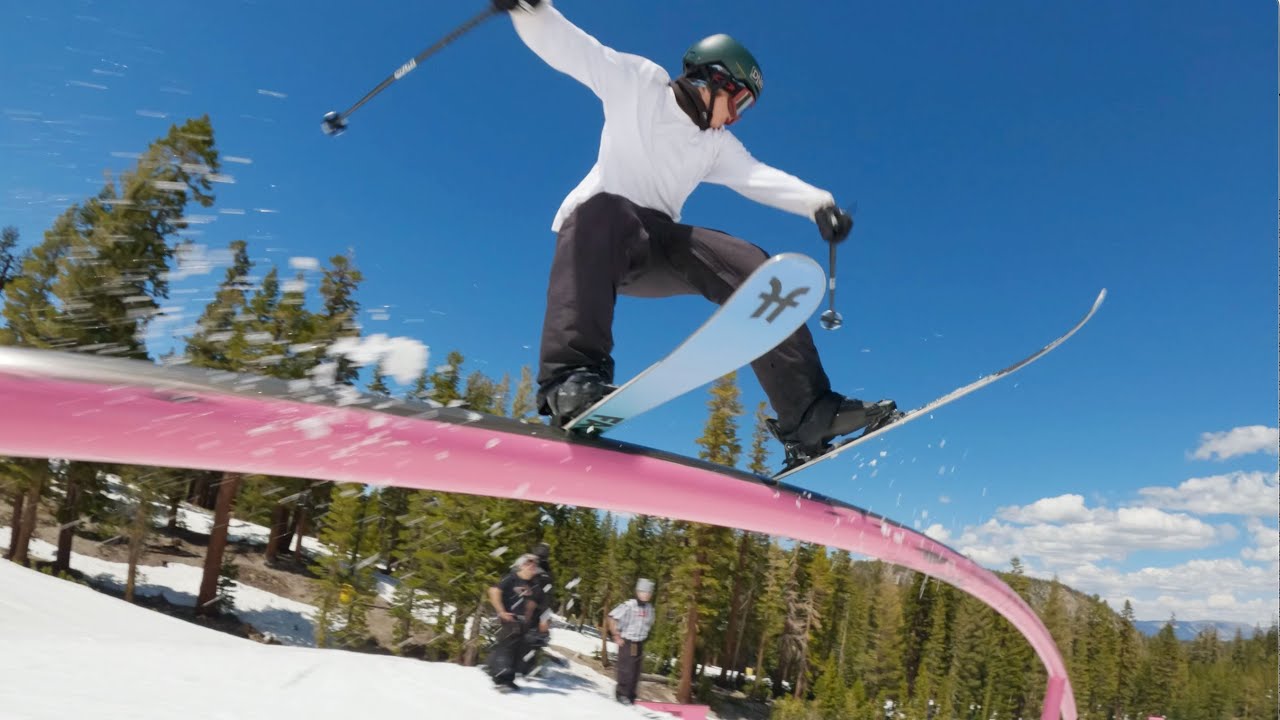
Frank Wahlstrom
Profile and significance
Frank Wahlström is a Norwegian-Swedish freeski slopestyle and big air specialist who has become one of the standout junior talents in Europe before even reaching his mid-teens. Raised in Örebro, Sweden, but deeply connected to the Norwegian resort of Trysil, he rides for Trysil IL and represents Norway in international competition. His breakout moment came in March 2024, when he won men’s slopestyle at the FIS Freestyle Junior World Ski Championships in Livigno/Mottolino with a 91-point run, taking junior world champion status at just 13 years old. That result instantly placed him in the global conversation as one of the most promising young riders in freeski.
Wahlström’s rise has not stopped at junior level titles. At home he has already claimed double Norwegian championship gold in big air and slopestyle, and on the Continental Cup circuit he has become a fixture on the podium. Across the 2024–25 season he dominated the FIS Europa Cup big air standings, finishing the year as overall big air champion and second in the combined slopestyle/big air ranking. Those results, alongside his selection to the Norwegian junior national team, show that he is not just a one-contest wonder but a consistent force in high-level freeski competitions.
Competitive arc and key venues
Frank’s story starts far from the high Alpine venues where he now competes. He grew up in Örebro in central Sweden and first clicked into skis as a two-year-old during family trips to the Norwegian resort of Trysil, where his family later bought a cabin. Week after week, his parents drove the long round trip from Örebro to Trysil so he could lap the snowpark and gradually move from small jumps and boxes into serious slopestyle lines. That combination of Swedish hometown life and a Norwegian “second home” in Trysil shaped both his riding and his eventual decision to compete for Norway.
As his trick level climbed, the family expanded their training circuit to include summer setups and airbags at Kläppen Ski Resort in Sweden, a mountain known for its dedicated snowpark scene. There, Wahlström spent long days on the jump line and airbag, working through double cork 1620s and 1800s with different grabs and axes. This foundation translated directly into his competition breakthroughs. After a dominant season on the Norwegian freeski cup circuit, he earned enough FIS points to race internationally, then converted that opportunity into junior slopestyle world gold in Livigno and podiums on the Europa Cup tour.
The 2024–25 winter showed how quickly he was adapting to bigger stages. At Corvatsch in Switzerland, on the renowned features of Corvatsch Park, he took second place in a Europa Cup big air event that helped lock in his season-long big air title. At the same time, media and fans began to see more of him outside standard contest formats, such as his appearance in a SLVSH game at Mammoth Mountain in the United States, where he went trick-for-trick against fellow prodigy Luke Harrold on a playful but technical park setup.
How they ski: what to watch for
Wahlström’s skiing combines heavy technical difficulty with a surprisingly relaxed, almost playful body language. Coaches and media often highlight the way he handles very complex rotations with minimal panic: in one widely reported training session at Kläppen, he came out of a double cork 1800 mute with a ski releasing mid-air, but still managed to stay calm, rotate out of trouble and land on his back rather than crashing out of control. That composure is rare at any age and is a big part of why coaches describe him as a “special” talent.
Technically, he is already comfortable spinning both left and right and mixing classical slopestyle spins with more modern off-axis and bio rotations. His favourite trick, a double cork 1440 lead Japan, says a lot about his approach: he cares as much about tweak, line and style as about the sheer number of spins. Judges have praised his junior world championship slopestyle run for its balance between difficulty and execution—he chose a slightly less-technical right 1080 instead of a 1440 on one feature due to speed issues, but did it with such cleanliness and control that it scored higher than many riders forcing harder tricks.
On rails, his riding is clean and precise rather than overly wild. He makes good use of change-ups, switch entries and technical exits, but usually inside a run that still flows naturally from top to bottom. For viewers trying to learn from him, it is worth watching how early he sets his grabs and how long he holds them. Instead of snatching at the ski at the last second, he often gets the grab in early, tweaks it, and then finishes the spin, which makes his doubles and 16s look smooth rather than frantic.
Resilience, filming, and influence
Behind the contest results is a demanding routine. Wahlström’s development has involved years of long car journeys between Örebro and Trysil almost every weekend, with school on Fridays, skiing all weekend, then the drive back on Sunday nights. In interviews, his father and coach Jonas describes days at camps where Frank gets in 30–40 jumps, filming each hit and reviewing the footage together after every lap to refine timing, grab position and rotation speed. That relentless repetition explains why he is able to manage such big tricks at such a young age.
His progression has also started to spill into the broader freeski culture. Clips of him working on switch double bio 1600s on the airbag, carving smooth lines in Trysil’s park and competing at top-level junior events circulate widely on social media, attracting attention from older pros and national team coaches. The SLVSH appearance at Mammoth, in particular, is a sign of how fast he is moving into the core freeski conversation: the series tends to feature riders who combine technical depth with creativity, and Wahlström fits naturally into that mix.
As a result, he has become a reference point for younger Scandinavian skiers who see in him proof that you can come from a relatively flat region, use weekend missions to a resort like Trysil, and still reach the sharp end of international freeski slopestyle and big air. He is not yet a film veteran or a full-time urban/street skiing specialist, but his contest clips and training edits already influence how junior riders think about spinning both ways, tweaking grabs and pushing big air progression responsibly.
Geography that built the toolkit
The mountains that shaped Wahlström’s skiing are a mix of Norwegian and Swedish terrain. Trysil is Norway’s largest ski resort, with multiple linked areas and a dedicated park scene under the SkiStar umbrella. Its variety of jump lines and rail features, plus reliable winter snow, gave him a consistent place to build core park skills from early childhood. Lapping the same lines weekend after weekend helped him refine speed control and trick selection far more than a handful of scattered trips ever could.
On the Swedish side, Kläppen has become his main summer and shoulder-season base, especially for airbag and dry-slope training. The resort is known as Sweden’s largest family-owned ski area with a strong freestyle infrastructure, and Wahlström has used that setup to stack repetitions on his big doubles and 1600–1800-level tricks with reduced risk. On the international calendar, venues like Livigno’s Mottolino snowpark and Corvatsch Park in Switzerland have introduced him to bigger, more high-profile stages and different styles of slopestyle and big air courses, forcing him to adapt his run construction to varying jump shapes, snow conditions and judging expectations.
Equipment and partners: practical takeaways
Wahlström rides for Swiss-born freeski brand Faction Skis, whose freestyle shapes are designed specifically for park, pipe and big air progression. For a rider who spends so much time on large jumps and technical rails, that means a twin-tip platform with a consistent flex and reliable pop, tuned for icy landings as much as for soft spring days. On the vision side, he uses goggles and eyewear from Oakley, taking advantage of lenses built for variable light and flat-light park sessions.
Closer to home, he receives support from Norwegian retailer Sport Lodge’n in Trysil and Swedish-based interior and retail specialist Nitton93, reflecting the tight-knit nature of his Scandinavian support network. Profiles in Norwegian media have also noted travel support from Red Bull, underlining how early major action sports backers have taken notice of his potential. For progressing skiers, the useful lesson is not just to chase the same logos, but to understand why his setup works: stable, park-focused skis that stay predictable at high speeds, quality boots and bindings dialled for impact, and goggles that keep vision sharp when speed and landings matter most.
Why fans and progressing skiers care
Fans are drawn to Frank Wahlström because he embodies the new wave of freeski talent emerging from Scandinavia: technically advanced, stylish, and composed well beyond his years. Junior world championship gold in slopestyle, double national titles in big air and slopestyle, and a Europa Cup big air overall title give him a contest résumé that already stands out among junior riders. At the same time, his skiing still carries the fun and looseness of someone who genuinely loves being in the park, whether that is at Trysil, Kläppen or a European competition venue.
For riders who want to progress in slopestyle and big air, watching Wahlström closely offers clear takeaways. His habit of spinning both ways, emphasising long, tweaked grabs and choosing runs that balance difficulty with clean execution is exactly what modern judges reward. His path—weekend commuting to a favourite resort, relentless repetitions on airbags and jumps, and step-by-step movement from national cups to Europa Cups and junior worlds—shows a realistic roadmap for other motivated teenagers. While he has not yet reached World Cup podiums or the Olympic stage, his trajectory suggests that the story of Frank Wahlström is still in its early chapters, and that makes him one of the most exciting young freeskiers to follow in slopestyle and big air right now.