Christian-Emil Thorup
Denmark | Active: 2010s-present public record | Known for: Freeride DM podiums, FWT Qualifier starts, Freeride Baby | Discipline: freeride, backcountry, park and mountain-focused skiing
Wildseeloder’s Heavy March Snow
Wildseeloder rose above Fieberbrunn at 2,119 metres during Freeride DM 2024, with thawing snow lower on the face, light frost higher up and changing texture under sun and high cloud. Christian-Emil Thorup was not there only to chase a score. Alongside Josephine Lützau, he led the “Spot Your Line” clinic, helping newer riders approach terrain choice, route reading and the practical decisions needed before entering a freeride face. It was a fitting later chapter for a skier whose public record has long combined competition, park skiing and mountain judgement.
Thorup’s strongest results belong to Denmark’s freeride scene rather than the global World Cup system. His record includes a second place at Freeride DM, a third place five years later, a Danish slopestyle top ten, a Freeride World Tour Qualifier profile and a long-running connection with Austrian terrain. The thread between those markers is versatility: cliffs, pillows, deep turns, park rotations and the discipline to assess a line before committing.
A Danish Freeride Podium Before the FWT Path
Riders.dk identified Thorup as the runner-up at Freeride DM during the 2014-15 winter. The same season, he finished sixth at the Danish slopestyle championship and won the public prize at Riders.dk MONEYFRAMES. Those three results describe a skier operating across different definitions of performance. Freeride rewards terrain choice, flow, control and execution in variable snow; slopestyle demands a complete run through rails and jumps; a video vote depends on what a skier can communicate through a filmed clip.
The combination matters because Thorup was not confined to one narrow discipline. A freeride skier needs to identify landing zones, control speed on unfamiliar snow and stay composed when a line becomes steeper than expected. A park skier needs takeoff timing, switch awareness, rail balance and enough air control to land precisely. His early Danish results show that he was developing both languages at the same time.
Ringkollen’s Cork 720 Winter
At the 2015 Danish slopestyle championship, held at Ringkollen in Norway, Thorup finished sixth and was photographed throwing a cork 720. The compact Norwegian park was an appropriate place for Danish riders to meet: short laps, jump repetition and a course where tricks had to be clean enough to hold a full run together. The result was not an international medal, but it showed that his freeride profile had a real freestyle base.
A cork 720 requires two full rotations, an off-axis movement and a controlled landing that keeps the skier centred over the skis. In a slopestyle course, that jump is only one section of the run. Speed must be preserved from the rail zone through later hits, and a missed grab or unstable landing can affect everything that follows. Thorup’s sixth place gives the technical context without overstating it: he could bring freestyle movements into a competition setting while building a freeride career elsewhere.
St. Anton Became the Long-Term Mountain Base
In a 2015 interview, Thorup described St. Anton am Arlberg as the place where he expected to spend much of the coming winter, skiing off-piste, park laps and urban features with a group of friends. The Austrian resort had already become a recurring base rather than a one-week holiday destination. He also named nearby Tirol areas such as Axamer Lizum, Nordkette, Kühtai and Stubai as part of the terrain map shaping his seasons.
St. Anton suits a skier whose interests cross disciplines. Storm snow can create soft landings for pillows and natural jumps, while harder days make park laps, side hits and technical resort terrain more useful. The key skill is adjustment: powder turns ask for rhythm and snow feel, while park or city features demand exact speed and body position. Thorup’s public comments from that period show a skier actively seeking all three environments rather than building an identity around only one.
The Qualifier Route Through Pitztal and Scandinavia
Thorup’s stated 2015 goal was to enter Freeride World Tour Qualifier events, beginning with Axamer Lizum. His documented path later included the 2016 Pitztal Wild Face 2-star event, where he appeared in the Ski Men field, and the 2020 Scandinavian Big Mountain Championships. His official Freeride World Tour profile records 100 points from the 2020 Scandinavian Big Mountain Championships and a 74th-place event finish.
The FWT result should be read precisely. It does not indicate a Challenger qualification or a top international ranking. It does confirm that Thorup entered the recognised European qualifier structure, where riders are judged on line choice, control, technique, fluidity and the way they manage natural terrain. For a Danish skier, reaching those starts also requires travel, mountain experience and the willingness to ski faces that do not offer the predictable landing zones of a park jump.
A Third Freeride DM Podium in 2020
By 2020, Thorup had reached his tenth Freeride DM as a participant. Riders.dk reported that he took third place that year, adding another podium to a competitive record already stretching back to the 2014-15 season. The result showed continuity rather than a one-off breakthrough. Freeride DM has become one of the central meeting points for Denmark’s mountain-oriented ski scene, bringing riders from park, touring, backcountry and freeride backgrounds into the same Austrian terrain.
Competition faces create pressure that does not appear in a filmed powder lap. A skier has limited inspection time, one judged line and changing snow through the day. The safest route may score less; the aggressive route can fail if the snow breaks under the skis or the exit becomes too fast. Thorup’s repeated participation and multiple podium finishes suggest a rider comfortable returning to that calculation rather than treating freeride as only a recreational pursuit.
Freeride Baby and the Danish Crew Lens
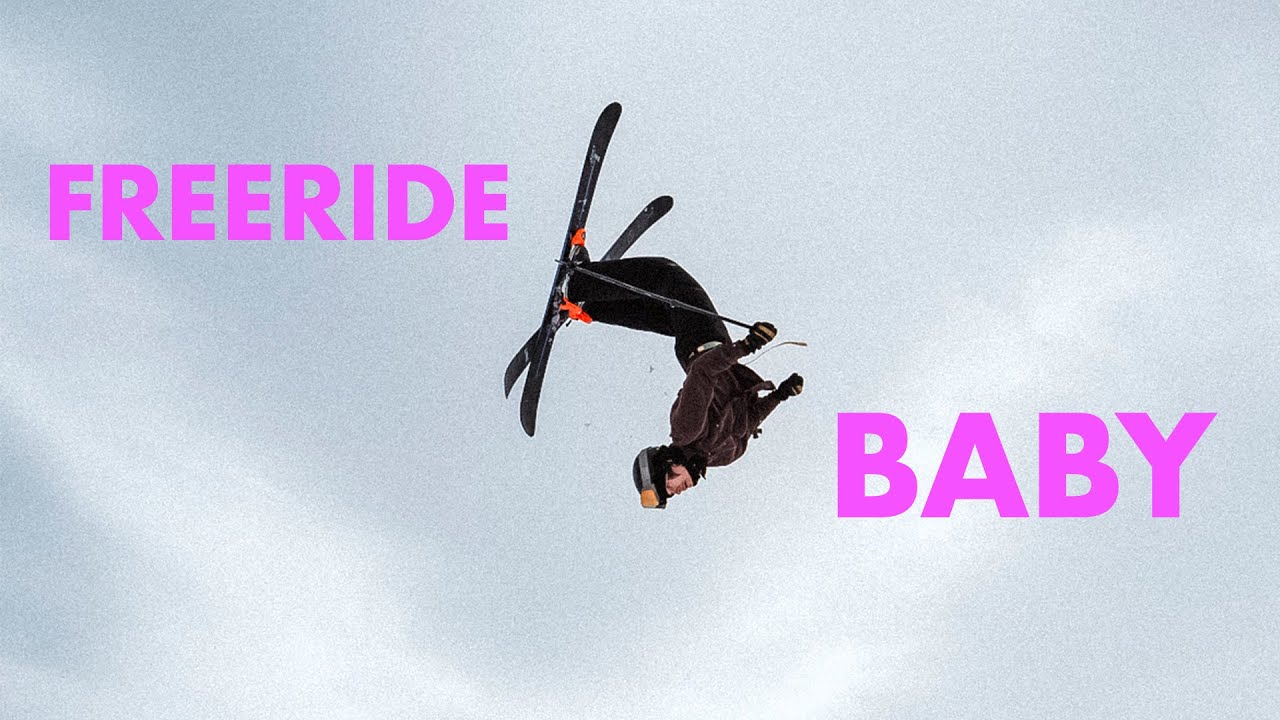
Freeride Baby, released in 2020, captured a Freeride DM week through a smaller crew perspective. The film was made by Jakob Ebskamp and featured Thorup with Mikkel Hjort-Pedersen and Ebskamp. The project did not present Thorup as a polished contest athlete isolated from his surroundings. It placed him inside a Danish ski culture where contests, travel, filming, mountain days and friendships often overlap.
That context gives his skiing a creative dimension. Freeride footage is built from more than the final turn or air: weather windows, snow stability, camera access, safe regrouping and the patience to wait for a line to become possible all shape the final clip. Thorup’s place in the project reinforces the broader picture created by his results. He is a mountain skier with a competition record, but also part of the crew-driven documentation that keeps the Danish freeride scene visible.
Training for Steep Snow, Long Days and Recovery
Thorup described his summer preparation in 2020 as a mix of running, cycling and ski-specific strength work. He said his running volume averaged around 60 kilometres per week, supported by cycling sessions and later gym training focused on legs, core and balance. That approach fits freeride better than a training plan built only for a single aerial trick. Long descents and touring days require endurance, while uneven snow and variable landings demand leg strength, joint stability and fast reactions.
He also emphasised that preparation should match the kind of skiing a rider wants to improve. Touring benefits from aerobic capacity, park skiing from strength and balance, and off-piste skiing from a mixture of both. His safety message was equally direct: riders should learn avalanche-search routines, inspect their equipment and make better decisions with their partners before heading into untracked terrain. That practical emphasis now sits at the centre of his public freeride identity.
Armada, Protective Gear and a Freeride Setup
Thorup’s public ski-related posts and Danish distribution announcements have associated him with Armada, alongside equipment names including Sweet Protection, Mons Royale, EVOC and Hestra. Those references confirm equipment relationships at different moments, but they should not be treated as proof of a permanent current factory-team contract. The reliable point is that his gear choices have reflected a freeride-oriented setup: twin-tip versatility for softer snow, protective equipment for mountain travel and layers suited to changing Alpine weather.
For this kind of skiing, equipment is functional rather than decorative. A skier moving between powder, side hits, compact chutes and occasional park laps needs predictable edge hold, dependable bindings, durable outerwear and avalanche equipment appropriate to the terrain and conditions. Thorup’s record does not support a detailed current ski model claim, so the profile should remain focused on the documented brand associations and the mountain use they imply.
From Contest Rider to Line-Reading Mentor
Thorup remained active in the Freeride DM environment in 2024, but his role had widened beyond his own score. At Wildseeloder, he helped lead a clinic designed for newcomers learning how to identify and navigate viable freeride lines. The move from competitor to mentor makes sense within his history: early Danish contest results, FWT Qualifier experience, multiple Freeride DM appearances and years spent skiing Austrian terrain.
His latest confirmed Freeride DM result is a 22nd-place finish in the Ski Men field in 2025, scored at 23 points. That ranking does not erase the earlier podiums; it gives a more complete picture of a long-running participation record. Christian-Emil Thorup remains a Danish freeride skier whose profile is built on repeated engagement with the mountain scene: competition faces, safety awareness, crew films, St. Anton seasons and the practical work of helping other riders read terrain before they drop.