Andre Anzevui
Hometown: Arolla, Switzerland | Active: 1985-present | Known for: steep skiing on the Matterhorn, first descents around Arolla, UIAGM mountain guiding | Disciplines: steep skiing, freeride, ski touring
On 14 July 1989, summer snow clung to the rock of the Matterhorn while André Anzévui stood on the summit in long alpine skis. The helicopter that had carried him up had its door removed, leaving his skis exposed during the flight. He had spent weeks watching the wall from Zermatt and waiting for the freeze-thaw cycle to bind snow to the face. After a brief pause at the top, he pushed into terrain where every turn demanded control, an ice axe within reach and no room for a routine correction.
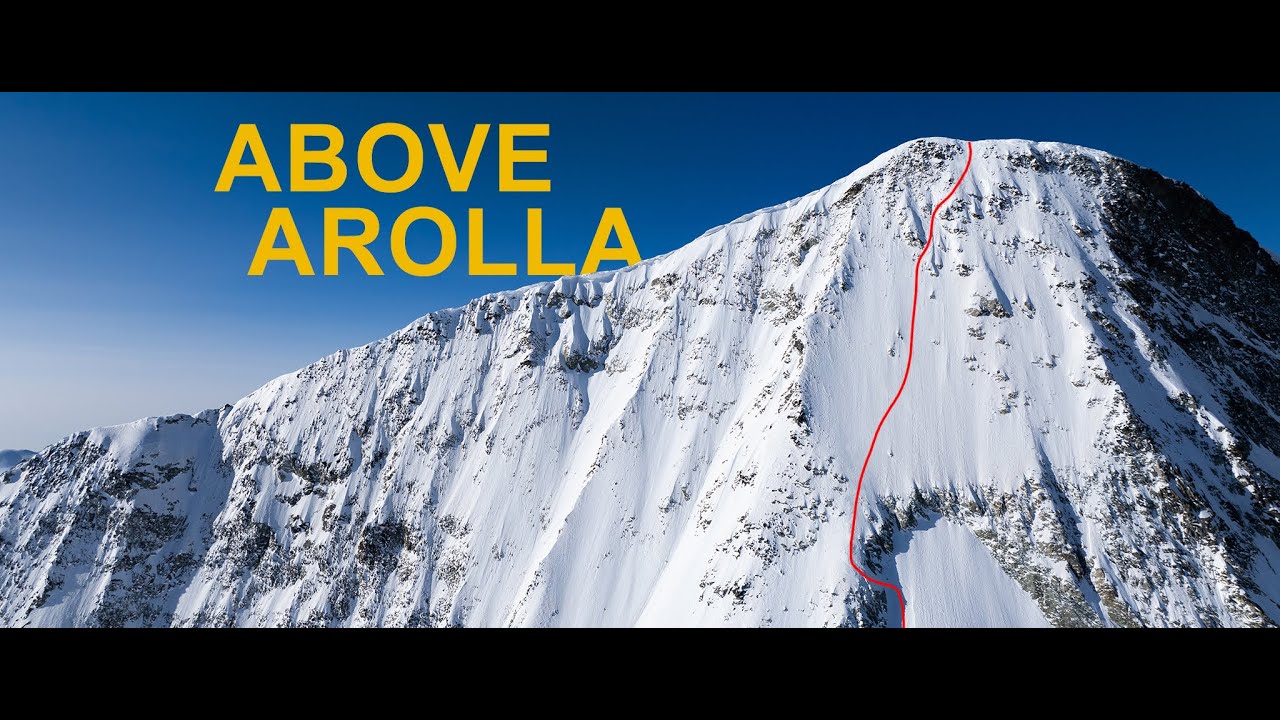
Arolla roots: Pigne d’Arolla and Petit Mont Collon
Anzévui grew up among the steep faces around Arolla and developed his skiing there long before freeride became a structured professional discipline. Across the 1970s, 1980s and 1990s he opened lines around his home valley and elsewhere in the Alps, including first descents on Pigne d’Arolla and Petit Mont Collon. The terrain combined ski touring, couloirs, glacier travel and high-mountain route finding, a background that later became inseparable from his work as a mountain guide.
Dent Blanche 1985: skiing from the summit
In 1985, Anzévui skied from the summit of Dent Blanche on terrain described between 45 and 60 degrees. François-Xavier Bagnoud piloted the helicopter involved in the undertaking, while the descent became one of the defining high-mountain ski projects of Anzévui’s early career. The combination of ascent, exposed skiing and helicopter logistics placed the Val d’Hérens directly inside the emerging history of European steep skiing.
Matterhorn 1989: a month below the wall
For the 1989 Matterhorn descent, Anzévui repeatedly travelled from Arolla to Zermatt for nearly a month, studying the north face with binoculars and staying in close contact with Air Zermatt rescue specialist Bruno Jelk about snow and weather. The decisive condition was summer snow that softened in daytime warmth and froze back onto the rock overnight. Lacroix backed the attempt, and Anzévui used 2.07-metre alpine skis.
Matterhorn 1989: jump turns above rock
Anzévui described the steepest section as 74 degrees. Before each jump turn he planted the outside ski pole for support and kept an ice axe in the inside hand; the gradient could leave him several metres lower after a single rotation. A section below the Solvay Hut had lost its snow and could not be skied, so he was lowered roughly 200 metres before continuing. The descent took about one hour and fifteen minutes.
La Liste 2016: Heitz revisits steep skiing
By 2016, Anzévui’s earlier lines had become part of the history explored in La Liste. Jérémie Heitz had identified Anzévui among the steep-skiing pioneers who influenced his own approach, alongside Sylvain Saudan. Guido Perrini directed the 47-minute film, with Heitz and Samuel Anthamatten skiing fifteen Alpine faces while revisiting the previous generation. Anzévui appeared as himself and joined Heitz and Anthamatten during the Montagne en Scène tour that accompanied the film’s release.
Arolla 2025: guiding and passing it on
Anzévui remained connected to professional mountain guiding decades after the Matterhorn descent. In 2023 he was still discussing route preparation, client ability and weather decisions through the experience of repeated Haute Route crossings, while the Guides du Val d’Hérens continued to list him as a UIAGM mountain guide in Arolla. His later public role shifted toward transmission rather than new extreme descents, with younger steep skiers occupying the terrain he had helped explore.
On 14 March 2025, Anzévui appeared in a 25-minute Passe-moi les jumelles portrait produced by RTS. At 70, he looked back on his steep-skiing career from Arolla while focusing on passing experience to younger generations, linking his 1980s descents with his continuing role as a mountain guide.
Selected filmography
- 2025 — Dédé Anzévui, pionnier au grand coeur — RTS — Full segment
- 2016 — La Liste — Timeline Missions — Cameo
Selection of his main film projects. Not a complete filmography.