LE BENT
Australia
Australian snow socks and baselayer brand | Born from bootfitting roots in Val d'Isere and shaped by mountain use in Australia, Europe and North America | Known for: Signature Merino Blend, rayon from bamboo softness, Pro Series ski socks, Definitive Fit System and athlete collaborations | Focus: first on skin comfort for skiers and riders who spend long days in boots.
Val d'Isere bootfitting roots and the search for a better ski sock
Le Bent is not a ski manufacturer. Its importance in skiing comes from a smaller but very specific problem: what happens between a skier's skin and the inside of a boot. The brand grew out of bootfitting culture, with founders Simon Blondel and Anthony Symonds spending years around ski boots, mountain towns and the daily discomfort that comes from bad socks. That origin matters because a bootfitter sees the small problems that ruin good ski days: wrinkles underfoot, heel lift, blisters, shin bang, sweaty feet, cold toes and fabric that starts to itch halfway through the morning.
The name points back to the French Alps and to the idea of bending the normal line. Val d'Isere is part of the brand's origin story, both as a place of skiing and as a place where technical boot knowledge shaped the first product idea. From there, Le Bent developed into an Australian performance apparel brand focused on snow socks, baselayers, headwear and first on skin layers. Its role in the ski world is not loud, but it is close to the body. Before skis, bindings, jackets or helmets can perform, the skier still needs the first layer to feel right.
Signature Merino Blend and the rayon from bamboo feel
Le Bent's product identity is built around its Signature Merino Blend, a fabric concept combining merino wool with rayon from bamboo and technical fibers. The brand uses merino for temperature regulation and odor control, while rayon from bamboo contributes the soft, smooth hand feel that Le Bent often describes as itch free. That blend is applied across socks, baselayers and headwear, giving the range a consistent skin feel rather than treating each category as a separate product world.
The snow sock line is the center of the brand. Le Bent offers different cushion profiles, including zero cushion, targeted cushion, light cushion and full cushion. That structure is useful because ski boots are personal. A racer or strong freerider in a tight boot may want a thin zero cushion sock for maximum precision. A backcountry skier who walks for hours may want targeted padding without bulk. A resort skier who deals with shin pressure may prefer light or targeted cushion over the shin and underfoot.
Baselayers extend the same logic beyond the foot. Lightweight and midweight merino blend tops and bottoms are built for cold starts, moving uphill, chairlift laps and winter travel. Neck gaiters, beanies and headwear complete the first on skin system. Le Bent's strongest category is not outerwear that people notice first. It is the layer that disappears when it works properly.
Zero cushion precision and boot comfort over long days
The performance question for Le Bent is simple: can a softgoods brand make ski boots feel better without dulling control? Its best products answer that by focusing on fit rather than bulk. Features such as the Definitive Fit System, Memory Stretch, elasticated instep support, ankle bands, Achilles support, mesh ventilation and stay up cuffs are designed to keep the sock from moving inside the boot. That is critical because even a small wrinkle can become painful after a few runs.
For touring, the problem becomes even more obvious. Skinning creates repeated friction with every step. A sock that slips at the heel can create hot spots before the descent begins. Le Bent's Cody Townsend Pro Series Zero Cushion Snow Sock uses silicone grippers at the heel and upper calf, plus Achilles support and a stay up cuff, to reduce movement during long approaches and bootpacks. That kind of detail shows how the brand translates athlete feedback into product features.
For resort skiing, comfort still matters, but the use case changes. A light cushion sock can soften shin pressure and add warmth without filling the boot too much. For park and freestyle skiers, a sock has to manage impacts, pressure and sweat while keeping enough feel for landings, grabs and switch skiing. Le Bent's range is useful because it does not assume every skier wants more padding. Sometimes the best ski sock is the one that removes material in the right places.
Cody Townsend Sammy Carlson and Kai Jones in the Pro Series
Le Bent's credibility is strongly athlete driven. Its official pro team includes skiers and snowboarders who operate in demanding mountain environments: Cody Townsend, Elyse Saugstad, Sammy Carlson, Nikolai Schirmer, Xavier de Le Rue, Kai Jones, Mickey Graglia and Nick Russell. The mix is important. These are not all park skiers, not all racers and not all resort riders. They represent touring, big mountain skiing, freeride, creative backcountry freestyle, snowboard mountaineering and endurance mountain movement.
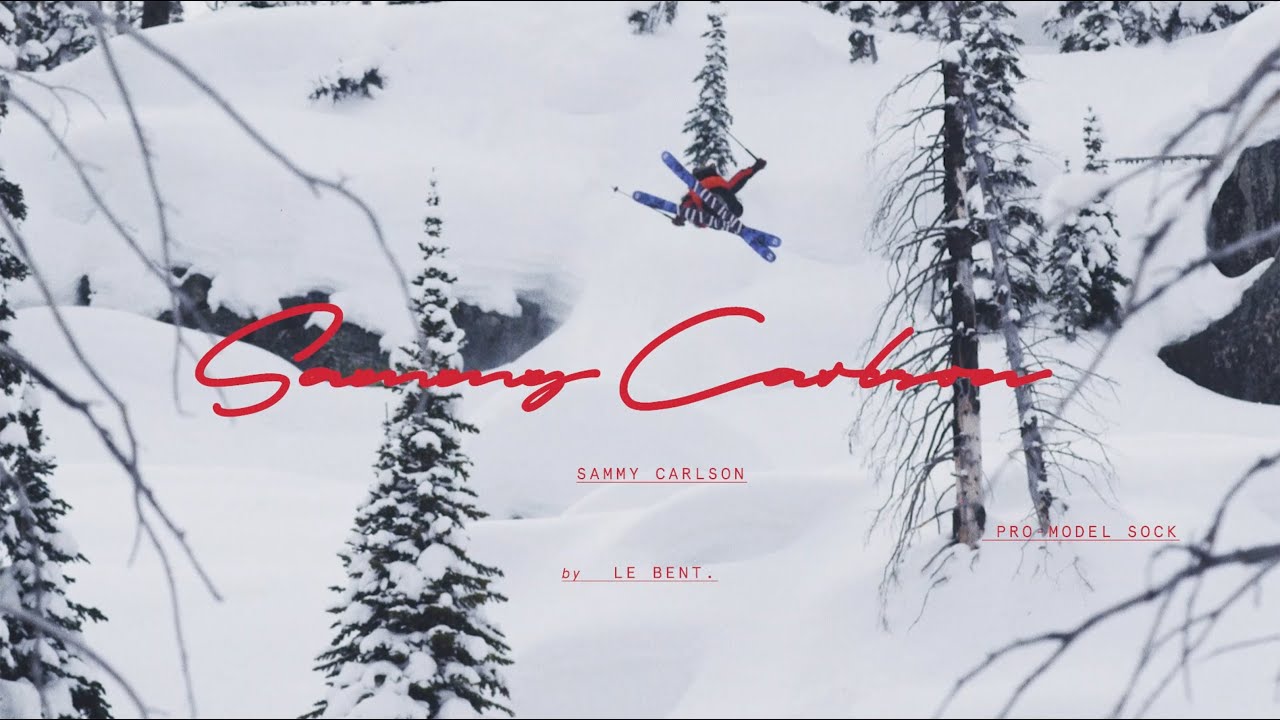
The Pro Series socks give that roster a direct product role. Cody Townsend's models connect to long touring days and the precision demands of modern backcountry boots. Sammy Carlson's Pro Series sock is built around day long riding in powder, pillows and creative natural terrain, using light cushioning underfoot and over the shin. Kai Jones' Pro Series sock sits in a versatile all mountain and freeride lane, with light cushioning, ventilation and a precise form fit for natural terrain.
That athlete connection gives Le Bent more weight than a basic sock company. In skiing, credibility often comes from whether the product survives the daily habits of riders who live in boots. If a sock can handle touring miles, sled days, cold lift rides, freeride comps and film trips, it has a stronger argument than a lifestyle sock with ski graphics printed on it.
From Val d'Isere lines to Australian snow culture
Le Bent has an unusual geography. Its origin story points to Val d'Isere, where bootfitting, big mountain skiing and Alpine seasonaire life helped shape the brand's first idea. Its company identity is Australian, with strong links to New South Wales snow culture and the Snowy Mountains. Campaigns such as Find Your Line have connected the brand to places such as Thredbo, the Main Range, Tignes and Val d'Isere, showing how personal mountain lines became part of the brand story.
That mix gives Le Bent a broader ski language than a purely local apparel label. It belongs to Australian skiers who travel north for winter, European skiers who understand bootfitting culture, North American backcountry riders who need touring socks, and snowboarders who want soft layers that do not itch. The brand's map follows the movement of skiers rather than one national identity.
For skipowd.tv, Le Bent fits especially well in equipment and athlete content. A ski sock is rarely the main visual subject of a video, but it is often part of the setup. In a Sammy Carlson gear context, a Cody Townsend touring context, or a Kai Jones freeride context, Le Bent is the kind of sponsor that supports the invisible comfort behind the visible skiing.
Non mulesed merino OEKO TEX claims and first layer durability
Le Bent's construction story is about fabric behavior and long term comfort. The brand highlights certified non mulesed merino wool, OEKO TEX 100 certification on selected products, field testing and a 100 day satisfaction guarantee. Those details matter in the first layer category because socks and baselayers sit directly against skin, absorb sweat and face repeated washing. A poor product can lose shape quickly, hold odor, bunch in a boot or become uncomfortable after a few uses.
The brand's sustainability language should be read carefully and practically. Merino wool offers natural odor control and temperature regulation, while rayon from bamboo provides softness, but rayon is still a processed fiber. Le Bent's strongest sustainability argument is not that every material is perfect. It is that comfortable, durable layers can be worn repeatedly, washed less aggressively and kept in use longer when they hold fit and do not irritate skin.
Durability in this category is also about elasticity. A sock that sags after a few days in ski boots fails even if the fabric still looks fine. Le Bent's technical knit features are designed to preserve shape, support and hold around the foot, ankle, calf and Achilles. That is why the brand's language repeatedly returns to fit systems rather than only warmth.
Choosing zero targeted light or full cushion Le Bent socks
Choosing Le Bent starts with boot fit. If the boot is precise, low volume or performance oriented, zero cushion is the cleanest option. It gives the closest connection to the liner and reduces bulk. That makes sense for strong skiers, tight boots, touring boots with good fit, race style shells or anyone who hates extra material inside the boot.
Targeted cushion works for skiers who want protection in key pressure zones without losing control through the foot and ankle. It is especially useful for shin sensitivity, long resort days, heavier landings or backcountry users who want a little more comfort on descents. Light cushion is the most versatile choice for many all mountain skiers because it adds balanced padding without becoming thick. Full cushion is best reserved for cold days, relaxed fits or skiers who prioritize warmth and plush comfort over maximum precision.
Baselayer choice follows climate and effort. A lightweight merino blend layer suits touring, spring skiing, active resort laps and warmer conditions. A midweight option makes more sense for cold chairlift days, storm skiing or riders who run cold. Neck gaiters and headwear are simpler decisions: choose them when you want the same soft blend around the face and head instead of switching to harsher fabrics in the most sensitive areas.
Why a sock brand matters to serious skiers
Le Bent matters because ski comfort often fails in small places. A skier can own expensive boots, strong skis and technical outerwear, but a bad sock can still make the day miserable. Hot spots, wet fabric, shin pressure, heel lift and bunching underfoot are not minor details when they repeat for six hours. Le Bent built its reputation by taking those details seriously.
The brand's value is also cultural. Skiers often talk about the visible parts of a setup, but the hidden layers are what make long days possible. A backcountry skier touring before sunrise, a freerider waiting on a ridge, a park skier lapping until close and a filmmaker standing in deep snow all need the same basic thing: first layers that regulate temperature, stay comfortable and do not distract from the moment.
On skipowd.tv, Le Bent belongs as a technical snow apparel and accessories sponsor rather than a ski hardware brand. Its importance comes from the connection between bootfitting knowledge, athlete feedback and everyday mountain comfort. It does not define skiing through topsheets or bindings. It defines it through the part of the setup that touches the skier first and comes off last.