Thredbo
Snowy Mountains
Australia
Overview and significance
Thredbo is Australia’s most complete alpine resort for freeskiers: the country’s biggest continuous vertical, long top-to-bottom laps, a modern gondola, and a park program that actually scales from first rails to proper jump lines. The resort sits inside Kosciuszko National Park in New South Wales, topping out at 2,037 m at Karel’s T-Bar—the highest lifted point in Australia—and dropping roughly 672 m to the village. On-mountain flow is anchored by the eight-person Merritts Gondola and high-speed chairs, which keeps lap times tight even on busy days. Thredbo also owns some of the nation’s longest marked descents; the Supertrail is a 3.7 km benchmark when coverage links top to bottom. For a quick local primer of clips and context, see our page at skipowd.tv/location/thredbo/, and use thredbo.com.au for daily operations.
What elevates Thredbo for park and freeride crews is how often it converts time on snow into useful repetitions. A dedicated progression park in the Cruiser area, an advanced line on Antons, and a 13-foot mini pipe add structure to training days, while long fall-line groomers let you reset speed and footwork between sessions. The village sits at the base, so evenings can pivot to night events like the Thursday Family Flare Run on Friday Flat without a long commute.
Terrain, snow, and seasons
Thredbo skis “big” by Australian standards because the vertical is continuous and the fall lines read clearly. From the high alpine around the Basin and Karels, you can drop sustained pitches that funnel into the Valley Terminal or Friday Flat. The frontside is a study in contrast: the Supertrail carves a long, groomed spine from near the top all the way to the village, while steeper, more technical panels sit off Antons and Sponars when coverage is strong. Intermediates live happily in the Cruiser pod with broad, confidence-building pistes, and first-timers learn on Friday Flat, which has its own lifts, dedicated teaching lanes, and clear sightlines.
Snowfall in the Snowy Mountains is variable year to year, so Thredbo leans on extensive, modern snowmaking to keep connectors, teaching zones, and park in-runs consistent through lean spells. Winters typically run June to October, with the most reliable coverage and jump speed from late July through August when overnight freezes lock in the surface. Spring shifts to salted takeoffs, forgiving landings and long, photogenic afternoons. Wind and fog are part of the Australian Alps playbook; choose aspects and elevation accordingly, using the upper Basin for cold storage and the lower Cruiser/Friday Flat benches for definition in flat light.
Park infrastructure and events
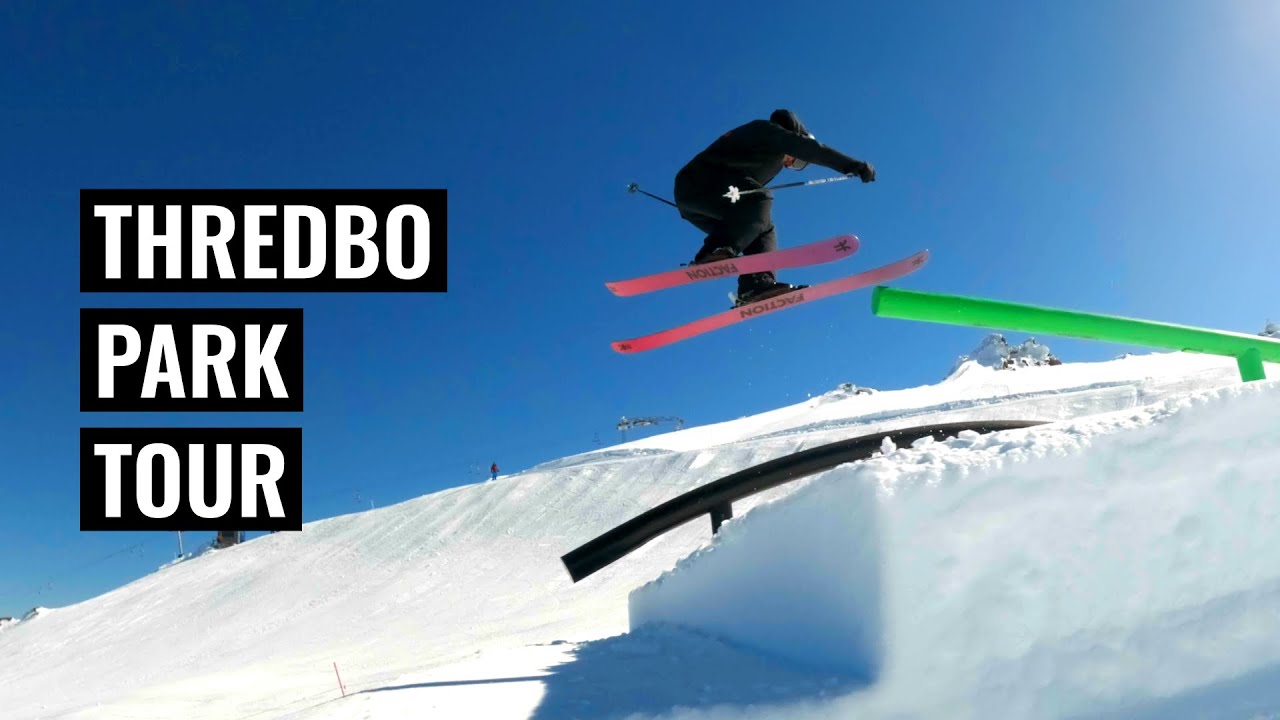
Thredbo’s park ecosystem is deliberately tiered. The intermediate hub is the Boost Mobile Terrain Park in the Cruiser area, accessed quickly by the Easy Rider T-Bar; it rolls clean boxes, progressive rails and small-to-medium tables so you can build trick ladders without leaving the zone. Up the hill, Antons Terrain Park scales to advanced features and proper jump sizes when the base is deep and the wind is calm. Transition fans get a rare treat in Australia with MOOKi’s Mini Pipe (about 13 ft), the result of a pipe-cutter donation that created a year-to-year mini-pipe program. A rider-cross course appears in appropriate seasons, adding speed and line-choice work to the mix.
Event energy is steady rather than stadium-sized, which is ideal for public progression. The Thredbo Triple Crown series (Rails, Slopestyle, Big Air) has become a Southern winter staple, with recent slopestyle rounds on Antons tied to the regional FIS/ANC calendar. For families, the Thursday Family Flare Run on Friday Flat keeps the stoke high under lights, and the resort regularly publishes park-crew updates so you can time sessions to fresh lips and reshapes.
Access, logistics, and on-mountain flow
Most visitors drive from Sydney or Melbourne via Jindabyne, or from Canberra in around 2.5 hours. Because Thredbo sits inside a national park, vehicles must purchase a park entry pass; check current fees with NSW National Parks before you roll (Kosciuszko National Park visitor info). When winter weather is active, be prepared for alpine road restrictions and carry chains when advised. Thredbo’s own “getting here” page consolidates the essentials for driving, buses and winter tips (Thredbo travel info).
For day flow, start with a short warm-up on Cruiser pistes to calibrate wax and speed, then move straight into the Boost Mobile park for rail mileage and timing. As winds settle and lips set, step to Antons for the bigger features. Mix in Supertrail top-to-bottoms for footwork and to keep the crew synced up. If visibility fades, drop to the lower benches or Friday Flat for fundamentals and video review. The mountain map is clear about pod structure, so you can set easy meeting points for mixed-ability groups. The Merritts Gondola is your pressure valve on busy days—use it to jump back into the Cruiser pod in about six minutes.
Local culture, safety, and etiquette
Inside the ropes, Thredbo enforces the Alpine Responsibility Code and publishes straightforward safety guidance; treat rope lines and slow zones as non-negotiable (mountain safety). In the parks, ride Smart Style: inspect first, call your drop clearly, hold a predictable line, and clear knuckles and landings immediately. Give shapers space during quick touch-ups; that cadence is why jump speed stays consistent.
If you plan to head for the Ramshead or Main Range beyond the boundary, Thredbo offers a Backcountry Access Pass for a single return on the Kosciuszko chair and runs guided programs for newer tourers. Treat any backcountry foray as real alpine travel: beacon, shovel, probe, partners who drill rescue, a lodged trip intention with NSW National Parks, and a morning read of the Mountain Safety Collective’s daily backcountry conditions for NSW and Victoria (mountainsafetycollective.org). Thredbo Ski Patrol also maintains an avalanche transceiver training area near the top of the Kosciuszko chair in winter—use it to sharpen search skills before you roam.
Best time to go and how to plan
Late July through late August is the sweet spot for consistent park speed and deep coverage. Early season (June into early July) is great for groomers and jib work while the base builds; spring (September into early October) delivers classic slush, easier landings and golden-hour filming windows. Build a two-block rhythm for a progression week: mornings on Cruiser (jibs and mini pipe) to dial timing; late-morning step-ups on Antons; afternoons alternating Supertrail mileage with feature refreshes. On Thursdays, plan an early dinner break and roll back to Friday Flat for the Family Flare Run if you want night vibes without committing to a full late session.
Book park-centric lodging close to the Valley Terminal or Merritts upload to minimise transitions, pre-purchase passes online via your MyThredbo card, and check live lift and park status each breakfast. If you’re stitching a broader Snowy Mountains trip, Perisher is an easy add on another day for its park depth—see our overview at skipowd.tv/location/perisher/—but if your target is long fall lines plus credible jumps, Thredbo often makes the better single-base choice.
Why freeskiers care
Because Thredbo turns the Southern winter into high-value reps. You get real vertical, a 3.7 km signature lap when the Supertrail is linked, a progression ladder that runs from Cruiser rails to Antons jumps, and a rare mini pipe for transition practice. Add an efficient lift network, a compact base village, clear safety frameworks, and straightforward backcountry staging, and Thredbo becomes the Australian resort where you can learn fast, film clean, and keep momentum from first chair to last light.