Edmonton
Alberta
Canada
Urban freeski city in Alberta | Known for: Rabbit Hill, Snow Valley, Edmonton Ski Club, Sunridge, LIARS HELL street clips, cold prairie winters, and a local park-to-street crew culture | Season: December to March for city snow windows | Best for: street crews, rope tow park laps, beginner progression, night sessions, and Alberta scene building
North Saskatchewan River Valley As A Ski Map
Edmonton is not a mountain resort, but the North Saskatchewan River valley gives the city a rare urban ski structure. The valley cuts through the middle of the city, creating small slopes, parkland, bridges, stair sets, banks, and neighborhood elevation changes that can turn winter into a local freeski map. This is why Edmonton should be classified as an urban freeski zone rather than a resort. Its value comes from repetition, cold snow, city rails, park hills, and a crew culture that moves between official ski areas and street spots. A skier can lap Rabbit Hill, ride Snow Valley, film in the city, then reconnect with the same scene at Edmonton Ski Club or Sunridge.
Rabbit Hill And The Southside Park Engine
Rabbit Hill Snow Resort is the strongest resort-style anchor in the Edmonton area. The resort describes itself as Edmonton’s largest local ski and snowboard resort, with over 40 acres of terrain, a tube park, and one of the top terrain parks in Western Canada. That claim matters because Rabbit Hill shows up repeatedly in Edmonton crew context. For street skiers, a hill like Rabbit is not only a place to ride on weekends. It is where rail timing, speed checks, switch landings, boxes, jumps, and rope-tow habits become automatic before the same movements are taken into the city. Rabbit Hill gives Edmonton freeskiing a structured park base before the street season turns serious.
Snow Valley Rails In The Heart Of The City
Snow Valley Edmonton adds another essential hill inside the city. It operates as a not-for-profit outdoor recreation area and is described by Go Ski Alberta as Edmonton’s busiest outdoor winter recreation area, with two carpet lifts, a triple chair, a quad chair, groomed slopes, a beginner terrain park, and a full park. The official terrain park page listed a Mini or Beginner Park with ride-on features, plus a Main Park with jumps, rails, tubes, and boxes in the March 2025 feature update. That makes Snow Valley useful for skiers who need controlled repetition more than vertical. A small park with ride-on boxes, 5 to 15 foot jumps, tubes, and handrails can teach the exact movement vocabulary that later appears on Edmonton street clips.
Edmonton Ski Club And A Century In The River Valley
Edmonton Ski Club gives the city its deepest ski-history layer. Go Ski Alberta describes it as a cornerstone of Edmonton’s winter sports scene since 1911, sitting in the downtown river valley. The club’s current public identity includes skiing, snowboarding lessons, tubing, programs, and strong accessibility through the Valley Line LRT. That matters for skipowd.tv because urban ski scenes need institutions, not only features. A hill like Edmonton Ski Club can introduce first turns, first park movements, first lift habits, and first local sessions close to the skyline. It also appears inside the Edmonton crew map through ESC clips and small-hill sessions, where technical park habits are built before bigger projects are filmed.
Sunridge And The Three Park Eastside Option
Sunridge Ski Area adds another layer on the eastern side of the city, inside Strathcona Science Provincial Park. Alberta Parks describes it as having skiing, snowboarding, terrain parks, a snow tubing park, and a chalet, while Go Ski Alberta lists 12 runs, six lifts, and two terrain parks. Sunridge’s own terrain page is more specific: Porcupine, Yellowhead, and Big Park, plus a skier and snowboard cross course described as the only one in the Edmonton area. That gives the metro scene another progression lane. A skier can use Sunridge for small-feature confidence, cross-course turns, tubing-family trips, and night-event style sessions without leaving the Edmonton orbit. The city’s strength is exactly this spread of modest but useful hills.
LIARS HELL And The Edmonton Street Proof
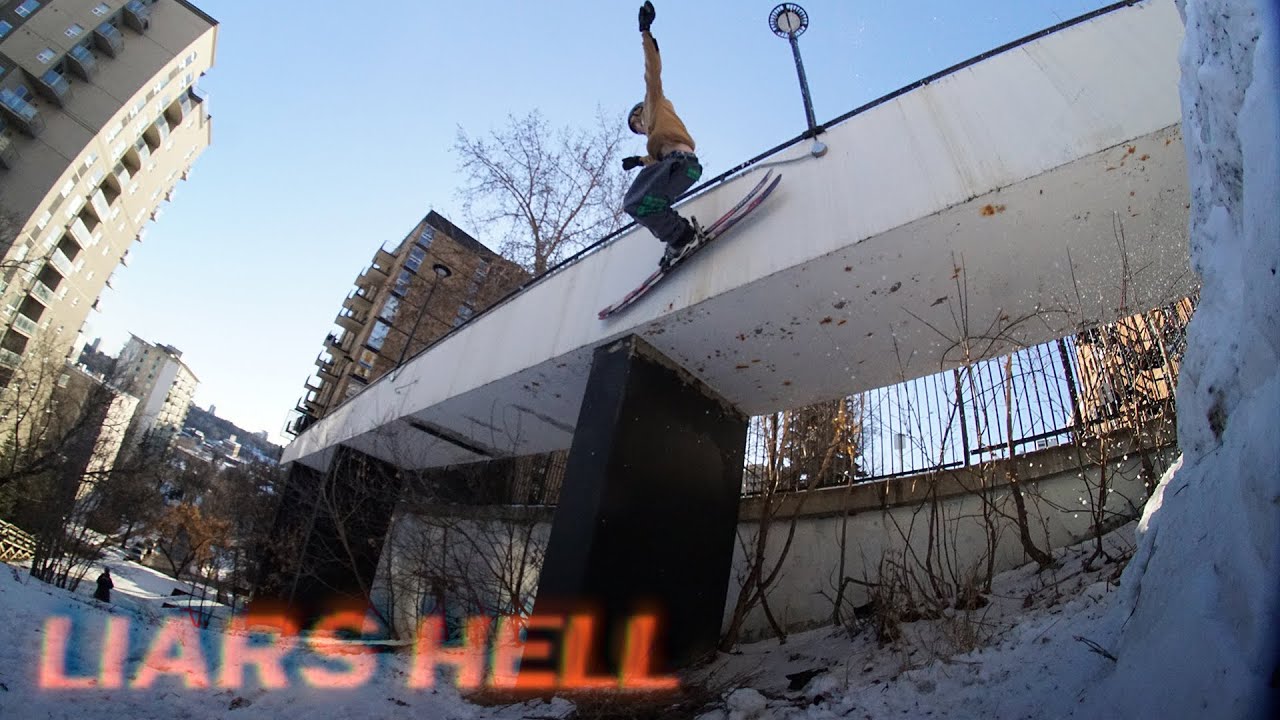
The clearest skipowd.tv marker for Edmonton is LIARS HELL. The video page describes it as a 10:11 street skiing video from Edmonton, Alberta, with riders including Elena Paskevich, Eric Law, John Smigelski, Kaileb Torrie, Layne Dalke, Mark Valtr, Matteo Esposito, Nevin Tarnowski, Wyatt Beaudoin, Parker Guimond, and others. That one project is enough to move Edmonton beyond a generic winter-city profile. It shows the city as a real street canvas: rails, wallrides, stairs, concrete transitions, shoveled in-runs, cold landings, and crew filming. Edmonton’s importance for freeskiing is not built from one famous contest. It is built from crews making the city rideable.
Cold Prairie Snow And The Clearing Clock
Street skiing in Edmonton depends on timing. The City of Edmonton snow-clearing service levels show that winter operations are structured by road priority, snowpack standards, and multi-day clearing phases after snowfall. That civic system matters because the same snow that creates a landing can be removed, packed, salted, plowed, or reshaped before a crew returns. Edmonton’s advantage is cold. Snow can stay usable longer than in warmer Canadian cities, giving crews time to shape run-ins and test features. The challenge is that streets, sidewalks, school grounds, business districts, and transit corridors are working spaces. A good Edmonton street session needs shovels, spotters, permission where required, fast cleanup, and a plan that respects pedestrians, traffic, and property.
4WESTCO Energy And The Alberta Crew Loop
Edmonton connects naturally to the broader Alberta crew loop. The verified skipowd.tv pages around John Smigelski, Mark Valtr, Kaileb Torrie, LIARS HELL, and K2 show a scene where park clips, street projects, filming roles, Rabbit Hill laps, Edmonton Ski Club sessions, Newschoolers releases, and 4WESTCO-adjacent energy overlap. That overlap is important. The modern freeski scene is not only athletes competing under bibs. It is riders filming each other, building local edits, testing gear, sharing spots, and creating a recognizable regional style. Edmonton works because the same skiers can move between small parks and urban rails without changing identity. They bring the same speed control, patience, and rail discipline into different environments.
From City Hills To Rockies Trips
Edmonton also functions as a staging base for larger Alberta and British Columbia travel. Local hills build the movement pattern, but bigger terrain sits farther west and south: the Rockies, Banff area resorts, Jasper trips when conditions allow, Kicking Horse objectives, and British Columbia road missions. That pipeline explains why a city with small vertical can still matter. Edmonton skiers can learn on Rabbit Hill, Snow Valley, Edmonton Ski Club, and Sunridge, then carry that foundation into real mountain terrain. Park riders get repetition. Street crews get architecture. Freeriders get a winter city base with access to regional trips. The city is not the destination for every kind of skiing, but it is a starting point for several.
Urban Safety And Spot Etiquette
Edmonton street skiing needs a clear safety frame. Rails, stairs, schoolyards, bridges, ledges, and downtown banks are not terrain parks. Crews should avoid damaging property, blocking sidewalks, creating fall hazards, or leaving piles of snow and debris after a session. Spotters matter because cars, pedestrians, cyclists, security, and transit routes can all enter the line. Padding, shovels, speed checks, landing maintenance, and quick cleanup should be part of the plan. Inside the city ski hills, etiquette changes but responsibility does not. Park riders should inspect features, start small, wait turns, clear landings, and respect closures when crews are rebuilding. Edmonton’s best ski culture comes from making small terrain usable without making it worse for everyone else.
Why Edmonton Matters For Freeskiers
Edmonton earns a 3 level profile because its importance is urban, developmental, and scene-based rather than mountain-based. The city has multiple local ski facilities, including Rabbit Hill, Snow Valley, Edmonton Ski Club, and Sunridge, each supporting lessons, park laps, tubing, night sessions, or progression terrain. It also has a verified street-ski marker through LIARS HELL, with local riders and filmmakers documenting Edmonton rails, stairs, wallrides, and concrete features. This is not a powder destination, not a freeride resort, and not a major contest venue. Its value is sharper than that. Edmonton gives Alberta skiers a cold winter city where park repetition, street filming, crew identity, and local hill culture can turn modest vertical into real freeski development.