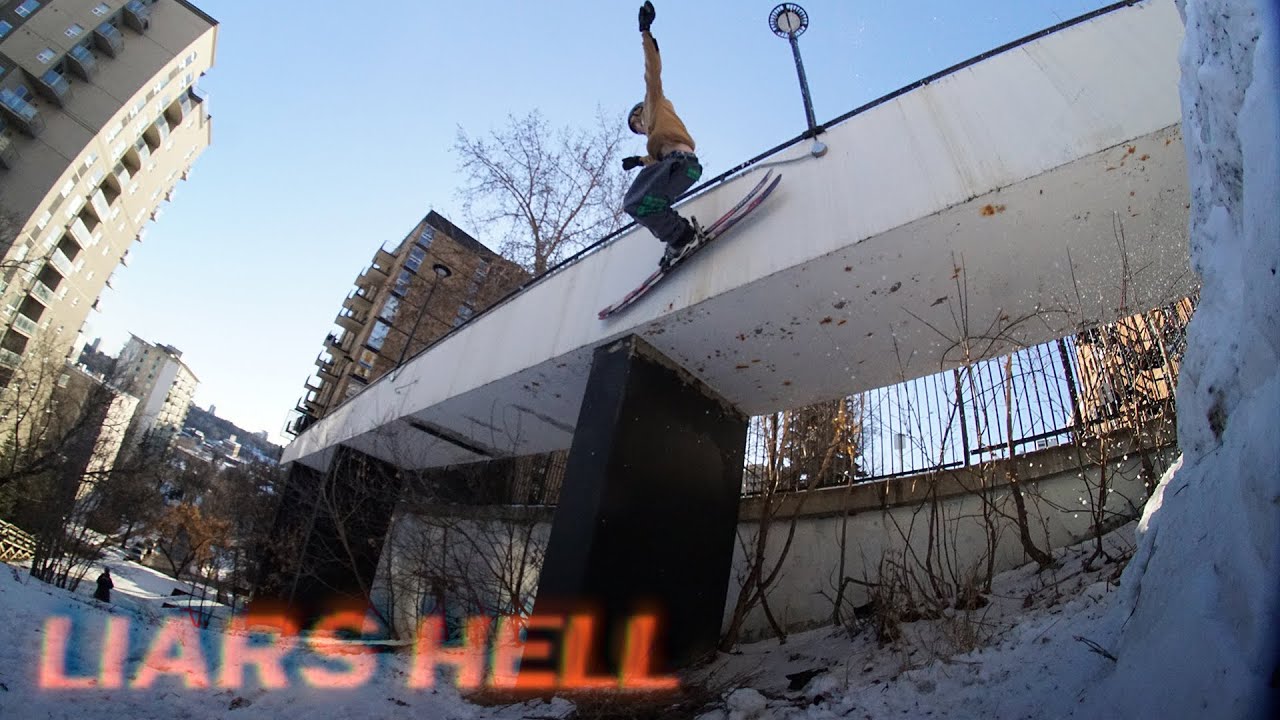
Wyatt Beaudoin
Profile and significance
Wyatt Beaudoin is a Canadian freeski athlete from Alberta whose public footprint is built around park progression, community-driven events, and a growing presence in street and rail-focused filming. Rather than arriving through the headline pipeline of World Cup start lists or Olympic qualification cycles, his name shows up where a lot of modern freeski careers quietly begin: regional competition results, local hill terrain parks, and crew-based video projects that document day-to-day progression.
Two things make him worth tracking early. First, he has verifiable competition roots in Alberta’s freestyle system, appearing in published event results tied to Freestyle Alberta. Second, he has credible “scene” validation: he was named Youth Winner at the 2024 Pro Bowl Riding (PBR) Session held at Sunshine Village, and he is credited as a skier in an Edmonton street edit titled “LIARS HELL,” filmed and edited by Parker Guimond. That mix of park credibility and street documentation is a common early marker for athletes who can grow into well-rounded freeskiers with both contest skill and video style.
Competitive arc and key venues
Beaudoin’s competitive record that’s easily verifiable in public documents starts young. He appears in age-group slopestyle results from March 2018 at Pine Valley Snow Resort in the Tawatinaw Valley region, which aligns with Alberta’s grassroots structure where smaller hills host early-season contests and skill-building events. By early 2020, he appears again in published men’s freeski slopestyle result documents connected to a Sunridge Ski Area event in the Edmonton region, with results formatted in a way that also references FIS-style competitor codes. The key takeaway is not a single score; it’s that he stayed in the system across multiple seasons and venues, which matters in a discipline where consistent reps and coaching feedback often decide who keeps progressing.
His most visible event result to date is cultural rather than purely competitive: Youth Winner at the 2024 PBR Session at Sunshine Village. PBR is known for a looser, session-first format that rewards creativity and flow in a terrain-park environment, closer to how many freeskiers actually ski day to day. Winning a youth category in that setting signals that he can show up, adapt to a feature set built for filming and style, and stand out among peers in a high-energy session environment.
How they ski: what to watch for
Based on the publicly credited street edit work and the types of events he has appeared in, Beaudoin’s most reliable descriptor is “park-and-rails oriented freeski.” That doesn’t mean he is only a rail skier, but it does suggest his progression has been shaped by terrain parks, short-run repetition, and the technical discipline needed to make street features look controlled rather than survived.
When you watch a developing park skier like Beaudoin, the most revealing details are usually the boring ones: approach speed control, posture through takeoff, and whether the skier can keep a quiet upper body while the lower body does the work. On rails, look for clean entries, minimal arm-waving, and exits that stay balanced enough to set up the next hit. On jumps, look for consistency and landing composure rather than the single biggest trick. In freeski slopestyle and big air culture, progression is public, but longevity is built on repeatability.
Resilience, filming, and influence
Beaudoin’s filming credit in “LIARS HELL” places him inside a recognizable part of modern freeski culture: the local street crew. Edmonton is not a “resort town” in the classic sense, so street skiing there tends to be practical and resourceful, built around rails, spots, timing, and crews that are willing to shovel, hike, and repeat. Being named among the skiers in that project indicates he’s participating in the kind of self-driven filming that often becomes an athlete’s long-term calling card, especially if contest results are still early-stage.
His PBR Youth win also hints at a different kind of resilience: the ability to ski well under a session spotlight. Session-based events are less predictable than two-run contests. Features get rutted, speed checks change, and the social pressure can be real. Standing out there suggests comfort with the social side of freeski performance: skiing with other crews, dealing with cameras, and keeping composure when the “best trick” energy is high.
Geography that built the toolkit
Alberta produces freeskiers in a distinctive way. The province has major mountain destinations a few hours away, but many athletes grow up doing a huge percentage of their training on smaller, colder, more repetitive local hills. In Beaudoin’s case, the publicly documented venues point to the Edmonton region and the Tawatinaw Valley area as early anchors, plus the Banff region for higher-profile sessions at Sunshine Village. That combination often creates a specific toolkit: strong rail basics from high-rep terrain parks, plus the ability to scale up to larger features and bigger mountains when opportunities appear.
It also shapes style. Prairie and foothills park skiing often rewards efficiency: quick laps, tight features, and limited time to overthink. When skiers from that environment move into larger parks, they tend to bring disciplined fundamentals and a comfort with repetition. That pathway fits the observable arc from early age-group slopestyle results, to a competitive-looking slopestyle event at Sunridge Ski Area, to session recognition at Sunshine Village, and finally to a street-skiing credit tied to Edmonton.
Equipment and partners: practical takeaways
There is not enough reliably verifiable public information to state specific personal sponsors or a confirmed ski setup for Beaudoin, and it’s important not to guess. What can be said, based on the type of skiing he is publicly associated with, is what typically works for athletes mixing park laps and street rails. Most skiers in that lane prioritize durable twin-tip skis, bindings mounted near center for switch balance, and a tune that’s rail-friendly, often with detuned contact points to reduce edge hang-ups.
His PBR Session win happened at an event supported by recognizable industry brands and local shops, including 4FRNT, 4West Co, Every Man Jack, Ski West, SPY Optic, 686, and Bear Street Outfitters. That matters for fans in a practical way: events like this are often where young skiers build relationships with the people who support local scenes, even before any formal “team” announcements exist.
Why fans and progressing skiers care
Beaudoin is a good name for freeski fans to file under “emerging.” The verified story so far is clear and grounded: he has documented roots in Alberta slopestyle events, he won a youth category at a respected session-style park event at Sunshine Village, and he has a visible connection to street skiing through an Edmonton-based project. That is exactly the stage where an athlete’s next two seasons tend to matter most, because the gap between “local standout” and “regional name” is usually built on consistency, more filming, and showing up at the right events.
If you’re a progressing skier watching his trajectory, the lesson is simple: strong fundamentals plus real community visibility can be as important as a single big contest result. Pay attention to the terrain parks and sessions that keep appearing around his name, and to whether his next edits show cleaner style, harder features, or more variety. In freeski slopestyle, big air, and urban/street skiing, those small shifts are often the earliest signal that an athlete is about to move up a tier.