Victor Galuchot
Profile and significance
Victor Galuchot is a French freeride skier, filmmaker and storyteller best known as the co-creator, with Fabien Maierhofer, of the cult web series Bon Appétit Ski. Originally from the Belleville valley and strongly connected to the resort of Les Menuires, he built his career by mixing serious skiing with equally serious humour, turning backcountry missions into episodes that felt as much like road movies as ski edits. Over nine seasons and nearly sixty episodes, Bon App’ became a reference in the freeride world, with their “monster episodes” in places like Kazakhstan and Iceland premiering at European festivals and touring ski towns all winter long.
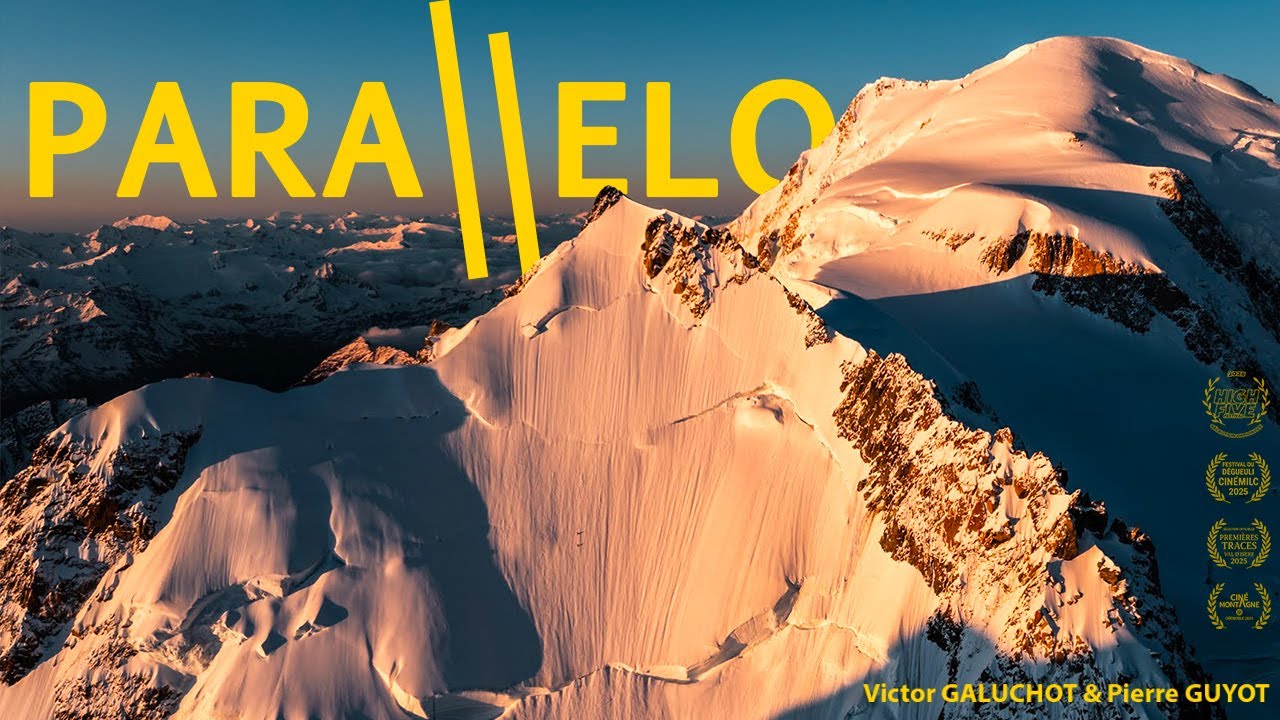
Today, Galuchot has evolved from web-series prankster to one of the most thoughtful voices in steep skiing. Supported by brands including Salomon, Les Menuires and eyewear company IZIPIZI, he continues to appear in films while writing and directing projects of his own. His recent movie “Les étoiles de la Terre” (“The Stars of Earth”) focuses on high-speed glacial lines and the fragility of the alpine environment, while “Parallelo,” co-directed with long-time friend Pierre Guyot, looks back on twenty winters they have spent tracing lines side by side. Between these films and his coaching role with the Freeski Belleville juniors, Galuchot has become an influential bridge between generations: a rider who has helped define what “ski libre” looks like in the French Alps and now passes that culture on.
Competitive arc and key venues
Although Victor has long defined himself more as a freerider than a contest specialist, he came up through the traditional structures of French ski clubs and early freestyle events. Growing up above the Belleville valley meant learning his craft in the pistes and off-piste zones of Les Menuires and the wider Trois Vallées network, where he first raced, then gravitated toward park jumps and natural hits. Those early years gave him the edge control and speed management that would later let him ski confidently on big, exposed faces.
The public first really met Galuchot through Bon Appétit, which quickly turned his “competitive calendar” into a filming calendar. Each season the crew chose a handful of destinations—classic French freeride arenas like La Grave and Sainte-Foy-en-Tarentaise, nearby giants in the Trois Vallées, and farther-flung trips to Greenland, Iceland, Eastern Europe and Central Asia. Episodes like the “monster” journeys to Kazakhstan and other remote ranges functioned as informal contests against terrain, weather and logistics rather than against other skiers. More recently his films have appeared in curated programmes at events such as the High Five Festival and regional “Ciné Montagne” and “Premières Traces” screenings, where “Les étoiles de la Terre” and “Parallelo” share billing with the biggest names in steep skiing and mountain cinema. For Victor, theaters full of ski fans have simply replaced start gates.
How they ski: what to watch for
On snow, Galuchot’s style is a blend of speed, creativity and a disarming lightness. In Bon Appétit and later films, he favours lines that read smoothly from top to bottom: strong, round turns to control speed at the top of a face, a well-timed air off a natural roll or cliff, and then an accelerating exit where he rides the fall line all the way out. Many of his best shots involve glacial or high-alpine terrain where the snow is fast and the consequences are real, yet he maintains a relaxed upper body and a stance that stays centred even as the skis chatter over firm or wind-affected sections.
What makes his skiing particularly watchable is how he tucks playful moments into serious terrain. Viewers are just as likely to see a perfectly placed shifty, a small backflip off a wind lip or a cheeky nose butter on a knoll as they are to see a straight, no-nonsense line. He uses transitions like a former park skier: reading the shape of a spine or couloir exit the way he once read kickers and halfpipe walls, and letting that shape dictate his timing. When you watch his segments, look at how early he commits to a direction change, how rarely he fights the terrain and how often he turns what could be a simple traverse or side-slope into an opportunity for a little extra style.
Resilience, filming, and influence
Victor’s resilience shows in the longevity and evolution of his career. Keeping a web series alive for the better part of a decade required constant creativity: new storylines, new locations, a steady stream of guests and, above all, the ability to laugh off bad weather, thin snowpacks and travel mishaps. Bon Appétit’s nine seasons chronicled not just great powder days but also wrong turns, broken vehicles and questionable costume choices, and Galuchot was usually in the centre of each scene, ready to turn frustration into comedy. That attitude helped thousands of viewers relate to big-mountain skiing as something welcoming, not distant and intimidating.
In recent years he has shifted his storytelling toward more introspective work without abandoning his sense of humour. “Les étoiles de la Terre” is built around high-speed glacier skiing and sharp ridges, but interviews and press around the film emphasise his concern for climate change and the future of these landscapes. “Parallelo,” made with Pierre Guyot, is both a steep-skiing movie and a portrait of friendship, reflecting on what it means to share twenty winters of lines, choices and close calls. At the same time, Victor continues to appear at festivals, write texts to accompany episodes on the Bon Appétit website and engage with audiences in Q&A sessions. For many fans, he has become not only a skier to admire but also a voice who can articulate why skiing matters in a changing mountain world.
Geography that built the toolkit
Galuchot’s skiing is inseparable from the geography of the Belleville valley. Based around Les Menuires, he grew up with access to the vast Trois Vallées network: groomed boulevards ideal for carving, hidden couloirs dropping away from the main lifts, and a huge variety of aspects and snow types. That terrain taught him to move comfortably from early-morning hardpack to midday powder and afternoon chopped snow, all within one run. Night laps and storm days around the resort added another layer, forcing him to read relief by feel and memory as much as by sight.
Through Bon Appétit and later films, his map expanded dramatically. He skied steep coastal lines in Iceland, explored remote valleys in Kazakhstan, sampled small resorts in Eastern Europe and went back to classic freeride zones across France and Switzerland. Each trip added new variables: long approaches on skins, unfamiliar snowpacks, different avalanche patterns and new cultural contexts. Yet he has always returned to his home valley, where he now helps guide young freeriders from Freeski Belleville toward their own lines around Les Menuires and its neighbours. That mix of global exploration and deep local knowledge is a big part of why his skiing feels both adventurous and grounded.
Equipment and partners: practical takeaways
Victor’s equipment choices mirror his all-terrain, story-first approach. As a long-time athlete for Salomon, he has relied on freeride skis designed to handle everything from firm resort snow to deep powder and glacial steeps, paired with boots stiff enough for precise edging but comfortable enough for long touring days. His support from IZIPIZI reflects the importance he places on clear, reliable vision in changing light, while his partnership with Les Menuires underlines his attachment to the everyday reality of a working resort: lifts, pistes, avalanche control and the local community that makes filming possible.
For progressing skiers, the practical lesson is to build a kit that encourages versatility rather than chasing a single niche. A mid-fat freeride ski with a stable platform and enough rocker to float in soft snow, boots that fit so well you forget about them, and goggles or sunglasses you trust in flat light and bright sun will serve better than a quiver of hyper-specialised gear you rarely use. Galuchot’s projects also highlight the importance of safety equipment—avalanche transceiver, shovel, probe and often a helmet and back protector—as standard, not optional. The less you have to worry about your gear, the more energy you can devote to reading terrain, choosing sensible lines and adding a touch of creativity where it counts.
Why fans and progressing skiers care
Fans care about Victor Galuchot because he has spent more than a decade showing that world-class freeride skiing and down-to-earth humour can coexist. In Bon Appétit, he and his friends turned big mountains into shared adventures, complete with cooking jokes, questionable costumes and long-running catchphrases. In newer films like “Les étoiles de la Terre” and “Parallelo,” he invites viewers deeper into his relationship with the mountains, addressing environmental concerns and long-term friendships without losing his playful tone. That balance of performance and personality has made him one of the most recognisable figures in francophone freeski culture.
For skiers looking to progress, Galuchot offers a roadmap that goes beyond trick lists. He built strong fundamentals on his home slopes, learned to use every terrain feature from piste edges to glacial walls, then used storytelling to give his skiing meaning. Watching his lines, you can study his edge control, his ability to manage speed on steep faces and the way he uses terrain to add small, stylish touches. Watching his body of work as a whole, you see how skiing can be a vehicle for friendship, creativity and even environmental awareness. That is why, whether you discovered him through an early Bon App’ episode or a recent festival screening, Victor Galuchot tends to stay in your mind long after the credits roll.