Pierre Guyot
Les Menuires, France | Active: early 2000s-present | Focus: freestyle, halfpipe, freeride, ski films, ski culture | Current: Parallelo co-director and video podcast host
Gros Tougnes Before The Lines Became Serious
The small mountain of Gros Tougnes above Les Menuires carried cold Belleville snow and teenage impatience. Pierre Guyot arrived with freestyle habits, Victor Galuchot with freeride eyes, and the two kept returning to the same features: a wind lip, a jump, a line that looked harmless until speed made it real. That terrain became more than a playground. It built a friendship, a shared language, and eventually Parallelo, their 2025 film about twenty winters of skiing side by side. Guyot’s career has always lived in that mixed space: part halfpipe competitor, part prankster, part video maker, part skier who never stopped chasing the strange pleasure of a badly reasonable idea.
From Parisian Kid To Les Menuires Freestyler
Guyot’s early biography is unusually direct because he told it himself in a 2008 Skipass interview. He did not come from a classic mountain-family myth. He described himself as a Parisian kid who moved to the mountains at age five for health reasons, living in Font Romeu, Briançon, and then Les Menuires. At Briançon, he entered ski studies but did not become a standard alpine-track athlete. Alpine skiing still gave him physical and technical foundations, but the turn came through snowblade culture, then freestyle skiing around 1999 and 2000. He mentioned Snow & DJ events, several wins or podiums in big air, and a period when he remained amateur while studying and skiing on weekends.
Halfpipe Results Without The Clean Hero Story
FIS lists Pierre Guyot as a French freestyle athlete from C.S. Les Menuires, FIS Code 2408737, born in 1984, with competition status marked not active. The official record confirms a formal freestyle career, especially in halfpipe, but Guyot’s own 2014 reflection gives the more honest summary. He said he had never won a major international competition and described his World Cup pipe results as fifth, sixth, seventh, and eighth-place finishes that did not stay in public memory like victories. That humility fits his place in French freeskiing. He was good enough to belong near the World Cup pipe conversation, but his fame came as much from personality, edits, and cultural timing as from score sheets.
Group France And The Mid-2000s French Mess
Skipass placed Guyot inside the French freestyle system in 2006 through its coverage of the Groupe France period. Those years were loose compared with modern federation freeskiing. Halfpipe skiing had no Olympic structure yet, slopestyle was still forming, and French riders moved between club training, web videos, park sessions, pipe contests, and jokes that aged better for some viewers than others. Guyot’s image came from that specific era. He was not polished into a neutral athlete brand. He appeared as a skier with strong technique, sharp self-awareness, and a public persona willing to mock the sport from inside it. That tone later became part of his value in French ski media.
Images Moisies And The Anti-Polished Edit
Guyot’s creative record is tied closely to the French web-ski scene. Skipass credited him with Images Moisies, including volumes 2 and 3, and with helping make point-of-view web skiing feel watchable again through the mini-series Following. The episodes Following Kev and Following Guyot et Flo Bastien were praised for doing a lot with limited means and humor. That matters because Guyot’s media style worked against the clean, heroic edit format. His clips often leaned into awkwardness, timing, banter, helmet-camera chaos, and the pleasure of skiing with friends who know exactly when the joke stops being safe.
La Plagne, Shred It, And The Quad Backflip Storm
The 2013 Shred It episode at La Plagne became the loudest Guyot moment on the internet. Skipass published a full story around his Quad Backflip video, describing more than 50,000 views in under 24 hours and a burst of attention from the French and North American freeski audience. The same article built the scene around Kevin Guri, Victor Galuchot, Fabien Maierhofer, Julien Régnier, Kevin Rolland, and a step-up jump that allowed a high, low-distance rotation. The moment should be described carefully because its online life included doubt, debate, and a strong layer of ski-culture theater. What is certain is that it became one of the defining French freeski web episodes of that period.
Victor Galuchot And The Belleville Counterweight
The Guyot-Galuchot relationship gives the most durable structure to his story. Skieur.com describes their meeting in the early 2000s after Guyot settled in the Belleville valley. Pierre came from freestyle, Victor from freeride, and their solution was simple: spend winter on Gros Tougnes near Les Menuires, mixing first lines, jumps, freeride, and shared nonsense. The contrast shaped both of them. Galuchot is portrayed as careful, analytical, and reluctant to fall; Guyot as faster, more impulsive, and constantly testing limits. Skiing together pushed one toward risk and the other toward patience. That tension later became the emotional backbone of Parallelo.
Bonneval, Chamonix, And The Freeride Drift
Guyot never treated freeride as a contest destination. In his 2014 Skipass interview, he said he had always practiced freeride with friends but had little desire to enter freeride competitions because a contest gives only one descent. He preferred outings with friends, filming, and shared mountain time. The same interview includes a near-miss at Bonneval-sur-Arc while skiing with Victor Galuchot, where hunger and poor attention nearly put him into rocks. That anecdote says more than a polished sponsor quote would. Guyot’s freeride chapter is not about becoming a Freeride World Tour athlete. It is about moving from park and pipe reflexes into wild snow, consequences, and filmed alpine improvisation.
Parallelo Across The Mont-Blanc Massif
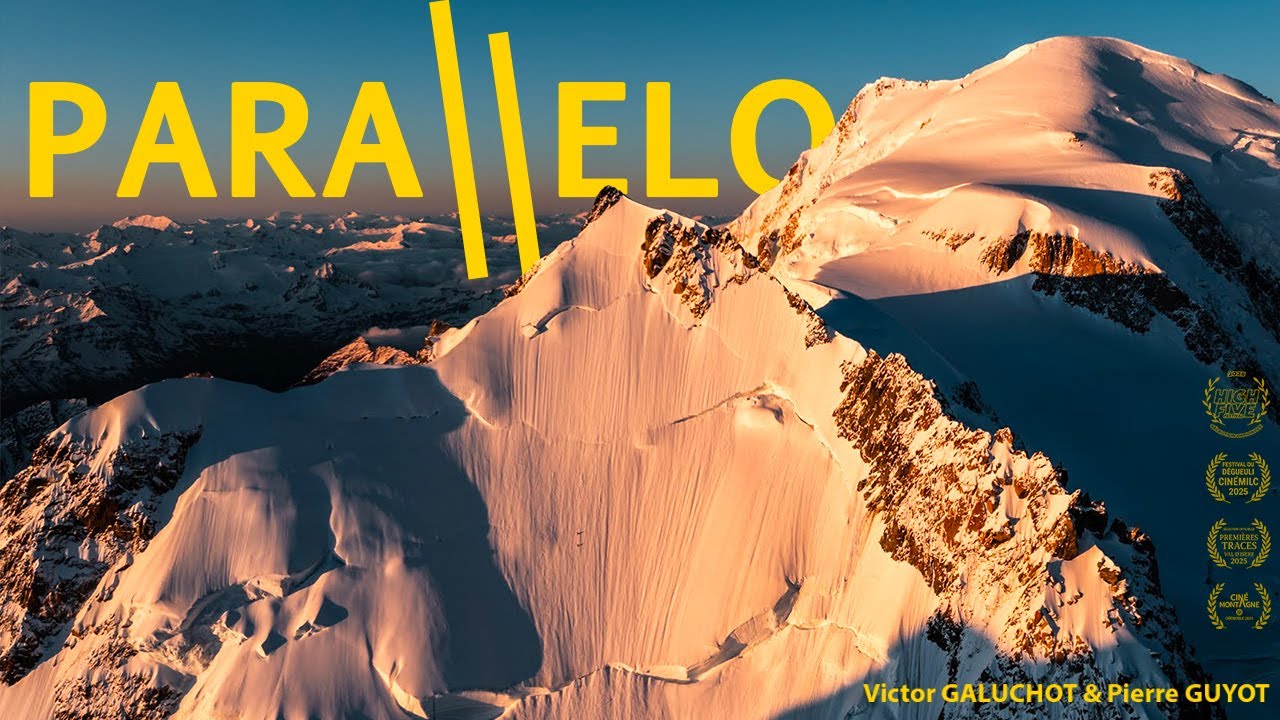
Parallelo brought that long friendship into a formal film in 2025. Alpine Mag described the project as a twenty-year story with Victor Galuchot and Pierre Guyot, moving from freestyle and freeride toward steep skiing in the Mont-Blanc massif. Skieur.com added the concrete mountain names: Aiguille du Tacus, Mont Maudit, and Tour Ronde. The film uses archive images, garage interviews, and mountain excursions to show two skiers who lost touch for a while before returning to shared lines with older judgment. High Five Festival listed Parallelo in its 2025 steep skiing program and named Guyot and Galuchot as directors, giving the project a clear festival context beyond a casual YouTube upload.
Style Between Technique And Bad Ideas
Guyot’s skiing is difficult to reduce to one discipline. The technical base includes alpine edge control, halfpipe amplitude, big-air rotation, backflip timing, switch comfort, and the loose balance needed for rough freeride snow. The cultural base is just as important: he skis like someone who respects strong technique but distrusts seriousness when it becomes branding. His best-known clips often sit between strong skiing and deliberate absurdity. That mix explains why friends such as Kevin Rolland, Enak Gavaggio, Julien Régnier, Kevin Guri, Flo Bastien, and Victor Galuchot appear naturally around his public story. Guyot belongs to a French freeski culture where performance, mockery, and friendship often arrived in the same edit.
NoScore And The Current Voice
Guyot’s current public role still runs through freeski media. His public profile describes him as a skier from Les Menuires, riding ZAG skis, and hosting the video podcast NoScore, a project presented as analysis and decoding of freeskiing. That role fits his older Skipass persona. He was never only a rider waiting for the next contest result. He became a commentator, participant, and critic of the sport’s habits. Parallelo gives him a recent creative anchor, while NoScore keeps him connected to the current generation by discussion rather than podium chasing. His FIS career is closed, but his freeski presence still sits inside French videos, conversations, and mountain friendships.
The Belleville Line Is Still The Anchor
Guyot’s page should not be written like a medal résumé. The stronger truth is more specific: Les Menuires, Gros Tougnes, French halfpipe, Skipass-era web edits, the Shred It Quad Backflip storm, Images Moisies, Following, and Parallelo with Victor Galuchot. His importance is cultural and regional, not Olympic. The next concrete chapter is already visible through Parallelo screenings, his podcast work, and a continued public identity built around skiing in the Belleville valley rather than stepping away from the sport completely.