Pierre Guyot
Profile and significance
Pierre Guyot is a French freeskier, storyteller and coach whose career traces the evolution of European freeskiing from early halfpipe contests to viral web edits and playful backcountry films. Raised in the Belleville valley and long linked to the club at Les Menuires, he first made his name in the early 2000s as a park and pipe specialist. He won the French Cup in halfpipe in 2003 and joined the national freestyle team for a five-year stint, stacking results on the SFR Tour and other European circuits before drifting away from pure competition. That competitive background gave him the technical base and confidence that still underpin his skiing today.
What truly sets Guyot apart, however, is the way he blends strong riding with humour and narrative. Over the past two decades he has moved from FIS start lists into an eclectic portfolio: parts in GPSY Feelin films, appearances in the “Bon Appétit” web series alongside Victor Galuchot, tongue-in-cheek commentary sketches and the infamous fake “quadruple backflip” clip that fooled a large portion of the ski internet. As an ambassador for black crows, he has become a kind of poet-laureate for “ski libre”: someone who can make serious terrain look welcoming and who never hesitates to laugh at himself while doing it.
Competitive arc and key venues
Guyot’s competitive arc is unusual because it starts in classic freestyle and bends gradually toward freeride and filming. As a young rider from Les Menuires he specialised in halfpipe and slopestyle, riding for the French freestyle team after his 2003 national halfpipe title. In those years he spent winters chasing SFR Tour stops and European open events, sharing start lists with the generation that pushed French park and pipe skiing toward international relevance. Results mattered, but what stuck with many observers was his ability to combine real amplitude and technical tricks with a relaxed attitude.
Midway through the 2010s, Guyot pivoted toward backcountry and freeride. He appeared in projects associated with the Freeride World Tour environment and in recap pieces from major stops like Chamonix, where he shared the mountain with riders such as Flo Bastien and Nikolai Schirmer. His focus shifted from perfect halfpipe walls to natural spines, couloirs and wind lips, without abandoning tricks entirely. At the same time he stayed close to the Belleville scene, ultimately returning as a freeride ski coach for the junior group of the valley’s freeski programme, based around Les Menuires and the broader Trois Vallées playground. These days his “main venues” are not bibbed courses but the lines he films for web episodes, the backcountry routes above his home valley and the faces he helps young skiers discover safely.
How they ski: what to watch for
On snow, Pierre Guyot skis like someone who has seen every side of the sport and decided that joy is the main objective. His halfpipe roots show up in the way he uses transitions: whether it is a natural quarterpipe, a wind lip or a shaped takeoff, he reads the wall early, sets his edge cleanly and lets the curvature of the terrain do much of the work. The result is takeoffs that rarely look forced and landings that tend to touch down high on the sweet spot rather than deep into the backseat. Even when he is simply arcing turns in a freeride line, his stance has that pipe-rider balance—hips stacked, hands forward, edges engaged from tip to tail.
Guyot’s trademark, though, is the way he tucks tricks into otherwise straightforward skiing. In web edits and in the many short clips he and his BatardGuyot partners have released on video platforms, you see nose butters on convex rolls, shifties into small drops, little backflips over trail knolls and playful grabs on medium-sized kickers that other skiers would simply straight-air. His infamous “quadruple backflip” prank—shot during a Shred It session and edited to look like a genuine four-time rotation—worked precisely because his real backflips and corks are so clean that viewers were willing to suspend disbelief. When you watch him ski, pay attention to the small details: how he uses terrain features that others ignore, how early he plants his edges, and how unfussy his upper body stays even when he adds a stylish twist to a simple feature.
Resilience, filming, and influence
Resilience in Guyot’s case is as much creative as physical. He has navigated the full cycle of a freeski career: up-and-coming contest rider, national-team regular, injuries and setbacks, then a second life as a filmer, journalist and coach. Along the way he has written for ski media, commentated events in a deliberately provocative, tongue-in-cheek style and built a backlog of short films under banners like BatardGuyot. His body of work includes touring pieces, “sauvage” ski episodes in the Alps, park edits and conceptual shorts that mix cooking, comedy and skiing—most famously the long-running “Bon Appétit” universe with Victor Galuchot, where food jokes and big lines share equal billing.
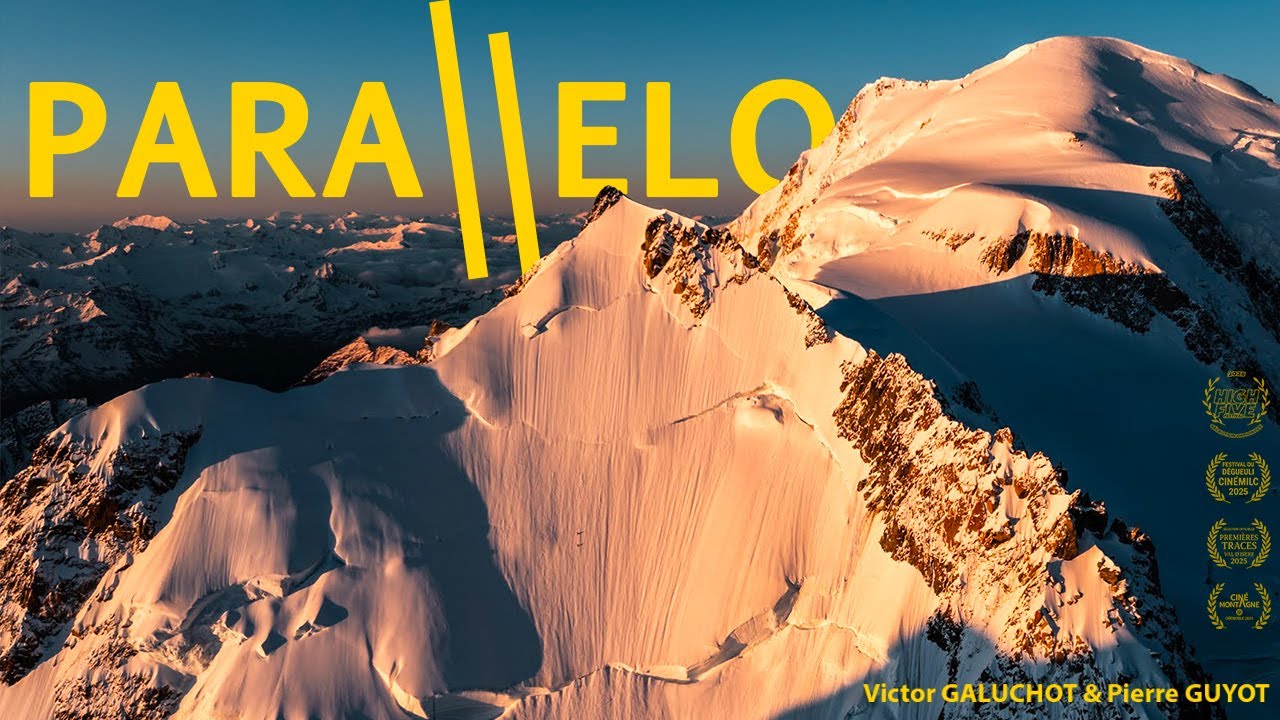
That mixture of substance and satire has made him quietly influential in francophone freeski culture. Younger skiers have grown up watching him and Galuchot treat serious terrain with a light touch, and the idea that a ski video can tell stories, invent characters and poke fun at its own clichés owes a lot to their approach. More recently, the film “Parallelo” has celebrated two decades of parallel careers between Guyot and Galuchot, presenting their shared lines and intertwined lives at festivals like High Five and reminding audiences how long he has been part of the landscape. At the coaching level, his role with the Belleville freeride juniors means that his philosophy—ski hard, stay humble, and remember that skiing is supposed to be fun—filters directly into the next generation.
Geography that built the toolkit
Geographically, Guyot is a pure product of the French Alps, but he has explored that terrain in many different ways. His home base of Les Menuires, in the Vallée des Belleville, sits inside one of the world’s largest interconnected ski areas. As a youngster he split time between snowpark laps—learning halfpipe and slopestyle skills for his national-team days—and long top-to-bottom runs that introduced him to variable snow, bumps, and the fast, directional skiing that would later feed into freeride lines. Being based in a resort with big vertical and extensive off-piste let him develop both park precision and mountain sense without ever leaving his valley.
Film projects expanded that map across the Alps. With partners like Victor Galuchot he has skied touring lines above remote villages, hunted storms in lesser-known corners of the French and Swiss Alps and visited destination resorts whenever a story or filming opportunity called for it. Clips and webisodes show him following or leading through couloirs, high-alpine faces and tree-lined pillows, often framed as part of a narrative rather than just a raw descent. At the same time, simple powder days at Les Menuires or neighbouring resorts remain a recurring theme in his output and his social channels: local laps with friends, coaching freeskiers from the valley and occasionally turning a “conditions check” into a mini-edit that reaches far beyond the Trois Vallées.
Equipment and partners: practical takeaways
Equipment is another area where Pierre Guyot’s choices mirror his philosophy of playful, all-terrain skiing. As an ambassador for black crows, he often speaks about the Atris, a mid-fat freeride ski he describes as hyper-versatile: comfortable in powder, reliable on piste, fun in bumps and chopped-up snow. In other clips he is seen on the more tailless, carve-friendly Mirus Cor, using it to turn ordinary groomers into a playground of high-angle arcs, slashes and quick butters. The message is consistent: he prefers skis that encourage creativity rather than locking him into one discipline, whether that means touring missions, funpark lines or spontaneous side-hits.
Over the years he has also been associated with performance-oriented boots from brands like Lange, reflecting his need for precision and support when he moves from playful jibbing into bigger, more exposed terrain. Combined with modern freeride outerwear and safety gear, his setup is built to handle long days—coaching juniors in mixed conditions, skinning to a ridge for a touring shot, or skiing laps for a humorous webisode. For aspiring skiers, the practical takeaway is to aim for versatile tools rather than hyper-specialised quivers: a freeride ski you trust everywhere, boots that transmit movement cleanly without destroying your feet, and protective equipment you are happy to wear every run. That kind of balanced setup makes it easier to ski with the same freedom and spontaneity that Guyot brings to his projects.
Why fans and progressing skiers care
Fans care about Pierre Guyot because he represents a version of freeskiing that is technically strong, culturally rich and never overly serious. He has stood on contest podiums, skied alongside World Tour athletes and produced clips that went viral across the global ski community, yet he consistently downplays ego in favour of shared laughter and good company. In his films and edits, the best line of the day might be followed immediately by a cooking joke, a self-deprecating sketch or a behind-the-scenes fail, reminding viewers that the point of all this sliding around on snow is enjoyment.
For progressing skiers, his career offers a refreshing roadmap. You can build high-level skills in pipe and park, shift toward freeride and touring, experiment with journalism and filmmaking, then return to your home valley as a coach—all while keeping a sense of play at the centre. Watching Guyot’s skiing with an analytical eye reveals plenty of technical lessons in balance, edge control and terrain use. Watching his body of work as a whole reveals something more important: that style is not just how you move on snow, but also how you tell stories, treat your friends and share your passion with others. In that broader sense, Pierre Guyot is not just a strong skier from Les Menuires; he is one of the enduring characters who have helped define what “ski libre” looks and feels like in the French Alps.