Profile and significance
Matteo Esposito is a freeski rider who shows up most clearly through local video credits rather than through major contest start lists. In the edits where he is credited, his name also appears as “Mateo,” so you may see both spellings depending on the release. What’s consistent is the role: he is documented as part of an Alberta park-and-street circle, with credits that stretch from mid-2010s short edits to more recent crew projects tied to Edmonton. For a video-first freeski audience, that matters because the sport’s culture is built as much by crews and edits as it is by podiums.
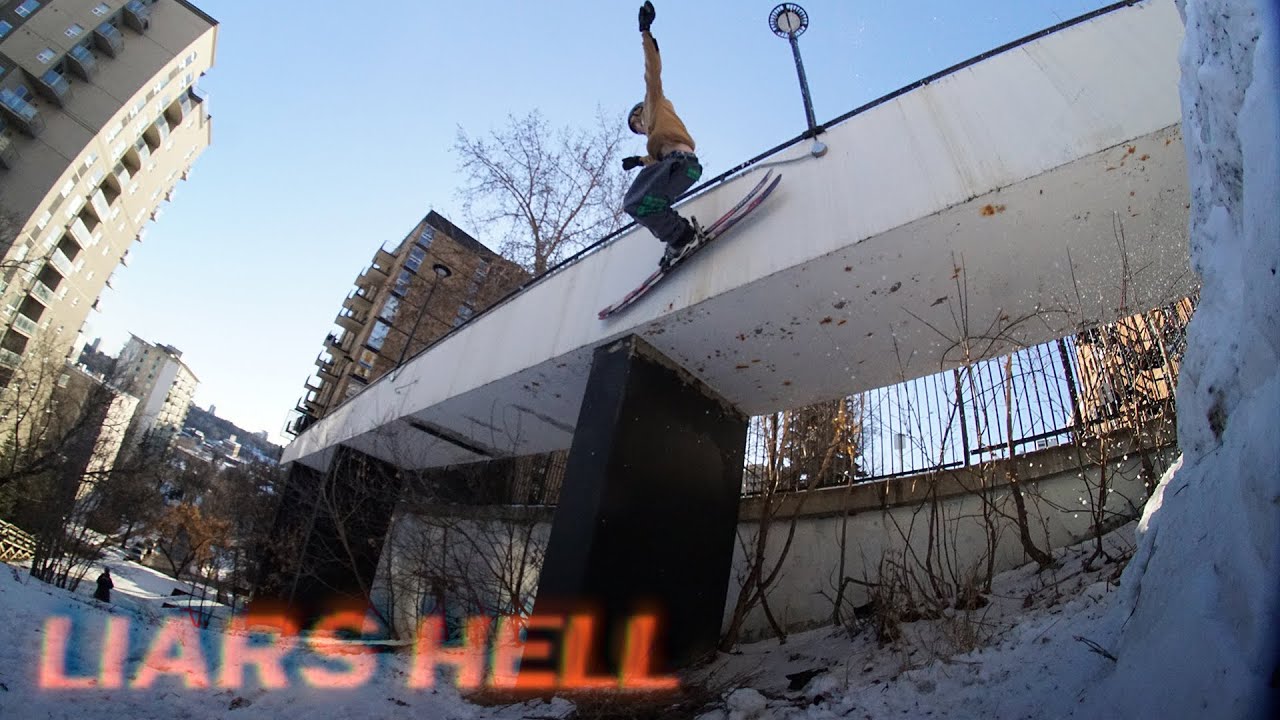
Esposito’s public footprint is not “headline athlete” material in the Olympic or X Games sense, but it is real and traceable. He is credited as the editor of the 2016 edit “A Lukewarm Minute,” he appears in the skier list for “Goodnight Rabbit Hill” (2018) and “MAIN” (a 2020/21 leftovers-style season edit), and he is later credited in the street skiing project “LIARS HELL,” described as filmed in Edmonton, Alberta. Those touchpoints establish both identity and continuity: a skier who has been around long enough to contribute on-camera clips and behind-the-laptop editing.
Competitive arc and key venues
There is not enough reliably documented public information to map a formal competition arc for Esposito, and it would be inaccurate to guess. Instead, his progression is best understood through release timestamps and the kinds of projects he is attached to. An early marker is “A Lukewarm Minute” (2016), which frames him as an editor within a friend group. “Goodnight Rabbit Hill” (2018) places him in a small, park-focused session edit. “MAIN” (2021) presents him as part of a crew compiling leftover clips from the 2020/21 season. “LIARS HELL” then signals a street-oriented direction, credited as a city-based project in Edmonton.
Those venues and contexts tell you what shaped the skiing. Park edits reward repetition and technical cleanliness, while street edits reward problem-solving, patience, and the ability to make a feature work even when the run-in and landing are imperfect. In the Edmonton area, a cornerstone of that park ecosystem is Rabbit Hill Snow Resort, a local hill known for keeping terrain-park laps accessible close to the city. Even when a specific rider’s day-to-day training routine is not publicly listed, the existence of that nearby infrastructure helps explain how a crew can keep producing park sessions and then pivot into street filming when conditions line up.
How they ski: what to watch for
Because Esposito’s most verifiable appearances come through edits that are explicitly park and street oriented, the most honest way to evaluate his skiing is through the fundamentals those formats expose. In street skiing, it’s rarely just “did the trick happen.” The camera is close, the margin is tight, and style is part of the difficulty. Watch for how a skier manages speed into a feature, whether their posture stays calm through contact, and whether the trick looks intentional rather than reactive. Clean exits, balanced landings, and quiet upper-body control are the small details that separate a clip you forget from a clip you replay.
In park-session edits, the lens shifts slightly toward repeatability and polish. The trick list matters, but so does the rhythm: how naturally a skier links features, how confidently they take off switch, and how consistent their timing is. A rider who appears in both types of projects is typically comfortable being judged by the camera, which is a different pressure than being judged by a score sheet. In that sense, Esposito’s documented lane is freeskiing where execution and aesthetics are the point, not just the trick name.
Resilience, filming, and influence
Street skiing is a patience sport disguised as a highlight reel. A single usable clip can require multiple days of attempts, weather windows, and coordination with whoever is filming. Being credited in a street project like “LIARS HELL,” described as filmed in Edmonton, is a signal of participation in that process-heavy reality. You don’t end up in those credits by accident; you end up there by showing up, taking attempts, and being part of a crew that can actually finish a project.
Esposito’s editing credit in “A Lukewarm Minute” adds another layer: influence in freeskiing is often created by people who can both ski and shape how skiing is presented. Editing is its own craft—selecting angles, pacing, music timing, and which moments actually communicate style. Even when an athlete isn’t a global name, being involved in the production side can make them a key contributor to a scene’s identity, because the edit is the artifact the outside world sees.
Geography that built the toolkit
The Alberta and Edmonton-area freeski environment tends to produce a specific toolkit: strong rail skills, high comfort with firm snow, and an emphasis on repetition because many sessions are built around shorter laps and night riding. That kind of training background often translates into crisp timing on takeoffs and a willingness to commit to features that are more “technical” than “huge.” It is an environment where filming can happen regularly, because the hills are close and the crew can stack sessions without needing a destination trip every weekend.
Edmonton also sets the table for urban/street skiing. A city-based project requires more than skiing ability; it requires scouting, adaptability, and a tolerance for uncertainty. When a rider’s public credits include both park-session style edits and a street project described as Edmonton-based, it’s fair to say the geography encourages versatility—park polish when the features are built, and street ingenuity when winter turns the city into an option.
Equipment and partners: practical takeaways
There is not enough reliable public information to list confirmed sponsors, specific ski models, or official partnerships for Esposito, and it would be inaccurate to invent them. What can be discussed responsibly is the practical equipment logic implied by the kind of skiing he is documented in. Park and street freeskiing usually demands durability, a predictable feel for switch skiing, and edges that can handle repeated impacts. Street sessions, in particular, can be brutally hard on gear because surfaces and landings are rarely ideal.
Esposito has also appeared in the freeski community as someone who talks gear in a practical, durability-focused way, including discussion of brands like ON3P in the context of how skis hold up to heavy use. For progressing skiers, the takeaway is not “copy a setup,” but “think like a filmer.” If you want to ski park and street consistently, prioritize boot fit, reliability, and a tune that matches what you actually ride. Your best “partner” is often your crew—who films, who helps reset, and who pushes you to make the landed version look clean.
Why fans and progressing skiers care
Fans care about riders like Matteo Esposito because freeskiing’s most replayable moments often come from scenes that are not headline-driven. The credits tell a simple story: an athlete involved in edits across multiple years, contributing both skiing and, at least once, the editing work that turns raw clips into a watchable piece. That is how local culture becomes visible beyond a single hill or a single winter.
Progressing skiers should care because the pathway is relatable and instructive. Start with small hills, stack repetitions, learn how to make tricks look calm, and eventually bring those skills into street features when you have the crew and conditions to film. Esposito’s documented appearances in park sessions and Edmonton-based street skiing projects point to a version of freeski progression that is built on consistency and craft—exactly the things that make videos worth rewatching.