Layne Dalke
Profile and significance
Layne Dalke is a Canadian freeski rider whose public footprint is rooted in the Edmonton, Alberta park-and-street scene rather than in major international contest start lists. What makes him notable for a video-first ski audience is consistency: his name appears in multiple crew edits and street projects across several seasons, the kind of repeat credit that signals a real presence in a local ecosystem where progression is earned through cold-weather sessions, spot hunts, and the patience it takes to stack clips.
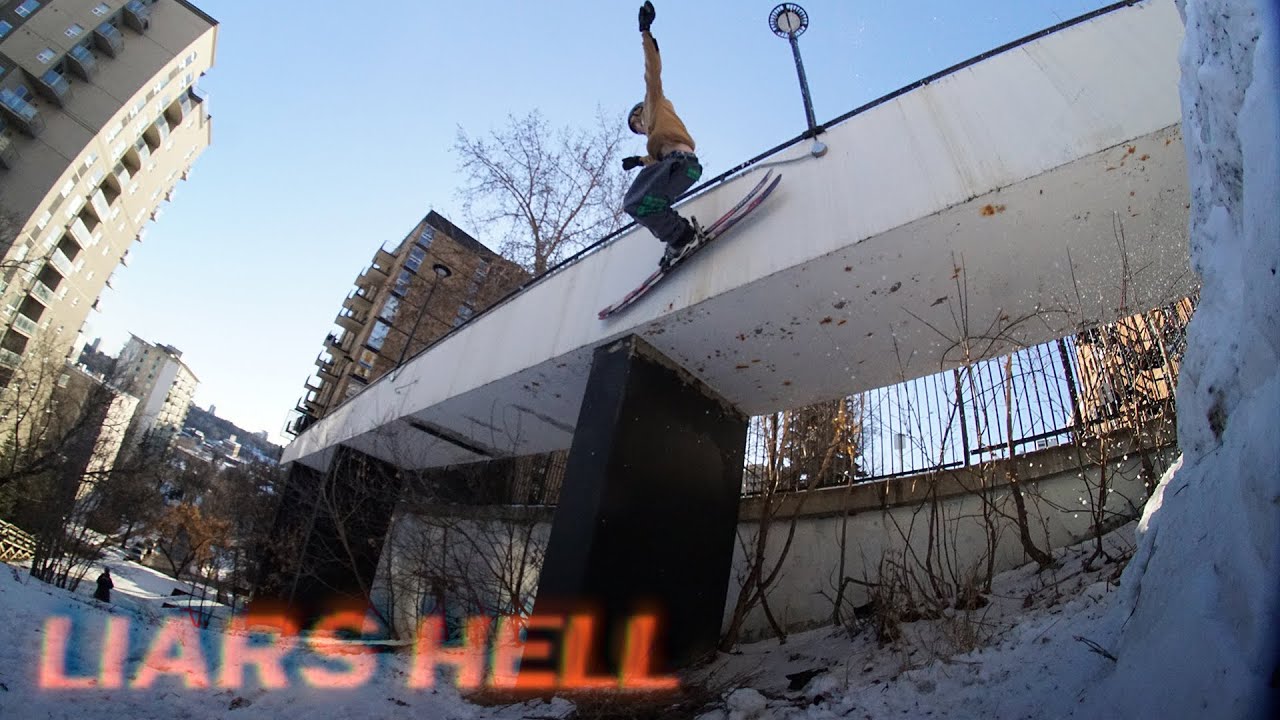
Dalke is credited in a run of edits released by the same Edmonton-based circle, including “Blue Comet” (March 2023), “LAZY MARY” (November 2023), “temporarily away on business” (January 2024), “8th wonder of the world” (February 2024), and “LIARS HELL” (released November 12, year shown on the platform). That pattern points to an athlete who matters inside a community: not because of medals, but because he’s part of the output that keeps a scene visible.
Competitive arc and key venues
There is no widely documented FIS-style competition record attached to Dalke in the public sources that surface most readily, so the clearest “arc” is built through filming timelines. “LAZY MARY” is described as a street project filmed over the 2022/23 season, while “LIARS HELL” is explicitly framed as a street skiing video from Edmonton, Alberta. In other words, his trajectory is easiest to track through releases and seasons, not through podiums.
Key venues show up through the edit titles and descriptions around the same circle. “8th wonder of the world” notes a session at Edmonton Ski Club, and multiple edits from the broader crew point back to Rabbit Hill Snow Resort—often referenced locally as “RabLab”—as a central training ground for terrain-park laps in an otherwise flat region. When you’re evaluating Dalke’s skiing, it’s useful to think in terms of repeatable access: short hills, high reps, and street spots close to home are the engines that build trick volume and rail comfort.
How they ski: what to watch for
Because Dalke’s most verifiable public appearances are within street-oriented and park-session edits, the most honest way to describe his skiing is by the environment it’s showcased in. Urban/street skiing and rail-focused park edits reward a particular toolkit: controlled speed checks, precise takeoffs on inconsistent surfaces, and the ability to keep tricks looking clean even when the run-in, landing, or feature quality is less than perfect.
When you watch a rider coming out of this lane, focus on the details that separate “landed” from “dialed.” Look for how early the trick is set, whether the upper body stays quiet through contact, and how confidently the skier exits a feature. In slopestyle and big air the stakes are often amplitude and spin, but in street skiing the evaluation is frequently about style, risk management, and making difficult features look repeatable. Dalke’s credits in multi-rider street projects put him in that conversation: the clips are built to be watched slowly, not just counted.
Resilience, filming, and influence
Local edits rarely happen by accident. They take coordination, repeat attempts, and a willingness to return when conditions aren’t ideal. Dalke’s recurring presence across different releases and seasons suggests resilience in the practical sense: showing up often enough that footage accumulates, and staying connected to a crew long enough that a name continues to appear in the roll call.
That matters for influence, even without international visibility. Scenes like Edmonton’s act as development pipelines: riders learn how to film, how to work with friends who shoot and edit, and how to progress with limited vertical and inconsistent weather. When a skier is reliably part of that output, they become one of the reference points for what the local standard looks like—how clean a rail trick should be, what “good” style means, and what it takes to get a clip in the cold.
Geography that built the toolkit
Alberta freeski progression has a distinct flavor. The combination of small urban hills, short lift-served laps, and long stretches of winter creates an environment where repetition is king. A place like Rabbit Hill Snow Resort is valuable precisely because it offers a consistent terrain-park platform close to Edmonton. High-frequency sessions build confidence on rails and smaller jumps, which then translate into better trick execution when the skier steps onto bigger features or more technical street spots.
At the same time, Alberta riders have access to the Rocky Mountain corridor, where spring setups and park events can provide a different scale of features. Banff Sunshine Village is one of the recognizable hubs for that next step, and the wider Canadian park scene includes creative, skier-driven events like the Pro Bowl Riding (PBR) Sessions hosted there in recent years. Even if a specific rider’s attendance isn’t always listed in public descriptions, the existence of that pathway helps explain why an Edmonton-based skier’s style often blends street grit with park precision.
Equipment and partners: practical takeaways
No major sponsor roster is reliably documented for Dalke in the same public sources that list his video appearances, so the most useful “equipment” discussion is practical rather than promotional. Street and park skiers tend to prioritize durability and predictability: twin-tip skis that can handle repetitive rail impacts,, edges that are tuned for slide consistency, and bindings mounted to support switch takeoffs and landings. Boots that fit well and stay consistent through cold sessions matter more than marginal gains in stiffness.
If you’re progressing in the same lane, take note of the lifestyle implied by the edits: short-session efficiency, warm-up habits that prevent injury, and a willingness to keep skiing even when conditions are less than cinematic. The best takeaway from a rider like Dalke isn’t “buy this product,” it’s “build a system” that lets you stack reps. That’s what turns a local hill into a legitimate training ground for freeski slopestyle skills and urban/street skiing confidence.
Why fans and progressing skiers care
Layne Dalke is a good reminder that freeskiing isn’t only defined by televised finals. A huge amount of the sport’s style, creativity, and day-to-day progression is shaped by riders whose names live in crew edits and street projects. His documented appearances in multiple releases across 2023 and 2024, plus a newer street project credit, make him part of an Edmonton scene that keeps producing watchable skiing.
For fans, that means discoverability: if you like rail-heavy edits and the texture of real street spots, his film credits put him in the middle of that world. For progressing skiers, it’s more direct: the path is visible—lap the local park, film with friends, learn how to make tricks clean, and keep showing up long enough that your skiing becomes part of a community’s output. That kind of consistency is its own form of significance.